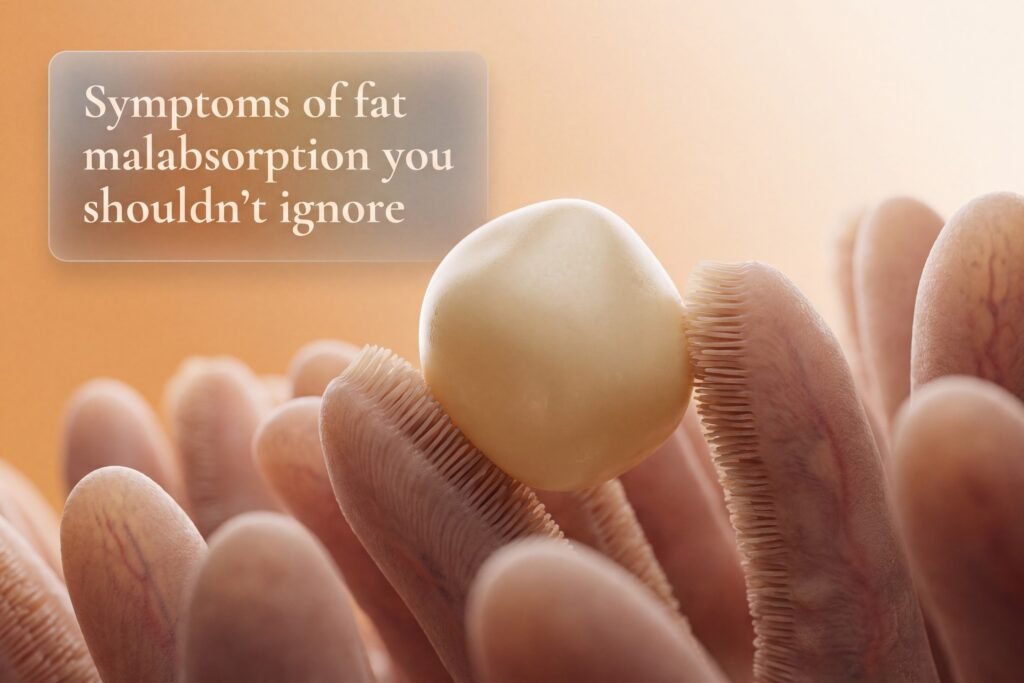
Symptoms of fat malabsorption you shouldn't ignore
Feeling full after a few bites, greasy stool, weight that drops without trying. Together they point to one problem: your gut is struggling to break down fat, and the vitamins that travel with it go missing too.
What is fat malabsorption?
Fat malabsorption happens when your digestive system struggles to break down and absorb dietary fat, so the fat passes through your gut mostly intact. It misses its chance to fuel your body and to carry fat-soluble vitamins into your bloodstream.
It is a pattern with several possible causes, usually driven by low digestive enzyme output, too little bile or damage to the intestinal lining that blocks absorption at the wall.2 Once fat absorption drops, the changes spread: stool, appetite and weight first, and later the nutrient levels that slowly slip below where they should be.
What are the symptoms of fat malabsorption?
The symptoms fall into two groups, and most people only ever hear about the first one.
Digestive symptoms and greasy stool
The clearest sign is steatorrhea, a pale, greasy and bulky stool that often floats and is hard to flush. People describe it as oily stool, sometimes with an oily film on the water. Bloating, extra gas and cramps after meals are common, especially after anything fatty, and stool frequency often rises even without classic watery diarrhea.1
Weight loss despite a normal or even bigger appetite is the sign doctors usually act on first, because no simple explanation fits it. If the bloating is your main complaint, bloating and gas after eating explains the other mechanisms that can sit behind it.
ok this might be tmi but I get full after like 5-6 bites now, especially with meat or anything oily. started maybe 4 months ago. dropped almost 8 lbs without trying. doctor already checked my thyroid, came back normal. what else even causes this??
Getting full after a few bites, especially with meat or oil, together with weight loss you did not plan, is one of the clearest patterns of fat malabsorption. A normal thyroid result still leaves the pancreas and the gut on the list, since fullness and weight loss like this often trace back there. The test that checks the pancreas is called fecal elastase, and it is worth asking your doctor for it by name.
The fat-soluble vitamin symptoms nobody connects to digestion
Vitamins A, D, E and K are absorbed together with dietary fat. As a result, when fat malabsorption sets in, these four can go missing together, and the signs can show up far from the gut.2
| Vitamin | Main job | What a shortage can look like |
|---|---|---|
| A | Vision in dim light, skin | Dry skin, trouble seeing in dim light |
| D | Bones and muscles | Bone or muscle pain written off as ordinary aches |
| E | Nerves and cell protection | Numbness, balance problems |
| K | Normal blood clotting | Easy bruising, bleeding gums |
Vitamin K is the one people notice fastest. Bruising easily or bleeding gums can appear next to stool changes that seem unrelated, and that is why a doctor checks these levels when fat malabsorption is suspected. Over time, fat malabsorption raises the risk of night blindness, poor coordination, impaired clotting and bone loss.4
The American Gastroenterological Association lists steatorrhea with or without diarrhea, weight loss, bloating, excess gas, fat-soluble vitamin deficiencies and protein-calorie malnutrition as the clinical features of exocrine pancreatic insufficiency, and advises routine monitoring of fat-soluble vitamin levels.1
The clearest data on how often these deficiencies appear come from chronic pancreatitis, one of the main causes of pancreatic fat malabsorption.5
Fat-soluble vitamin deficiency in chronic pancreatitis
Pooled prevalence, Martínez-Moneo 2016, 12 studies, 548 patients. Vitamin D deficiency was not more common than in controls. Vitamin K was measured in one study only.
not sure if this is tmi but my poop has been really pale and greasy for like 2 months, it floats and i have to flush like 3 times. no real diarrhea, just this. also been bruising super easily out of nowhere, is that even related??
Yes, that is a sharp connection to make. Greasy, floating stool is a classic sign of fat malabsorption, and the fat-soluble vitamins that travel with dietary fat, vitamin K above all, tend to go missing along with it. Easy bruising and greasy stool can be the same problem showing up in two different places, so it is worth asking your doctor to check your fat-soluble vitamin levels directly.
What causes fat malabsorption?
A short list of conditions accounts for most cases: low pancreatic enzyme output, too little bile reaching the gut, or damage to the absorptive lining itself.2 Exocrine pancreatic insufficiency is the one that gets overlooked most, because its symptoms look so much like ordinary IBS.1
- Exocrine pancreatic insufficiency (EPI)
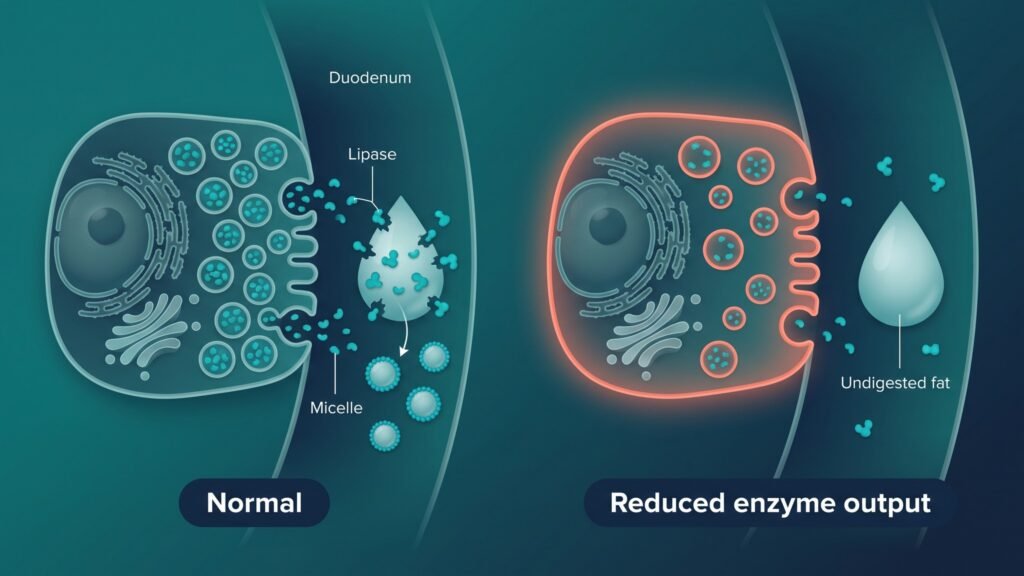
- A drop in the digestive enzymes the pancreas releases into the small intestine. Common causes are chronic pancreatitis, cystic fibrosis, pancreatic cancer and surgery of the pancreas or upper gut. Diabetes and untreated celiac disease are less common causes. With less enzyme, fat, protein and starch all pass through partly undigested, and fat usually causes symptoms first.
Bile problems can produce the same greasy stool through a different route. After gallbladder removal, bile no longer arrives as a concentrated dose at mealtime, and some of it is lost from the gut.6 With too little bile at the right moment, fat may stay in droplets too large to absorb well. The wider picture is in IBS after gallbladder removal.
Celiac disease and small intestinal bacterial overgrowth (SIBO) work on the lining itself. In newly diagnosed celiac disease, EPI turned up in about one in four people in a pooled analysis, and in 8% of those already on a gluten-free diet.7 In SIBO, bacteria in the small intestine break down bile acids, which may shrink the bile pool and disturb fat absorption.2 How SIBO is tested is explained in how to test for SIBO.
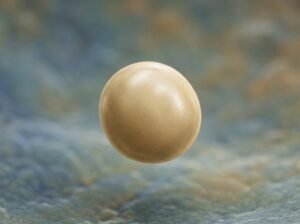
Fat that never got broken down
Without enough lipase, dietary fat stays as large droplets, far bigger than the small, absorbable particles your gut expects.
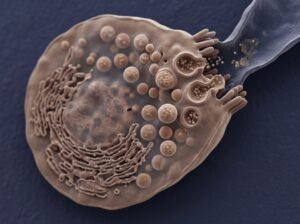
Where the enzymes come from
Acinar cells in the pancreas pack lipase and other enzymes into granules, then release them into the gut after a meal.
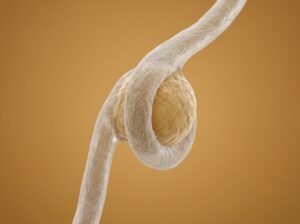
One way to help
A viscous soluble fiber such as psyllium forms a gel that may hold some fat and bile acids on their way through.
Is it IBS, or is it EPI?
Exocrine pancreatic insufficiency is missed often because its symptoms overlap almost completely with irritable bowel syndrome. A few clues tend to point away from a simple IBS diagnosis.
In a prospective study of 140 people with diarrhea-predominant IBS, 5% had EPI on fecal elastase testing, and dyspepsia was the symptom most strongly linked with it. After enzyme replacement, stool form, stool frequency, bloating, pain and IBS severity improved.8 An earlier study found low fecal elastase in 6.1% of 314 people with IBS-D.9
In the same study, the people with EPI also had lower blood levels of vitamins A and E.8
How do doctors test for fat malabsorption?
The first test is a stool test. Fecal elastase-1 measures how much pancreatic enzyme reaches your stool, and it must be done on a semi-solid or solid sample. A result under 100 µg/g gives good evidence of EPI, while 100 to 200 µg/g is a grey zone that needs more work-up.1
Some clinics also use a 72-hour stool fat collection. It is the classic reference test, with steatorrhea defined as at least 7 g of fat in the stool per day on a diet with 100 g of fat.3 Even so, it is rarely needed today, because collecting stool for three days on a high-fat diet is hard for the patient.1 Fat-soluble vitamin levels, A, D, E and K, are usually checked at the same time, since a deficiency supports the diagnosis even before the cause is confirmed.
The diabetes connection nobody checks for
If you have diabetes and any of these gut symptoms, it is worth asking your endocrinologist to look at your pancreas next to your blood sugar.
| Diabetes | Moderate EPI | Severe EPI |
|---|---|---|
| Type 1 | 30% to 50% | 5% to 30% |
| Type 2 | 15% to 35% | 5% to 15% |
Insulin requirement, poor glycemic control and long disease duration have all been associated with reduced exocrine pancreatic function in diabetes. The authors add that some people labeled with type 2 diabetes may in fact have diabetes caused by pancreatic disease.3
The exocrine pancreatic secretion is the link between IBS and diabetes.
Michael's story shows how this looks in real life. His case comes from the clinic where I work as a scientific collaborator, and the full account is in Michael's case of hidden EPI.
Michael, 56, bus driver
Type 2 diabetes, then years of gut symptoms nobody linked to his pancreas.
- The patient
Michael developed type 2 diabetes at 49. Years later he started getting diarrhea, bloating and abdominal pain that no one connected to his blood sugar.
- Lab findings
His fecal elastase came back almost undetectable, together with steatorrhea and malabsorption of fat-soluble nutrients.
- The plan
Enzyme support, a low FODMAP diet and regular fasting periods, built around his irregular shift schedule.
- The outcome
He reported an 80% improvement in his symptoms within six weeks, and over the following six months his doctor lowered his daily insulin from 24 to 16 units.
Every case differs, and this describes one person. It shows why a pancreas check belongs in the work-up when diabetes and gut symptoms meet.
More on gut symptoms in diabetes is in can diabetes cause bowel problems, and the medicine side is in metformin and diarrhea.
I've had type 2 diabetes for about 6 years, sugars have been fine per my last A1c. but the last couple months my poop is really greasy and floats, and I've lost weight without trying. is this even related to the diabetes or is it something totally separate?
It can be related. Your pancreas makes the enzymes that digest fat as well as insulin, and diabetes can wear that enzyme output down over time. Greasy, floating stool plus weight loss, even with a normal A1c, is a classic sign of fat malabsorption. Ask for a fecal elastase test to check it directly, since a normal A1c alone leaves that question open.
Four ways to help your gut handle fat again
None of these fixes the cause on its own. Still, they can lower the daily symptom load while you and your doctor work on it.
Include fat at every meal, in a smaller amount
The aim is a portion your enzyme output can handle. Guidance for EPI favors a low to moderate fat diet with smaller, more frequent meals, and warns against very-low-fat diets, which also starve vitamin absorption.1
Add soluble fiber to meals that contain fat
A viscous, gel-forming fiber may hold some fat and bile acids on their way through, easing part of the bloating and loose stool. The type of fiber matters, as the next note explains.
Ask about a water-miscible form of fat-soluble vitamins
Standard oil-based vitamin A, D, E and K capsules rely on the same fat digestion that is impaired. In a small pilot study in cystic fibrosis, a micellar, water-miscible formula raised blood levels of several fat-soluble nutrients.12 Your doctor can decide which form and amount suit you, taken with a meal.
If your main question is which enzyme helps which food, digestive enzymes for bloating goes through the options one by one.
When to get help right away
Together, and especially with diabetes or unexplained weight loss, these are the symptoms of fat malabsorption worth taking straight to a fecal elastase test before another round of guessing. Getting the right test early is usually faster, and cheaper, than months of elimination diets that were never going to fix an enzyme problem. Fat malabsorption is only one of the causes of abdominal bloating, and the test result tells you whether it is yours.
Frequently asked questions
Most people notice bloating and cramps after fatty meals, stool that looks greasy or floats, and weight loss that continues even when appetite stays normal or rises. Tiredness is common too, since fewer calories and nutrients are absorbed.
Typically pale, bulky and greasy, sometimes described as oily or foamy. It often floats, smells strong and is hard to flush completely.
Often, yes, once the cause is treated. Enzyme replacement for exocrine pancreatic insufficiency, or treating a bile acid problem, celiac disease or SIBO, usually improves fat absorption within weeks. If the pancreas has lost its function for good, the enzymes keep the problem under control for the long term.1
The main test is fecal elastase-1, a stool sample that measures pancreatic enzyme output. A result under 100 µg/g gives good evidence of EPI. Fat-soluble vitamin blood levels are often checked at the same time.1
Pancreatic enzyme replacement is the main treatment when EPI is confirmed, and it is prescribed and dosed by a doctor. Fat-soluble vitamins are added according to measured levels, often in a water-miscible form. Supplements chosen without a diagnosis can miss the real cause.
Spread fat across meals in smaller portions, eat dinner earlier, chew well and add a gel-forming fiber such as psyllium. If greasy stool or weight loss continues, the next step is a fecal elastase test rather than more diet changes.
A low to moderate fat intake spread over smaller, more frequent meals usually works better than cutting fat out, since very-low-fat diets also reduce the absorption of fat-soluble vitamins.1
References
13 studies
- Whitcomb DC, Buchner AM, Forsmark CE. AGA clinical practice update on the epidemiology, evaluation, and management of exocrine pancreatic insufficiency: expert review. Gastroenterology. 2023.
- Keller J, Layer P. The pathophysiology of malabsorption. Viszeralmedizin. 2014.
- Capurso G, Traini M, Piciucchi M, Signoretti M, Arcidiacono PG. Exocrine pancreatic insufficiency: prevalence, diagnosis, and management. Clin Exp Gastroenterol. 2019.
- Hirsch TI, Wang SZ, Fligor SC, et al. Fat malabsorption in short bowel syndrome: a review of pathophysiology and management. Nutr Clin Pract. 2024.
- Martínez-Moneo E, Stigliano S, Hedström A, et al. Deficiency of fat-soluble vitamins in chronic pancreatitis: a systematic review and meta-analysis. Pancreatology. 2016.
- Sauter GH, Moussavian AC, Meyer G, et al. Bowel habits and bile acid malabsorption in the months after cholecystectomy. Am J Gastroenterol. 2002.
- Jiang C, Barkin JA, Barkin JS. Exocrine pancreatic insufficiency is common in celiac disease: a systematic review and meta-analysis. Dig Dis Sci. 2023.
- Olmos JI, Piskorz MM, Litwin N, et al. Exocrine pancreatic insufficiency is undiagnosed in some patients with diarrhea-predominant irritable bowel syndrome using the Rome IV criteria. Dig Dis Sci. 2022.
- Leeds JS, Hopper AD, Sidhu R, et al. Some patients with irritable bowel syndrome may have exocrine pancreatic insufficiency. Clin Gastroenterol Hepatol. 2010.
- Goo RH, Moore JG, Greenberg E, Alazraki NP. Circadian variation in gastric emptying of meals in humans. Gastroenterology. 1987.
- Keller J, Gröger G, Cherian L, Günther B, Layer P. Circadian coupling between pancreatic secretion and intestinal motility in humans. Am J Physiol Gastrointest Liver Physiol. 2001.
- Papas KA, Sontag MK, Pardee C, et al. A pilot study on the safety and efficacy of a novel antioxidant rich formulation in patients with cystic fibrosis. J Cyst Fibros. 2008.
- McRorie JW Jr, McKeown NM. Understanding the physics of functional fibers in the gastrointestinal tract: an evidence-based approach to resolving enduring misconceptions about insoluble and soluble fiber. J Acad Nutr Diet. 2017.
Found this useful? Share it with someone who needs it.
Cite this article
Prevedoros, T. (2026, September 2). Symptoms of fat malabsorption you shouldn’t ignore. Gut Pathways. https://gutpathways.com/articles/symptoms-of-fat-malabsorption/