Why does IBS often start after gallbladder removal?
You had the surgery to fix your digestive problems, and instead you got new ones. With IBS after gallbladder removal, bile now flows into the gut all day and changes digestion, gut bacteria and even stool, sometimes months or years after the operation.
Can gallbladder removal cause IBS?
Gallbladder removal is linked with a higher risk of IBS. In a UK Biobank cohort of more than 400,000 people followed for almost 13 years, those who had their gallbladder removed had a 46% higher risk of IBS. The risk of IBS with diarrhea was higher still.1
The link held whether or not the person had gallstones, which points to the operation itself rather than to the gallstone disease. Doctors call the new or ongoing digestive symptoms after the operation postcholecystectomy syndrome.
Your bowel is acidic, but bile is alkaline
Your digestive system relies on a pH gradient. The stomach is highly acidic, the duodenum sits around pH 6, the small intestine rises to about 7.4 at its end, and the pH drops again to 5.7 in the first part of the colon.5 These values shape the gut bacteria, the absorption of vitamins and minerals and the activity of digestive enzymes.5
Bile, on the other hand, is alkaline. Before the operation, the gallbladder released it in bursts with meals. In practice, a constant flow of bile may make the gut less acidic over time, which could favor bacteria such as Fusobacterium. This is a working hypothesis, and pH has not been measured directly after gallbladder removal.
How gallbladder removal changes digestion
The gallbladder stores bile and concentrates it. As soon as you eat fat, it contracts and releases bile in a controlled burst that helps digest the fat and absorb fat-soluble vitamins.6 Without the gallbladder, bile flows from the liver into the duodenum all the time, regardless of meals.7
Without concentrated bile, fatty foods are not fully broken down, and undigested fat can travel on to the colon.
In the colon, undigested fat meets the gut bacteria and can produce gas, bloating and diarrhea.
More bile acids reach the colon, where they pull in water. Bile acids also act as signals for liver, sugar and fat metabolism, so their new rhythm affects more than the gut.6
What changes after gallbladder removal
The biochemical and physical changes that link IBS with gallbladder surgery are many. These six come up most often:
The liver keeps making bile, which now flows directly into the small intestine. More bile salts can reach the colon and cause diarrhea and discomfort. In one study, a marker of bile acid loss rose after the operation, but it did not track with the changes in bowel habits, so bile acids do not explain every case.2
After the operation, the gut bacteria change. In one study, Bacteroides ovatus, Prevotella copri and Fusobacterium varium rose, while Faecalibacterium prausnitzii, Roseburia and Bifidobacterium adolescentis fell, and the changes grew with time since surgery.8 Fewer butyrate producers can affect digestion, immunity and the gut lining.
In practice, some people show low pancreatic elastase after gallbladder removal, which means fewer enzymes to digest fat, protein and starch. A direct effect of the operation on the pancreas has not been proven.
A constant flow of bile may make the gut less acidic, which could inhibit some digestive enzymes and change the gut bacteria. Calcium and iron absorption also depend on pH.5 This remains a hypothesis after gallbladder removal.
Without stored and concentrated bile, the gut absorbs fat less well. This can cause bloating, chronic diarrhea and abdominal pain, and over time low levels of fat-soluble vitamins.6
In mice, the gallbladder makes a protein called surfactant protein D (SP-D). It is released into the gut, binds to certain bacteria and keeps the gut flora in balance. Mice without it developed dysbiosis and were more prone to colitis.4 Whether this happens in people after the operation is not known yet.
Is it common to get IBS after gallbladder removal?
It is more common than studies once suggested. Diarrhea after the operation has been reported in 2.1% to 57.2% of patients.3 In one prospective study, loose stools rose from 2% before surgery to 47% one month and 33% three months later.2
Studies often count this diagnosis only when symptoms start shortly after the procedure. Symptoms, however, can take months or years to appear. In a multicentre audit, the median time from surgery to a test for bile acid diarrhea was almost two years, and the authors suggested the true rate is much higher than recorded.3
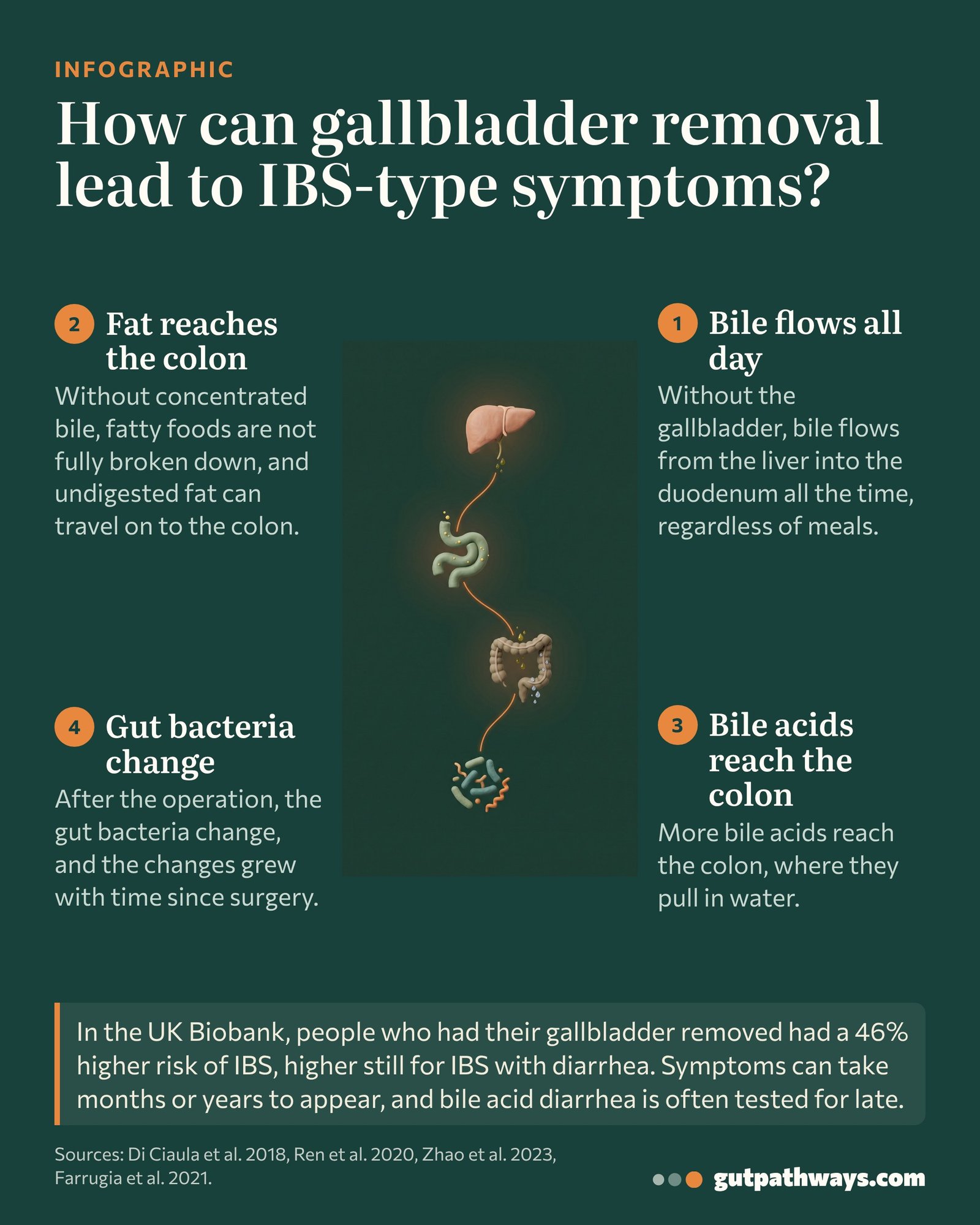
Infographic
Fat reaches the colon
Without concentrated bile, fatty foods are not fully broken down, and undigested fat can travel on to the colon.
Gut bacteria change
After the operation, the gut bacteria change, and the changes grew with time since surgery.
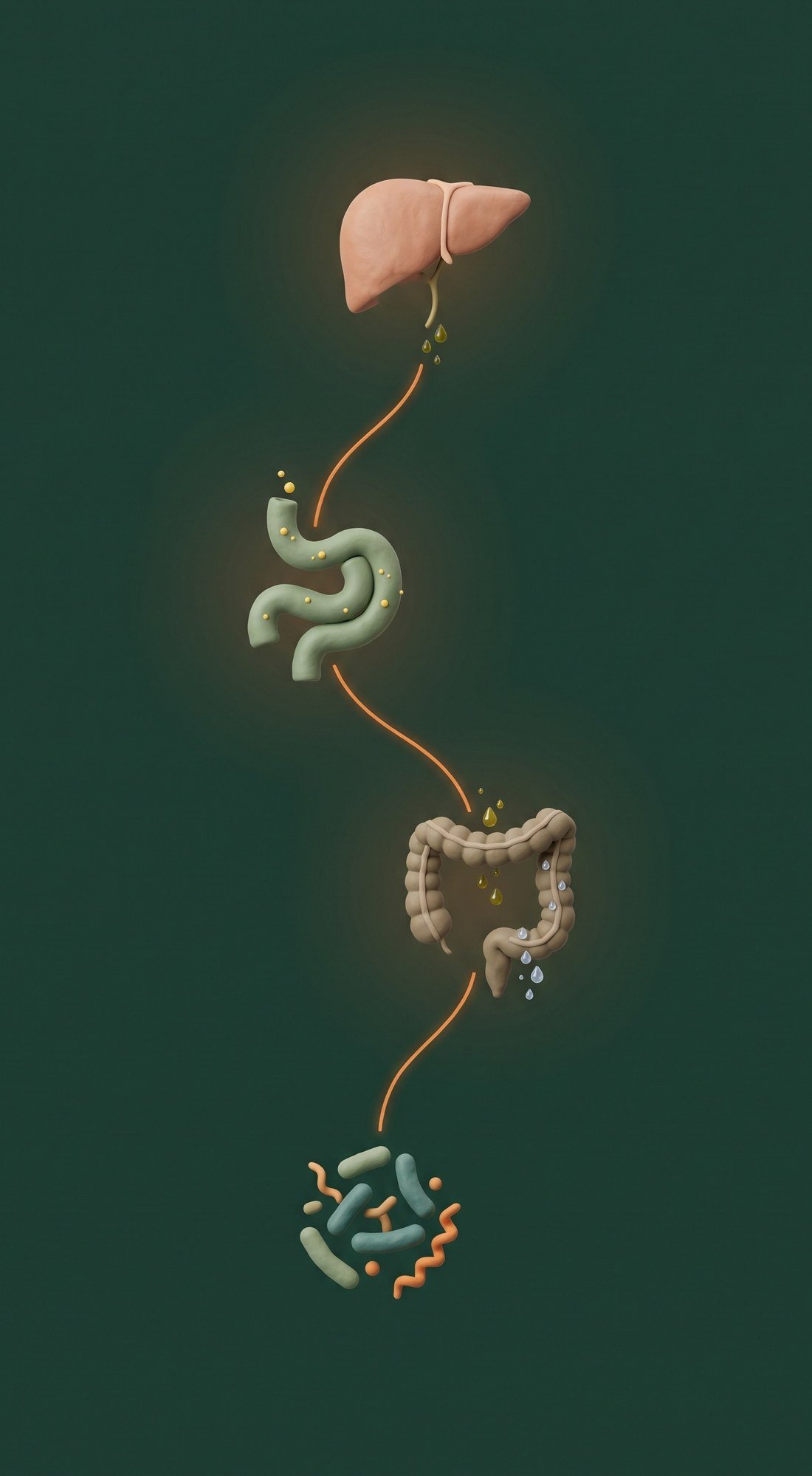
Bile flows all day
Without the gallbladder, bile flows from the liver into the duodenum all the time, regardless of meals.
Bile acids reach the colon
More bile acids reach the colon, where they pull in water.
Bile flows all day
Without the gallbladder, bile flows from the liver into the duodenum all the time, regardless of meals.
Fat reaches the colon
Without concentrated bile, fatty foods are not fully broken down, and undigested fat can travel on to the colon.
Bile acids reach the colon
More bile acids reach the colon, where they pull in water.
Gut bacteria change
After the operation, the gut bacteria change, and the changes grew with time since surgery.
In the UK Biobank, people who had their gallbladder removed had a 46% higher risk of IBS, higher still for IBS with diarrhea. Symptoms can take months or years to appear, and bile acid diarrhea is often tested for late.
Sources: Di Ciaula et al. 2018, Ren et al. 2020, Zhao et al. 2023, Farrugia et al. 2021.
gutpathways.com
 Save this infographicImage 4:5, with sources, from gutpathways.com
Why some people don't get symptoms right away
This delay is why many people, and many practitioners, never link the digestive problems with the operation. The state of the gut bacteria before surgery seems to matter. In the clinics where I work as a scientific collaborator, people without gut symptoms before the operation tend to develop them later, sometimes after years.
A diverse microbiome adapts more easily and buffers the effect of constant bile. However, if the gut bacteria were already out of balance because of diet or antibiotics, symptoms can show up quickly. In line with this, the bacterial changes after the operation grew with the time since surgery.8
Symptoms beyond diarrhea
Diarrhea after gallbladder removal is the most common symptom of postcholecystectomy syndrome, and it has its own name: bile acid diarrhea. Other symptoms may also appear or get worse.
Bile acid diarrhea
Before surgery, most bile reached the end of the small intestine and was recycled back to the liver. Now bile flows all day, the recycling cannot keep up, and more bile reaches the colon. The colon responds by releasing water and mucus, and stools can turn greenish.
Bloating
Changes in the colon can reduce helpful bacteria and favor those that ferment more. The same amount of sugar or fiber may then produce more gas, which gets trapped and causes bloating.
Alternating stools
One day stools are formed, the next they are loose or watery, whether on a low-fat or a low FODMAP diet. Bowel habits follow the changing gut bacteria and the bile concentration in the colon, so flares come when a threshold is crossed.
Indigestion and bile reflux
Bile flowing into the duodenum can rise into the stomach, mostly at night when lying down. In people with upper abdominal pain, bile reflux gastritis was found in 61.8% of those without a gallbladder, against 16.7% of those who never had biliary surgery.9
Why a food diary often fails
Keeping track of what you eat may seem helpful, but after gallbladder removal it often falls short. The constant flow of bile keeps changing the gut environment, so bile concentration, enzyme activity and bacteria are always in flux.
Foods that trigger symptoms today may cause no problem tomorrow. The same food that bothers you now may be fine next month, because the gut keeps adjusting to the unregulated bile flow. As a result, a food diary alone rarely gives clear answers.
The bigger risks of living without a gallbladder
Discomfort, and sometimes strong pain, is not the only consequence. Several studies have found a higher rate of colorectal cancer after gallbladder removal, and changes in bile acids and gut bacteria are thought to explain part of it.7 The bacterial changes after the operation have also been linked with precancerous lesions.8
Gallbladder removal can also affect metabolism. Through the new rhythm of bile acids, it has been linked with insulin resistance, changes in blood fats, fatty liver and the metabolic syndrome.6 A link with inflammatory bowel disease has been suggested but not confirmed.
What I've seen in clinical practice
In practice, a few patterns come up again and again in people with postcholecystectomy syndrome:
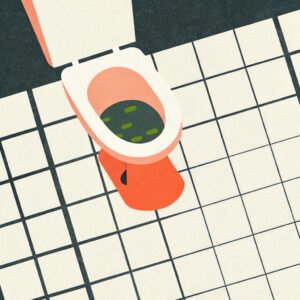
Increased bile acids in stool
Many people have high bile acids in their stool, which can cause chronic diarrhea. Excess bile irritates the lining of the colon and disrupts water absorption, so stools turn loose and watery.
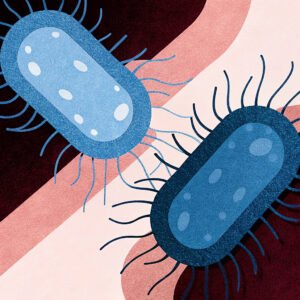
Overgrowth of harmful bacteria
Higher levels of bacteria such as Fusobacterium are a frequent finding, in line with the published data.8 They seem to thrive in a bile-rich gut and can cause inflammation, gas and bloating. People often describe their gut as constantly "inflamed" or "angry".
Loose stools and urgency
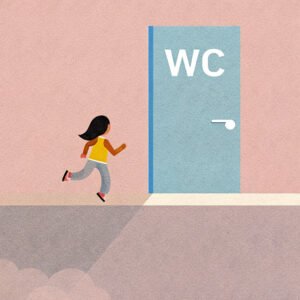
Most people report more loose stools and a sudden urge to go. This unpredictability affects daily life, from running to the bathroom during a meeting to skipping meals before social events.
Reduced pancreatic function
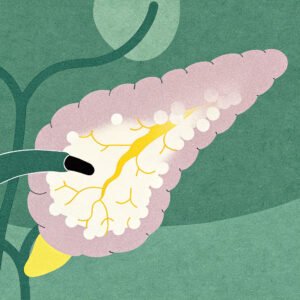
Low pancreatic elastase in stool tests is another common finding. This enzyme marker reflects how well the pancreas digests food, and low levels go along with fullness, greasy stools and trouble digesting even small meals.
Treatments doctors use for diarrhea after gallbladder removal
Bile acid diarrhea can be treated once it is diagnosed.3 A SeHCAT scan, or a blood marker of bile acid loss, can confirm it. Doctors then often use bile acid binders such as cholestyramine, and they look for other causes, such as low pancreatic enzymes or bacterial overgrowth.
Living with IBS after gallbladder removal is not necessary
The operation does not have to define your quality of life. Each case is unique, but some habits and diet changes help most people. As described in IBSyncrasy, most people need at least two to three months to see real results, and some changes are best kept for life, because the physiology of digestion has changed.
Divide the fat across the day
For example, instead of eating a whole portion of salmon at lunch, have half at lunch and half at dinner. Smaller fat loads match the smaller amount of bile available at each meal.
Wait three hours before lying down
Leaving about three hours between the last meal and bed can reduce the amount of bile that rises into the stomach at night.
Add leafy greens to meals
Kale, spinach and cabbage are thought to bind some bile acids, which may soften their effect in the colon.
Drink less water with meals
In practice, less fluid with meals lets stomach acid and the enzymes for starch and protein work at full strength, so the food is better prepared when it meets the bile.
Frequently asked questions
It is linked with it. In the UK Biobank, people without a gallbladder had a 46% higher risk of IBS, and a 71% higher risk of IBS with diarrhea.1
Large, fatty meals are the most common trigger, because less bile is available at each meal. Spreading fat across the day usually helps more than cutting it completely.
Not exactly. Postcholecystectomy syndrome covers all new or ongoing symptoms after the operation, such as bile acid diarrhea, bloating and bile reflux. Many of these look like IBS, and the risk of an IBS diagnosis rises after surgery.1
References
9 studies
- Zhao J, Tian L, Xia B, et al. Cholecystectomy is associated with a higher risk of irritable bowel syndrome in the UK Biobank: a prospective cohort study. Front Pharmacol. 2023.
- Sauter GH, Moussavian AC, Meyer G, et al. Bowel habits and bile acid malabsorption in the months after cholecystectomy. Am J Gastroenterol. 2002.
- Farrugia A, Attard JA, Hanmer S, et al. Rates of Bile Acid Diarrhoea After Cholecystectomy: A Multicentre Audit. World J Surg. 2021.
- Sarashina-Kida H, Negishi H, Nishio J, et al. Gallbladder-derived surfactant protein D regulates gut commensal bacteria for maintaining intestinal homeostasis. Proc Natl Acad Sci U S A. 2017.
- Fallingborg J. Intraluminal pH of the human gastrointestinal tract. Dan Med Bull. 1999.
- Di Ciaula A, Garruti G, Wang DQ, et al. Cholecystectomy and risk of metabolic syndrome. Eur J Intern Med. 2018.
- Ma Y, Qu R, Zhang Y, et al. Progress in the Study of Colorectal Cancer Caused by Altered Gut Microbiota After Cholecystectomy. Front Endocrinol (Lausanne). 2022.
- Ren X, Xu J, Zhang Y, et al. Bacterial Alterations in Post-Cholecystectomy Patients Are Associated With Colorectal Cancer. Front Oncol. 2020.
- Othman AA, Dwedar AA, ElSadek HM, et al. Post-cholecystectomy bile reflux gastritis: Prevalence, risk factors, and clinical characteristics. Chronic Illn. 2023.
Found this useful? Share it with someone who needs it.
Cite this article
Prevedoros, T. (2025, January 21). Why does IBS often start after gallbladder removal?. Gut Pathways. https://gutpathways.com/articles/irritable-bowel-syndrome-after-gallbladder-removal/