Why alkalizing foods never make your gut alkaline
Spinach, lemons and broccoli are not alkaline foods. They are alkalizing foods, which means they leave an alkaline load for the kidneys to handle. The gut, meanwhile, stays mostly acidic, and its bacteria help keep it that way.

What is the difference between an alkaline diet and alkalizing foods?
The gut plays a central role in health, and its acidity is one of the conditions that keeps it working. It is home to a dense community of bacteria, fungi and viruses, the microbiome, which supports health and helps set the acidity of the gut through its own metabolism. Proper pH matters, because changes in it affect digestion, nutrient absorption and the balance of the microbiome.
People often mix up the terms "alkaline diet" and "alkalizing diet". Many of the foods promoted in an alkaline diet are acidic on the plate. Their effect comes later, from what remains after the body has processed them, and that is why the right term for such a plan is an alkalizing diet.
How alkalizing foods work
Nutritionists measure this effect with the potential renal acid load (PRAL). Fruits, fruit juices and vegetables score about minus 3 mEq per 100 g, so they leave a small alkaline load. Fats and oils score about 0, and some hard cheeses reach about plus 24 mEq per 100 g, which means they leave an acid load.1 The kidneys balance the total and change the pH of the urine, not of the blood.6
Using food composition data, potential renal acid load ranged from about +23.6 mEq per 100 g for some hard cheeses to about -3 mEq per 100 g for fruits, fruit juices and vegetables, and it predicted the acidity of the urine.1
Why baking soda is not an alkalizing diet
One practice built on this confusion is drinking baking soda to "alkalize the body". There is little evidence for it, and it can harm the gut. Large or repeated amounts upset the balance of electrolytes and, in case reports, have caused stomach rupture after a big meal.7 Baking soda acts mostly in the gut, while the blood stays where the kidneys and lungs keep it. For more on this, see why stomach acid matters more than an alkaline diet.
How acidic is your gut?
The gut does not have the same acidity along its length. Each part has its own pH, set by the chemistry and the bacteria at work there. The figures below come from people who swallowed a small pH-sensitive capsule that reported its readings on the way through.2, 3
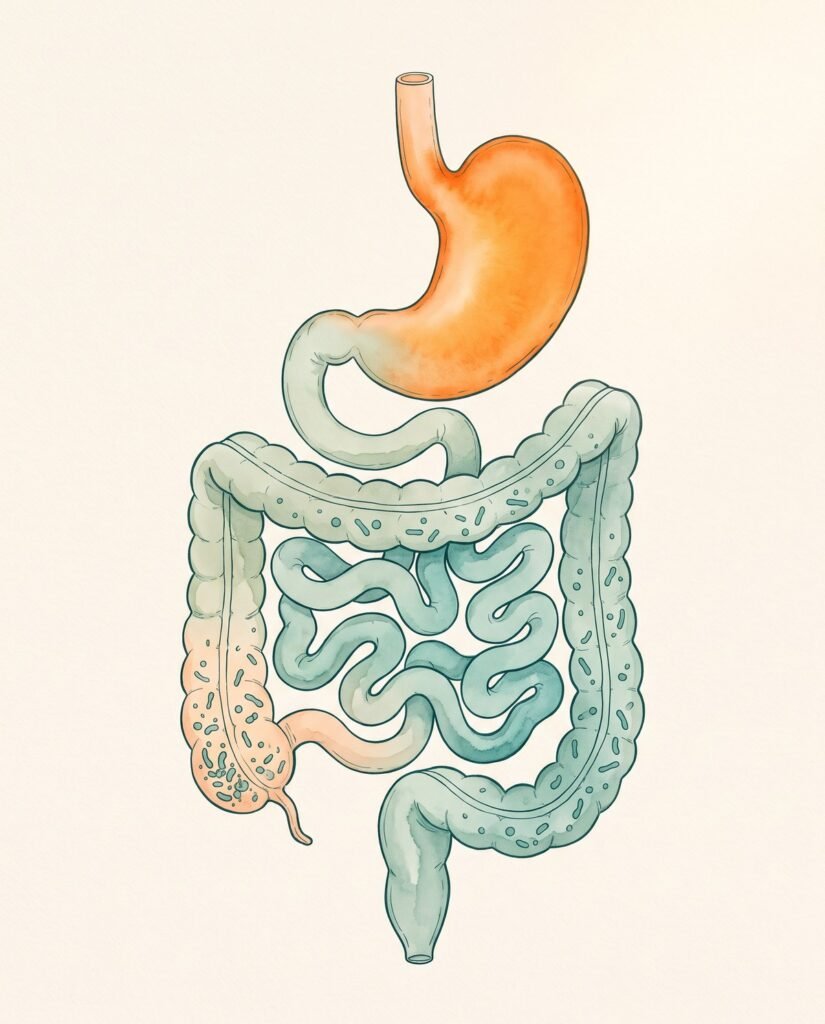
Sources: Evans 1988, Fallingborg 1999, Cummings 1987. Values measured with swallowed pH capsules.
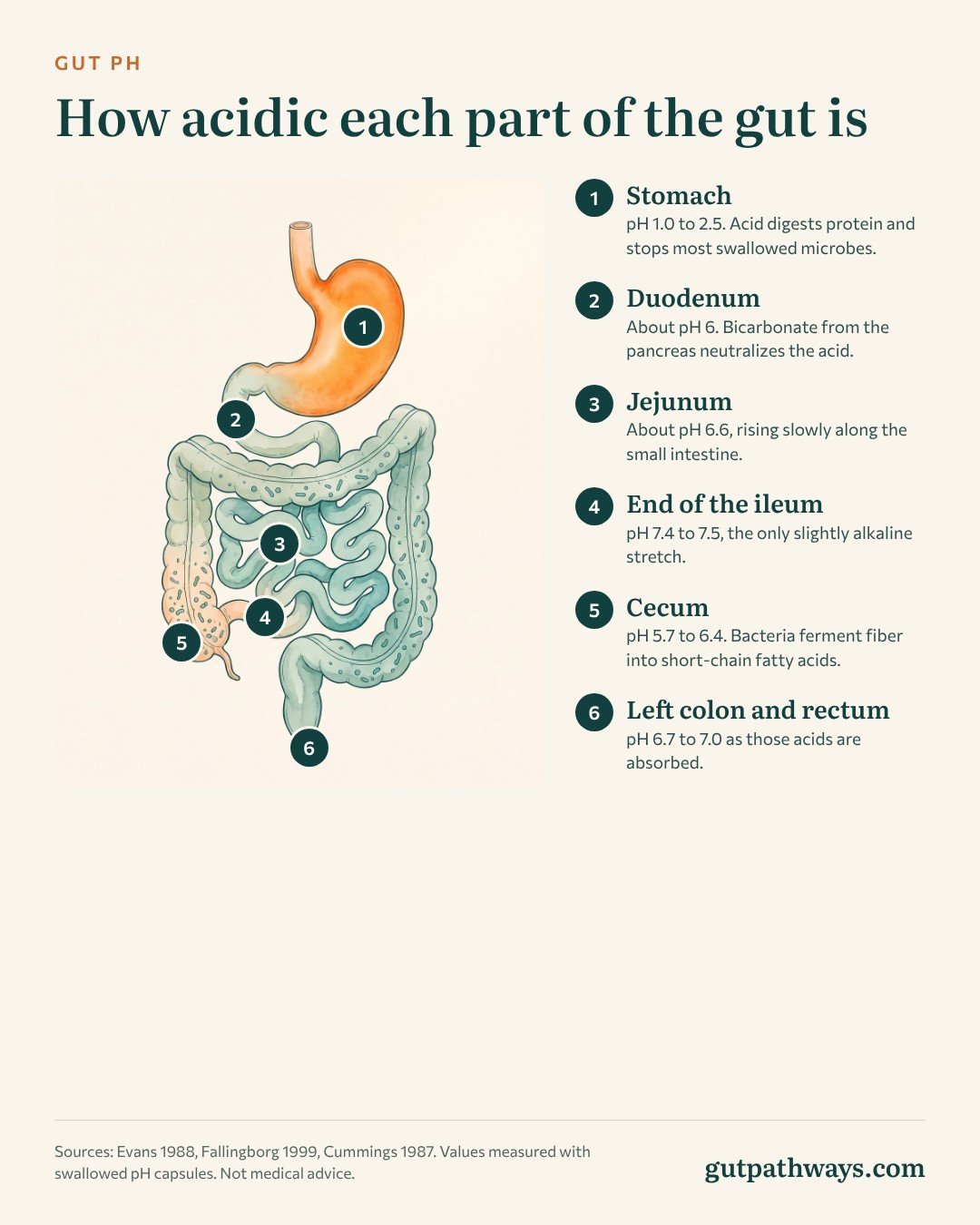 Save this infographicImage 4:5, with sources, from gutpathways.com
The stomach is the most acidic part of the whole digestive tract, and a gastric pH close to 1 is completely normal. The stomach has several ways to protect itself, so acid causes symptoms such as reflux and heartburn only when those defenses fail.
In the duodenum, the first part of the small intestine, the pH is about 6. It may not sound very acidic, but that is because bicarbonate from the pancreas neutralizes the chyme, the mix of partly digested food and digestive juices, as it leaves the stomach.
From there, the pH rises slowly through the jejunum and ileum and reaches about 7.4 to 7.5 at the end of the small intestine.2, 3 In the colon it drops again, to about 5.7 to 6.4 in the cecum, because bacteria make short-chain fatty acids such as acetate, propionate and butyrate. It then rises slowly toward 6.7 to 7.0 by the rectum.2, 3, 8
Why is the digestive system mostly acidic?
Gut bacteria are a large part of the answer. They produce acids as they break down what we eat, and these acids keep the lining and its community in working order. The acidity is part of the gut's basic infrastructure, and the microbiome helps maintain it.
Dietary fiber is the main fuel. Bacteria ferment it into short-chain fatty acids, mainly acetate, propionate and butyrate, which lower the pH of the colon.8, 9 A mildly acidic colon changes who grows there. In a study of 33 colonic bacteria, all eight Bacteroides species and E. coli grew poorly at pH 5.5, while most gram-positive anaerobes still grew well.5
In mixed fecal communities, the effect was even clearer. At pH 5.5, butyrate levels were several times higher than at pH 6.5, so a slightly more acidic colon favored the bacteria that make butyrate.4 Lowering pH in another model reduced Fusobacterium and several Enterobacteriaceae.10
Lactobacilli and bifidobacteria
Two familiar groups take part. Lactobacilli ferment sugars, including lactose, mainly into lactic acid. Bifidobacteria break down complex sugars, such as those in some fibers, into acetate and lactate. They do not make butyrate themselves, but other bacteria feed on their acetate and lactate and turn them into butyrate.11
The same link shows up early in life. Across 14 studies from 1926 to 2017, the stool pH of breastfed infants rose from about 5.0 to 6.5, and the change went together with fewer bifidobacteria and more bacteria linked to dysbiosis.12
Is the gut the only organ that should be acidic?
No. The gut is the clearest example, but other surfaces that face the outside world also rely on pH. The vagina is the best-known case. When lactobacilli dominate, vaginal pH sits at about 3.5, and lactic acid at that pH is a strong microbicide that helps protect against infections.13
The lungs are a more delicate case. The thin fluid that lines the airways is only slightly acidic, close to neutral. In pigs, making this fluid more acidic reduced its ability to kill bacteria, so in the airways more acid is not better.14 Even so, each of these surfaces has a pH range that suits its defenses, and that range may have evolved to keep harmful microbes out while digestion and breathing go on.
What happens when gut pH gets out of balance?
Several gut problems have been linked to a gut that is less acidic than it should be. The core idea is that pH shapes the balance of the microbiome, and that balance helps prevent harmful bacteria and fungi from growing and setting off inflammation.
From an evolutionary point of view, a mostly acidic gut supports the bacteria we need and helps keep infections out. A gut that stays less acidic may suit beneficial bacteria less and favor organisms that cause disease. In a laboratory model, raising the pH increased overall richness but reduced the evenness of the community on the lining.10
Candidiasis
Candida albicans is a yeast that can overgrow in the gut and elsewhere. It does well in neutral to alkaline conditions and can raise the pH around it on its own, from 4 to above 7 in less than 12 hours, which switches it into its invasive hyphal form.15
Small intestinal bacterial overgrowth
SIBO means too many bacteria in the small intestine, with bloating, pain and diarrhea. Lower stomach acid lets more bacteria survive, and acid-suppressing medicines go with about 2.3 times the odds of SIBO.18
Colon cancer
A less acidic colon has been linked to colon cancer. In four South African populations, the groups where colon cancer was rare had a mean stool pH of about 6.1 to 6.3, compared with 6.9 in the group where it was more common.19
Which cancer-linked bacteria favor alkaline conditions?
Some bacteria grow better in neutral to alkaline conditions than in an acidic gut, and several of them have been linked to cancer. They are less suited to acidity and may gain ground when the gut becomes less acidic.
- Porphyromonas gingivalis
A mouth bacterium behind gum disease. In the laboratory it grew only at pH 6.5 to 7.0, not in more acidic conditions. It has been linked to several cancers, including colon and pancreatic cancer.20
- Fusobacterium nucleatum
Another mouth bacterium. It formed biofilms at an alkaline pH of 8.2, a sign of survival mode. It is found in colorectal tumors and travels with them when they spread.21, 22
- Bacteroides fragilis
A common gut bacterium. Some strains make B. fragilis toxin (BFT), which causes diarrhea and, together with certain E. coli strains, has been found in tumor-promoting biofilms of the colon.23, 24
- Clostridioides difficile
Known for severe gut infections after antibiotics. Strains taken from colon cancers drove tumor formation in mice. It may also be favored by a less acidic gut.25
- Klebsiella pneumoniae
Better known for lung and urinary infections. Strains that make the toxin colibactin are discussed as a possible colorectal cancer risk, and it may be favored by a higher gut pH.26
What can make your gut less acidic?
Several everyday factors can push gut pH up, which means it moves toward the higher end of the scale. Since this affects several areas of health, it helps to know which of them apply to you.
Acid-suppressing medicines
Proton pump inhibitors (PPIs) lower the acid made in the stomach. They change the pH only in the stomach and the first part of the small intestine, but they have been linked to clear changes in the gut microbiome. In 1,827 twins, PPI users had fewer typical gut bacteria and more bacteria from the mouth and upper gut in their stool.27
PPIs also reduce pepsin activity, and they go with a higher risk of SIBO.18 In turn, SIBO caused by low stomach acid can lead to gas and bloating, low iron and vitamin B12, and poor fat absorption. More on these in IBS and anemia and symptoms of fat malabsorption.
Gallbladder removal
After cholecystectomy, the liver releases bile straight into the intestine instead of storing it in the gallbladder. Bile is alkaline, so this constant flow may raise the pH of the gut. The next section explains why.
Processed food and low fiber
A diet high in processed and refined foods and low in fruits and vegetables can unbalance the microbiome. With less fiber to ferment, bacteria make fewer short-chain fatty acids, so the colon may become less acidic.8 On the other hand, a diet rich in fruits, vegetables and fiber helps maintain a healthy balance.
Baking soda
Some people drink baking soda to "alkalize" their gut. It is neither safe nor effective for that purpose and can cause harm.7 The blood should stay slightly alkaline, and it does so on its own. Baking soda acts mainly on the gut, not the blood.
How gallbladder removal may change intestinal acidity
The gallbladder stores bile, a digestive juice made by the liver that helps break down fats. When the gallbladder is diseased or damaged, it may have to be removed to prevent complications.
Cholecystectomy can be life-saving, but it has consequences worth knowing. The main one is a constant flow of bile into the intestine. Normally, bile is stored and released when a meal needs it. After surgery, it trickles into the gut all the time, and because bile is naturally alkaline, this may keep the gut less acidic than before.
This constant flow may also affect the microbiome. pH plays an important role in which bacteria thrive, so a less acidic gut may shift the balance between helpful and harmful bacteria. That shift may contribute to digestive problems, nutrient deficiencies and changes in immunity. For the practical side, see IBS after gallbladder removal, SIBO after gallbladder removal and Lydia's case.
How to keep your gut and its microbiome acidic
The basics are simple: slow down, chew well and cut back on processed food. In practice, small daily habits matter more than any single food or supplement.
Eat slowly and chew well
Eating fast means swallowing more air, and the extra gas and the bicarbonate released in response may make the gut less acidic.
Limit junk food
Processed and refined foods are low in fiber and nutrients, may unbalance the microbiome and can lead to constipation, which may raise gut pH.
Do not drink baking soda
It may bring short-term relief, but over time it may cause lasting changes in the gut flora, and large amounts can be dangerous.7

Drink enough water
Good hydration helps prevent constipation and may support a healthy gut pH.

Watch excess coffee
Coffee stimulates cholecystokinin and gallbladder contraction, so more bile reaches the gut, and it can irritate a sensitive digestive system.28
Avoid medicines you do not need
Unnecessary PPIs make the upper small intestine less acidic, because they reduce hydrochloric acid production. Never stop a prescribed medicine without your doctor.
Eat at regular times
Late meals may upset gut pH. Stomach acid secretion follows a daily rhythm with a peak in the evening, so the main problems with late eating are lying down and reflux.29
Avoid very fatty meals
Large amounts of fat trigger the release of bicarbonate and bile, which neutralize acid and may make the gut less acidic.

Keep a healthy weight
People with obesity may produce more bile acids, which may affect gut pH and the microbiome.
In the practice where I work as a scientific collaborator, these changes work best together and over months rather than days. The microbiome needs time and consistency to settle into a new balance, especially after antibiotics or long-term medicines.
Conclusion
The acidity of the gut is a basic part of good health. Its pH changes from one part to the next, and the microbiome helps keep it acidic by producing short-chain fatty acids and lactic acid. Changes outside the normal range can affect digestion, nutrient absorption and the balance of gut bacteria. Gallbladder removal and acid-suppressing medicines may have a large effect on this balance.
So it is worth keeping gut acidity in mind when you make everyday choices. A diet rich in fruits, vegetables and fiber, fewer processed and refined foods and, where appropriate, probiotics can help keep gut pH in a healthy range and support the rest of the body. For a list of foods that feed the right bacteria, see best foods for gut health.
Frequently asked questions
Foods that leave an alkaline load after the body processes them, measured as a negative potential renal acid load. Most vegetables and fruits are alkalizing, even when they are acidic on the plate.1
No. Lemon juice is acidic, with a pH well below 7. In the body, however, lemon is alkalizing, because it leaves an alkaline load that the kidneys excrete in the urine.1
No. The kidneys and lungs keep blood pH between 7.35 and 7.45. Alkalizing foods change the pH of the urine instead.6
Food buffers stomach acid for a short time after a meal, but no food makes the stomach alkaline for long. The stomach returns to a pH of about 1 to 2.5, which is normal and protective.2
Eggs, like meat and cheese, are protein foods that tend to leave an acid load in the body, while fruits and vegetables leave an alkaline one. A balanced plate combines both.1
References
29 studies
- Remer T, Manz F. Potential renal acid load of foods and its influence on urine pH. J Am Diet Assoc. 1995.
- Evans DF, Pye G, Bramley R, Clark AG, Dyson TJ, Hardcastle JD. Measurement of gastrointestinal pH profiles in normal ambulant human subjects. Gut. 1988.
- Fallingborg J. Intraluminal pH of the human gastrointestinal tract. Dan Med Bull. 1999.
- Walker AW, Duncan SH, McWilliam Leitch EC, Child MW, Flint HJ. pH and peptide supply can radically alter bacterial populations and short-chain fatty acid ratios within microbial communities from the human colon. Appl Environ Microbiol. 2005.
- Duncan SH, Louis P, Thomson JM, Flint HJ. The role of pH in determining the species composition of the human colonic microbiota. Environ Microbiol. 2009.
- Schwalfenberg GK. The alkaline diet: is there evidence that an alkaline pH diet benefits health? J Environ Public Health. 2012.
- Han YJ, Roy S, Siau AMPL, Majid A. Binge-eating and sodium bicarbonate: a potent combination for gastric rupture in adults, two case reports and a review of literature. J Eat Disord. 2022.
- Cummings JH, Pomare EW, Branch WJ, Naylor CP, Macfarlane GT. Short chain fatty acids in human large intestine, portal, hepatic and venous blood. Gut. 1987.
- Scott KP, Duncan SH, Flint HJ. Dietary fibre and the gut microbiota. Nutrition Bulletin. 2008.
- Firrman J, Liu L, Mahalak K, et al. The impact of environmental pH on the gut microbiota community structure and short chain fatty acid production. FEMS Microbiol Ecol. 2022.
- Rivière A, Selak M, Lantin D, Leroy F, De Vuyst L. Bifidobacteria and butyrate-producing colon bacteria: importance and strategies for their stimulation in the human gut. Front Microbiol. 2016.
- Henrick BM, Hutton AA, Palumbo MC, et al. Elevated fecal pH indicates a profound change in the breastfed infant gut microbiome due to reduction of Bifidobacterium over the past century. mSphere. 2018.
- O'Hanlon DE, Moench TR, Cone RA. Vaginal pH and microbicidal lactic acid when lactobacilli dominate the microbiota. PLoS One. 2013.
- Pezzulo AA, Tang XX, Hoegger MJ, et al. Reduced airway surface pH impairs bacterial killing in the porcine cystic fibrosis lung. Nature. 2012.
- Vylkova S, Carman AJ, Danhof HA, Collette JR, Zhou H, Lorenz MC. The fungal pathogen Candida albicans autoinduces hyphal morphogenesis by raising extracellular pH. mBio. 2011.
- Nugent SG, Kumar D, Rampton DS, Evans DF. Intestinal luminal pH in inflammatory bowel disease: possible determinants and implications for therapy with aminosalicylates and other drugs. Gut. 2001.
- Fallingborg J, Christensen LA, Jacobsen BA, Rasmussen SN. Very low intraluminal colonic pH in patients with active ulcerative colitis. Dig Dis Sci. 1993.
- Lo WK, Chan WW. Proton pump inhibitor use and the risk of small intestinal bacterial overgrowth: a meta-analysis. Clin Gastroenterol Hepatol. 2013.
- Walker AR, Walker BF, Walker AJ. Faecal pH, dietary fibre intake, and proneness to colon cancer in four South African populations. Br J Cancer. 1986.
- Takahashi N, Schachtele CF. Effect of pH on the growth and proteolytic activity of Porphyromonas gingivalis and Bacteroides intermedius. J Dent Res. 1990.
- Chew J, Zilm PS, Fuss JM, Gully NJ. A proteomic investigation of Fusobacterium nucleatum alkaline-induced biofilms. BMC Microbiol. 2012.
- Bullman S, Pedamallu CS, Sicinska E, et al. Analysis of Fusobacterium persistence and antibiotic response in colorectal cancer. Science. 2017.
- Sears CL. Enterotoxigenic Bacteroides fragilis: a rogue among symbiotes. Clin Microbiol Rev. 2009.
- Dejea CM, Fathi P, Craig JM, et al. Patients with familial adenomatous polyposis harbor colonic biofilms containing tumorigenic bacteria. Science. 2018.
- Drewes JL, Chen J, Markham NO, et al. Human colon cancer-derived Clostridioides difficile strains drive colonic tumorigenesis in mice. Cancer Discov. 2022.
- Strakova N, Korena K, Karpiskova R. Klebsiella pneumoniae producing bacterial toxin colibactin as a risk of colorectal cancer development, a systematic review. Toxicon. 2021.
- Jackson MA, Goodrich JK, Maxan ME, et al. Proton pump inhibitors alter the composition of the gut microbiota. Gut. 2016.
- Douglas BR, Jansen JB, Tham RT, Lamers CB. Coffee stimulation of cholecystokinin release and gallbladder contraction in humans. Am J Clin Nutr. 1990.
- Moore JG, Englert E Jr. Circadian rhythm of gastric acid secretion in man. Nature. 1970.
Found this useful? Share it with someone who needs it.
Cite this article
Prevedoros, T. (2022, December 20). Why alkalizing foods never make your gut alkaline. Gut Pathways. https://gutpathways.com/articles/your-gut-is-acidic-and-should-stay-acidic/