Why stomach acid matters more than an alkaline diet
The blood keeps its own pH within a very narrow range, whatever you eat. The gut is a different place. Stomach acid digests protein, frees vitamin B12 and stops most swallowed bacteria, and the rest of the digestive tract stays slightly acidic for good reasons.

What do acidic and alkaline mean?
Until the internet era, the words acidic and alkaline belonged mostly to chemists. Today they appear in diet books, supplement ads and wellness posts, and most of those references have little scientific basis. Some advice, such as drinking baking soda, can even be harmful, because several parts of the body are meant to be acidic and should stay that way.
The pH scale runs from 0 to 14. Water sits at exactly 7. Anything below 7 is acidic and anything above 7 is alkaline. The closer a value gets to 0, the stronger the acid, as in battery acid, lemon juice or stomach acid. The closer it gets to 14, the stronger the alkali, as in ammonia or oven cleaner.
- Inside and outside organs
- Organs that are continuous with the outside world, such as the mouth, nose, lungs, stomach, intestine and vagina, meet the environment first. They are lined by mucosa and are often acidic on the surface. Organs deep inside the body, bathed in blood, are kept slightly alkaline.
In the body, pH is not one fixed value. It changes from one place to another, and it shifts with circumstances and with a person's health. As a general rule, the parts that sit "inside" the body are slightly alkaline, while the "outside" organs are acidic.
Can food change your blood pH?
No, not in any meaningful way. Blood pH is held between 7.35 and 7.45, and anything below that range (acidosis) or above it (alkalosis) is a medical problem, not a lifestyle choice. The kidneys and the lungs keep it there with a set of buffers that work around the clock.1
For this reason, the molecules that enter through digestion and breathing do not set the pH of the blood. If they did, a whiff of ammonia would be enough to make us sick. Diet does change the pH of the urine, because the urine is where the kidneys send the extra acid or base.6
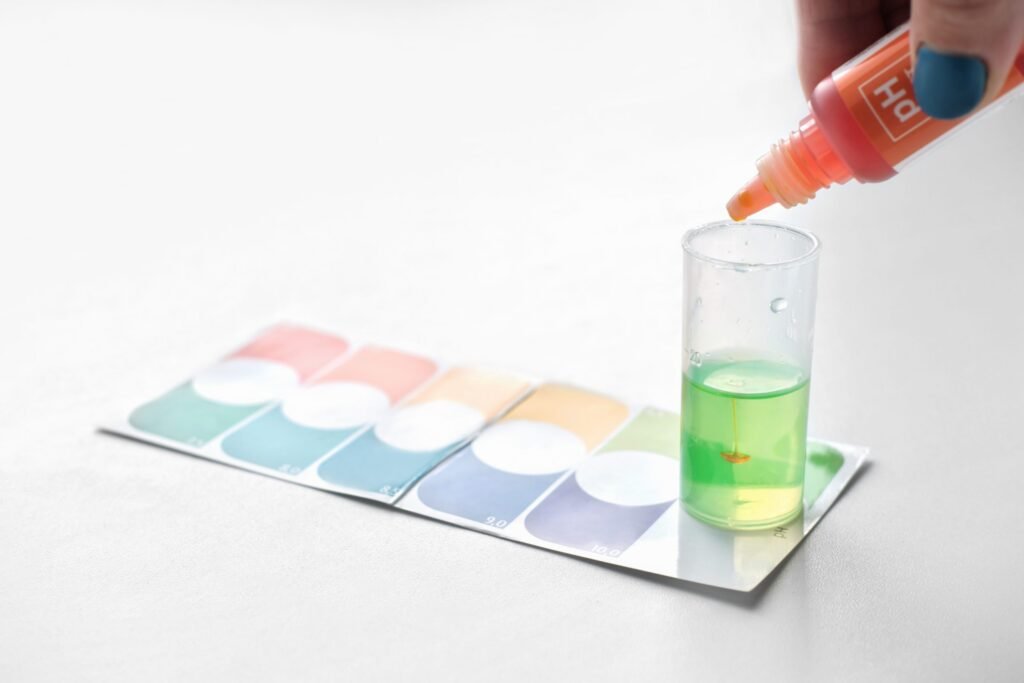
That is also why home urine strips say little about the body as a whole. In a systematic review of diet acid load, alkaline water and cancer, only one study met the inclusion criteria and it found no association. The authors concluded that there is almost no research to support or disprove the alkaline diet and alkaline water.7
What is the pH of stomach acid?
Stomach acid is strongly acidic. In 66 healthy people who swallowed a pH-sensitive capsule, gastric pH ranged from 1.0 to 2.5.8 After a meal the contents become less acidic for a while, because food buffers the acid, and the pH can rise toward 5 before it falls again.
The stomach has its own ways to protect itself from this acid. When those defenses fail, acid reflux and heartburn can follow, which is a different problem from having too much acid. For reflux without the burning, see acid reflux without heartburn.
| Part | Typical pH | What sets it |
|---|---|---|
| Stomach | 1.0 to 2.5 when empty | Hydrochloric acid from the stomach lining |
| Duodenum | About 6 | Bicarbonate from the pancreas neutralizes the acid |
| Small intestine | Rises from about 6.6 to 7.5 | Bicarbonate and absorption along the way |
| Cecum | Falls to about 5.7 to 6.4 | Fermentation of fiber into short-chain fatty acids |
| Left colon and rectum | About 6.7 to 7.0 | Short-chain fatty acids are absorbed along the colon |
Stomach
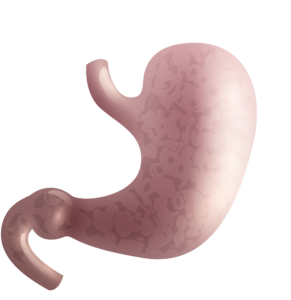
At rest, gastric pH is close to that of a battery. This is the most acidic place in the body by far, and it is meant to be. The acid starts protein digestion and forms the first barrier against microbes that arrive with food and saliva.8, 2
Small intestine
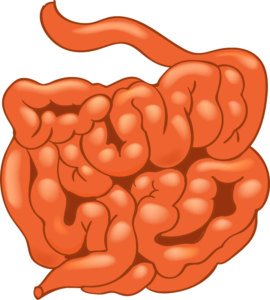
Once contents leave the stomach, the pH jumps to about 6 in the duodenum. It then rises slowly along the small intestine and reaches about 7.4 to 7.5 in the last part, the terminal ileum.8, 9 This is the only stretch of the gut that becomes slightly alkaline, and only when food is moving through it.
Colon
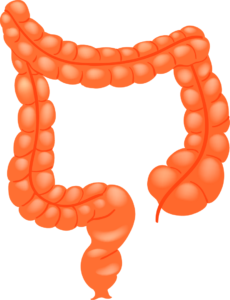
As soon as contents enter the colon, the pH drops again, to about 5.7 to 6.4 in the cecum. It then rises slowly toward neutral in the left colon and rectum.8, 9 The drop in the cecum comes from bacteria fermenting fiber into acids such as acetate, propionate and butyrate.10
Why does the stomach need to stay acidic?
The acid that the stomach reaches serves several jobs at once. The main ones are digesting certain nutrients and defending against swallowed microorganisms. When acid is suppressed for a long time, two problems tend to follow, poor absorption of some nutrients and bacterial overgrowth in the small intestine.
Acid frees vitamin B12 and other nutrients
Many nutrients must be released from food and prepared before the gut can absorb them. If food is not fully digested, part of its vitamin content never becomes available and is lost.
Vitamin B12 depends on the stomach more than most. In food, B12 is bound to proteins, and it has to be cut free by acid and pepsin before it can be absorbed.3 Pepsin is first made as an inactive form, pepsinogen, and it switches on only in an acidic environment. It works below a pH of about 5, best at roughly 2.5 to 3.5, and loses activity as the pH approaches neutral.11
When this step is blocked for months or years, B12 levels keep falling until a deficiency appears. Other protein-bound vitamins and nutrients can be lost the same way, which sets the stage for long-term deficiencies. The link between acid-suppressing medicines and B12 is covered in PPIs and vitamin B12 deficiency.
Acid is a barrier against microbes
All vertebrates produce stomach acid, and its main job is to inactivate the microorganisms we swallow. Most ingested pathogens never reach the intestine because of this gastric barrier.2 Low acid, whether from atrophic gastritis, stomach surgery or acid-blocking medicines, weakens that barrier.
Low stomach acid and SIBO
Small intestinal bacterial overgrowth (SIBO) is now a well-recognized condition, linked to a wide range of digestive and systemic problems. Normally, the upper small intestine hosts fewer than about 10,000 microbes per milliliter, and only near its end, the ileum, does the number reach roughly 100,000 to 1,000,000. Most of these belong to groups such as lactobacilli and streptococci, while the vast majority of gut bacteria live in the large intestine.12
This modest population in the small intestine is useful. It helps protect against invaders, keeps the lining in good shape and activates some micronutrients for absorption. Once the colonies grow past a certain threshold, however, they start to compete for nutrients and interfere with digestion.
Gastric acid is one of the body's main defenses against this overgrowth, alongside gut motility, the ileocecal valve and immune secretions.13 When acid is lower, more bacteria survive the stomach, and more bacteria and more undigested food reach the small intestine. In a meta-analysis of 11 studies with 3,134 people, proton pump inhibitor users had about 2.3 times the odds of SIBO, and about 7.6 times in studies that used the most accurate test, intestinal aspirate culture.4
Does the alkaline diet make sense in digestive terms?
To be clear, the alkaline diet itself is not a bad diet. It asks people to eat plenty of fruits and vegetables, which is a healthy pattern. The problem is the explanation. Most of the fruits and vegetables it promotes are not alkaline at all, since their pH is below 7.
Celery, kale and other greens are rich in nutrients, fiber and protective plant compounds, and they deserve a big place on the plate, especially in their season. In my view, fiber is one of the reasons humans evolved the way they did. These are good foods, but they are good for their fiber and nutrients, not because they are alkaline.
- Grapes
- Pomegranates
- Grapefruit
- Tomatoes
- Lemons
All of the foods above are clearly acidic, and all of them are healthy. After the body processes them, these foods do leave behind an alkaline load, which the kidneys excrete in the urine.6 That is a separate idea, explained in why alkalizing foods never make your gut alkaline.
What happens to food in the stomach
The body has no way to know whether a food was alkaline on the plate. Everything we eat goes through several steps that change its composition before anything is absorbed. Even a food that tests alkaline after cooking turns acidic once it mixes with gastric juice at a pH close to 1 to 2.5.8 The contents that pass into the intestine are therefore always acidic at first.
Why drinking baking soda is a bad idea
Baking soda is a strong alkali, and the stomach's job is to neutralize it. When it meets gastric acid, the reaction releases carbon dioxide gas. Case reports describe stomach rupture after large amounts of baking soda, especially after a big meal.14
Even the small amount that may pass into the body does not change blood pH in a lasting way, because the kidneys decide whether the body needs to get rid of base. So baking soda leaves the inside of the body unchanged. Instead, it acts on the organs that face the outside world, mainly the stomach and intestine. Repeated exposure of the gut to strong alkalis may alter the surface of its lining and, over time, favor disease.
How an alkaline colon may favor disease
Some diseases of the colon, such as colorectal cancer, have been linked to a higher, less acidic pH. Inflammatory bowel disease is a more mixed story, since in some patients with active ulcerative colitis the colon is very acidic.15 Two mechanisms are often discussed for cancer.
Stool pH and toxins in the colon
A healthy stool is slightly acidic. This is normal, because stool forms largely through bacterial activity, and most gut bacteria produce acids such as butyrate, propionate and acetate from plant fiber.10 High fiber intake goes with better bowel health, and in South African populations, mean stool pH was about 6.1 in groups where colon cancer was rare and about 6.9 in the group where it was much more common.16
An alkaline colon may favor cancer in another way too. Colon cancer is linked to toxic substances in the large intestine, including some pesticides, packaging chemicals and bile acid derivatives. Before these substances leave the body, the liver attaches a tag molecule, glucuronide, which makes them inactive and ready for excretion.
However, gut bacteria make an enzyme, beta-glucuronidase, that can cut this tag and set the toxin free again. A modest amount of this activity is useful, because it lets the body take back some nutrients and hormones. In people with colon cancer, fecal beta-glucuronidase activity was 1.7 times higher than in healthy controls.17 The enzyme's activity may also depend on pH, so a more alkaline colon could mean more toxins at work.
Oral bacteria that slip past the stomach
Colorectal cancer has been linked to several bacteria, such as Fusobacterium and Porphyromonas, which are found in tumor tissue. Fusobacterium can even travel with the tumor when it spreads, and the same strains were found in liver metastases.18 These are typical mouth bacteria, the kind found in gum disease, and the only way to reach the colon in large numbers is through the stomach.
Under normal conditions they rarely make it, because stomach acid kills them on the way. Acid suppression changes the picture. In 1,827 twins, people taking proton pump inhibitors had more oral and upper gut bacteria in their stool, a change the authors attributed to the removal of the acid barrier.5, 19 A stomach that someone keeps alkalizing on purpose may let through the same traffic.
In the practice where I work as a scientific collaborator, low acid often turns up behind symptoms that started after long-term acid suppression.
Key points
Frequently asked questions
You cannot, and you do not need to. Blood pH is already slightly alkaline and held in a narrow range. Trying to force it with baking soda can harm the stomach and, in rare cases, cause dangerous complications.14
No. Lemon juice is acidic, and it does not change blood pH. Like other fruits, lemon leaves an alkaline load that shows up in the urine, which is a different thing.6
In healthy people the empty stomach has a pH of about 1.0 to 2.5. After a meal it rises for a while, because food buffers the acid.8
Not as a habit. It reacts with stomach acid and releases gas, and case reports describe stomach rupture after large doses, especially with a full stomach.14
References
19 studies
- Schwalfenberg GK. The alkaline diet: is there evidence that an alkaline pH diet benefits health? J Environ Public Health. 2012.
- Martinsen TC, Bergh K, Waldum HL. Gastric juice: a barrier against infectious diseases. Basic Clin Pharmacol Toxicol. 2005.
- Andrès E, Loukili NH, Noel E, et al. Vitamin B12 (cobalamin) deficiency in elderly patients. CMAJ. 2004.
- Lo WK, Chan WW. Proton pump inhibitor use and the risk of small intestinal bacterial overgrowth: a meta-analysis. Clin Gastroenterol Hepatol. 2013.
- Jackson MA, Goodrich JK, Maxan ME, et al. Proton pump inhibitors alter the composition of the gut microbiota. Gut. 2016.
- Remer T, Manz F. Potential renal acid load of foods and its influence on urine pH. J Am Diet Assoc. 1995.
- Fenton TR, Huang T. Systematic review of the association between dietary acid load, alkaline water and cancer. BMJ Open. 2016.
- Evans DF, Pye G, Bramley R, Clark AG, Dyson TJ, Hardcastle JD. Measurement of gastrointestinal pH profiles in normal ambulant human subjects. Gut. 1988.
- Fallingborg J. Intraluminal pH of the human gastrointestinal tract. Dan Med Bull. 1999.
- Cummings JH, Pomare EW, Branch WJ, Naylor CP, Macfarlane GT. Short chain fatty acids in human large intestine, portal, hepatic and venous blood. Gut. 1987.
- Piper DW, Fenton BH. pH stability and activity curves of pepsin with special reference to their clinical importance. Gut. 1965.
- Sender R, Fuchs S, Milo R. Revised estimates for the number of human and bacteria cells in the body. PLoS Biol. 2016.
- Bures J, Cyrany J, Kohoutova D, et al. Small intestinal bacterial overgrowth syndrome. World J Gastroenterol. 2010.
- Han YJ, Roy S, Siau AMPL, Majid A. Binge-eating and sodium bicarbonate: a potent combination for gastric rupture in adults, two case reports and a review of literature. J Eat Disord. 2022.
- Fallingborg J, Christensen LA, Jacobsen BA, Rasmussen SN. Very low intraluminal colonic pH in patients with active ulcerative colitis. Dig Dis Sci. 1993.
- Walker AR, Walker BF, Walker AJ. Faecal pH, dietary fibre intake, and proneness to colon cancer in four South African populations. Br J Cancer. 1986.
- Kim DH, Jin YH. Intestinal bacterial beta-glucuronidase activity of patients with colon cancer. Arch Pharm Res. 2001.
- Bullman S, Pedamallu CS, Sicinska E, et al. Analysis of Fusobacterium persistence and antibiotic response in colorectal cancer. Science. 2017.
- Imhann F, Bonder MJ, Vich Vila A, et al. Proton pump inhibitors affect the gut microbiome. Gut. 2016.
Found this useful? Share it with someone who needs it.
Cite this article
Prevedoros, T. (2022, September 20). Why stomach acid matters more than an alkaline diet. Gut Pathways. https://gutpathways.com/articles/stop-the-alkaline-madness/