Low FODMAP is no long-term fix for post-infectious IBS
A post-infectious IBS diet should start from its main feature, a gut that feels too much. Low FODMAP can help for a while, but it is not where the road ends.
Why one diet does not fit every IBS
Each subtype of IBS, including post-infectious IBS (PI-IBS), has its own microbial signature and its own structural and biochemical changes. These features influence both the symptoms and the treatment options.1 That is why a generic diet plan rarely covers the needs of one person. Quite often, the symptoms come back as soon as the excluded foods return.
Many people with IBS have already tried two or three general diets that they read about online or that were suggested to them. For many of them, those diets did not work for long. A personal plan that takes the IBS subtype into account is a better starting point.
IBS subtypes based on the first trigger
The usual way to subtype IBS follows the main bowel habit: IBS with diarrhea (IBS-D), IBS with constipation (IBS-C) and mixed IBS (IBS-M).2 Subtyping by the first trigger is useful as well. Examples are IBS after gallbladder removal (post-cholecystectomy IBS) and IBS after long-term use of proton pump inhibitors (PPIs). When the first trigger is known, its typical biochemical and microbial changes can guide the diet. There are at least 30 different subtypes of IBS.

Four examples
Post-cholecystectomy IBS
Trigger: gallbladder removal. Typical change: the intestine becomes more alkaline.
After the gallbladder is removed, bile flows into the gut in a different way, and bile acid metabolism changes.3 A shift towards a more alkaline intestine is thought to follow. This change in pH affects the ecology of the gut microbes and may contribute to IBS symptoms. See also IBS after gallbladder removal.
PPI IBS
Trigger: long-term or excessive use of proton pump inhibitors. Typical change: low stomach acid (hypochlorhydria).
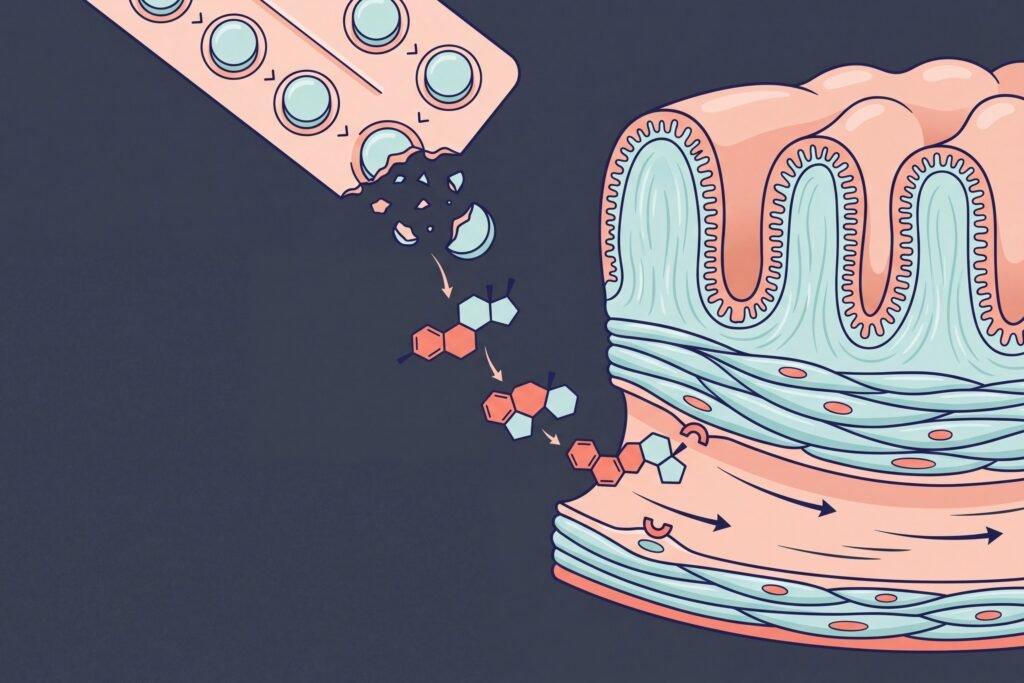
PPIs lower the production of stomach acid. Less acid can impair digestion and absorption, and PPIs change the composition of the gut microbiome.4
Proteus-predominant IBS
Trigger: colonization of the gut by Proteus. Typical change: swarming.
Proteus bacteria can move as a swarm across surfaces. In laboratory work, Proteus mirabilis needed excess glutamine to start swarming.5 This disruption is thought to set off several biochemical changes that, in susceptible people, lead to PI-IBS. See also Proteus mirabilis in stool.
Post-infectious IBS
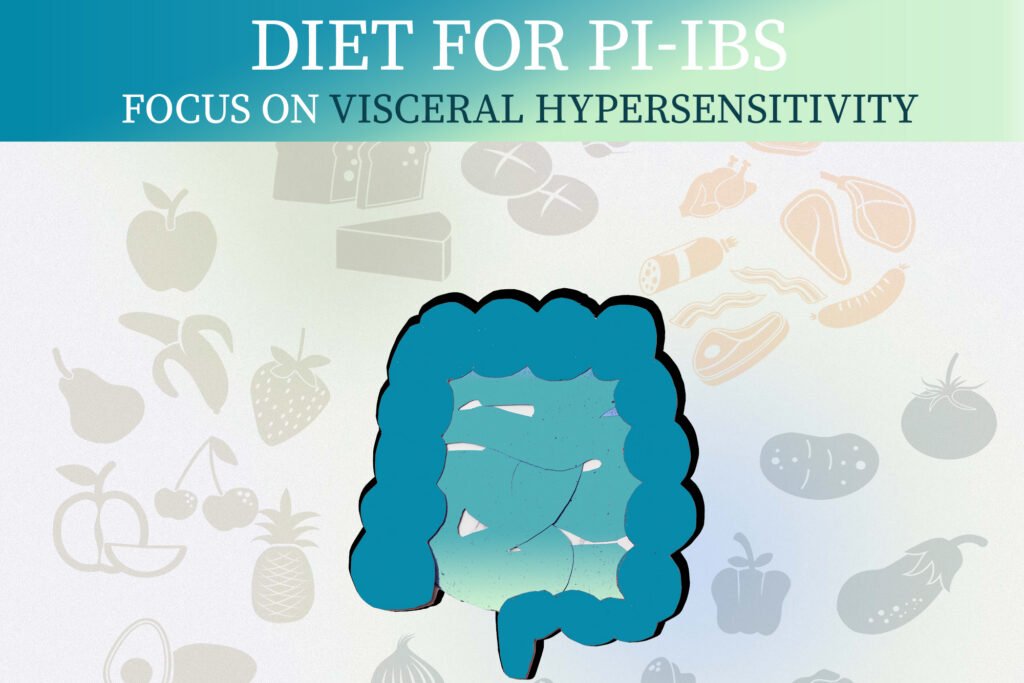
Trigger: gastroenteritis or food poisoning. Typical change: enhanced visceral hypersensitivity.
PI-IBS can follow an infection with bacteria such as Salmonella or Campylobacter, or with viruses such as norovirus. The gut then becomes more sensitive to ordinary stimuli, which leads to abdominal pain and discomfort.6 Changes in motility and sensation and an imbalance of the gut microbiome are thought to be involved.
A diet aimed at post-infectious IBS
To design a diet for PI-IBS, it helps to understand its mechanisms: the enteric nervous system, the molecular changes after the infection and, above all, visceral hypersensitivity. Even so, the diet still has to be built for each person, because the risk factors differ. People with the same IBS subtype sometimes respond differently to the same diet. Knowing the first trigger, however, makes the plan more precise.
In PI-IBS, several things can trigger the heightened pain sensitivity: gas, digestive residue and substances that speed up motility. A low-residue diet for a few weeks (often 3 to 5) is sometimes used to calm the gut, especially together with other behavioral and lifestyle measures. It has not been tested in trials for PI-IBS, so it is best followed with a doctor or a dietitian.
Calming a sensitive gut through food choices
The heightened pain sensitivity of PI-IBS is linked to an overactive enteric nervous system and to pain receptors in the gut that respond too easily. Foods that stimulate these receptors or produce gas can make the sensitivity worse. For that reason, the food choices focus on keeping these triggers low.
- beans
- cabbage
- carbonated drinks
These are common examples of gas-producing foods. Avoiding them can ease discomfort. This is symptom relief and not healing. It buys time until the treatment of the cause starts to work.
Low-residue diet for PI-IBS
A low-residue diet (LRD) limits fibrous and indigestible parts of food, so less undigested material reaches the colon. With less residue, there is less pressure and stretch inside the large intestine. In theory, this can ease the visceral hypersensitivity of PI-IBS.
Usually included
- refined grains
- lean meats
- well-cooked vegetables without skin or seeds
Usually limited
- high-fiber foods
- raw vegetables
- fruits with skin

Low FODMAP diet: common, but meant to be temporary
The low FODMAP diet is often seen as the answer for IBS. It can reduce symptoms in the short term.7 However, it is not meant as a long-term diet. In one trial, people with IBS improved on a low FODMAP, a gluten-free and a balanced diet, and most of them preferred the balanced diet.8 There are other reasons too, from its effect on the gut microbiome to its risks for people prone to eating disorders.9
Limits and risks of a long low FODMAP diet
Fewer bifidobacteria
A low FODMAP diet limits fermentable carbohydrates, and this lowers the number of bifidobacteria, a group linked with a healthy gut.10, 11
Relief without healing
Part of the relief may come from lower histamine levels, which fell in one trial.12 The cause of the symptoms remains.
Less room for some strains
Some helpful strains may not grow well when fermentable fibers are scarce. This point has been proposed but is not well studied.
Fear of FODMAPs
Some people become afraid to bring back important FODMAP foods. A narrow diet can then lead to missing nutrients.9
Changes in diversity
Studies of microbiome diversity on a low FODMAP diet give mixed results. The fall in bifidobacteria is the most consistent finding.13
Eating disorders
A very restrictive diet can make an existing eating disorder worse.9
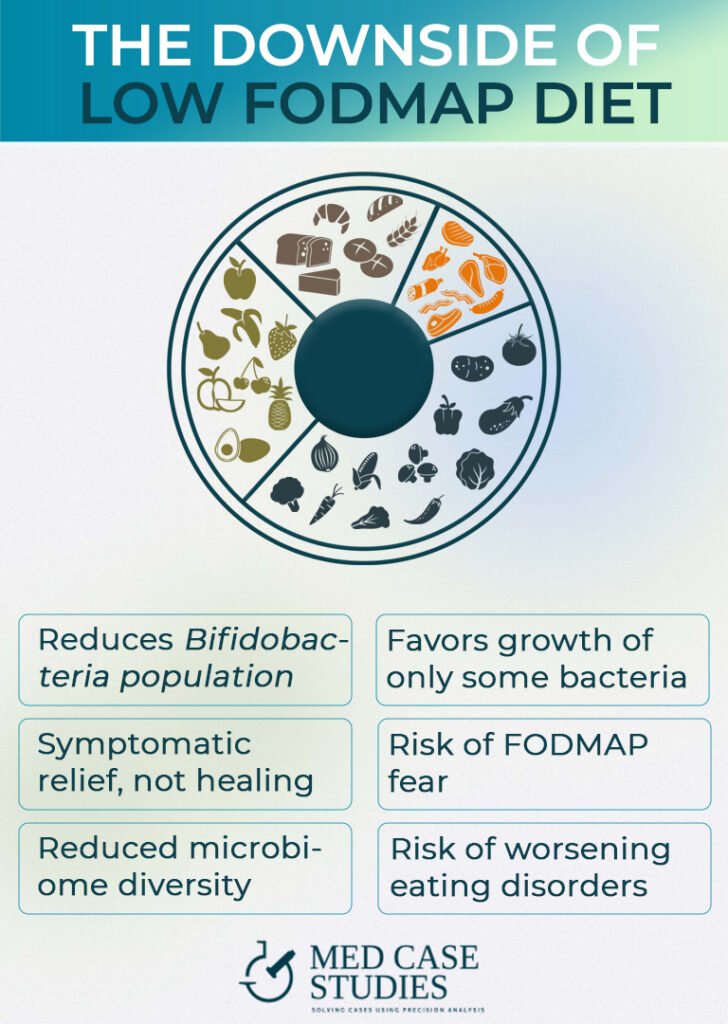
Bifidobacteria
A low FODMAP diet reduces the Bifidobacteria population.
Bacterial growth
It favors the growth of only some bacteria.
Relief, not healing
It gives symptomatic relief, not healing.
FODMAP fear
There is a risk of FODMAP fear.
Microbiome diversity
It reduces microbiome diversity.
Eating disorders
There is a risk of worsening eating disorders.
Frequently asked questions
Yes. IBS can be grouped by bowel habit: constipation (IBS-C), diarrhea (IBS-D) and mixed (IBS-M).2 It can also be grouped by its first trigger, for example post-infectious IBS (PI-IBS), PPI IBS, Proteus-predominant IBS and IBS after gallbladder removal.
There is no single diet for post-infectious IBS, because each subtype has its own biochemical, microbial and structural features. It is best to work with a doctor or a dietitian on a plan that fits your own needs and your IBS subtype. A short low-residue or low FODMAP phase may be part of it, followed by a broader diet.
References
13 studies
- Berumen A, Edwinson AL, Grover M. Post-infection irritable bowel syndrome. Gastroenterol Clin North Am. 2021.
- Mearin F, Lacy BE, Chang L, et al. Bowel disorders. Gastroenterology. 2016.
- Farrugia A, Arasaradnam R. Bile acid diarrhoea: pathophysiology, diagnosis and management. Frontline Gastroenterol. 2021.
- Imhann F, Bonder MJ, Vich Vila A, et al. Proton pump inhibitors affect the gut microbiome. Gut. 2016.
- Armbruster CE, Hodges SA, Mobley HL. Initiation of swarming motility by Proteus mirabilis occurs in response to specific cues present in urine and requires excess L-glutamine. J Bacteriol. 2013.
- Spiller R, Lam C. An update on post-infectious irritable bowel syndrome: role of genetics, immune activation, serotonin and altered microbiome. J Neurogastroenterol Motil. 2012.
- Halmos EP, Power VA, Shepherd SJ, et al. A diet low in FODMAPs reduces symptoms of irritable bowel syndrome as compared with a typical Australian diet. Gastroenterology. 2014.
- Paduano D, Cingolani A, Tanda E, et al. Effect of three diets (low-FODMAP, gluten-free and balanced) on irritable bowel syndrome symptoms and health-related quality of life. Nutrients. 2019.
- Whelan K, Ford AC, Burton-Murray H, et al. Dietary management of irritable bowel syndrome: considerations, challenges, and solutions. Lancet Gastroenterol Hepatol. 2024.
- Staudacher HM, Lomer MCE, Farquharson FM, et al. A diet low in FODMAPs reduces symptoms in patients with irritable bowel syndrome and a probiotic restores Bifidobacterium species: a randomized controlled trial. Gastroenterology. 2017.
- Wilson B, Rossi M, Kanno T, et al. β-Galactooligosaccharide in conjunction with low FODMAP diet improves irritable bowel syndrome symptoms but reduces fecal bifidobacteria. Am J Gastroenterol. 2020.
- McIntosh K, Reed DE, Schneider T, et al. FODMAPs alter symptoms and the metabolome of patients with IBS: a randomised controlled trial. Gut. 2017.
- Vandeputte D, Joossens M. Effects of low and high FODMAP diets on human gastrointestinal microbiota composition in adults with intestinal diseases: a systematic review. Microorganisms. 2020.
Found this useful? Share it with someone who needs it.
Cite this article
Prevedoros, T. (2023, April 27). Low FODMAP is no long-term fix for post-infectious IBS. Gut Pathways. https://gutpathways.com/articles/post-infectious-ibs-diet/