A stomach bug revealed an older imbalance in the gut
This is case 1 in the book IBSyncrasy
Katie had never had gut problems until one evening yogurt was followed by six days of diarrhea. Her post-infectious IBS recovery story shows how an infection can bring an older imbalance in the gut to the surface, and how her care plan was built in stages.
 Katie's casecase study
1DemographicsStop 1 of 8
Who Katie is
Katie is a woman who had no gut symptoms until the age of 39. She ate without restrictions and never had a problem. About two years later, she came to the clinic where I work as a scientific collaborator, after a year of tests and treatments that had not helped.
- Woman
- Symptoms from age 39
- Frequent trips to tropical countries
- Antibiotics for tonsillitis
- Clear colonoscopy
Statistics from the practice for similar cases
- Number of cases
- 188
- Age range
- 25 to 60
- Success rate
- >80%
- Treatment duration
- 2 to 3 months
- Most common symptom
- Bloating
- Most common trigger
- Poor eating habits
Average improvement score
Figures from the practice's own records of cases like this one, not from a published study.
Her main complaints were smelly gas, pain in the upper abdomen, episodes of diarrhea and burping that lasted a long time. Her full case is described in the book IBSyncrasy.
2IntroductionStop 2 of 8
What post-infectious IBS is
Post-infectious IBS (PI-IBS) is IBS that begins after a gut infection, most often gastroenteritis. It is common. In a large review of 45 studies, 10.1% of people had IBS 12 months after an infection, and the risk was 4.2 times higher than in people without a recent infection.1 The infecting agent matters too: 41.9% of people with a parasitic or protozoal infection developed IBS, against 13.8% after a bacterial one.1 Viral infections seem to have mostly short-term effects.2 The differences are covered in post-infectious IBS, viral against bacterial.
Not everyone who gets an infection develops IBS. Risk was higher in women (odds ratio 2.2), in people who took antibiotics (1.7) and in people with anxiety (2).1 In practice, many people with PI-IBS seem to have been close to developing IBS for years, because of diet, environment, stress, earlier infections or genetics. The strong immune response against the infection then changes the gut lining and its bacteria, and symptoms come to the surface.
The triggers people most often report are these:
The most common trigger. When the gut is already vulnerable, a strong infection can change both the mucus layer and the bacterial community.
Infections outside the gut, such as HIV, cytomegalovirus or Epstein-Barr virus, can also affect the immune system and its tolerance of gut bacteria.
IBS that starts during or after antibiotics is common, and antibiotics during an infection raise the risk of PI-IBS.1 In practice, the damage is often reversible, depending on how long and which antibiotics were used.
Many people say their IBS began after a traumatic event or a long period of intense stress. The gut's nerve control, including the vagus nerve, adapts to the stress and can leave the bowel more sensitive.
Radiotherapy for bowel or bladder cancer can inflame the colon, and some people do not regain full bowel function.
Long-term acid suppression changes the gut lining and its bacteria, and IBS after PPI use is not rare. A related case is George's PPI case.
Abdominal operations can leave scar tissue and change local gut function.
People sometimes report IBS after dental work. In practice, this type usually settles on its own.
Other triggers people mention include air travel, stays in very humid places and moving house. Most of them lead back to one of the common patterns of IBS.
3MeetingStop 3 of 8
Meeting Katie
About two years before we met, Katie came home from an evening scuba diving lesson. She was not as hungry as usual, so she ate only a yogurt. That was the last time she remembered being free of pain.
How it began
A few hours after the yogurt, she felt a strange, sharp pressure around her belly button, and minutes later she had watery, loose stools. This lasted six days. Over the next year, she saw three doctors, tried several treatments and had many tests, all of them negative. Her mother had died of colorectal cancer, so Katie could not stop thinking of cancer, even though her colonoscopy was clear. Only loperamide, an anti-diarrhea medicine, eased her symptoms, and she knew it only covered them up.
Looking back, four factors seemed to have built on each other.
Antibiotics
Repeated antibiotics for tonsillitis disturbed her gut bacteria early in life.

Frequent travel
Many trips to tropical countries were a chance to pick up a parasite.
The yogurt
A yogurt that had probably gone off set off six days of diarrhea and, in our assessment, fungal overgrowth.
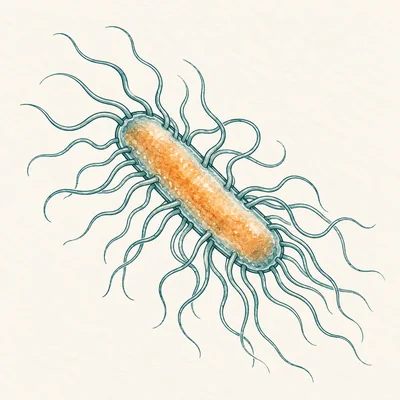
Parasite and Proteus
A parasite and Proteus mirabilis kept the diarrhea going long after the first episode.
4DiagnosticsStop 4 of 8
Diagnostics: beyond the first infection
The main symptoms to explore were smelly gas, upper abdominal pain, diarrhea and long-lasting burping. All of them pointed to one central problem, an imbalance of her gut bacteria (dysbiosis). The yogurt may have triggered her symptoms, but in our assessment it took advantage of an older imbalance, probably from repeated antibiotics. Before anything else, I needed to rule out other, more serious causes, such as adult-onset celiac disease and a lack of the gut's main antibody, secretory IgA.
Gas from parasites or putrefying bacteria smells because sulfur and nitrogen compounds are turned into hydrogen sulfide and ammonia.
Loose or watery stools that come and go usually follow the shifting state of the gut bacteria.
Burping usually starts in the stomach, but in some people with IBS, gas from the intestine adds to it, especially when SIBO is present.
This is usually a false signal. The bowel is empty, but inflammation from bacteria such as Proteus makes it feel full.
Other details completed her picture:
- Yogurt as the trigger
- Trips to tropical countries
- Upper abdominal pain
- No findings on endoscopy
- Antibiotics for tonsillitis
- Pain on the left side
5ResultsStop 5 of 8
Results: what the stool tests found
Katie's case is a good example of IBS in which routine tests are negative but detailed stool testing finds a great deal. In fact, the only normal result was her celiac blood test. Heavy dysbiosis, inflammation, allergic mediators, poor absorption and a parasite had all played a part.
Of the 9 results we reviewed, four guided the care plan.

High histamine
Histamine can cause allergy-like reactions in the gut, with watery stools and other common IBS symptoms.

Dientamoeba fragilis
Dientamoeba fragilis is a gut parasite. In Katie's case, it came with signs of eosinophil activation, white blood cells that drive allergic-type reactions. Its role in IBS is debated, and in one small study it was found in 22% of people with IBS.3
Proteus mirabilis
This bacterium produces hydrogen sulfide, which gives gas its smell, and it can make intermittent diarrhea and other gut symptoms worse. More on this finding is in Proteus mirabilis in stool.
Low levels of beneficial bacteria
With few beneficial bacteria (what I call probiotic sterility), starch, sugars and fiber ferment abnormally, and gas and flatulence are the main symptoms.
6Care planStop 6 of 8
Care plan: one target at a time
Because Katie had so many findings, her options at any one time were limited. Her plan therefore ran in stages, each aimed at a different part of the problem, alongside a moderate low FODMAP diet. The first stage targeted the parasite and protected the lining of the gut and stomach. Once the parasite was reduced, the second stage targeted Proteus. Since a specific treatment was already used for D. fragilis, a plant-based antimicrobial blend was chosen for Proteus. The last stage used anti-inflammatory, antihistamine and gut-nourishing agents.
Every case is different, so Katie's plan describes her care and is not a plan for anyone else. There is no single standard treatment for PI-IBS, and treatment is usually matched to the main bowel symptom, most often diarrhea.2 Diet options are discussed in the post-infectious IBS diet.
7Follow-upStop 7 of 8
Follow-up: an empty symptom diary
Two months later, Katie came to my office clearly pleased with her progress. She looked better, and she had regained the weight she had lost. Her symptom diary was empty: her stools were formed, gas was rare, she no longer burped after meals and her mood was very good. I asked her to repeat the last two months of her plan and then recheck several inflammation markers and a stool test for parasites.
8ConclusionStop 8 of 8
Conclusion: infection and IBS
Gut infections can cause strong and long-lasting reactions, and Katie's story is only one example. These reactions protect the body by stopping microbes and toxins from getting through. They have a large effect on how the gut works, but a healthy bacterial community can absorb that effect and restore normal digestion.
When the gut is already vulnerable
In a gut with an imbalanced bacterial community and weaker immune barriers, the gut may not recover on its own, and PI-IBS can last. Katie's case was mainly diarrhea, but many post-infectious cases come with constipation.
Whatever form it takes, it helps to identify the overgrowth and the changes that followed it, and in Katie's case stool testing found what blood tests had not. Post-infectious IBS often has a better outlook than IBS in general, although it can take years to resolve.2 It helps not to give up after the first flare. In the end, it was not the infection alone that caused Katie's IBS, but a bacterial community and gut defenses that could not recover from it. Recovery times are discussed in post-infectious IBS recovery time.
What Katie's case shows
- Infections can trigger IBS, but other factors usually need to be present too, such as heavy dysbiosis or weakened immune defenses.
- In Katie's case, symptoms settled within about two months, and her plan continued after that.
- Diarrhea and gas are the most prominent symptoms of PI-IBS, and burping is common too.
- The gut can repair itself well, but repeated hits, such as antibiotics and poor food choices, can upset its balance.
- Women are at higher risk of IBS after a gut infection (odds ratio 2.2).1
This case is one of the stories behind what causes IBS, where one symptom turns out to have different causes in different people.
Frequently asked questions
They are the same as other IBS: abdominal pain, diarrhea or constipation, gas and bloating, starting after a gut infection. Diarrhea is the most common pattern.2 Katie had smelly gas, upper abdominal pain, episodes of diarrhea and burping.
It can. Its outlook is somewhat better than IBS in general, but it can take years to resolve.2 In Katie's case, her symptoms settled within about two months of starting her plan.
It starts after a gut infection, and parasitic and protozoal infections carry the highest risk (41.9% developed IBS, against 13.8% after bacterial infections). Being a woman, antibiotic use during the infection and anxiety also raise the risk.1
It is diagnosed when IBS symptoms begin after a gut infection, and other causes such as celiac disease have been ruled out. In Katie's case, stool testing also looked for parasites, bacterial overgrowth and inflammation markers.
There is no single standard treatment, and treatment is usually matched to the main bowel symptom, most often diarrhea.2 Treatment options are covered in post-infectious IBS treatment.
References
3 studies
- Klem F, Wadhwa A, Prokop LJ, et al. Prevalence, risk factors, and outcomes of irritable bowel syndrome after infectious enteritis: a systematic review and meta-analysis. Gastroenterology. 2017.
- Spiller R, Garsed K. Postinfectious irritable bowel syndrome. Gastroenterology. 2009.
- Cengiz M, Beyhan YE, Kayar Y. Dientamoeba fragilis dominance in IBS and Blastocystis sp. in ulcerative colitis. Diagn Microbiol Infect Dis. 2026.
Found this useful? Share it with someone who needs it.
Cite this article
Prevedoros, T. (2022, September 16). A stomach bug revealed an older imbalance in the gut. Gut Pathways. https://gutpathways.com/case-studies/post-infectious-ibs-cure-story/