What does Proteus mirabilis in a stool test mean?
A high result for Proteus mirabilis in stool means a bacterium best known for urinary infections has settled in the gut and can feed gas, bloating, urgency and pain. A course of antibiotics or a stomach bug often opens the door.

What Proteus mirabilis in stool means for IBS
Proteus mirabilis is a Gram-negative, rod-shaped bacterium. Most doctors know it from urinary tract infections and catheter infections.3 When a stool test shows it at high levels, the bacterium lives in your gut as well, and it may add to your symptoms.
It carries several virulence factors: urease, adhesins, toxins, biofilm formation and swarming. These are the same tools that can produce bloating, pain under the ribs, diarrhea and sudden urgency.
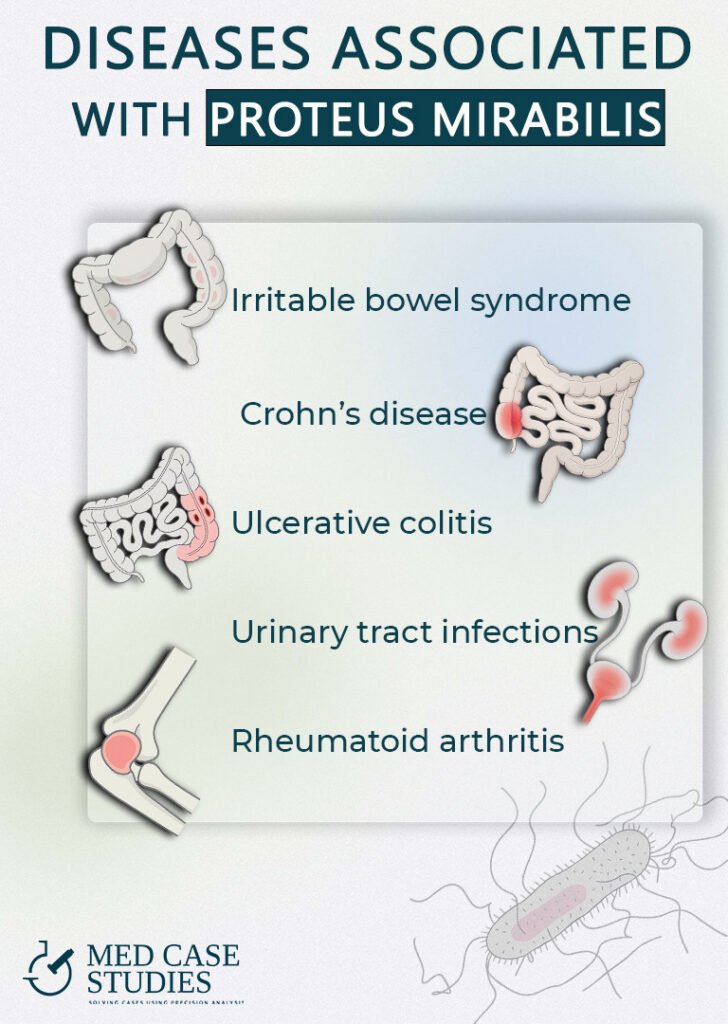
Irritable bowel syndrome
Proteus mirabilis is associated with irritable bowel syndrome.
Crohn's disease
Proteus mirabilis is associated with Crohn's disease.
Ulcerative colitis
Proteus mirabilis is associated with ulcerative colitis.
Urinary tract infections
Proteus mirabilis is associated with urinary tract infections.
Rheumatoid arthritis
Proteus mirabilis is associated with rheumatoid arthritis.
How often it shows up
In clinics that work with IBS and IBD, Proteus turns up in a share of stool tests, and more often in people with inflammation of the gut. Research points the same way. In Crohn's disease, Proteus was more common and more abundant in stool and colon tissue than in healthy people.1 In ulcerative colitis, two out of three patients carried P. mirabilis in one study.2 It behaves like an opportunist that takes the free space when other gut bacteria are disturbed.
Why symptoms flare
Swarming and biofilms help the bacterium spread over surfaces and resist clearance. In addition, its endotoxin (LPS) and other products can stir the immune system and sensitize gut nerves.3 Most of these mechanisms were first described in urinary infections. In the gut, the same tools are thought to act in a similar way.
Where Proteus mirabilis comes from
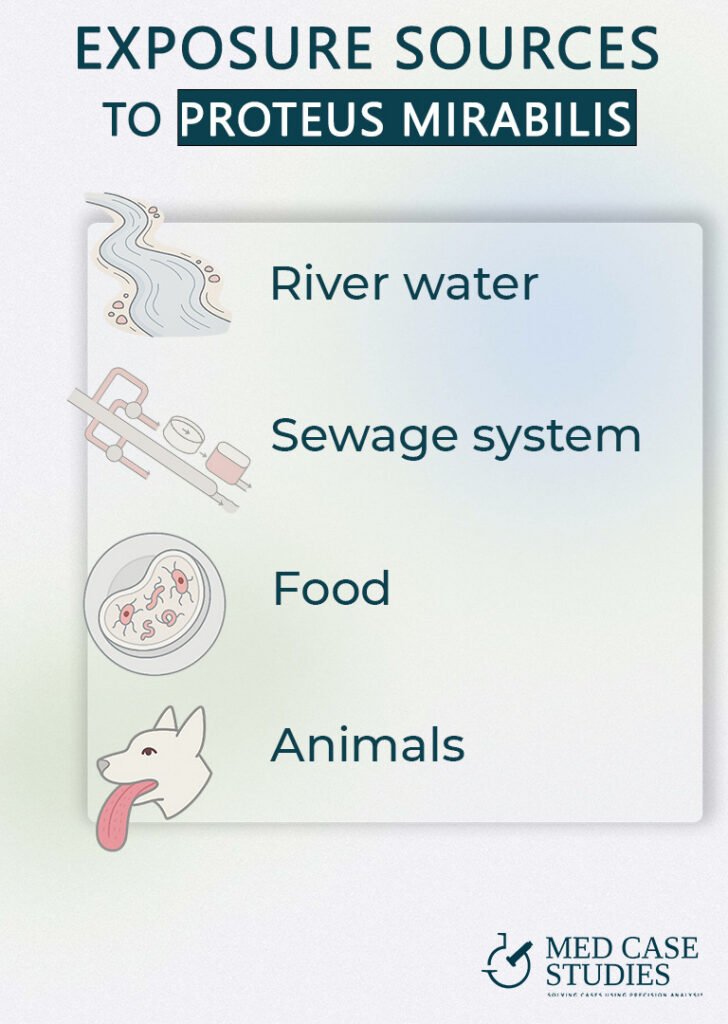
River water
River water is an exposure source to Proteus mirabilis.
Sewage system
The sewage system is an exposure source to Proteus mirabilis.
Food
Food is an exposure source to Proteus mirabilis.
Animals
Animals are an exposure source to Proteus mirabilis.
Water and environment
Proteus survives in soil, sewage, rivers and seawater. You can swallow it with lake or river water while swimming.
Food
In one survey, P. mirabilis was found in about a quarter of retail meat and aquatic products, and most of the strains resisted several antibiotics.4 Cross-contamination in the kitchen adds to the risk.
Hands and animals
It spreads from feces to hands to mouth when hygiene slips. Animal feces can also carry it.
How long Proteus mirabilis stays in the gut
P. mirabilis can stay in the gut for a long time without causing obvious trouble. It builds biofilms and clings to tissue, which makes it harder to clear.5 In a mouse model of colitis, it thinned the protective mucus layer and made inflammation worse.2 A similar setting can exist in IBS after an infection or a course of antibiotics, and this may explain why symptoms return after short treatments.
Results go up and down
Repeated stool PCR tests often show swings. A test can come back negative and the counts can return later, while the lining is still vulnerable. Improvement tends to come when the load drops and the lining is repaired at the same time.
Control rather than a one-off cure
Full eradication is uncommon. For this reason, lowering the numbers and keeping them low tends to work better than a single course. Plans are usually reviewed over about three months.
Natural antimicrobials studied against Proteus mirabilis
All the studies below are laboratory studies. None of these agents has been tested against Proteus in the human gut, so they belong in a plan made with a doctor.
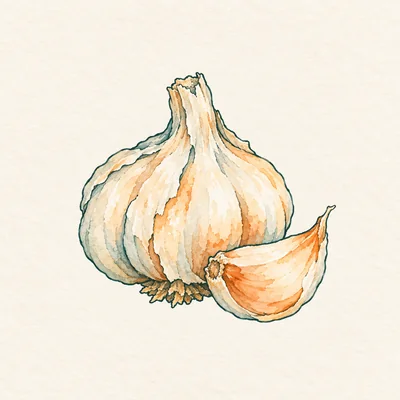
Garlic extract
Allicin from garlic inhibited the growth, urease activity and biofilm formation of P. mirabilis in vitro.10 Allicin is unstable, so standardized preparations matter.
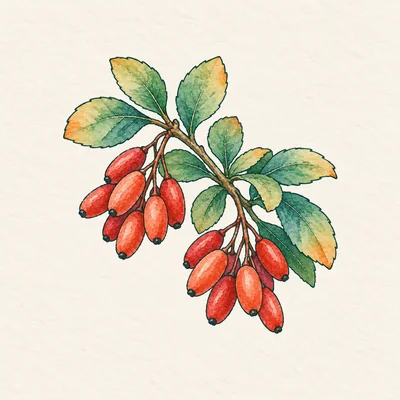
Berberine
Berberine has broad antibacterial effects. It also interacts with medicines: in kidney transplant recipients it raised blood levels of cyclosporine.11 Check with your doctor if you take other drugs.


Cinnamon oil
Cinnamon essential oil was active against P. mirabilis and impaired biofilms of Gram-negative bacteria in the laboratory.14 Essential oils can irritate tissue, so internal use should be guided by a clinician.
Proteus mirabilis virulence factors that worsen symptoms
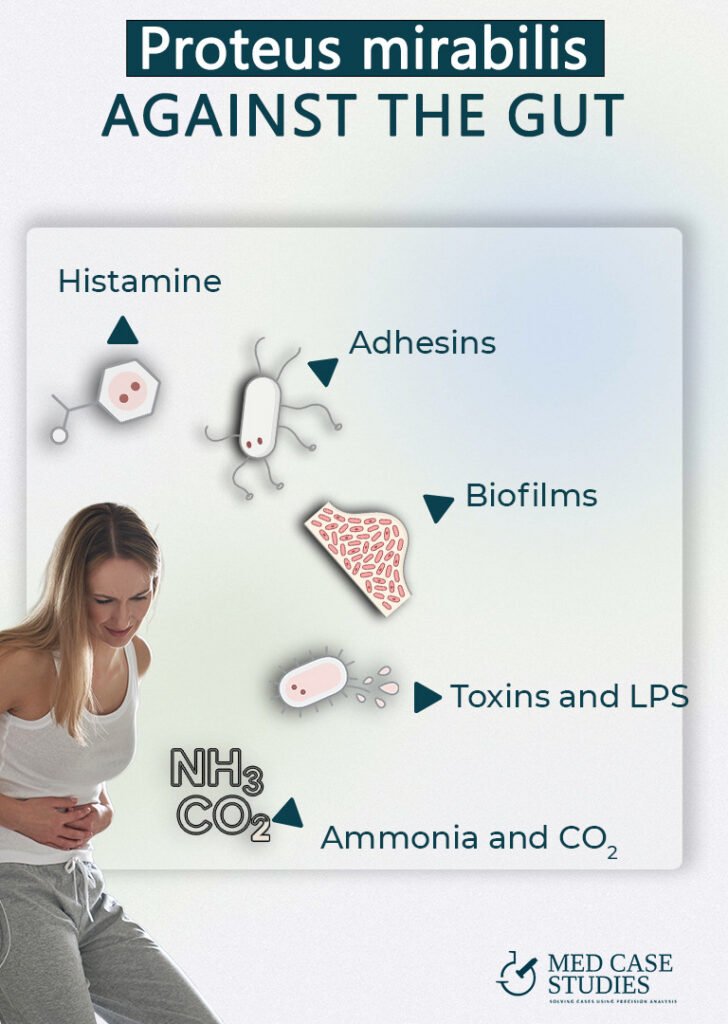
Histamine
Proteus mirabilis acts against the gut through histamine.
Adhesins
Proteus mirabilis acts against the gut through adhesins.
Biofilms
Proteus mirabilis acts against the gut through biofilms.
Toxins and LPS
Proteus mirabilis acts against the gut through toxins and LPS.
Ammonia and CO2
Proteus mirabilis acts against the gut through ammonia and CO2.
Urease
P. mirabilis makes a strong urease that splits urea into ammonia and carbon dioxide.3 In urine, the ammonia raises pH and leads to crystals and stones. In the gut, the gas and the higher pH may irritate the lining, so pressure, bloating and urgency can flare.
Adhesins
MR/P fimbriae work like small grappling hooks, so P. mirabilis can hold on to cells and resist being washed out.3 Strong adhesion also keeps local inflammation going, which may explain discomfort that seems larger than the lab results.
Toxins
Hemolysin punches holes in cell membranes, and LPS (endotoxin) switches on the body's alarm signals.3 Together they can amplify irritation and make nerves more sensitive.
Histamine
When LPS and tissue damage stimulate mast cells, histamine release can rise. More histamine can mean more burning, urgency and pain, especially in people who already react to histamine. See IBS and mast cells.
Managing Proteus mirabilis in stool
Each plan depends on the person and on the test results, so treat the steps below as a starting point for a talk with your doctor.
Support the lining without glutamine
P. mirabilis needs excess L-glutamine to start swarming,15 so many clinicians leave out L-glutamine supplements during treatment. See can glutamine cause diarrhea. Soluble fiber, omega-3 fats, foods rich in polyphenols and good sleep support the lining instead.
Combine agents rather than relying on one
Strains of P. mirabilis differ, and biofilms and resistance blunt single agents.7 The aim is to lower the numbers and keep them under control.
Choose probiotics with care
Some lactobacilli produce histamine, for example certain strains of Lactobacillus reuteri.16 If histamine symptoms flare, pause the product and discuss a switch.
Hold alcohol during treatment
Alcohol loosens the junctions between gut cells and raises intestinal permeability.17
Limit simple sugars for a while
P. mirabilis ferments glucose with gas, so a lower sugar load can ease bloating. Reintroduce foods later, step by step.
Frequently asked questions
Most likely from the environment. Proteus species live in soil, water, sewage, animals and the human gut. Exposure can come from swallowing lake or river water, from contaminated meat or fish,4 or from hand-to-mouth contact.
In stool it is usually slow to clear but not dangerous, unless your immune system is weak. The bigger risks are urinary tract infections, stones or invasive infection, which need medical care.
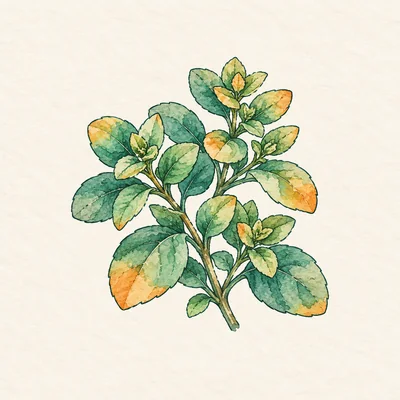
There is no single standard treatment for gut colonization. Doctors may use antibiotics guided by culture or PCR results, together with diet changes and lining support. Natural agents such as garlic and oregano have only laboratory evidence so far.
References
17 studies
- Zhang J, Hoedt EC, Liu Q, et al. Elucidation of Proteus mirabilis as a key bacterium in Crohn's disease inflammation. Gastroenterology. 2021.
- Jiang Z, Li P, Qiu K, et al. Proteus mirabilis exacerbates ulcerative colitis by inhibiting mucin production. Front Microbiol. 2025.
- Armbruster CE, Mobley HLT, Pearson MM. Pathogenesis of Proteus mirabilis infection. EcoSal Plus. 2018.
- Ma WQ, Han YY, Zhou L, et al. Contamination of Proteus mirabilis harbouring various clinically important antimicrobial resistance genes in retail meat and aquatic products from food markets in China. Front Microbiol. 2022.
- Wasfi R, Hamed SM, Amer MA, et al. Proteus mirabilis biofilm: development and therapeutic strategies. Front Cell Infect Microbiol. 2020.
- Hafiz TA, Alghamdi GS, Alkudmani ZS, et al. Multidrug-resistant Proteus mirabilis infections and clinical outcome at tertiary hospital in Riyadh, Saudi Arabia. Infect Drug Resist. 2024.
- Uruén C, Chopo-Escuin G, Tommassen J, et al. Biofilms as promoters of bacterial antibiotic resistance and tolerance. Antibiotics (Basel). 2020.
- Sim JXF, Khazandi M, Chan WY, et al. Antimicrobial activity of thyme oil, oregano oil, thymol and carvacrol against sensitive and resistant microbial isolates from dogs with otitis externa. Vet Dermatol. 2019.
- Sánchez García E, Torres-Alvarez C, Morales Sosa EG, et al. Essential oil of fractionated oregano as motility inhibitor of bacteria associated with urinary tract infections. Antibiotics (Basel). 2024.
- Ranjbar-Omid M, Arzanlou M, Amani M, et al. Allicin from garlic inhibits the biofilm formation and urease activity of Proteus mirabilis in vitro. FEMS Microbiol Lett. 2015.
- Wu X, Li Q, Xin H, et al. Effects of berberine on the blood concentration of cyclosporin A in renal transplanted recipients: clinical and pharmacokinetic study. Eur J Clin Pharmacol. 2005.
- Kwiecińska-Piróg J, Przekwas J, Majkut M, et al. Biofilm formation reducing properties of Manuka honey and propolis in Proteus mirabilis rods isolated from chronic wounds. Microorganisms. 2020.
- Majtan J, Bohova J, Horniackova M, et al. Anti-biofilm effects of honey against wound pathogens Proteus mirabilis and Enterobacter cloacae. Phytother Res. 2014.
- Condò C, Anacarso I, Sabia C, et al. Antimicrobial activity of spices essential oils and its effectiveness on mature biofilms of human pathogens. Nat Prod Res. 2020.
- Armbruster CE, Hodges SA, Mobley HL. Initiation of swarming motility by Proteus mirabilis occurs in response to specific cues present in urine and requires excess L-glutamine. J Bacteriol. 2013.
- Thomas CM, Hong T, van Pijkeren JP, et al. Histamine derived from probiotic Lactobacillus reuteri suppresses TNF via modulation of PKA and ERK signaling. PLoS One. 2012.
- Bishehsari F, Magno E, Swanson G, et al. Alcohol and gut-derived inflammation. Alcohol Res. 2017.
Found this useful? Share it with someone who needs it.
Cite this article
Prevedoros, T. (2025, August 14). What does Proteus mirabilis in a stool test mean?. Gut Pathways. https://gutpathways.com/articles/proteus-mirabilis-in-stool/