IBS has more than the four official subtypes
The four official IBS subtypes describe your stools: IBS-C, IBS-D, IBS-M and IBS-U. They say little about the cause, so two people with the same label can need very different treatment.

Why living with IBS is so frustrating
If you live with IBS, you know the frustration. Persistent symptoms wear down your quality of life, and treatments that do not work cost money. Anxiety and depression are also more common in people with IBS.3 Many people feel isolated and misunderstood, and some carry a wrong diagnosis for years.
- Many doctors, same treatment
- Different people, same treatment
- Little understanding from doctors and friends
- Conflicting advice on diet and lifestyle
- Money spent on tests and treatments




A better starting point is to understand what is going on in your own gut. IBSyncrasy is a way to classify IBS by its first trigger and by what makes each person different. Unlike the official types, which follow bowel habits only, it looks at the root cause: changes in gut bacteria, hormones, enzyme shortages, current medicines and things in your environment.
IBS-D, IBS-C, IBS-M: letters for bowel habits
The official system has four types, all based on stool form:1
- IBS-D, diarrhea
- IBS-C, constipation
- IBS-M, mixed
- IBS-U, unclassified
Symptoms do differ between these groups,4 and bowel habit is not the only way to subtype IBS. Pain severity, for example, shaped quality of life more than the bowel pattern in one study of women with IBS.5 However, these labels say nothing about the cause, the mechanisms or the bacteria involved. That is why treatment chosen by label alone often gives average results.
Why the classic IBS types fall short

Diabetic presenting with diarrhea
This person gets the label IBS-D.
Diarrhea after starting biologics
This person gets the label IBS-D.
Diarrhea and long-term PPI use
This person gets the label IBS-D.
Diarrhea and 3 years on contraceptives
This person gets the label IBS-D.
Diarrhea after a trip to Colombia
This person gets the label IBS-D.
Outdated IBS types, same diagnosis for all
All five people get IBS-D. The diagnosis is the same, the treatment is the same and there are no results.
Picture all five moving from one doctor to the next and receiving the same advice each time. The frustration and the cost add up. This is the main weakness of the classic system: it groups people by symptom and ignores what each person brings. Whether your IBS followed an infection or comes from bacterial overgrowth in the small intestine, you may get the same treatment, even when the cause is completely different.
To see how one IBS label can hide different causes in different people, read what causes IBS.
IBSyncrasy: IBS types based on the first trigger
IBSyncrasy starts from the first trigger and the features of each person. From there, a doctor can look for the clues that matter:
- changes in gut bacteria
- small or large intestine
- gastrin and serotonin
- mucosal immunity
- enzyme shortages
- metabolic imbalances
- environmental triggers
These clues help whether the label is IBS-C, IBS-D or IBS-M. The plan then aims at the cause rather than only at the symptoms.
An example: five people with IBS-D
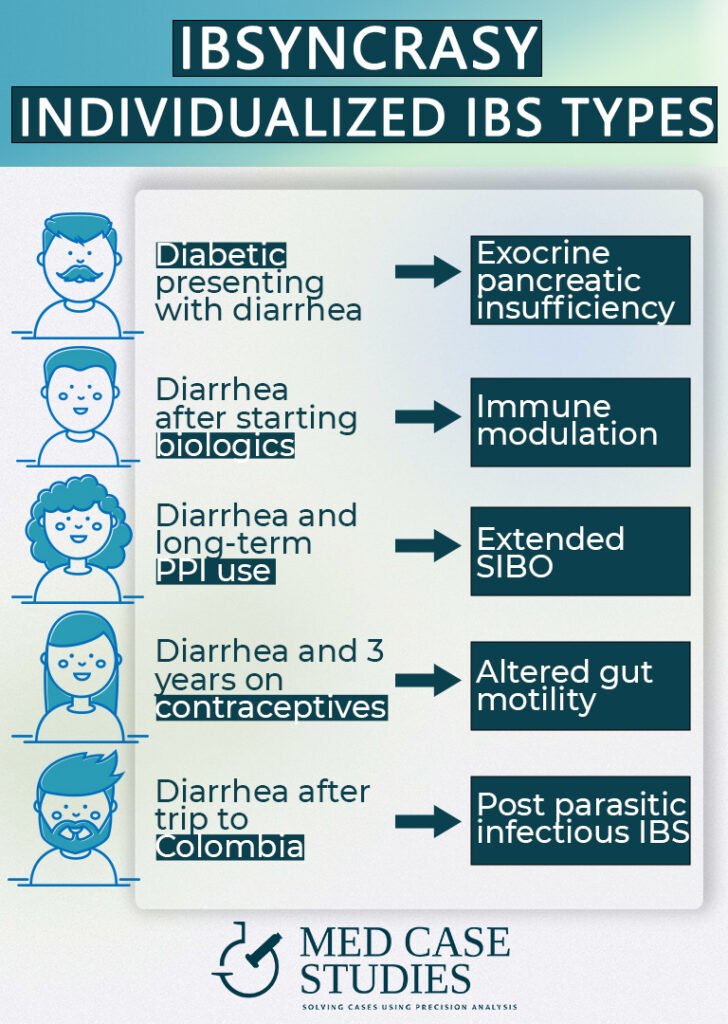
Diabetic presenting with diarrhea
Individualized IBS type: exocrine pancreatic insufficiency.
Diarrhea after starting biologics
Individualized IBS type: immune modulation.
Diarrhea and long-term PPI use
Individualized IBS type: extended SIBO.
Diarrhea and 3 years on contraceptives
Individualized IBS type: altered gut motility.
Diarrhea after a trip to Colombia
Individualized IBS type: post-parasitic infectious IBS.
The trigger gives each of the five people a different set of clues:
Diabetes
Diarrhea in a person with diabetes may point to exocrine pancreatic insufficiency, where the pancreas makes too few digestive enzymes. Diabetes is a recognized risk factor for it.6 See IBS with diabetes.
Biologic drugs
A person on biologic drugs may have a specific gap in the immune defense of the gut lining.
Long-term PPIs
Long-term use of proton pump inhibitors raises the risk of small intestinal bacterial overgrowth (SIBO).7
Contraceptives
In a teenager on contraceptives, changes in gut motility, including the migrating motor complex, may be part of the picture.
Travel abroad
After a trip to Colombia, post-infectious IBS is likely, possibly from a tropical parasite. IBS is about four times more common after an infectious enteritis.8 See post-infectious IBS, viral vs bacterial.
With these clues, treatment can target the cause of the diarrhea instead of only calming it.
A closer look at one person with IBS-D

Case study: diarrhea and PPI abuse
The same person is classified in two ways.
Classic IBS type
The label is IBS-D. It will treat diarrhea.
IBSyncrasy
The label is SIBO-IBS. It will treat SIBO, gastrinemia, histaminemia, protein loss, gut motility, dysbiosis and many more.
Take a person who has used PPIs for more than three months and now has diarrhea. Under the classic system this is IBS-D, and the usual plan is rifaximin and perhaps a probiotic.
The classic plan misses several problems: the bacterial overgrowth, the constant rise in gastrin, the long-term acid suppression and the extra histamine the stomach releases to make up for it. If these are ignored, relief is often temporary and the symptoms may come back worse.
A plan built on the trigger aims for lasting relief rather than a quiet week. It looks at the whole digestive tract, beyond the foods that set off symptoms.
IBSyncrasies: new types of IBS
IBS has at least 30 subtypes when you look at the first trigger. The book IBSyncrasy focuses on the ten most common, and each has a feature that the classic system can miss:

Post-infectious IBS
Feature: stronger visceral hypersensitivity. It starts after a gut infection and often brings a gut that feels pain and discomfort more easily. See post-infectious IBS treatment.
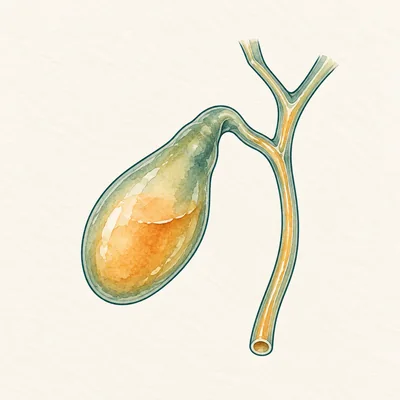
Post-cholecystectomy IBS
Feature: altered pH in the gut. After gallbladder removal, some people develop IBS symptoms because the pH of the gut changes, with constipation or diarrhea.
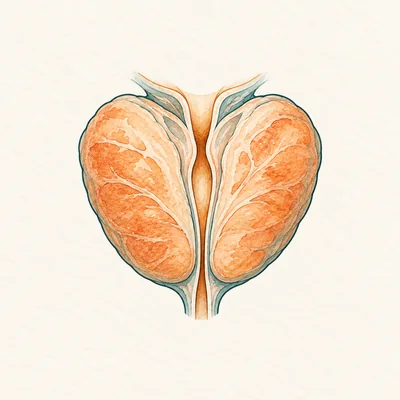
Prostatitis IBS
Feature: antibiotics for prostatitis. In men with chronic prostatitis, IBS can follow, with a mix of constipation and diarrhea or loose stools. See IBS symptoms in men.

Pseudomonas IBS
Feature: elastase that breaks down gluten. Pseudomonas bacteria produce an elastase that cuts gluten into unusual fragments, with diarrhea and stomach pain.9 See Pseudomonas spp high in stool.
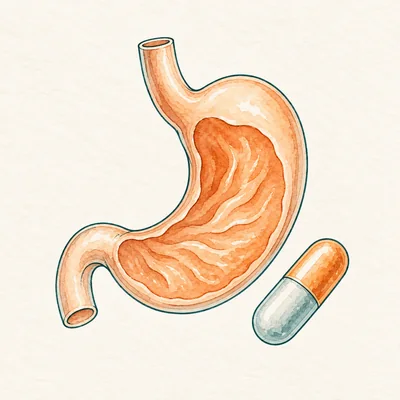
PPI IBS
Feature: high gastrin and SIBO. Long-term PPI use can raise gastrin, lead to SIBO and cause malabsorption.7

Proteus IBS
Feature: bacteria that thrive on glutamine. Excess glutamine makes Proteus swarm,10 and this IBS type, often with diarrhea, is one of the hardest to diagnose. See Proteus mirabilis in stool.

Pediatric IBS
Feature: an immature gut. In children, a digestive system that is still developing can cause IBS symptoms, often with a mix of constipation and diarrhea.
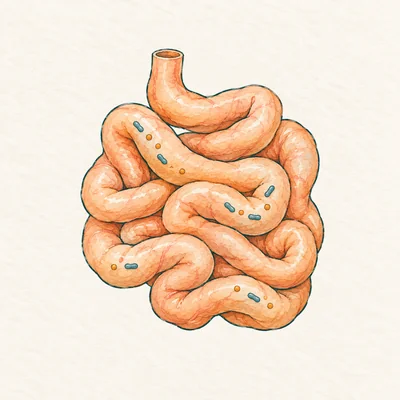
SIBO IBS
Feature: different enzyme activity. Bacterial overgrowth in the small intestine changes the activity of digestive enzymes, with constipation or diarrhea and sometimes lumpy stools.
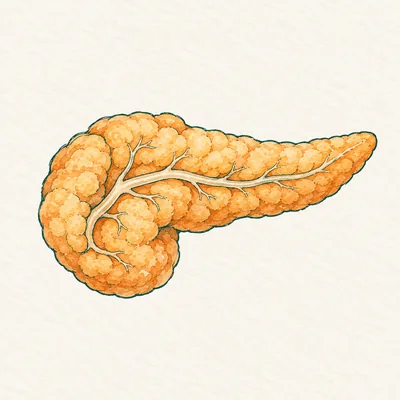
Exocrine pancreatic insufficiency IBS
Feature: too few enzymes. When the pancreas makes too few digestive enzymes, IBS-like symptoms follow. Simple stool tests can point to it.6

Immunodeficiency IBS
Feature: weak immunity in the lining. A weak immune defense in the gut lining can unbalance the gut bacteria and lead to both diarrhea and constipation.
Understanding these subtypes allows treatment plans that address the cause and the personal factors behind each case of IBS, with a better quality of life as the goal.
Frequently asked questions
Yes. The official types follow bowel habits: IBS-C (constipation), IBS-D (diarrhea), IBS-M (mixed) and IBS-U (unclassified).1 IBS can also be subtyped by its first trigger, for example post-infectious IBS, PPI IBS, Proteus-predominant IBS and IBS after gallbladder removal. Knowing the subtype helps to choose the treatment.
Yes, and often. In one trial cohort only one in four people kept the same IBS type throughout, and IBS-M was the least stable group.2 Changes in gut bacteria and hormones may explain part of this.
Stress is rarely the root cause, but it can make IBS worse. It affects the brain-gut axis, gut motility, the gut barrier and the gut bacteria,12 and many people notice flare-ups during stressful periods. Managing stress can ease pain and distress.
References
12 studies
- Mearin F, Lacy BE, Chang L, et al. Bowel disorders. Gastroenterology. 2016.
- Yadav YS, Eslick GD, Talley NJ. Review article: irritable bowel syndrome: natural history, bowel habit stability and overlap with other gastrointestinal disorders. Aliment Pharmacol Ther. 2021.
- Fond G, Loundou A, Hamdani N, et al. Anxiety and depression comorbidities in irritable bowel syndrome (IBS): a systematic review and meta-analysis. Eur Arch Psychiatry Clin Neurosci. 2014.
- Schmulson M, Lee OY, Chang L, et al. Symptom differences in moderate to severe IBS patients based on predominant bowel habit. Am J Gastroenterol. 1999.
- Heitkemper M, Cain KC, Shulman R, et al. Subtypes of irritable bowel syndrome based on abdominal pain/discomfort severity and bowel pattern. Dig Dis Sci. 2011.
- Whitcomb DC, Buchner AM, Forsmark CE. AGA clinical practice update on the epidemiology, evaluation, and management of exocrine pancreatic insufficiency: expert review. Gastroenterology. 2023.
- Lo WK, Chan WW. Proton pump inhibitor use and the risk of small intestinal bacterial overgrowth: a meta-analysis. Clin Gastroenterol Hepatol. 2013.
- Klem F, Wadhwa A, Prokop LJ, et al. Prevalence, risk factors, and outcomes of irritable bowel syndrome after infectious enteritis: a systematic review and meta-analysis. Gastroenterology. 2017.
- Caminero A, Galipeau HJ, McCarville JL, et al. Duodenal bacteria from patients with celiac disease and healthy subjects distinctly affect gluten breakdown and immunogenicity. Gastroenterology. 2016.
- Armbruster CE, Hodges SA, Mobley HL. Initiation of swarming motility by Proteus mirabilis occurs in response to specific cues present in urine and requires excess L-glutamine. J Bacteriol. 2013.
- Oświęcimska J, Szymlak A, Roczniak W, et al. New insights into the pathogenesis and treatment of irritable bowel syndrome. Adv Med Sci. 2017.
- Konturek PC, Brzozowski T, Konturek SJ. Stress and the gut: pathophysiology, clinical consequences, diagnostic approach and treatment options. J Physiol Pharmacol. 2011.
Found this useful? Share it with someone who needs it.
Cite this article
Prevedoros, T. (2023, May 8). IBS has more than the four official subtypes. Gut Pathways. https://gutpathways.com/articles/ibs-types/