A high Pseudomonas count in stool can drive IBS
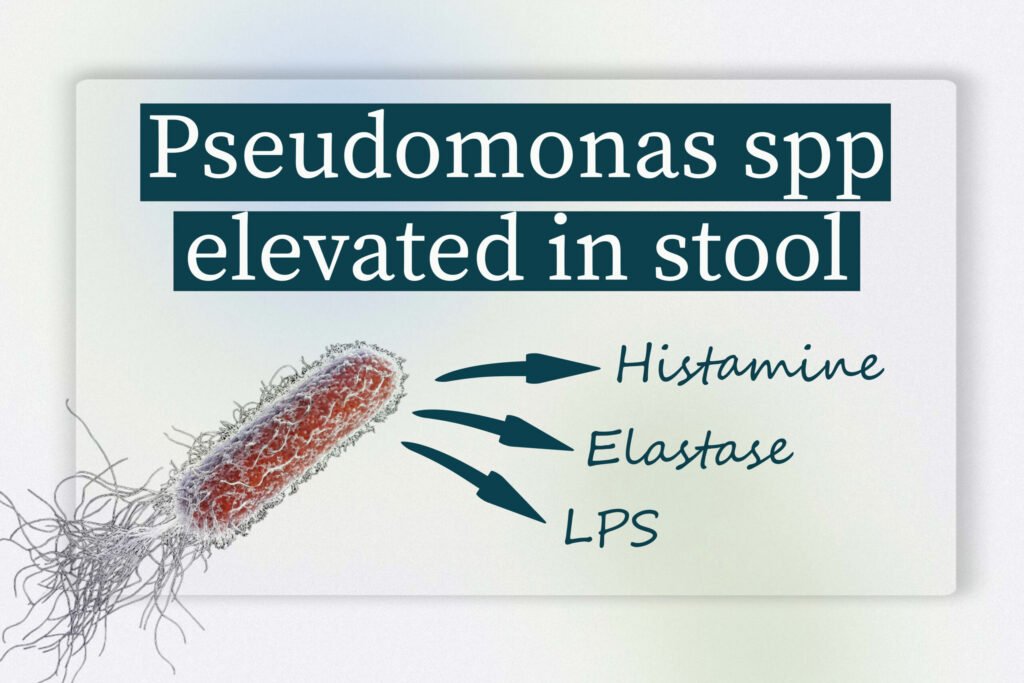
Results with Pseudomonas spp high in stool, such as P. aeruginosa, turn up far more often in people with IBS than in healthy people. This species can produce histamine signals, break down gluten in an unusual way and release LPS, so it can drive symptoms on several fronts.
Pseudomonas aeruginosa in the gut
Pseudomonas species, and above all Pseudomonas aeruginosa, are a fairly common finding in stool tests of people with IBS. The bacterium lives in soil and water, but when it finds the right conditions it can grow in the gut. This Gram-negative bacterium stands out for the range of its chemistry, from histamine signaling to the breakdown of gluten.
How often Pseudomonas aeruginosa is found in IBS
Several studies show much higher counts of P. aeruginosa in people with IBS than in healthy people.
The study was small, with 37 people with IBS and 20 healthy subjects, so the exact ratios may differ in larger groups.
Across IBS subtypes
In a second study, P. aeruginosa was found in 46 of 47 people with IBS, against 10 of 30 healthy people.2 Its numbers were higher in both IBS with constipation and IBS with diarrhea. So the bacterium seems linked with IBS whatever the bowel pattern. For more on subtypes, see IBS types.
How Pseudomonas aeruginosa causes symptoms
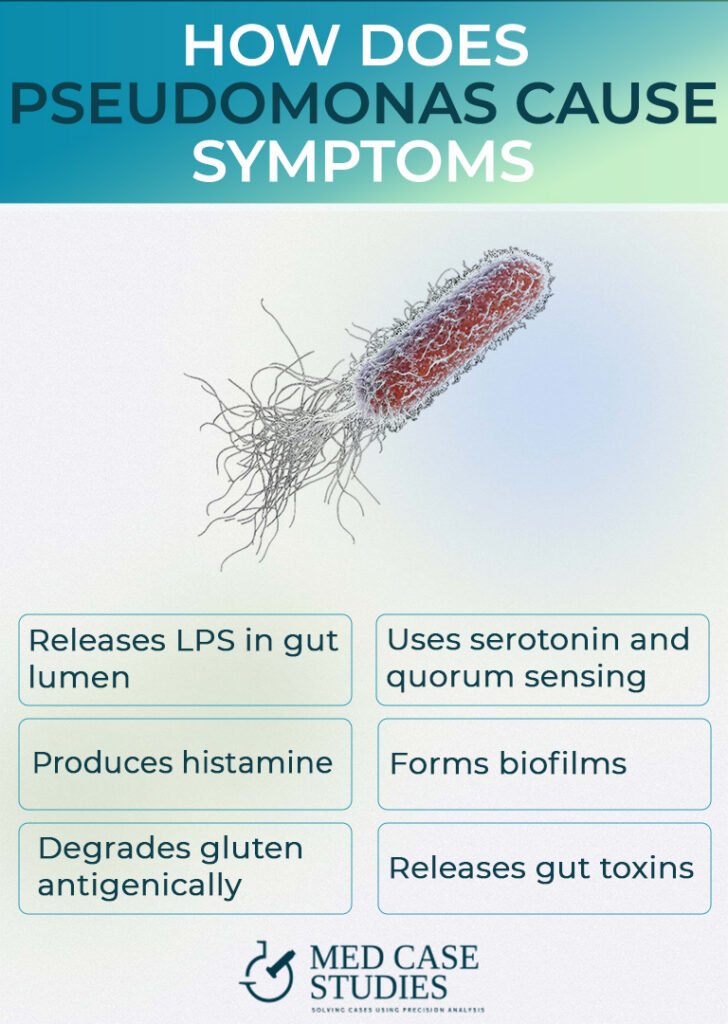
Releases LPS in the gut lumen
Pseudomonas releases LPS in the gut lumen.
Uses serotonin and quorum sensing
Pseudomonas uses serotonin and quorum sensing.
Produces histamine
Pseudomonas produces histamine.
Forms biofilms
Pseudomonas forms biofilms.
Degrades gluten antigenically
Pseudomonas degrades gluten antigenically.
Releases gut toxins
Pseudomonas releases gut toxins.
Pseudomonas has many activities that can disturb the gut, from motility to fermentation. Other bacteria, such as Citrobacter or Klebsiella, mostly settle in the large intestine. Pseudomonas, by contrast, can grow in the duodenum as well.
Serotonin and quorum sensing
Quorum sensing is the way bacteria talk to each other. Serotonin can act as a signal for P. aeruginosa: it switched on its quorum sensing, raised its virulence factors and increased biofilm formation in the laboratory and in mice.3 Such signaling may worsen inflammation and make antibiotics less effective.
Gluten breakdown
Our own enzymes break gluten down into fragments that are mostly harmless. Pseudomonas elastase cuts gluten in a different way, and in one study the fragments it produced were more immunogenic.5 Because P. aeruginosa can live in the duodenum, the picture can resemble a celiac-like reaction. This is one reason why gluten sensitivity is a real symptom and not something in people's heads.
LPS in the gut
As P. aeruginosa grows, it releases LPS (lipopolysaccharide) into the gut. LPS binds immune receptors on the lining, especially in the duodenum, and triggers inflammation. The gut wall becomes more permeable and its movement changes, which can lead to diarrhea, pain, bloating and irregular bowel habits.
Complications of Pseudomonas aeruginosa overgrowth
An untreated overgrowth of P. aeruginosa can keep low-grade inflammation going and feed chronic discomfort.
Symptoms that follow the counts
When P. aeruginosa is high, people often report abdominal pain and episodes of diarrhea, and the symptoms tend to follow the bacterial load. In people with a weak immune system, it can also cause infections outside the gut, such as urinary tract infections, which need medical care.
Post-infectious IBS
After an acute infection, many people are left with a lasting imbalance of gut bacteria. An overgrowth of P. aeruginosa can set the stage for chronic IBS if the conditions that let it grow are not addressed. See post-infectious IBS treatment.
Steps that help manage Pseudomonas overgrowth
A single antibiotic course is rarely enough on its own. The plan should address both the bacterium and the conditions that let it grow, and it should be personal. Discuss these steps with your doctor.
Diet and lifestyle

Lower the gluten load
Pseudomonas elastase can turn gluten into more immunogenic fragments,5 so cutting back on gluten during treatment may lower one trigger.

Leave a long gap at night
P. aeruginosa can also overgrow in the small intestine. The migrating motor complex, the cleaning wave of the small intestine, runs during fasting,7 and late meals interrupt it.
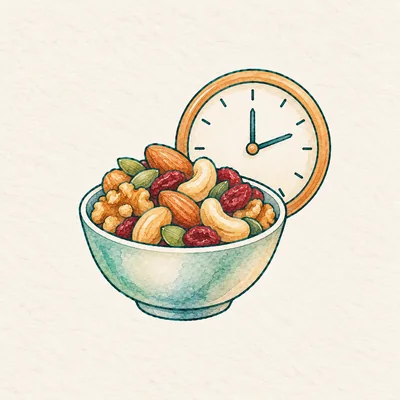
Avoid all-day snacking
Constant eating also keeps the cleaning wave from running and gives the bacteria a steady supply of food. Regular meals with gaps between them are the better pattern.

Cut down on refined carbohydrates
Refined carbohydrates ferment quickly in a disturbed gut and produce more gas per gram, so lowering them can ease bloating.
Targeted approaches

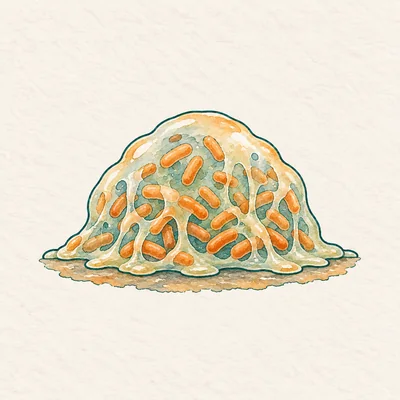
Biofilm disruptors
Biofilms shield bacteria from antibiotics and immune cells.10 Agents that break them down may help antibiotics work, which is why clinicians sometimes combine them.
Even if the infection clears once, overgrowth tends to come back unless the conditions that allowed it change. Long-term changes in diet and daily rhythm help keep Pseudomonas in check.
Frequently asked questions
It means Pseudomonas bacteria, usually P. aeruginosa, are growing in your gut above the usual level. People with IBS carry much more of it than healthy people.1
It may. Through LPS, histamine signaling, biofilms and the way it breaks down gluten, P. aeruginosa can feed pain, bloating and diarrhea. Higher levels appear in both IBS-C and IBS-D.2
Treatment is decided by a doctor and may include antibiotics guided by test results. Diet steps such as regular meal timing, fewer refined carbohydrates and a lower gluten load support the treatment and lower the chance of relapse.
References
10 studies
- Kerckhoffs APM, Ben-Amor K, Samsom M, et al. Molecular analysis of faecal and duodenal samples reveals significantly higher prevalence and numbers of Pseudomonas aeruginosa in irritable bowel syndrome. J Med Microbiol. 2011.
- Shukla R, Ghoshal U, Dhole TN, et al. Fecal microbiota in patients with irritable bowel syndrome compared with healthy controls using real-time polymerase chain reaction: an evidence of dysbiosis. Dig Dis Sci. 2015.
- Knecht LD, O'Connor G, Mittal R, et al. Serotonin activates bacterial quorum sensing and enhances the virulence of Pseudomonas aeruginosa in the host. EBioMedicine. 2016.
- Corral-Lugo A, Matilla MA, Martín-Mora D, et al. High-affinity chemotaxis to histamine mediated by the TlpQ chemoreceptor of the human pathogen Pseudomonas aeruginosa. mBio. 2018.
- Caminero A, Galipeau HJ, McCarville JL, et al. Duodenal bacteria from patients with celiac disease and healthy subjects distinctly affect gluten breakdown and immunogenicity. Gastroenterology. 2016.
- Krell T, Gavira JA, Velando F, et al. Histamine: a bacterial signal molecule. Int J Mol Sci. 2021.
- Deloose E, Janssen P, Depoortere I, et al. The migrating motor complex: control mechanisms and its role in health and disease. Nat Rev Gastroenterol Hepatol. 2012.
- Aswathanarayan JB, Vittal RR. Inhibition of biofilm formation and quorum sensing mediated phenotypes by berberine in Pseudomonas aeruginosa and Salmonella typhimurium. RSC Adv. 2018.
- Mechmechani S, Gharsallaoui A, Fadel A, et al. Microencapsulation of carvacrol as an efficient tool to fight Pseudomonas aeruginosa and Enterococcus faecalis biofilms. PLoS One. 2022.
- Uruén C, Chopo-Escuin G, Tommassen J, et al. Biofilms as promoters of bacterial antibiotic resistance and tolerance. Antibiotics (Basel). 2020.
Found this useful? Share it with someone who needs it.
Cite this article
Prevedoros, T. (2025, February 26). A high Pseudomonas count in stool can drive IBS. Gut Pathways. https://gutpathways.com/articles/pseudomonas-spp-high-in-stool/