Can diabetes cause bowel problems?
Yes. Diabetes can cause diarrhea, constipation, bloating and urgency. Nerve damage, a tired pancreas, bile acids and sugar-free sweeteners all play a part, and most of them can be tested.

Can diabetes cause bowel problems?
Yes, diabetes can cause bowel problems. In a population survey of 15,000 adults, all 16 gut symptoms studied, upper and lower, were more frequent in people with diabetes. The rise was linked with poorer glucose control rather than with how long someone had diabetes.1
The most common bowel problems in diabetes are diarrhea, constipation, alternating between the two, bloating and fecal incontinence.6 In the clinics where I work as a scientific collaborator, diarrhea comes up far more often than constipation. More on this pattern in IBS types.
What is diabetic diarrhea?
Diabetic diarrhea is a common complication, seen most often in people with poorly controlled diabetes who also have nerve damage. It is typically painless, comes during the day and at night, and may alternate with normal stools or constipation.3 It can also come with fecal incontinence.
Fatty stools are common and do not always mean a separate gut disease.3 Nerve damage, small intestinal bacterial overgrowth and low pancreatic enzymes are the main mechanisms behind it.
How diabetes affects the digestive system
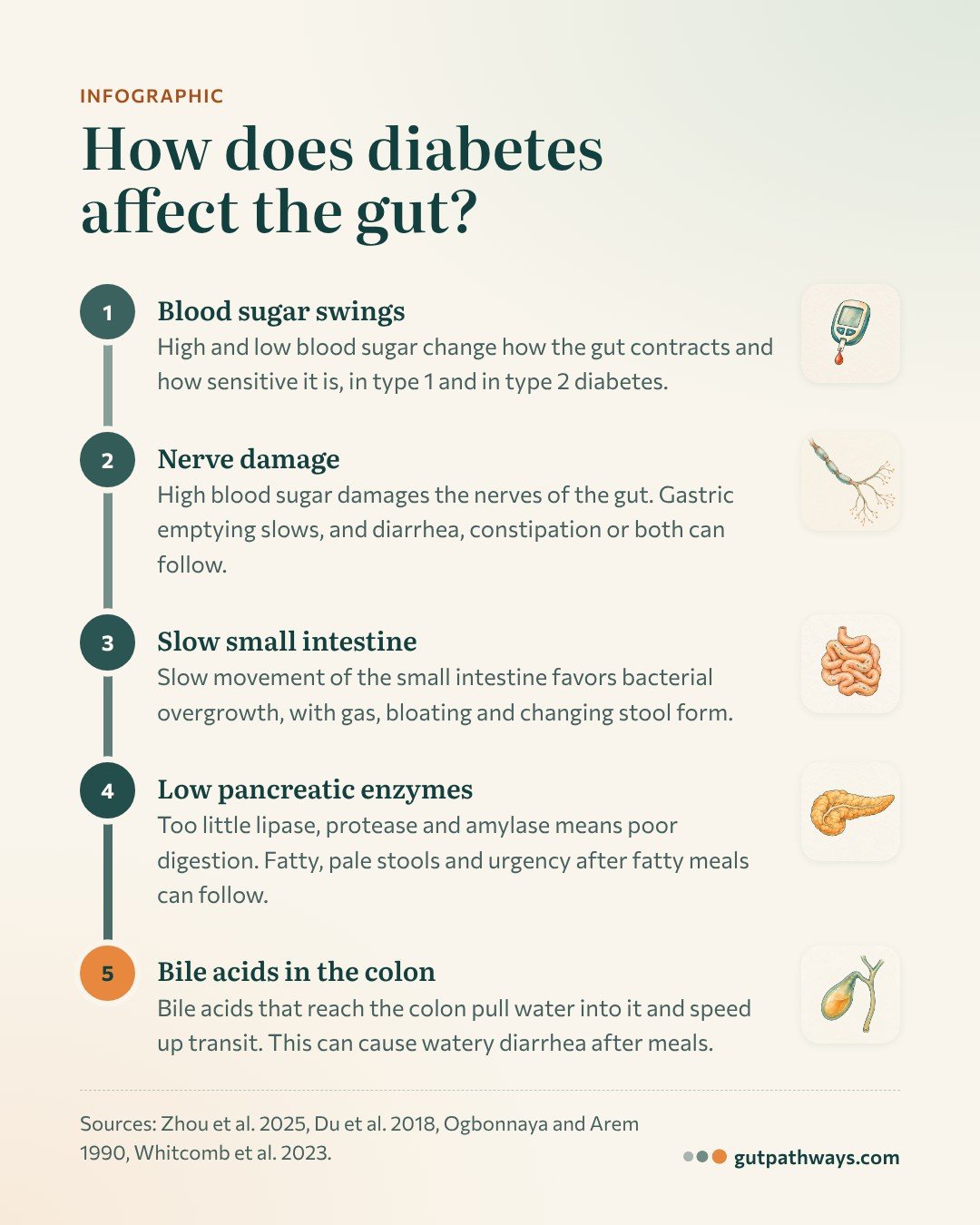
Diabetes does not act through one mechanism. The five below work together, and each one can shift stool form, urgency or pain.
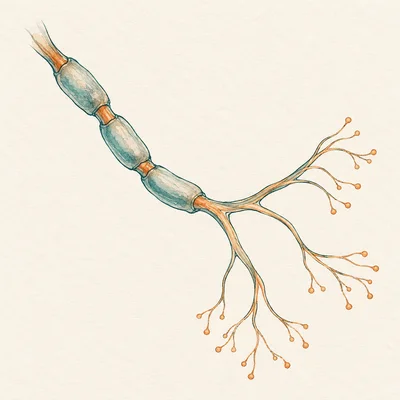
Autonomic neuropathy
High blood sugar, oxidative stress and inflammation damage the nerves of the gut. Gastric emptying slows, and diarrhea, constipation or both can follow.7 Changes in gut bacteria may worsen this nerve damage.
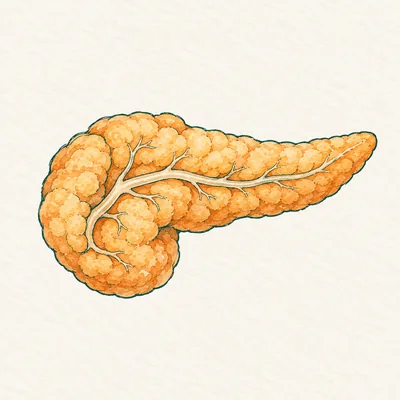
Low pancreatic enzymes
Exocrine pancreatic insufficiency means too little lipase, protease and amylase. Food is poorly digested, so fatty, pale and sometimes floating stools, gas and urgency after fatty meals follow.8
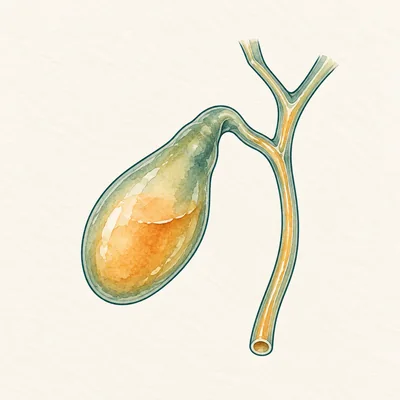
Bile acids in the colon
Bile acids that reach the colon pull water into it and speed up transit, which can cause watery diarrhea after meals.6
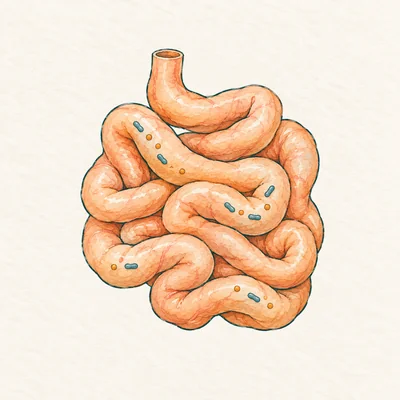
Slow small intestine and overgrowth
Slow or uncoordinated movement of the small intestine favors bacterial overgrowth, with gas, bloating and changing stool form.3
Swings in blood sugar
High and low blood sugar change how the gut contracts and how sensitive it is, in type 1 and in type 2 diabetes.6
Infographic
Blood sugar swings
High and low blood sugar change how the gut contracts and how sensitive it is, in type 1 and in type 2 diabetes.
Nerve damage
High blood sugar damages the nerves of the gut. Gastric emptying slows, and diarrhea, constipation or both can follow.
Slow small intestine
Slow movement of the small intestine favors bacterial overgrowth, with gas, bloating and changing stool form.
Low pancreatic enzymes
Too little lipase, protease and amylase means poor digestion. Fatty, pale stools and urgency after fatty meals can follow.
Bile acids in the colon
Bile acids that reach the colon pull water into it and speed up transit. This can cause watery diarrhea after meals.
Sources: Zhou et al. 2025, Du et al. 2018, Ogbonnaya and Arem 1990, Whitcomb et al. 2023.
gutpathways.com
 Save this infographicImage 4:5, with sources, from gutpathways.com
Exocrine pancreatic insufficiency in diabetes
Exocrine pancreatic insufficiency (EPI) is common in diabetes and often missed. A systematic review found a median prevalence of 33% in type 1 and 29% in type 2 diabetes, against about 13% in people without diabetes.2 The review recommends a fecal elastase test for people with diabetes and gut symptoms.
Fecal elastase below 200 µg/g suggests EPI, and values below 100 µg/g give strong evidence for it.8 EPI is more likely with longer diabetes and unstable blood sugar, and it tends to cause urgent diarrhea after meals rather than lasting constipation.
What does diabetic stool look like?
Stool can tell a lot. Pale, greasy stools that float, with gas after fatty meals, point to low lipase and poor fat digestion.8 Undigested fragments in stool point the same way. Watery stools soon after meals fit bile acids, while stools that change from day to day can reflect mixed nerve effects.
Constipation in diabetes
Constipation is also common in diabetes, especially when nerve damage slows the colon.6 Some people swing between days of constipation and days of diarrhea, which is typical of autonomic neuropathy.3
Medicines and sweeteners that cause diarrhea
Metformin is the most widely prescribed diabetes drug, and a large share of people cannot tolerate it because of diarrhea, nausea, gas, indigestion or abdominal discomfort.4 A slow start, slow dose increases or an extended-release form may help, so this is worth discussing with your doctor before stopping it.
Sugar-free "diabetic" foods often contain polyols such as sorbitol, maltitol, isomalt and xylitol. Polyols can cause diarrhea and gas when the dose climbs, especially in people with IBS.5
Diabetes genes with possible gut relevance
| Gene | Function |
|---|---|
| TCF7L2 | Regulates GLP-1 release from gut L cells and incretin action |
| KCNQ1 | Potassium channel in gut lining cells, involved in secretion |
| SLC5A1 (SGLT1) | Glucose uptake in the small intestine and incretin release |
| HNF1B | Linked with exocrine pancreas problems and low elastase |
| GLP1R | Changes GLP-1 signaling and the gut's response to it |
These genes are known from diabetes research. Whether they explain bowel symptoms in a given person has not been tested.
Steps that are often discussed with a doctor
Each plan depends on the person and on the test results. These are the steps most often discussed when diarrhea dominates:
Check sugar-alcohol intake
Labels of "diabetic" foods often list sorbitol, maltitol, isomalt or xylitol. Cutting them for a while shows whether they trigger diarrhea and gas.5
A fecal elastase test
When diarrhea dominates, a fresh stool sample can show whether pancreatic enzymes are low. Low values support enzyme loss behind fatty stools and urgency after meals.2
Enzyme timing with fatty meals
When EPI is confirmed, doctors usually advise taking enzymes with the first bites and splitting doses over longer meals. Less grease, steadier stools and less bloating show that the dose fits.8
Steadier blood sugar
Large swings in blood sugar can shift motility,6 so steadier meals and good hydration support the gut too.
Smaller, slower meals on bad days
Chewing well and eating slowly lower the fermentation load, especially when bloating and gas are strong.
A two-week stool diary
Recording the timing of bowel movements, greasy stools, color and leaks often reveals the role of enzymes and bile acids, and helps the doctor choose tests.
The bottom line on diabetes and bowel health
Diabetes can disrupt digestion through exocrine pancreatic insufficiency, nerve damage, bile acids, medicines and sweeteners. A fecal elastase test finds many people with low enzyme output,2 and enzyme support, when it is needed, can reduce fatty stools, bloating and urgency. For other causes of loose stools, see can glutamine cause diarrhea.
Frequently asked questions
It is not usually dangerous by itself, but it can lead to dehydration, upset blood sugar control and incontinence. Diarrhea with weight loss, blood or fever needs a doctor soon.
It is often intermittent, with weeks of diarrhea and weeks of normal stools or constipation.3 It tends to continue until the cause, such as low enzymes, overgrowth or a medicine, is found and treated.
Yes. Diarrhea and nausea are the most common side effects of metformin.4 A slower dose increase or an extended-release form may help, so talk to your doctor before you stop it.
References
8 studies
- Bytzer P, Talley NJ, Leemon M, et al. Prevalence of gastrointestinal symptoms associated with diabetes mellitus: a population-based survey of 15,000 adults. Arch Intern Med. 2001.
- Lewis DM. A Systematic Review of Exocrine Pancreatic Insufficiency Prevalence and Treatment in Type 1 and Type 2 Diabetes. Diabetes Technol Ther. 2023.
- Ogbonnaya KI, Arem R. Diabetic diarrhea. Pathophysiology, diagnosis, and management. Arch Intern Med. 1990.
- Bonnet F, Scheen A. Understanding and overcoming metformin gastrointestinal intolerance. Diabetes Obes Metab. 2017.
- Lenhart A, Chey WD. A Systematic Review of the Effects of Polyols on Gastrointestinal Health and Irritable Bowel Syndrome. Adv Nutr. 2017.
- Du YT, Rayner CK, Jones KL, et al. Gastrointestinal Symptoms in Diabetes: Prevalence, Assessment, Pathogenesis, and Management. Diabetes Care. 2018.
- Zhou MX, Zhao Y, Chu CL, et al. Diabetic gastrointestinal autonomic neuropathy: Integrating neuronal degeneration and gut microbial dysbiosis. World J Diabetes. 2025.
- Whitcomb DC, Buchner AM, Forsmark CE. AGA Clinical Practice Update on the Epidemiology, Evaluation, and Management of Exocrine Pancreatic Insufficiency: Expert Review. Gastroenterology. 2023.
Found this useful? Share it with someone who needs it.
Cite this article
Prevedoros, T. (2025, November 8). Can diabetes cause bowel problems? Causes and what helps. Gut Pathways. https://gutpathways.com/articles/can-diabetes-cause-bowel-problems/