What does a high Pseudomonas result in a stool test mean?
A Pseudomonas intestinal infection turns up more and more often on stool and duodenal tests in people with IBS. The bacterium can settle in the small intestine, make histamine and change the way gluten is broken down.

How often does a Pseudomonas intestinal infection turn up in IBS?
A Pseudomonas intestinal infection turns up far more often than most people expect once someone tests for it, especially in the small intestine of people with IBS. Molecular tests of both the duodenum and stool keep finding Pseudomonas aeruginosa at much higher levels in IBS than in healthy volunteers.
The most detailed study came from a Dutch team. They took duodenal brushings and stool from the same people and measured P. aeruginosa with quantitative PCR in both.1 The difference between people with IBS and healthy controls was large.
Pseudomonas aeruginosa as a share of gut bacteria (%)
Kerckhoffs 2011. Each pair is scaled on its own, because the values range from 0.003% to 8.3%.
A separate cohort from India found the same pattern with another method: P. aeruginosa was present in nearly every IBS stool sample tested, compared with about a third of healthy controls.5 Two labs, two methods and the same conclusion. In IBS this bacterium is not a rare finding, and it seems to prefer the small intestine over the colon.
If a stool PCR panel brought you here, Pseudomonas spp high in stool explains how to read a raised Pseudomonas marker on that kind of test.
How do you get Pseudomonas in the gut?
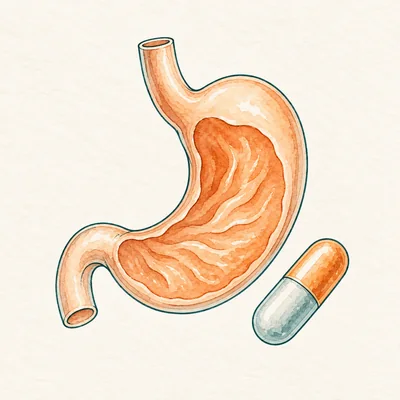
Two conditions usually come together: low stomach acid and everyday exposure to the bacterium. Normally, stomach acid kills most P. aeruginosa long before it reaches the small intestine.
Proton pump inhibitors (PPIs) change this, because they suppress acid production and remove the main barrier for this species. In the clinics where I work as a scientific collaborator, a PPI course often comes a few weeks before small intestinal symptoms begin. This is a clinical observation, not a finding from a study.
P. aeruginosa is common in soil and water, and pets are a frequent household source. Dogs and cats can carry it in their ears and mouths without obvious illness and pass it on through daily contact. Once it reaches a gut with lower acid defenses, it does not need much to settle in the duodenum.
Why does a Pseudomonas aeruginosa infection cause so many symptoms?
The bacterium does more than one thing. It signals through histamine, breaks down gluten in a way that mimics celiac disease, and releases LPS into a lining it has already loosened. Most people get a mix of all three.
It makes histamine
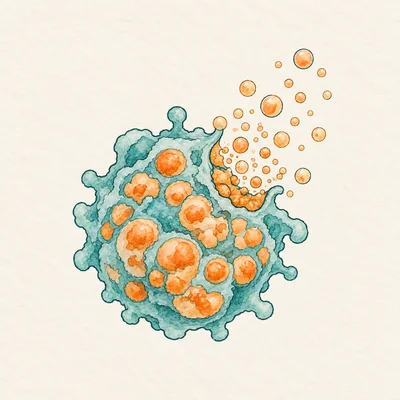
P. aeruginosa has histidine decarboxylase, the enzyme that turns histidine into histamine,2 and it produces histamine in the laboratory. Histamine also pulls more bacteria toward its source through the TlpQ receptor,6 and it made P. aeruginosa biofilms larger and more resistant to antibiotics.7

Its elastase changes gluten
P. aeruginosa from the duodenum of people with celiac disease broke gluten down with its elastase into peptides that activated their gluten-specific immune cells. Duodenal lactobacilli from healthy people broke these peptides down further.3
It releases LPS
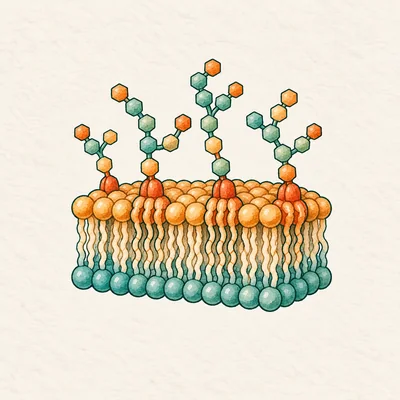
As its numbers climb, its outer membrane sheds LPS into the gut. LPS triggers inflammation that can loosen the junctions between lining cells, so water moves less predictably and diarrhea, cramps and irregular stools follow. Biofilms help it persist.8
Histamine from the bacterium acts on the same receptors our own mast cells use. H1 activation drives smooth muscle contraction and pain, and H2 activation raises stomach acid and can add to secretory diarrhea. More on this in IBS and mast cells.
I have a problem with gluten, but celiac disease has never been proven, not by duodenal biopsy and not by antibodies. So why does it still bother me? When I stop eating it, the bloating disappears.
Your tests are probably right, and your gut lining may be healthy. A Pseudomonas aeruginosa infection could explain this without damaging the villi. Its elastase cuts gluten into small fragments that immune cells in the lining may react to.3 Stop the gluten and the fragments stop, so the bloating goes away, which matches your pattern. Once the bacterium is treated, gluten often becomes easier to tolerate again.
Which IBS symptoms go along with a high Pseudomonas result?
The symptoms that go along with a high Pseudomonas result are rarely random. Once the mechanism behind each one is clear, the pattern usually makes sense.
| Symptom | Why Pseudomonas may cause it |
|---|---|
| Stomach discomfort after meals | It settles in the duodenum, where digestion begins, so it reacts soon after eating |
| Bloating and burping | Gas from fermentation and from the bacterium's own metabolism |
| Gluten sensitivity with a negative celiac panel | Elastase-modified gluten peptides trigger inflammation without celiac antibodies |
| Loose stools or diarrhea | LPS loosens the junctions between lining cells and speeds up transit |
| Abdominal cramps or pain | Bacterial histamine acting on H1 receptors in gut smooth muscle |
| Fatigue | Low-grade inflammation together with poorer absorption of nutrients |
Not every symptom needs to be there for the pattern to be real. Many people notice two or three of these together rather than the full list, which fits a bacterium that sits mostly in the duodenum.
Infographic
Common in IBS
Molecular tests of the duodenum and stool keep finding it at much higher levels in IBS than in healthy volunteers.

Low stomach acid helps
Stomach acid normally kills most of it. Acid-suppressing PPIs remove the main barrier for this species.
It makes histamine
Histamine pulls more bacteria toward its source and made biofilms larger and more resistant to antibiotics.
Its elastase cuts gluten
Elastase breaks gluten into fragments that immune cells may react to, even when a celiac panel is negative.
LPS loosens the lining
It sheds LPS into the gut, which can loosen the junctions between lining cells and lead to diarrhea and cramps.
Sources: Kerckhoffs et al. 2011, Corral-Lugo et al. 2018, Caminero et al. 2016, Tuon et al. 2022.
gutpathways.com
 Save this infographicImage 4:5, with sources, from gutpathways.com
How often is Pseudomonas the main organism in small intestinal overgrowth?
If doctors culture small intestinal bacterial overgrowth (SIBO) directly from duodenal fluid, instead of inferring it from a breath test, Pseudomonas can be the organism found most often. A 2025 study from Bangladesh in 104 people with IBS reported this, with Pseudomonas in most of the SIBO-positive samples.
A real case of Pseudomonas-predominant IBS
A Pseudomonas-predominant IBS case often starts the way Aspa's did: years of bloating that no one linked to a specific cause, until targeted testing pointed at the small intestine.
Aspa, 56, mother of two
Her history included more than 30 antibiotic courses for tonsillitis before age 12, and bowel symptoms since her teens. A short PPI course a few weeks before her symptoms got worse pointed to the duodenum rather than the colon.
- The patient
Two pregnancies delivered by C-section and more than 20 kg gained in the second one. Bloating and constipation had been present since her teens but had been dismissed.
- The trigger
A PPI prescribed weeks before her symptoms got worse lowered the stomach acid that normally keeps P. aeruginosa out of the small intestine. Regular contact with a family pet was the likely source.
- Lab findings
A 16S rRNA stool test found P. aeruginosa at more than 25 times the baseline value, with raised eosinophil protein X (EPX), raised secretory IgA and signs of low fermentation by beneficial bacteria.
- The plan
The plan had two parts: lower the Pseudomonas population and repair the damage in the duodenum. Antimicrobials were combined with a 16-hour fasting window, so the small intestine could rest, over several months.
- The outcome
Within the first week, urgency and bloating had eased. By two months she tolerated a wider range of meals, including raw vegetables, with regular bowel movements, little gas and more energy.
Cases like this tend to respond to a blend of antimicrobials given for long enough, timed around a fasting window, with a strict gluten-free and very low sugar diet and support for the small intestine. A single antibiotic course, rifaximin included, is rarely enough on its own in the clinics where I work as a scientific collaborator.
A stool test that flags Pseudomonas is not a diagnosis on its own. It is a clue that points to the small intestine.
Why a resistant Pseudomonas infection rarely clears with one course
P. aeruginosa survives antibiotics well, in the gut as much as in a hospital ward. A Chinese study cultured it from 2,605 stool samples of intensive care patients and healthy adults from ten provinces.9
Intestinal Pseudomonas aeruginosa, intensive care against healthy adults (%)
Hu 2023. Carbapenem-resistant share among the isolates found.
Biofilm is a big part of the problem. Once P. aeruginosa settles into a protected matrix on the gut lining, antibiotics struggle to get through it.8 For this reason, a short course often eases symptoms for a few weeks and then lets them return.
How can you get rid of Pseudomonas aeruginosa in the gut?
It helps to see it as a small intestinal infection with its own rhythm, not as a general dysbiosis that one supplement or one prescription can fix. Each plan is set by a doctor, depending on the person and the test results.
The antimicrobial part tends to work better as a blend than as a single agent, given for long enough to outlast the biofilm, and timed around meals. The small intestine has its own cleaning wave, the migrating motor complex, which sweeps debris and bacteria toward the colon between meals,10 and constant grazing switches it off.
Diet matters too. A gluten-free diet removes the substrate that elastase turns into a trigger, and cutting refined sugar starves the fermentation that Pseudomonas and its neighbors feed on. In the clinics where I work as a scientific collaborator, a very low sugar diet makes more difference than a moderate cut.
Because Pseudomonas prefers the duodenum, the small intestine often needs direct support while the bacterial load comes down: enzymes and mucosal repair for the segment that was damaged, rather than general probiotics aimed mainly at the colon.
When does a Pseudomonas aeruginosa infection become serious?
It becomes serious when the bacterium leaves the gut, most often through the bloodstream, in someone whose immune defenses are already weak. The gut is considered the most important reservoir of P. aeruginosa9 and the starting point of this spread.
Once this Gram-negative organism reaches the blood, it can spread to the urinary tract, catheters and central lines, the lungs, the eyes and the skin. In cystic fibrosis it is one of the best known lung pathogens. In hospitals it is among the most common causes of hospital-acquired infection, and antibiotic resistance is why such a case can become life-threatening quickly.
The risk factors that matter most
People with a weak immune system carry the highest risk by far: people on chemotherapy with low white cell counts, people with a catheter or central line, and people already in intensive care. Mechanical ventilation and an intensive care stay were among the strongest predictors of death.4 In a healthy person with a normal immune system, gut inflammation from the same bacterium usually stays where the test found it, in the small intestine.
The bottom line on a Pseudomonas aeruginosa infection
A single high number on a stool or duodenal test matters, but it rarely tells the whole story. This bacterium behaves less like background dysbiosis and more like a small intestinal infection with its own biology: it makes histamine, it can turn gluten into a problem without celiac disease, and it protects itself with biofilm.
Treating it well means combining the right antimicrobials with the right diet and enough rest for the small intestine to heal. A high result is a starting point for a specific plan, not a life sentence. For diarrhea in particular, see can Pseudomonas cause diarrhea.
Frequently asked questions
Not in the way a cold spreads from person to person. Pseudomonas aeruginosa is common in soil, water and pets, so people in a household can share the same source without infecting each other. Stomach acid decides whether it settles in the gut, and low acid, often from PPIs, lets it reach the small intestine.
Mild colonization can come and go. A large rise, such as the more than 25-fold rise in Aspa's case, rarely resolves unless the low acid or slow motility that let it settle is addressed.
Not automatically. The number matters less than how it fits with symptoms and other markers, such as calprotectin, EPX or secretory IgA. A high result without symptoms and with clean inflammatory markers is a different picture from the same number with bloating, gluten sensitivity and discomfort after meals.
Gluten and refined sugar are the two main dietary drivers. Gluten gives the bacterium's elastase a substrate to turn into inflammatory peptides,3 and refined sugar feeds the fermentation that lets Pseudomonas and related organisms overgrow.
References
10 studies
- Kerckhoffs APM, Ben-Amor K, Samsom M, et al. Molecular analysis of faecal and duodenal samples reveals significantly higher prevalence and numbers of Pseudomonas aeruginosa in irritable bowel syndrome. J Med Microbiol. 2011.
- Cundell DR, Devalia JL, Wilks M, et al. Histidine decarboxylases from bacteria that colonise the human respiratory tract. J Med Microbiol. 1991.
- Caminero A, Galipeau HJ, McCarville JL, et al. Duodenal Bacteria From Patients With Celiac Disease and Healthy Subjects Distinctly Affect Gluten Breakdown and Immunogenicity. Gastroenterology. 2016.
- Vitkauskienė A, Skrodenienė E, Dambrauskienė A, et al. Pseudomonas aeruginosa bacteremia: resistance to antibiotics, risk factors, and patient mortality. Medicina (Kaunas). 2010.
- Shukla R, Ghoshal U, Dhole TN, et al. Fecal Microbiota in Patients with Irritable Bowel Syndrome Compared with Healthy Controls Using Real-Time Polymerase Chain Reaction: An Evidence of Dysbiosis. Dig Dis Sci. 2015.
- Corral-Lugo A, Matilla MA, Martín-Mora D, et al. High-Affinity Chemotaxis to Histamine Mediated by the TlpQ Chemoreceptor of the Human Pathogen Pseudomonas aeruginosa. mBio. 2018.
- Dib K. Histamine Promotes Pseudomonas aeruginosa Biofilm Formation and Renders P. aeruginosa Biofilms More Resistant to Gentamicin and Azithromycin. Med Princ Pract. 2025.
- Tuon FF, Dantas LR, Suss PH, et al. Pathogenesis of the Pseudomonas aeruginosa Biofilm: A Review. Pathogens. 2022.
- Hu Y, Wang S, Zhang Y, et al. A comparative study of intestinal Pseudomonas aeruginosa in healthy individuals and ICU inpatients. One Health Adv. 2023.
- Deloose E, Janssen P, Depoortere I, et al. The migrating motor complex: control mechanisms and its role in health and disease. Nat Rev Gastroenterol Hepatol. 2012.
Found this useful? Share it with someone who needs it.
Cite this article
Prevedoros, T. (2026, August 8). What does a high Pseudomonas result in a stool test mean?. Gut Pathways. https://gutpathways.com/articles/pseudomonas-intestinal-infection/