Mast cells keep the gut barrier on edge in IBS
IBS and mast cells meet at the gut barrier. A leaky lining, reactive immune cells, bacterial signals and everyday triggers can keep the gut on high alert. The same biology also shows routes toward a calmer barrier.
What is the link between IBS and mast cells?
The link becomes clearer when you look at numbers and at location together. In a large study of health records, up to 4% of people with IBS also had a mast cell disorder.1 The strongest link was with mast cell activation syndrome (MCAS): people with IBS had 16 times higher odds of MCAS. This puts mast cells inside the IBS story, not at its edge.
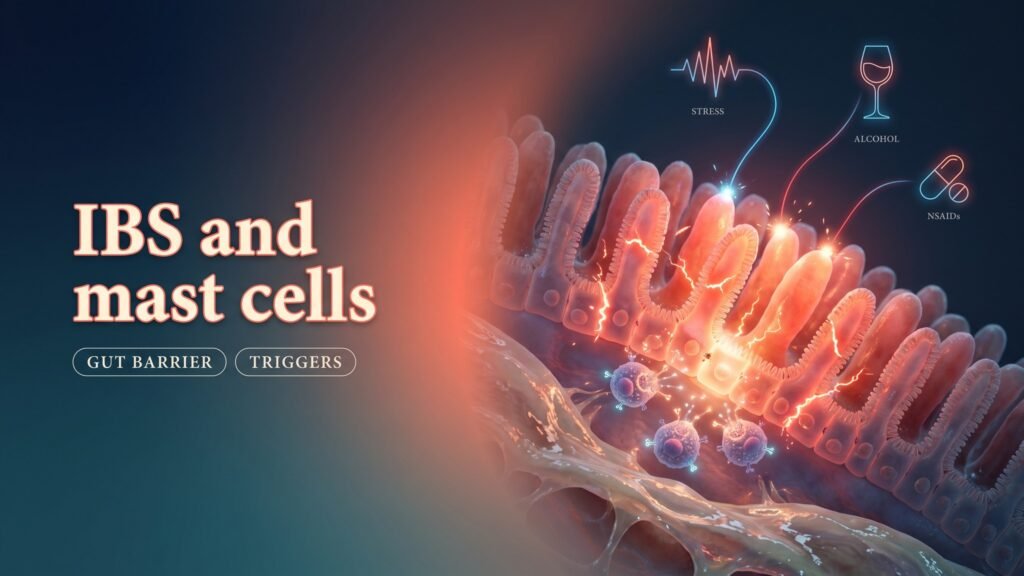
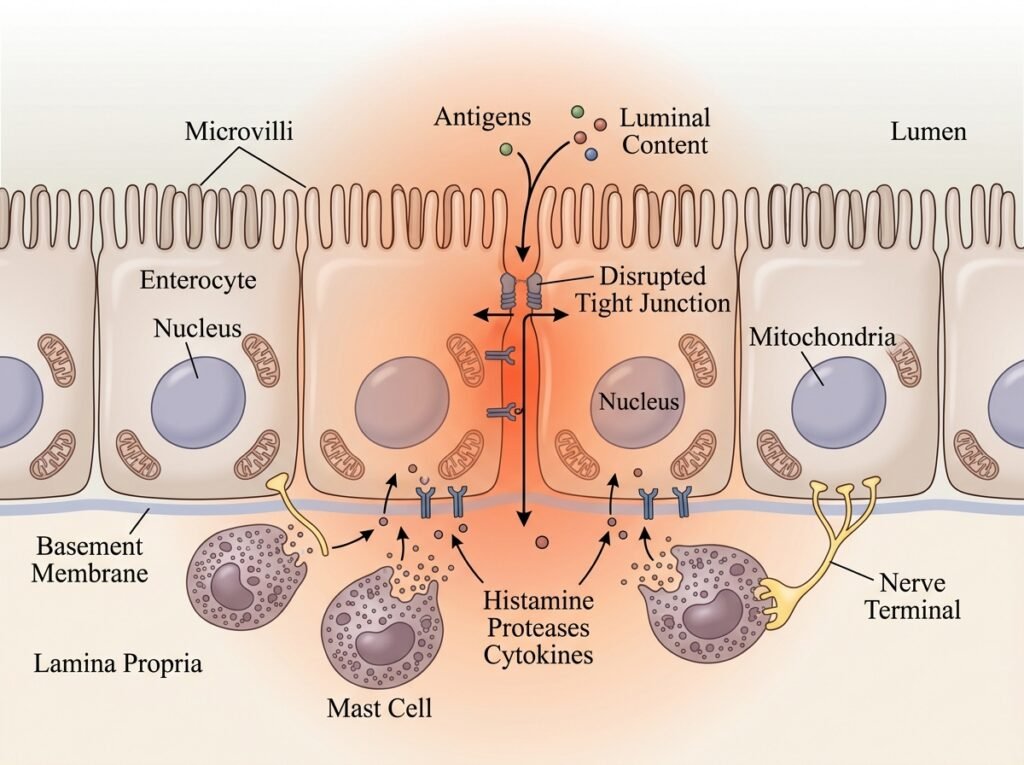
Mast cells sit close to the gut barrier, where they respond fast to stress signals, bacterial products and chemicals. When the response is too strong, the gut becomes more permeable and more sensitive. This offers a plausible route from immune activation to urgency, loose stools, discomfort and a bowel that reacts strongly to ordinary food and stretch.
Where are mast cells increased in the gut?
A meta-analysis compared mast cell counts in the small intestine of people with IBS and healthy people. Only the ileum, the last part of the small intestine, showed a clear increase.2 The duodenum and the jejunum showed smaller differences that did not reach significance.
Mast cells in the small intestine of people with IBS, by segment (standardized mean difference)
Robles 2019, meta-analysis. Only the ileum result was significant.
The location matters. More mast cells close to the lining means more chances for their mediators to act on the barrier. When mast cell activity and permeability are both high, the ileum becomes a central part of the IBS picture.

How do mast cells affect intestinal permeability?
In a study of rectal biopsies from 16 people with IBS-D and 7 healthy people, tryptase activity and permeability were both much higher in IBS-D.3 Mast cell counts alone did not differ, but the number of mast cells tracked with permeability within the IBS-D group.
Tryptase and permeability in rectal biopsies, IBS-D against healthy controls
Lee 2013. Tryptase in mU/mg protein, permeability in ng/2 h/mm². Each pair is scaled on its own.
Mast cells release tryptase when they are activated. As their activity rises, the barrier becomes easier to cross, and more material from the gut reaches the immune side of the lining. That brings more stimulation, which explains why the bowel can stay reactive after the first trigger has gone, and why IBS-D can feel like a system that has lost its normal threshold.

Which habits and exposures make mast cells flare?
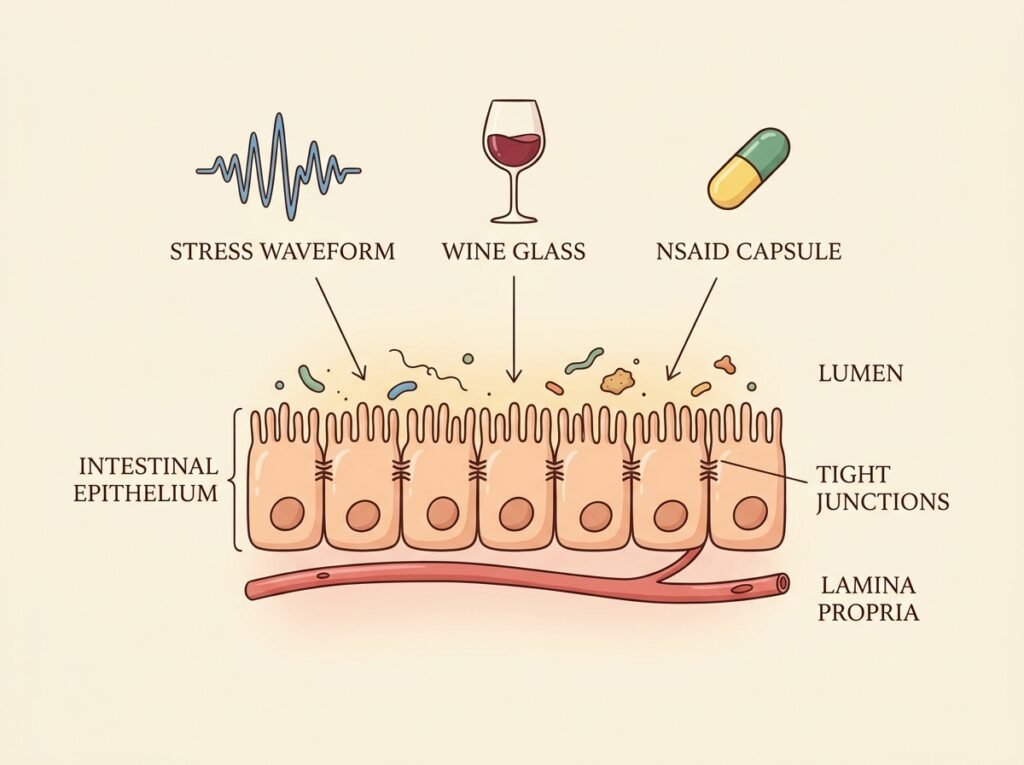
Chronic stress, alcohol and NSAIDs reach the gut barrier by different routes, yet all three can push mast cells to react.
Chronic stress
In healthy volunteers, public speaking stress and the stress hormone CRH raised small intestinal permeability. A mast cell stabilizer blocked the effect, so mast cells were part of the chain.4

Alcohol
In rats, alcohol made the colon more permeable, and acetaldehyde, its breakdown product, raised the flow of molecules across the lining by 54%. A mast cell stabilizer blocked this effect too.5
NSAIDs
Diclofenac increased the number of mast cells in the small intestine of rats, and in cell studies the mast cells weakened the tight junctions between gut cells through PAR-2.6
The effect adds up. A stressful period, regular alcohol and frequent painkillers all load the same barrier. The result is a gut that opens more easily, reacts more strongly and takes longer to settle. Knowing these routes gives repeated flares a clearer structure.
Which gut bacteria make mast cell-related IBS worse?
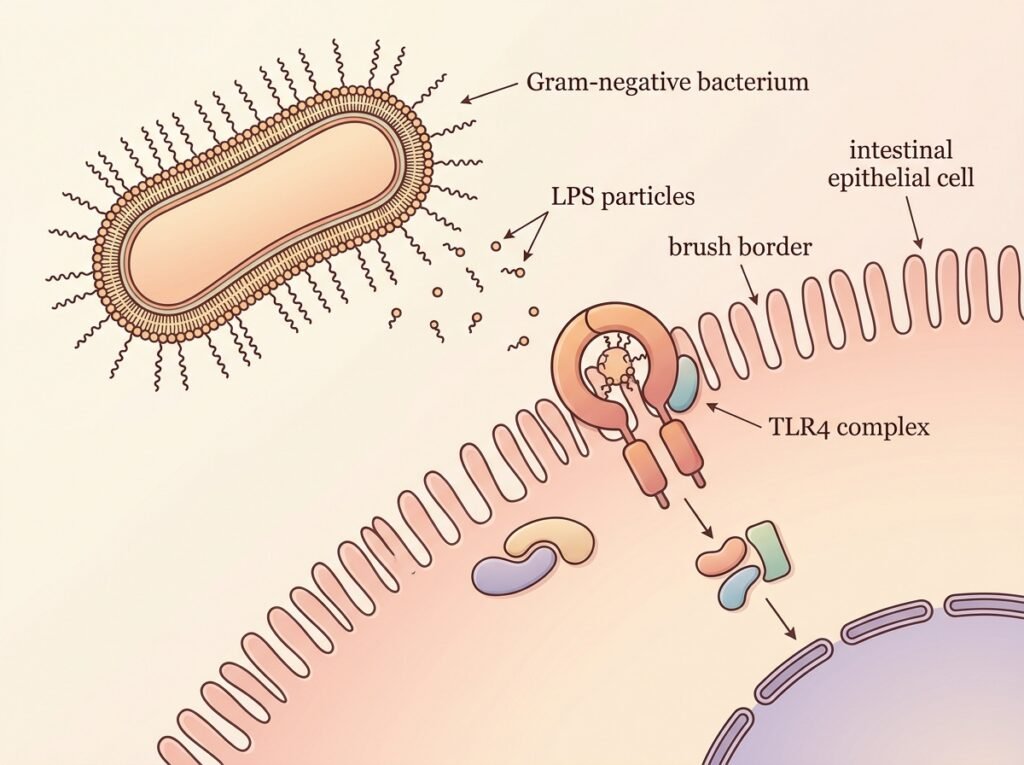
Gram-negative bacteria carry LPS on their surface. LPS binds the TLR4 receptor and switches on inflammatory signals. In mice, a high FODMAP diet raised fecal LPS, activated mast cells through TLR4 and weakened the colon barrier, and stool from people with IBS stimulated mast cells more than stool from healthy people.9 A low FODMAP diet reversed these changes.
So the direction of the bacterial output matters. A gut flora rich in LPS keeps sending activation signals to the barrier. Mast cells receive more stimulation, the lining loses control and the gut becomes less resilient. This ties gut bacteria directly to immune activation instead of treating them as a separate topic.
Faecalibacterium prausnitzii and how it protects the gut barrier
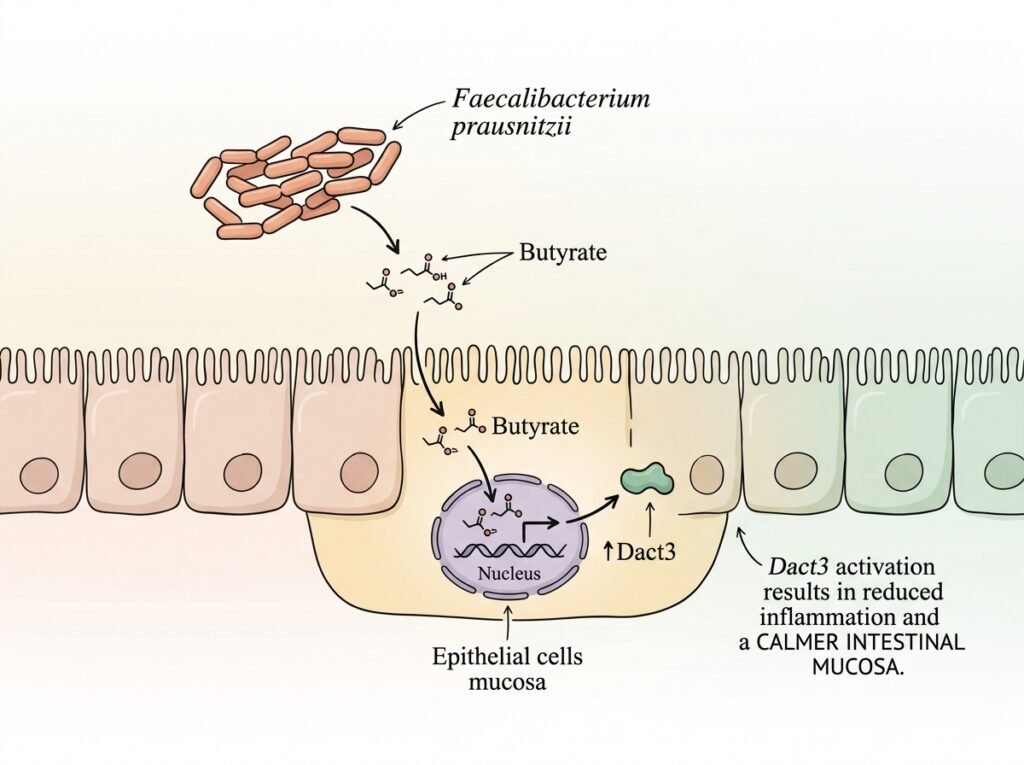
The protective route starts with Faecalibacterium prausnitzii. This bacterium makes butyrate, and in gut cells and in mice butyrate raised a protective gene called Dact3, which dampened inflammation.7
Here the product matters more than the name of the bacterium. Butyrate is the bridge between a protective flora and a lining that controls inflammation better. When this route works, the barrier receives fewer signals that keep mast cells switched on.
How to support Faecalibacterium prausnitzii
Prebiotic fibers such as inulin raised F. prausnitzii in several trials, although not in all of them.10
- oats and legumes
- cooked and cooled potatoes
- extra virgin olive oil
- colorful vegetables
- fermented foods
Cutting back on chronic stress, alcohol and unneeded NSAIDs also helps, because each of them strains the same barrier. See low Faecalibacterium prausnitzii.
Can quercetin help stabilize mast cells?
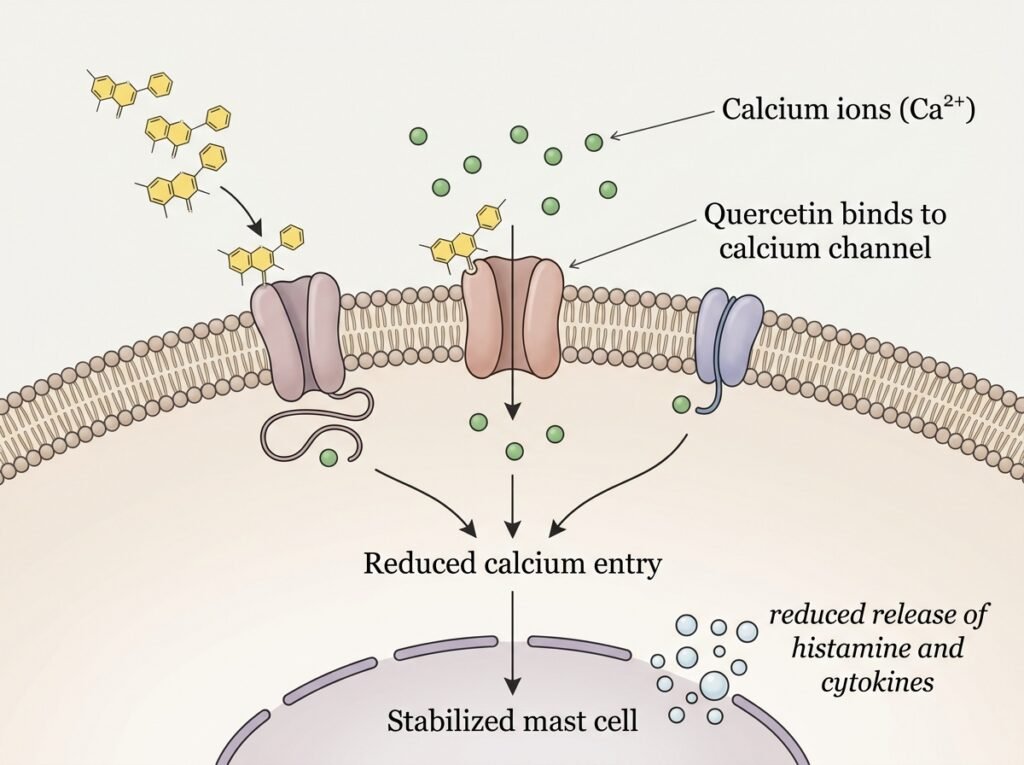
Quercetin is a flavonoid found in many plants. In human mast cells grown in the laboratory, it blocked the rise of calcium inside the cell, cut the release of histamine and inflammatory cytokines, and worked better than cromolyn, the classic mast cell stabilizer, on some of these signals.8 Reviews list it among the natural mast cell stabilizers.11
Quercetin comes from foods and herbs, which makes it easy to include. Its effect on mast cells comes from laboratory studies, and it has not been tested as a treatment for IBS.
How to prepare linden tea
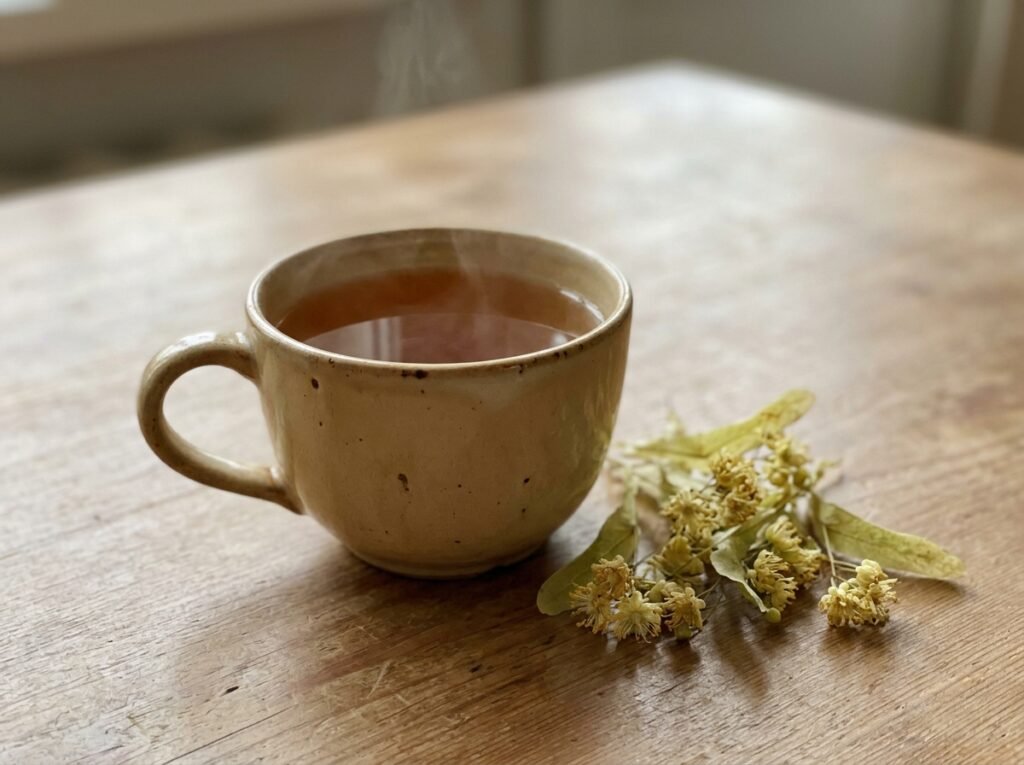
Linden flowers (Tilia) contain quercetin and other flavonoids, which are their marker compounds.12 The European Medicines Agency describes linden tea for colds and for mild symptoms of stress, at 1.5 g of flowers in 150 ml of boiling water, 2 to 4 times a day.13 It has not been studied in IBS or in mast cell disorders, so treat it as a gentle addition to a flavonoid-rich diet, not as a treatment.
Linden tea
A simple infusion of dried linden flowers, a source of quercetin and other flavonoids.
Ingredients
- 1.5 g dried linden flowers
- 150 ml boiling water
Method
- Place the dried linden flowers in a cup or teapot.
- Pour in 150 ml of boiling water.
- Cover and let it steep for 5 to 15 minutes.
- Strain and drink warm.
Frequently asked questions
No. Mast cells matter most in a subgroup of IBS marked by a leaky barrier, diarrhea, sensitivity to triggers and immune reactivity.
In a large study of health records, people with IBS had about 16 times higher odds of mast cell activation syndrome (MCAS) than people without IBS.1 The two conditions share symptoms, so a doctor may look for both.
The ileum is the only part of the small intestine where mast cells were clearly increased in IBS in a meta-analysis.2
Gram-negative bacteria release LPS, which activates TLR4, weakens the barrier and keeps inflammatory signals close to the mast cells.9
Prebiotic fibers such as inulin raised it in several trials.10 A varied diet with fiber, resistant starch and polyphenols, and less stress, alcohol and unneeded NSAIDs, also support it.
Low levels mean less butyrate, and butyrate supports the Dact3 route that calms the gut lining.7 A lining under less protection can become more permeable and its mast cells more reactive.
References
13 studies
- Kurin M, Elangovan A, Alikhan MM, et al. Irritable bowel syndrome is strongly associated with the primary and idiopathic mast cell disorders. Neurogastroenterol Motil. 2022.
- Robles A, Perez Ingles D, Myneedu K, et al. Mast cells are increased in the small intestinal mucosa of patients with irritable bowel syndrome: a systematic review and meta-analysis. Neurogastroenterol Motil. 2019.
- Lee H, Park JH, Park DI, et al. Mucosal mast cell count is associated with intestinal permeability in patients with diarrhea predominant irritable bowel syndrome. J Neurogastroenterol Motil. 2013.
- Vanuytsel T, van Wanrooy S, Vanheel H, et al. Psychological stress and corticotropin-releasing hormone increase intestinal permeability in humans by a mast cell-dependent mechanism. Gut. 2014.
- Ferrier L, Bérard F, Debrauwer L, et al. Impairment of the intestinal barrier by ethanol involves enteric microflora and mast cell activation in rodents. Am J Pathol. 2006.
- Chao G, Hong X, Zhang S. Effects of mast cells induced by NSAIDs impair intestinal epithelial barrier function in vivo and in vitro. Inflammation. 2021.
- Lenoir M, Martín R, Torres-Maravilla E, et al. Butyrate mediates anti-inflammatory effects of Faecalibacterium prausnitzii in intestinal epithelial cells through Dact3. Gut Microbes. 2020.
- Weng Z, Zhang B, Asadi S, et al. Quercetin is more effective than cromolyn in blocking human mast cell cytokine release and inhibits contact dermatitis and photosensitivity in humans. PLoS One. 2012.
- Singh P, Grabauskas G, Zhou SY, et al. High FODMAP diet causes barrier loss via lipopolysaccharide-mediated mast cell activation. JCI Insight. 2021.
- Verhoog S, Taneri PE, Roa Díaz ZM, et al. Dietary factors and modulation of bacteria strains of Akkermansia muciniphila and Faecalibacterium prausnitzii: a systematic review. Nutrients. 2019.
- Cao M, Gao Y. Mast cell stabilizers: from pathogenic roles to targeting therapies. Front Immunol. 2024.
- Karioti A, Chiarabini L, Alachkar A, et al. HPLC-DAD and HPLC-ESI-MS analyses of Tiliae flos and its preparations. J Pharm Biomed Anal. 2014.
- European Medicines Agency, HMPC. Community herbal monograph on Tilia cordata Miller, Tilia platyphyllos Scop., Tilia x vulgaris Heyne or their mixtures, flos. 2012.
Found this useful? Share it with someone who needs it.
Cite this article
Prevedoros, T. (2026, July 31). Mast cells keep the gut barrier on edge in IBS. Gut Pathways. https://gutpathways.com/articles/ibs-and-mast-cells/