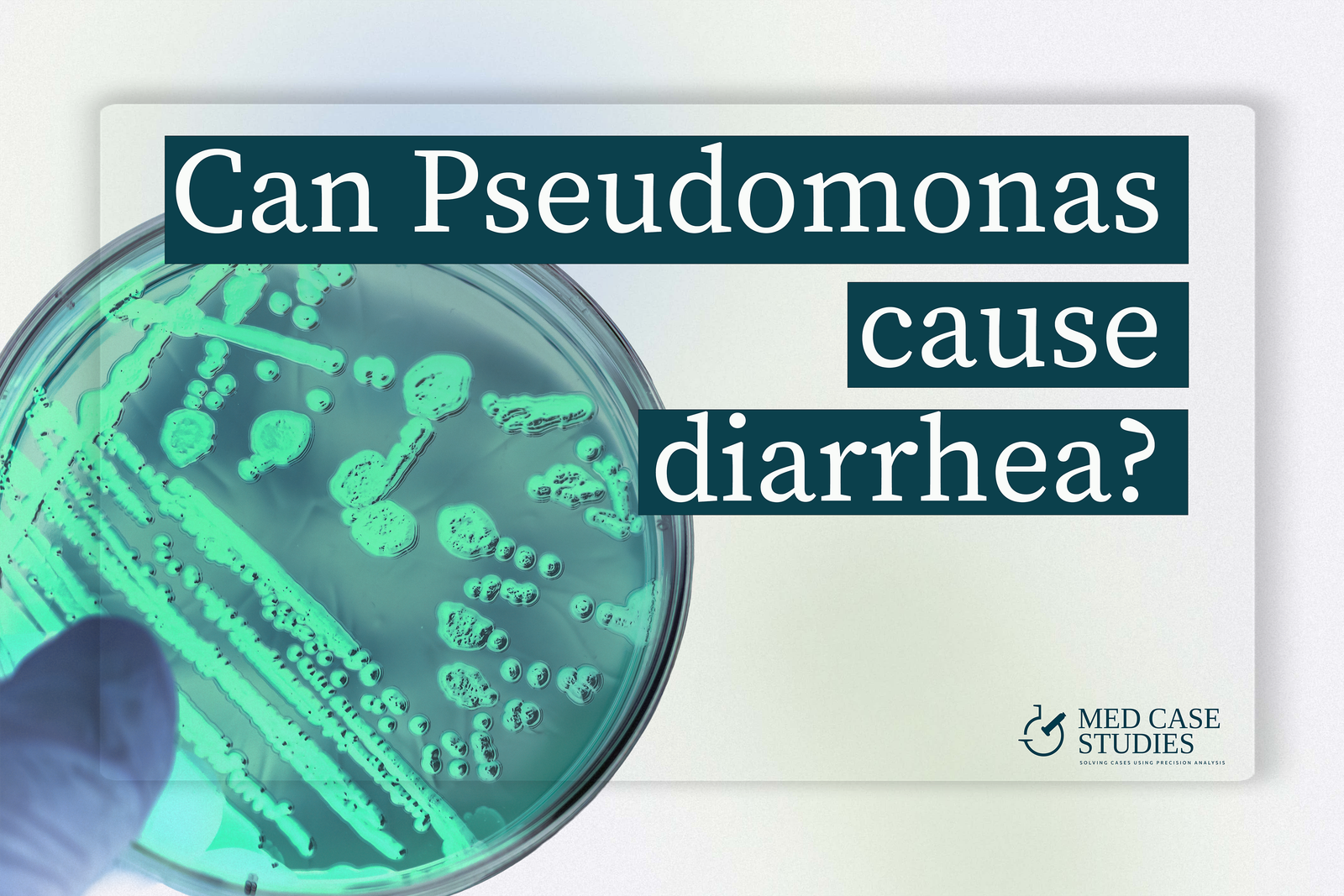
Can Pseudomonas cause diarrhea?
Pseudomonas aeruginosa is better known from hospitals than from the gut. Yet it can cause infectious diarrhea, often after a course of broad antibiotics, and it turns up far more often in the stool of people with IBS.
How Pseudomonas aeruginosa can trigger diarrhea
Yes, Pseudomonas aeruginosa can cause diarrhea. Case reports describe it as a cause of infectious diarrhea in adults, for example in a woman in her eighties with diabetes who developed it in hospital.1 It often appears after broad antibiotics, so it is one possible cause of antibiotic-associated diarrhea.
Hospital plumbing can seed outbreaks, and hospital water systems are a documented source of hospital-acquired Pseudomonas infections.2 This matters most in the weeks of recovery after a hospital stay.
In the lining, the bacterium releases elastase and other proteins that break down the junctions between lining cells. In nasal lining cells, these proteins made the barrier more permeable, and the effect followed the elastase activity of each strain.4 A similar effect in the gut would raise permeability and feed watery stools with abdominal pain, although it has not been tested there.
People with IBS carry far more P. aeruginosa than healthy people, both in the small intestine and in stool.3, 5 In the clinics where I work as a scientific collaborator, it often shows up on PCR stool tests during and after IBS flares. More details are in Pseudomonas spp high in stool.
Stool test: culture, PCR and susceptibility
A stool test can confirm the bacterium and guide the treatment. These are the main parts:
Stool culture
A culture confirms the identity of the bacterium and allows susceptibility testing, which shows the antibiotics that still work. In one case report, oral ciprofloxacin chosen this way cleared the infection.1
PCR panels
PCR panels can detect Pseudomonas aeruginosa when routine stool pathogens are negative. This can point to the cause of antibiotic-associated diarrhea.
Other sites
Pseudomonas can colonize the gut and another site at the same time, such as the urinary tract or a medical device, especially in hospital settings where the defenses of the normal flora are weaker.
How Pseudomonas aeruginosa harms the gut
P. aeruginosa does not act through one mechanism. The six below work together, and each one can add to diarrhea, urgency or pain.
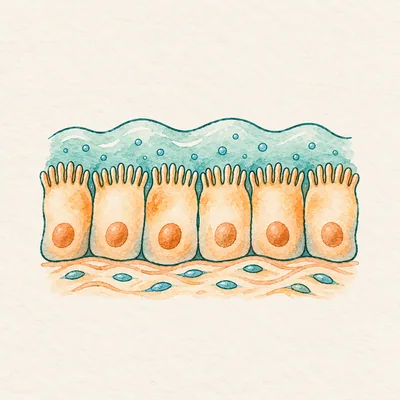
Elastase weakens tight junctions
LasB elastase degrades the proteins that seal the gaps between lining cells, such as ZO-1 and occludin. In nasal lining cells this raised permeability,4 and the same may happen in the gut and feed urgency.
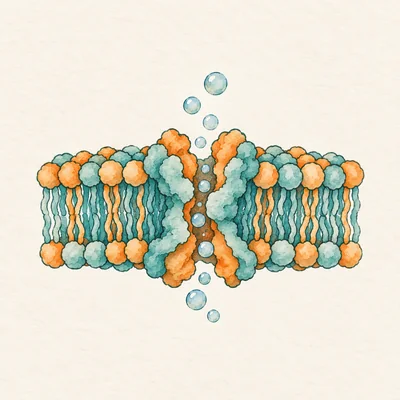
Secreted proteins injure the lining
The proteins P. aeruginosa secretes damage the epithelium and make it leakier.4 A leaky, inflamed lining is a frequent source of abdominal pain.
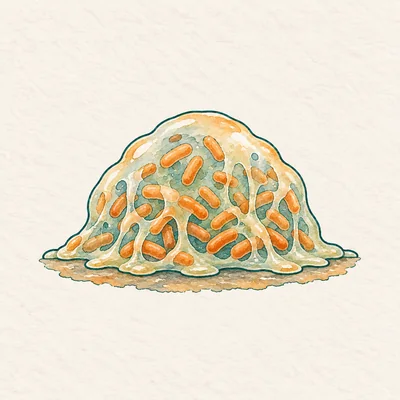
Biofilm keeps it in place
Biofilm makes the bacterium more tolerant to drugs and to the immune system, so it clears more slowly.6 This can prolong antibiotic-associated diarrhea during recovery.
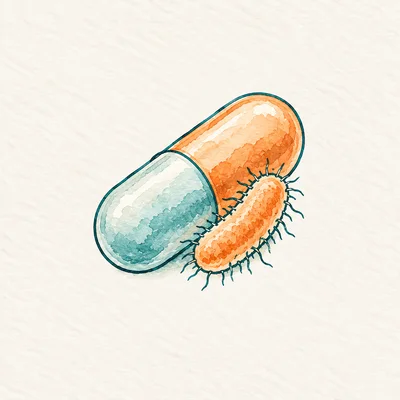
Dysbiosis after antibiotics
After antibiotics, the defenses of the normal flora drop. This lets a Gram-negative organism like P. aeruginosa expand and drive symptoms.
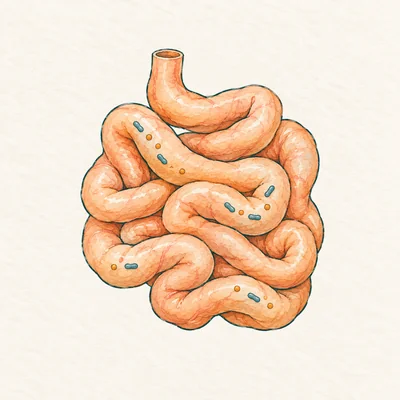
Small and large bowel
P. aeruginosa is not limited to the colon. It is found at much higher levels in the duodenum of people with IBS than in healthy people.3
Fermentation
An excess of quickly fermented carbohydrates raises gas and bloating alongside diarrhea during recovery from an infection.
Infographic
After antibiotics
After antibiotics, the defenses of the normal flora drop. This lets a Gram-negative organism like P. aeruginosa expand.
Elastase and the barrier
Elastase breaks down proteins that seal the gaps between lining cells. This was shown in nasal cells and may happen in the gut.
Secreted proteins
The proteins it secretes damage the epithelium and make it leakier. A leaky, inflamed lining is a frequent source of abdominal pain.
Biofilm
Biofilm makes the bacterium more tolerant to drugs and to the immune system, so it clears more slowly.
Small bowel presence
It is found at much higher levels in the duodenum of people with IBS than in healthy people.
Sources: Li et al. 2019, Tuon et al. 2022, Kerckhoffs et al. 2011.
gutpathways.com
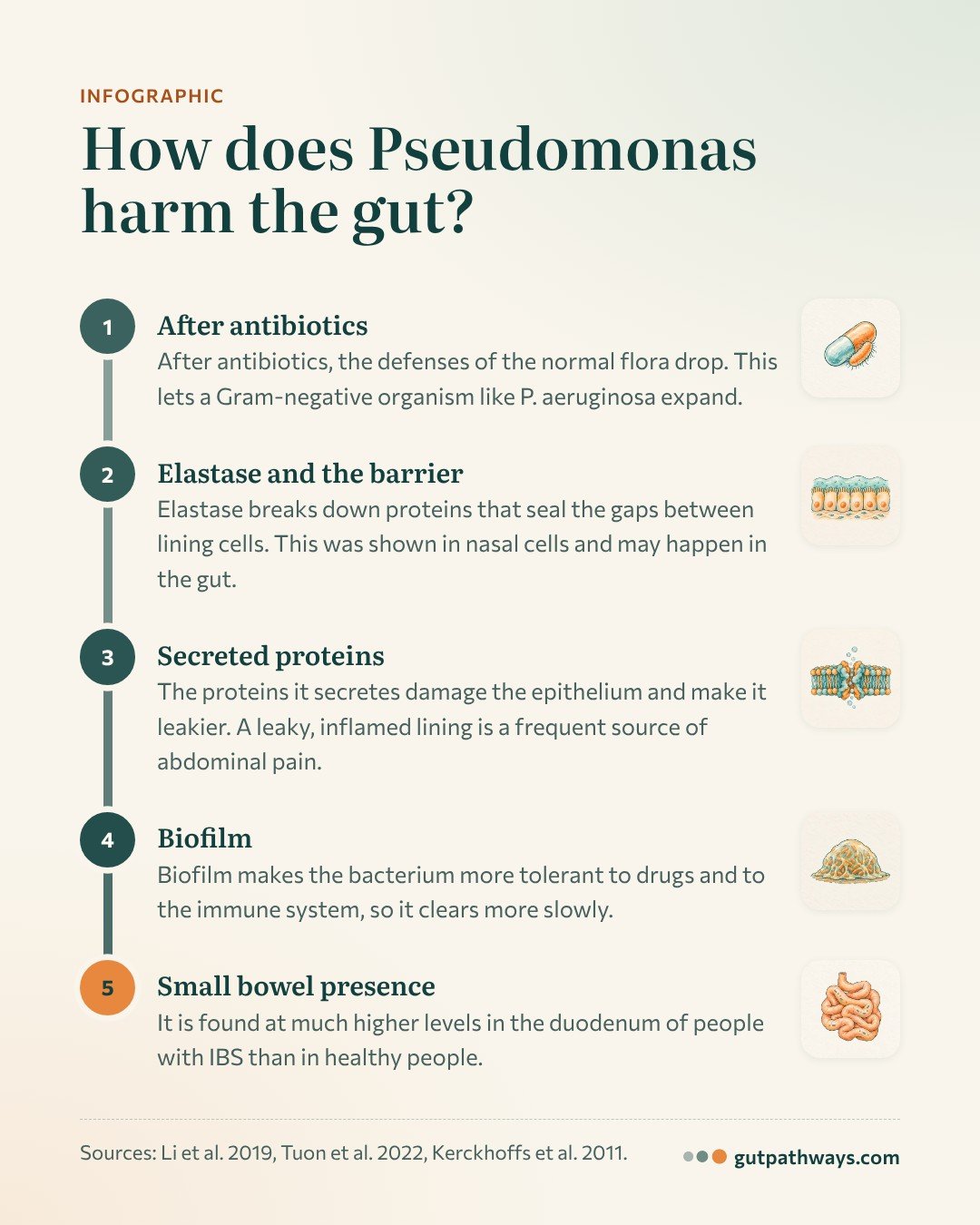 Save this infographicImage 4:5, with sources, from gutpathways.com
Risk factors for Pseudomonas overgrowth in the gut
- Recent broad-spectrum antibiotics, intensive care and medical devices
- Repeated antibiotic courses, or an earlier bacterial or viral gastroenteritis
- Underlying disease, earlier enterocolitis or a weak immune system
- Community cases also occur, mostly after recent antimicrobials and travel
People in intensive care carry it more often than healthy adults, and their strains resist more antibiotics.7
Steps that are often discussed with a doctor
Each plan depends on the person and on the test results. These are the steps most often discussed in the clinics where I work as a scientific collaborator:
A gluten-free period
Pseudomonas elastase can turn gluten into fragments that activate the immune system.8 A strict gluten-free period lowers this load.
A combination of antimicrobials
Doctors often use a blend of antimicrobial agents for about three months, so that both the small and the large intestine are covered. Biofilms make short, single-agent courses less effective.6
A long gap between meals
A daily fasting window lets the cleaning wave of the small intestine, the migrating motor complex, run between meals.9 Whether it also makes biofilms easier to clear has not been studied.
Fewer free sugars
Less sugar and fewer simple carbohydrates mean less fermentation, so gas and bloating tend to ease.
Takeaway
Pseudomonas aeruginosa can cause infectious diarrhea and is one possible cause of antibiotic-associated diarrhea. Recent antibiotics, a less diverse gut flora, underlying metabolic disease and hospital exposure are the main risk factors. For the full picture of how it behaves in IBS, see Pseudomonas intestinal infection.
Frequently asked questions
With a stool test. A culture confirms the bacterium and tests which antibiotics still work, while PCR panels can detect it when routine pathogens are negative.
No. Healthy people can carry small amounts.7 A high level matters more when it goes along with symptoms, recent antibiotics or a hospital stay.
A doctor chooses the treatment, usually guided by susceptibility testing.1 Diet steps such as less gluten and less sugar can support the treatment.
References
9 studies
- Porco FV, Visconte EB. Pseudomonas aeruginosa as a cause of infectious diarrhea successfully treated with oral ciprofloxacin. Ann Pharmacother. 1995.
- Anaissie EJ, Penzak SR, Dignani MC. The hospital water supply as a source of nosocomial infections: a plea for action. Arch Intern Med. 2002.
- Kerckhoffs APM, Ben-Amor K, Samsom M, et al. Molecular analysis of faecal and duodenal samples reveals significantly higher prevalence and numbers of Pseudomonas aeruginosa in irritable bowel syndrome. J Med Microbiol. 2011.
- Li J, Ramezanpour M, Fong SA, et al. Pseudomonas aeruginosa Exoprotein-Induced Barrier Disruption Correlates With Elastase Activity and Marks Chronic Rhinosinusitis Severity. Front Cell Infect Microbiol. 2019.
- Shukla R, Ghoshal U, Dhole TN, et al. Fecal Microbiota in Patients with Irritable Bowel Syndrome Compared with Healthy Controls Using Real-Time Polymerase Chain Reaction: An Evidence of Dysbiosis. Dig Dis Sci. 2015.
- Tuon FF, Dantas LR, Suss PH, et al. Pathogenesis of the Pseudomonas aeruginosa Biofilm: A Review. Pathogens. 2022.
- Hu Y, Wang S, Zhang Y, et al. A comparative study of intestinal Pseudomonas aeruginosa in healthy individuals and ICU inpatients. One Health Adv. 2023.
- Caminero A, Galipeau HJ, McCarville JL, et al. Duodenal Bacteria From Patients With Celiac Disease and Healthy Subjects Distinctly Affect Gluten Breakdown and Immunogenicity. Gastroenterology. 2016.
- Deloose E, Janssen P, Depoortere I, et al. The migrating motor complex: control mechanisms and its role in health and disease. Nat Rev Gastroenterol Hepatol. 2012.
Found this useful? Share it with someone who needs it.
Cite this article
Prevedoros, T. (2025, November 7). Can Pseudomonas cause diarrhea? What the evidence shows. Gut Pathways. https://gutpathways.com/articles/can-pseudomonas-cause-diarrhea/