Pseudomonas made gluten a problem without celiac disease
This is case 4 in the book IBSyncrasy
Aspa reacted to gluten, but her celiac tests were negative. Her case shows how Pseudomonas in the gut, a bacterium that can settle in the upper small intestine, may change the way gluten is broken down, and what her care plan focused on.
 Aspa's casecase study
1DemographicsStop 1 of 8
Who Aspa is
Aspa was a 56-year-old mother of two when she came to the clinic where I work as a scientific collaborator. Both of her children were born by C-section, and she had grown up in a small village in Greece.
- 56 years old
- Woman
- Mother of two
- Over 30 antibiotic courses before age 12
- Dog owner
- Negative celiac biopsies
Statistics from the practice for similar cases
- Number of cases
- >71
- Age range
- 30 to 60
- Success rate
- >95%
- Treatment duration
- 2 to 4 months
- Most common symptom
- Gluten sensitivity
- Most common trigger
- Pets
Average improvement score
Figures from the practice's own records of cases like this one, not from a published study.
Her main complaints were discomfort soon after meals, trouble with gluten, bloating, burping and fatigue. Her full case is described in the book IBSyncrasy.
2IntroductionStop 2 of 8
When bacteria in the small intestine meet gluten
When we talk about the gut microbiome, we usually mean the bacteria of the large intestine. Some bacteria, though, can cause IBS-like symptoms when they settle in the upper small intestine, the duodenum. Pseudomonas aeruginosa is one of them, and in practice I find it in some people with mixed-type IBS.
Its best-studied property is an enzyme called elastase, which can cut gluten into fragments in its own way. In a study by Caminero and colleagues, Pseudomonas aeruginosa from people with celiac disease produced gluten peptides that crossed the gut barrier of mice more easily and activated gluten-specific immune cells taken from people with celiac disease.1 In the same study, Lactobacillus bacteria from the duodenum of healthy people broke these peptides down further and made them less immunogenic.1
Does this mean that Pseudomonas causes celiac disease? No. Celiac disease is an immune reaction to gluten in genetically susceptible people. What Pseudomonas may do is change gluten in a way that makes it more irritating to the gut, so that some people get celiac-like symptoms without having celiac disease. In those people, the small intestine may stay mildly inflamed for hours after a meal that contains gluten. More on this bacterium is in Pseudomonas spp high in stool, and on gluten in IBS and gluten sensitivity.
3MeetingStop 3 of 8
Meeting Aspa
Aspa had recurrent tonsillitis as a child and received more than 30 antibiotic prescriptions before the age of 12. She remembered having gut symptoms even then, mainly bloating and gas, and as a teenager she was always constipated. She gained more than 20 kg in pregnancy. Until two years before we met, her gut symptoms came and went, so she did not pay much attention to them.
Then they became constant. A few weeks before they started, she had taken a PPI, and at home, her dog had recurrent ear infections.
Looking back, four factors seemed to have built on each other.

Contact with pets
Daily contact with her dog, which had recurrent ear infections, was a possible source of Pseudomonas in our assessment.
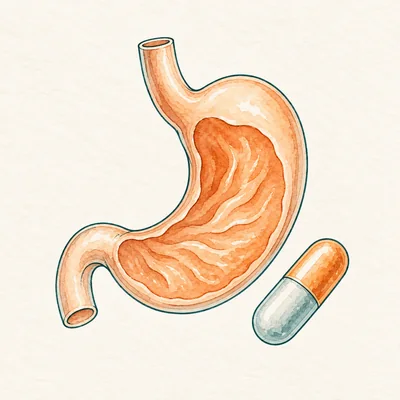
PPI before the onset
Lower stomach acid lets more swallowed bacteria survive and reach the small intestine.
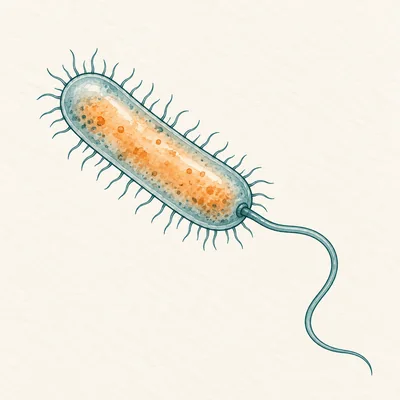
Low-grade inflammation
Pseudomonas in the upper small intestine kept a mild inflammation going, together with a weaker gut barrier.
Diet
Her food choices left her short of nutrients and made the gut environment less acidic.
4DiagnosticsStop 4 of 8
Diagnostics: looking higher up the gut
The tests I asked Aspa to do were meant to check my suspicion of a problem in the small intestine, rather than the usual imbalance in the colon. Besides a full 16S rRNA stool test, she had several inflammation markers in stool and blood. A histamine work-up helped rule out histamine intolerance, which can look similar. Finally, I wanted to check for poor protein absorption, which is common when the small intestine is inflamed, and for reduced pancreatic enzyme output.
When the upper small intestine is involved, stomach-type symptoms appear soon after meals, on top of the usual IBS symptoms.
The elastase activity of Pseudomonas can make gluten-containing foods harder to tolerate.1
Besides elastase, Pseudomonas has other metabolic activities that release gas, such as ammonia.
Inflammation, poor absorption and eating less all add up to poor nutrition and fatigue.
Other details completed her picture:
- Passing a lot of gas
- Metallic taste in the mouth
- Negative duodenal biopsies for celiac disease
- Dog with recurrent ear infections
- PPI a few weeks before onset
- Pain in the upper right abdomen
5ResultsStop 5 of 8
Results: Pseudomonas in large numbers
As suspected, Pseudomonas aeruginosa was found, at more than 25 times the baseline reading. In practical terms, a large population of these bacteria was available to break down gluten into more irritating fragments. At least three more results pointed to poor absorption and low-grade chronic inflammation.
Of the 8 results we reviewed, four guided the care plan.
Pseudomonas aeruginosa
Low-grade inflammation, burping and gluten sensitivity are typical when this bacterium colonizes the duodenum and jejunum. More on it is in can Pseudomonas cause diarrhea.

High EPX
Activated eosinophils drive allergic-type symptoms and reactions to food.

High secretory IgA
High secretory IgA points to infection-related inflammation in the gut.
Low levels of beneficial bacteria
With few beneficial bacteria (what I call probiotic sterility), starch, sugars and fiber ferment abnormally, and bloating and gas are the main symptoms.
6Care planStop 6 of 8
Care plan: rest for the small intestine
Restoring the small intestine had two goals in Aspa's case: reducing the harmful bacteria, such as Pseudomonas, and repairing the damage that the long-standing inflammation had done. Her plan had two parts.
Timing mattered too. The antimicrobial agents were followed by a 16-hour fast each day, so that the small intestine could stay at rest long enough to heal. In the first days, this brought some extra bloating and discomfort, which eased as the bacteria declined.
Every case is different, so Aspa's plan describes her care and is not a plan for anyone else. Gluten-related symptoms always need celiac disease ruled out first by a doctor, as in her case.
7Follow-upStop 7 of 8
Follow-up: a raw salad again
Our next conversation was a pleasant one. Aspa had had only one urgent bowel movement in the previous five days, and her bloating had almost gone. She had even tried a raw salad, with very little discomfort.
Two months after starting her plan, she was clearly much happier. For three weeks, her bowel movements had been regular, without urgency and with very little gas. She was eating a wider range of meals every day, and everyone around her noticed her extra energy.
8ConclusionStop 8 of 8
Conclusion: the small intestine matters
Bacterial overgrowth in the small intestine is a recognized condition, even though it is hard to diagnose. Breath tests have limits, since their results depend on stomach factors and on the previous meal.2 Even so, overgrowth of certain bacteria can disturb the lining of the small intestine and cause many unpleasant symptoms, and in some people it ends in poor absorption and poor nutrition.
What Aspa's case shows
- Pseudomonas aeruginosa can live in the small intestine and cause celiac-like symptoms without celiac disease.
- Its elastase can break gluten into fragments that the immune system reacts to more strongly, at least in laboratory and animal studies.1
- In my practice, most people with Pseudomonas in the small intestine own pets, and pets can carry Pseudomonas ear infections with few obvious signs.
- Timing matters when the small intestine is treated, and in her case a daily 16-hour fast was part of the plan.
- PPIs lower stomach acid, which normally kills many swallowed bacteria before they reach the small intestine.
This case is one of the stories behind what causes IBS, where one symptom turns out to have different causes in different people.
Frequently asked questions
Yes. Pseudomonas aeruginosa is usually found in small numbers, if at all, but it can colonize the gut, and in some people the upper small intestine, after antibiotics, acid suppression or a weakened gut barrier. In Aspa's case, it was more than 25 times the baseline reading.
In Aspa's case: discomfort soon after meals, trouble with gluten, bloating, burping, a lot of gas, a metallic taste and fatigue. Diarrhea is also possible. More on this is in Pseudomonas intestinal infection.
Research suggests it may make gluten more irritating. Pseudomonas elastase produced gluten fragments that crossed the gut barrier of mice more easily and activated immune cells from people with celiac disease.1 This has not been proven in people without celiac disease.
Yes. Non-celiac gluten sensitivity and other gut conditions can cause symptoms after gluten. Aspa's duodenal biopsies were negative for celiac disease, and her stool test found Pseudomonas instead.
Pseudomonas is common in the environment and is a known cause of ear infections in dogs. In practice, I often see it in pet owners, but this has not been proven as a route into the human gut.
References
2 studies
- Caminero A, Galipeau HJ, McCarville JL, et al. Duodenal bacteria from patients with celiac disease and healthy subjects distinctly affect gluten breakdown and immunogenicity. Gastroenterology. 2016.
- Pimentel M, Saad RJ, Long MD, Rao SSC. ACG Clinical Guideline: Small Intestinal Bacterial Overgrowth. Am J Gastroenterol. 2020.
Found this useful? Share it with someone who needs it.
Cite this article
Prevedoros, T. (2022, September 15). Pseudomonas made gluten a problem without celiac disease. Gut Pathways. https://gutpathways.com/case-studies/pseudomonas-predominant-ibs-gluten/