How to tell viral from bacterial gastroenteritis
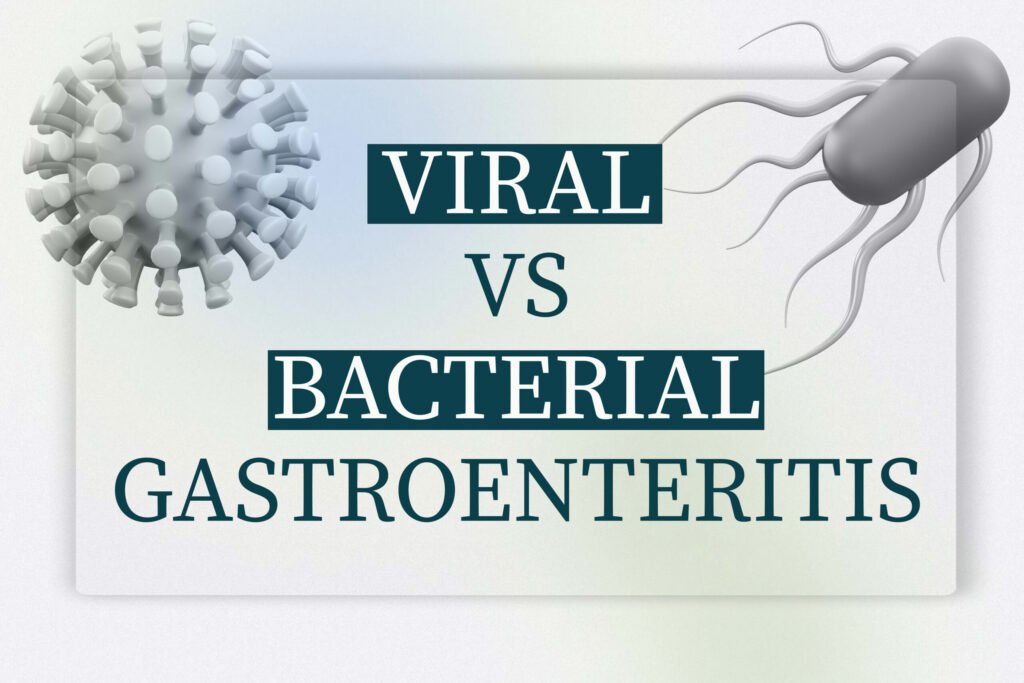
Viral vs bacterial gastroenteritis can look alike, because both start with diarrhea, cramps and often vomiting. Yet they differ in their causes, course, treatment and risks, including the risk of post-infectious IBS.
Viral vs bacterial gastroenteritis at a glance
In this guide you will learn how viral and bacterial gastroenteritis differ, from their common causes to treatment and prevention.
Common causes
Viral gastroenteritis
Viral gastroenteritis is most often caused by viruses such as norovirus, rotavirus and adenovirus. These infections are the usual cause of what many people call the stomach flu.3 In simple terms, a virus infects the gut and quickly leads to vomiting or diarrhea.
Bacterial gastroenteritis
Bacterial gastroenteritis usually comes from contaminated food or water, which brings harmful bacteria such as Salmonella, Shigella, Campylobacter or certain types of E. coli into the gut.1 This can lead to food poisoning and to a more severe illness if it is not addressed.
Duration of the illness
Viral gastroenteritis
In many cases viral gastroenteritis settles by itself within a few days, usually 1 to 3. The symptoms are acute but short-lived, and recovery comes with supportive care such as fluids and electrolytes.
Bacterial gastroenteritis
Bacterial gastroenteritis may last longer, sometimes a week or more. The duration depends on the type of bacteria, the severity of the infection and how quickly the right care starts.
How it spreads
Viral gastroenteritis
Viral gastroenteritis is highly contagious. It spreads quickly through contact with infected stool or contaminated surfaces, so the stool of an ill person is a key source. Good hygiene is the best way to lower the risk of spread.
Bacterial gastroenteritis
Bacterial gastroenteritis is most often caught by eating or drinking contaminated food or water. The usual reason is poor food handling that lets bacteria multiply. This is why sanitation and food safety matter so much.
Treatment
Viral gastroenteritis
Treatment is supportive. The focus is on rehydration, replacing the fluids and electrolytes the body has lost, and on easing vomiting and diarrhea. There is usually no antibiotic or specific medicine, because viral infections settle on their own.
Bacterial gastroenteritis
Most cases also get better with fluids and electrolytes alone. Antibiotics are kept for selected cases, for example a severe illness or certain bacteria, and a doctor decides when they are needed.1 For Shiga toxin-producing E. coli, antibiotics are usually avoided, because they may raise the risk of a serious kidney complication.1
How the symptoms start
Viral gastroenteritis
Symptoms such as vomiting, watery diarrhea and a low-grade fever appear quickly. They can start suddenly and usually last only a few days.
Bacterial gastroenteritis
The symptoms often include a higher fever, more intense abdominal pain and sometimes bloody diarrhea. The start can be more gradual, and because the illness ranges from mild to severe, careful monitoring is important.
How can you tell viral from bacterial gastroenteritis?
Typically, a virus causes a sudden start and milder abdominal pain, while a bacterial infection is more often marked by high fever, bloody diarrhea and stronger abdominal pain. Only a test can confirm the cause.
Vomiting
Viral gastroenteritis
The viral form is known for intense vomiting, which can quickly lead to dehydration if fluids are not replaced. The stomach and intestines react strongly, and vomiting comes in frequent episodes.
Bacterial gastroenteritis
Bacterial gastroenteritis can also cause vomiting, but it is usually less severe than in viral cases. The main problems are often diarrhea and abdominal pain.
Fever
Viral gastroenteritis
A virus usually causes only a low-grade fever. This milder fever is a common response to the infection and rarely rises much.
Bacterial gastroenteritis
A bacterial infection more often leads to a higher fever. The immune response to the bacteria can cause fever and bloody diarrhea, a sign of stronger inflammation. In one study of children, markers of inflammation such as C-reactive protein and interleukin-6 were higher in bacterial than in viral gastroenteritis.4
Complications and post-infectious IBS
Viral gastroenteritis
For most people, viral gastroenteritis is unpleasant for a short time and leaves no lasting problems. Complications are rare, and good hydration helps a fast recovery. Even so, after a norovirus outbreak in Italy, 13% of the people who fell ill developed post-infectious IBS.5
Bacterial gastroenteritis
Bacterial gastroenteritis can lead to serious complications, such as severe dehydration, sepsis or longer-term problems if it is not treated properly. In addition, post-infectious IBS is more common after a bacterial infection.2 See viral vs bacterial post-infectious IBS.
Which one leads to post-infectious IBS?
The health of the gut microbiome before the infection is thought to play a large part. In general, though, post-infectious IBS is more common after a bacterial infection,2 because the disruption of the gut microbiome is usually stronger.
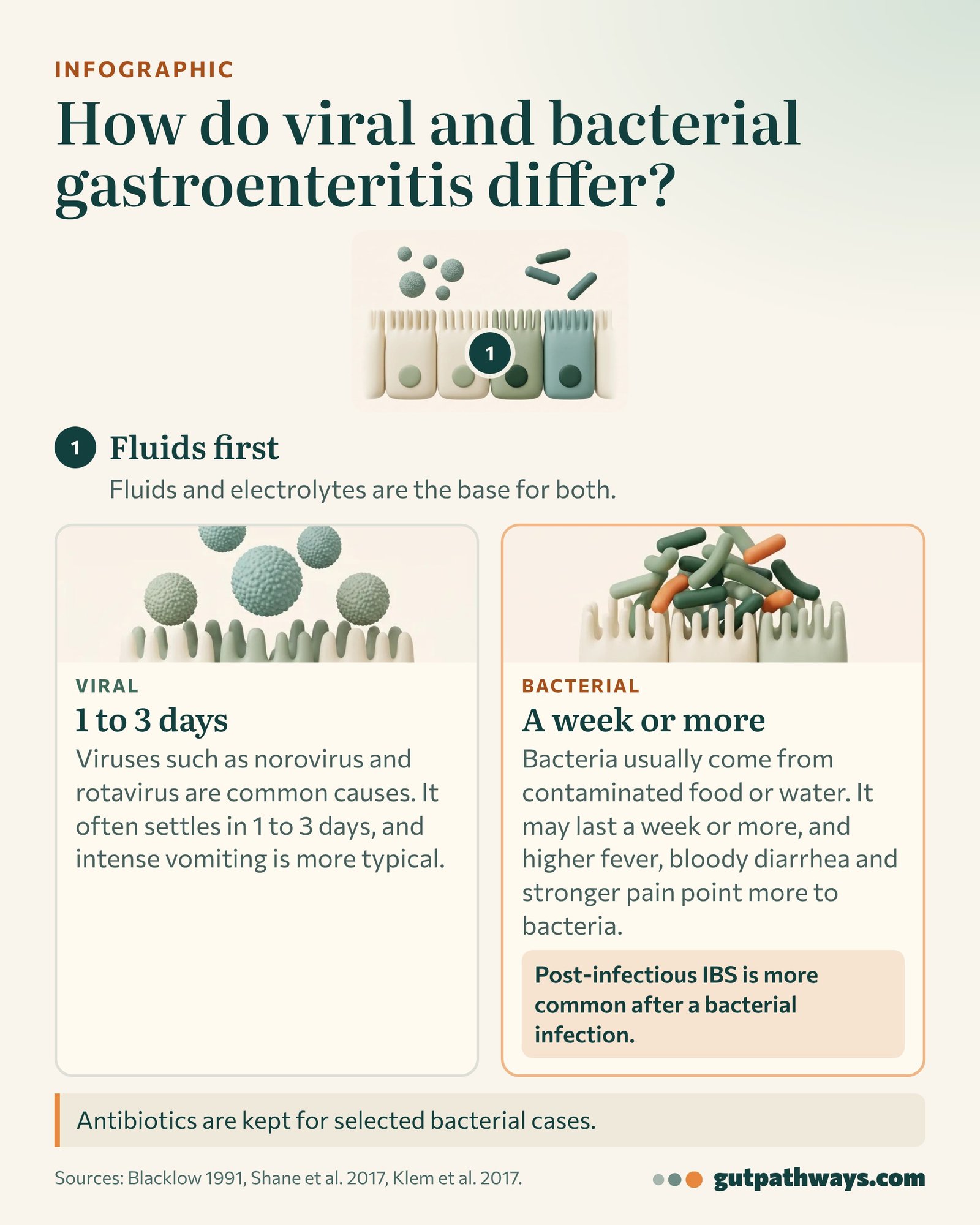
Infographic

Fluids first
Fluids and electrolytes are the base for both.

Viral
1 to 3 days
Viruses such as norovirus and rotavirus are common causes. It often settles in 1 to 3 days, and intense vomiting is more typical.
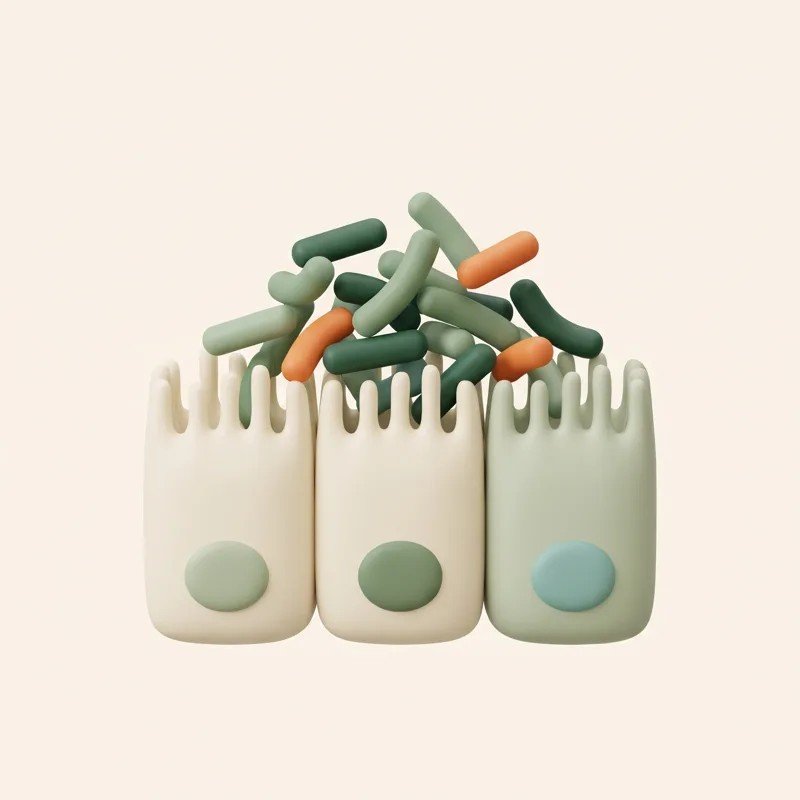
Bacterial
A week or more
Bacteria usually come from contaminated food or water. It may last a week or more, and higher fever, bloody diarrhea and stronger pain point more to bacteria.
Post-infectious IBS is more common after a bacterial infection.
Antibiotics are kept for selected bacterial cases.
Sources: Blacklow 1991, Shane et al. 2017, Klem et al. 2017.
gutpathways.com
 Save this infographicImage 4:5, with sources, from gutpathways.com
Diagnosis
Viral gastroenteritis
Viral gastroenteritis is usually diagnosed from the symptoms, such as vomiting, diarrhea and a low-grade fever. The doctor often relies on the history rather than on many laboratory tests.
Bacterial gastroenteritis
A stool test is used more often. It can identify the bacteria responsible, which helps when the doctor considers whether an antibiotic is needed.1
Uncommon signs
Viral gastroenteritis
Now and then viral gastroenteritis brings less common signs. For example, some young children have short seizures during an episode, which are usually benign.6
Bacterial gastroenteritis
Bacterial gastroenteritis can lead to unusual complications, such as reactive arthritis7 or early signs of septic shock. They are not present in every case, but they are important warning signs.
Which is worse, viral or bacterial gastroenteritis?
Both can be distressing. However, bacterial gastroenteritis more often carries a serious health risk because of its possible complications. It also leads to post-infectious IBS more often.2
Prevention
Viral gastroenteritis
Prevention starts with good personal hygiene. Washing your hands often and avoiding contact with people who are ill can lower your chances of catching the stomach virus.
Bacterial gastroenteritis
Prevention focuses on food safety. Cooking food properly, avoiding contaminated food and washing your hands thoroughly are the key steps.
A closer look: fluids, immunity, probiotics and diet
Preventing dehydration
Viral gastroenteritis
The standard WHO oral rehydration solution (ORS) contains about 75 mmol/L sodium, 20 mmol/L potassium, 65 mmol/L chloride and 75 mmol/L glucose, with a total of about 245 mOsm/L. It uses the joint absorption of sodium and glucose to restore fluids quickly. This lower-osmolarity formula reduced the need for unscheduled drips in children with acute diarrhea.8
Bacterial gastroenteritis
When diarrhea is profuse, as in cholera, the older WHO formula with about 90 mmol/L sodium was used for many years. A Cochrane review found the lower-osmolarity formula about as effective in cholera, with a small risk of low blood sodium.9 A doctor decides which solution fits.
The immune response
Viral gastroenteritis
In viral gastroenteritis the immune response is marked by type I interferons such as interferon alpha, which were higher in children with viral than with bacterial gastroenteritis.4 Cytokines such as IL-6 and IL-8 also rise.10 This response helps to control the virus and usually comes with a faster recovery.
Bacterial gastroenteritis
Bacterial gastroenteritis tends to provoke a stronger inflammatory response, with higher C-reactive protein and IL-6.4 This may contribute to more tissue injury and longer inflammation, delay the healing of the lining and call for closer monitoring.
Probiotics for each form
Viral gastroenteritis
Lactobacillus rhamnosus GG was long thought to shorten diarrhea in children. However, two large trials in 2018 found no benefit, one with L. rhamnosus GG11 and one with a combination probiotic.12 The evidence is therefore weaker than it once seemed.
Bacterial gastroenteritis
Saccharomyces boulardii was studied in children with acute gastroenteritis and shortened the diarrhea.13 It is also used against the disruption of the gut flora caused by antibiotics. Combinations with Lactobacillus acidophilus and Lactobacillus casei have been tried as well.
Diet during recovery
Viral gastroenteritis
Advice often started with easily digestible foods, for example the BRAT diet (bananas, rice, applesauce, toast), to limit irritation. Current guidelines, however, suggest returning to a normal, balanced diet as soon as vomiting settles.1
Bacterial gastroenteritis
The first steps are similar. If the inflammation is strong, some people avoid dairy products and high-fiber foods for a while, because they can irritate the gut. Later, foods that support the gut barrier, such as fermented products and prebiotic fibers, are often added, although trials in gastroenteritis are lacking.
Supplements for each form
Viral gastroenteritis
Zinc is one of the most studied supplements for acute diarrhea in children. In children older than six months, mainly in low-income countries, it shortened the diarrhea.14 Omega-3 fatty acids and curcumin have been proposed for their mild anti-inflammatory effects, but evidence in gastroenteritis is lacking.
Bacterial gastroenteritis
Because the inflammation is stronger, glutamine has been proposed to support the repair of the gut lining. It improved symptoms in a trial of post-infectious IBS with diarrhea,15 but it has not been tested in acute bacterial gastroenteritis. Chosen probiotics may also help to rebalance the gut after antibiotics.
References
15 studies
- Shane AL, Mody RK, Crump JA, et al. 2017 Infectious Diseases Society of America clinical practice guidelines for the diagnosis and management of infectious diarrhea. Clin Infect Dis. 2017.
- Klem F, Wadhwa A, Prokop LJ, et al. Prevalence, risk factors, and outcomes of irritable bowel syndrome after infectious enteritis: a systematic review and meta-analysis. Gastroenterology. 2017.
- Blacklow NR, Greenberg HB. Viral gastroenteritis. N Engl J Med. 1991.
- Mangiarotti P, Moulin F, Palmer P, et al. Interferon-alpha in viral and bacterial gastroenteritis: a comparison with C-reactive protein and interleukin-6. Acta Paediatr. 1999.
- Zanini B, Ricci C, Bandera F, et al. Incidence of post-infectious irritable bowel syndrome and functional intestinal disorders following a water-borne viral gastroenteritis outbreak. Am J Gastroenterol. 2012.
- Cappellari AM, Mariani S, Bruschi G. Febrile seizures and convulsions with mild gastroenteritis: age-dependent acute symptomatic seizures. Front Pediatr. 2023.
- Pogreba-Brown K, Austhof E, Tang X, et al. Enteric pathogens and reactive arthritis: systematic review and meta-analyses of pathogen-associated reactive arthritis. Foodborne Pathog Dis. 2021.
- Hahn S, Kim S, Garner P. Reduced osmolarity oral rehydration solution for treating dehydration caused by acute diarrhoea in children. Cochrane Database Syst Rev. 2002.
- Murphy C, Hahn S, Volmink J. Reduced osmolarity oral rehydration solution for treating cholera. Cochrane Database Syst Rev. 2004.
- Chen SM, Lin CP, Tsai JD, et al. The significance of serum and fecal levels of interleukin-6 and interleukin-8 in hospitalized children with acute rotavirus and norovirus gastroenteritis. Pediatr Neonatol. 2014.
- Schnadower D, Tarr PI, Casper TC, et al. Lactobacillus rhamnosus GG versus placebo for acute gastroenteritis in children. N Engl J Med. 2018.
- Freedman SB, Williamson-Urquhart S, Farion KJ, et al. Multicenter trial of a combination probiotic for children with gastroenteritis. N Engl J Med. 2018.
- Ozkan TB, Sahin E, Erdemir G, et al. Effect of Saccharomyces boulardii in children with acute gastroenteritis and its relationship to the immune response. J Int Med Res. 2007.
- Lazzerini M, Wanzira H. Oral zinc for treating diarrhoea in children. Cochrane Database Syst Rev. 2016.
- Zhou Q, Verne ML, Fields JZ, et al. Randomised placebo-controlled trial of dietary glutamine supplements for postinfectious irritable bowel syndrome. Gut. 2019.
Found this useful? Share it with someone who needs it.
Cite this article
Prevedoros, T. (2025, February 16). How to tell viral from bacterial gastroenteritis. Gut Pathways. https://gutpathways.com/articles/viral-vs-bacterial-gastroenteritis/