Intestinal disaccharidase deficiency and 5 habits that make it worse
When the small intestine runs short of the enzymes that split double sugars, food turns into gas, cramps and loose stools. Five everyday habits can push those symptoms further, and each one has a practical fix.

What is disaccharidase deficiency?
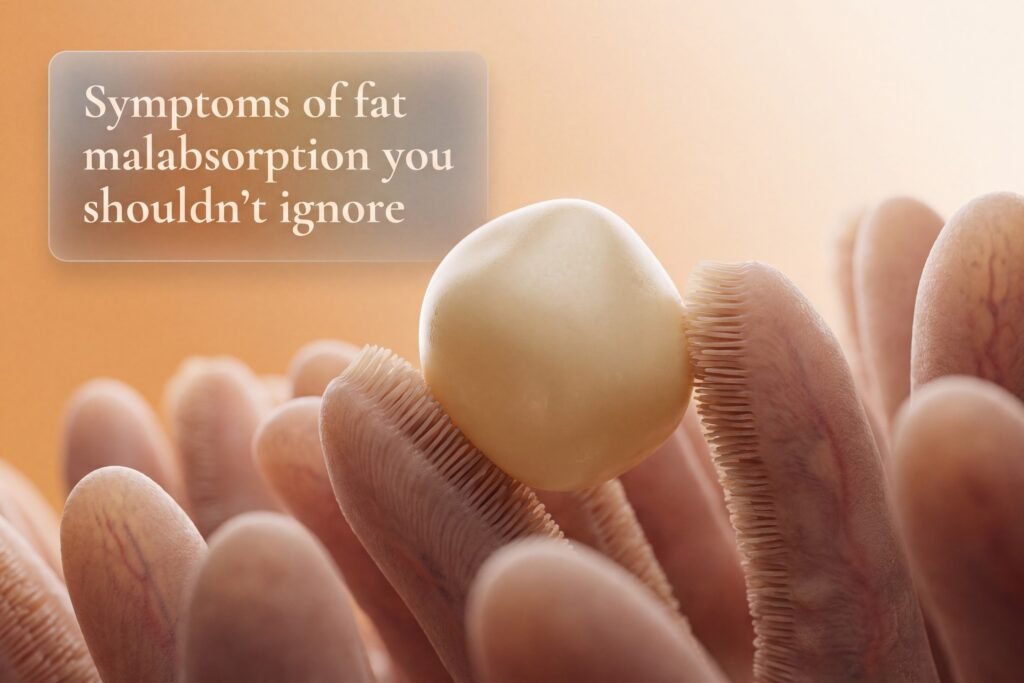
Disaccharidase deficiency means the small intestine makes too little of one or more enzymes that split double sugars. These enzymes sit on the brush border, the fringe of tiny projections that lines the small intestine. Without them, lactose, sucrose and maltose cannot be broken into single sugars, so they cannot be absorbed.1
- Disaccharidase
- An enzyme on the surface of small intestine cells that splits a double sugar (disaccharide) into two single sugars, which the gut can then absorb. Lactase, sucrase, maltase and isomaltase are the four main ones.
Lactase deficiency is by far the most common type. However, deficiencies of maltase, sucrase and isomaltase (also called palatinase) are not rare, and in adults they are more common than doctors once thought.1, 9 People who lack all four have what is called pan-disaccharidase deficiency, which tends to cause more weight loss than a single missing enzyme.1
| Enzyme | Sugar it splits | Where that sugar comes from |
|---|---|---|
| Lactase | Lactose | Milk and other dairy foods |
| Sucrase | Sucrose | Table sugar, sweets, some fruits and root vegetables |
| Maltase | Maltose | Starch breakdown, malted grains |
| Isomaltase (palatinase) | Isomaltose and branch points of starch | Starchy foods |
What are the symptoms of disaccharidase deficiency?
The symptoms come from sugar that stays in the gut instead of being absorbed. Gas, bloating, abdominal cramps and diarrhea are the most common, and some people have constipation instead.1, 10 Because these symptoms overlap so much with irritable bowel syndrome, many people carry an IBS label for years before anyone measures their enzymes.1
- Gas
- Bloating
- Abdominal cramps
- Diarrhea
- Constipation
- Nausea
If left unmanaged, these conditions may lead to poor nutrition and other health problems, especially in pan-disaccharidase deficiency, where weight loss is more frequent.1
Lactase deficiency alone affects about 70% of adults around the world.3 Lactase does not rise when you drink more milk, because its level is set by genes and not by diet. The colonic microbiome, on the other hand, can adapt and slowly gets better at handling lactose.3 So while there is no cure for primary lactase deficiency, its symptoms can be managed.
What causes disaccharidase deficiency?
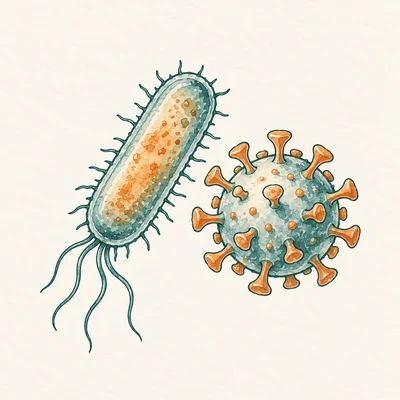
There are two broad routes. Primary deficiency is inherited, as in congenital sucrase-isomaltase deficiency or the gradual loss of lactase after childhood. Secondary deficiency follows damage to the brush border, for example after an infection or in other conditions that hurt the lining of the small intestine.2, 9
Gut infections
A bout of gastroenteritis can strip the brush border for a while, and lactase is often the first enzyme to drop. In many people it recovers as the lining heals.
Celiac disease
Damage to the villi in active celiac disease lowers several brush border enzymes at once.
Inflammation of the small intestine
Conditions that inflame the lining of the small bowel can reduce enzyme output until the inflammation settles.
Medicines and other insults
Some medicines and toxins can injure the cells that carry the enzymes, which is why foodborne arsenic appears among the habits below.
How is disaccharidase deficiency diagnosed?
The gold standard is a duodenal biopsy taken during an upper endoscopy, with the enzyme activity measured in the tissue. Breath tests are the other option.1 They are easier to do, but they can mislead. In a Hungarian study of 264 adults, about one in ten lactose breath tests gave a false positive, and SIBO was present in 75% of those false positives.11
The breath test issue matters because SIBO and enzyme deficiency produce almost the same symptoms. The limits of breath testing for SIBO apply to sugar malabsorption tests too.
What 2026 studies add
Three studies from 2026 add new detail. In a US hospital study, 59 of 67 adults with unexplained gut symptoms who had a biopsy enzyme test (88.1%) had at least one deficiency. Among those with a deficiency, 88.1% improved after targeted diet or enzyme changes, compared with 50% of those with normal results.4
The genetic side looks more complicated. In an Australian group of 72 people with IBS, 54% carried at least one low-function variant of the sucrase-isomaltase gene. However, carrying one variant did not change how well they did on a FODMAP diet, either early or years later.13 In children, a Turkish study of 290 children with functional gut disorders found sucrase-isomaltase variants in 5.9%, more often in those with IBS-like symptoms.14
Which habits make disaccharidase deficiency worse?
Besides the missing enzyme itself, several everyday factors may add to the symptoms. Below are five of them, each with the mechanism and practical steps that may help absorption.
Increased osmotic load from undigested sugars
- A weaker barrier
The seals between gut cells may loosen, a step the original article proposed.
- Undigested sugar in the gut
Without enough enzyme, the double sugar stays in the lumen of the gut.
- Osmotic bloating
The sugar pulls water into the gut, and bloating and loose stools follow.
A weak barrier and unsplit sugars together pull water into the gut and cause osmotic bloating.
Mechanism. When a disaccharidase is low, undigested sugar stays in the lumen of the gut. It raises the osmolarity there, so water moves in by osmosis, and the result is osmotic bloating and loose stools.2 The original article also proposed that weakened tight junctions, the seals between gut cells, add to this, so that a leaky barrier and low enzyme activity together drive the discomfort. Studies in people with disaccharidase deficiency have not tested this yet. In mouse and rat models of lactose intolerance, however, a lactose load slightly lowered tight junction proteins and weakened the gut barrier.15, 16
What may help. Supplementary enzymes, such as lactase taken with dairy, split the sugar before it reaches the bacteria. In a double-blind study of 30 lactose malabsorbers, lactase added to milk cut peak breath hydrogen to about a quarter of the placebo level and lowered symptom scores.17 In children with congenital sucrase-isomaltase deficiency, the yeast enzyme sacrosidase reduced stools, gas, cramps and bloating on a normal diet.18 Matching the enzyme to the meal is covered in how to match digestive enzymes for bloating.
Enterocyte damage from foodborne arsenic
- Arsenic exposure
Arsenic in food and water reaches the lining of the gut.
- Damaged enterocytes
It may harm the cells that carry the brush border enzymes.
- Diarrhea
Fewer working enzymes can add diarrhea to a disaccharidase deficiency.
Arsenic exposure may damage enterocytes and add diarrhea to a disaccharidase deficiency.
Mechanism. Arsenic in food and water may damage enterocytes, the cells that carry the brush border enzymes. In rats, oral arsenic lowered the activity of brush border enzymes in the intestine, including sucrase, and damaged the DNA of intestinal cells.8 A similar loss of brush border enzymes has been shown in the rat kidney.19 In a 2026 mouse study, arsenic damaged the intestinal lining, lowered the tight junction protein occludin and switched on inflammation.20 These are animal data, so the effect in people at everyday exposure is not known. Even so, more unabsorbed sugar and water in the gut would mean larger, looser stools, a common symptom of lactose intolerance.
What may help.
- Lower dietary arsenic, for example by eating rice less often and varying your grains.
- Consider a home water filter if your water source may contain arsenic.
- Antioxidants such as vitamins C and E are sometimes suggested to protect the brush border, although the protective data come from animal studies with other antioxidants.8
- If you live in an area with high arsenic in well water, have the water tested every so often.
Reduced gut blood flow from overtraining
- Very hard training
Long, intense sessions send blood to the muscles and the heart.
- Less blood to the gut
Blood flow to the gut drops while the hard effort lasts.
- Bowel pain
The strained gut lining can make pain after meals worse.
Very hard training diverts blood away from the gut and can worsen pain after meals.
Mechanism. During hard exercise the body sends blood to the muscles and heart, away from the gut. In healthy men, an hour of cycling at 70% of maximum workload lowered gut blood flow and caused measurable small intestinal injury and a leakier gut.21 A systematic review found that exercise of 2 hours or more at 60% of maximal oxygen uptake is roughly the point where clear gut problems appear, including slower transit and malabsorption.7 In someone with a disaccharidase deficiency, this may reduce the gut's capacity to handle sugars after meals and make abdominal pain after eating worse. Strenuous exercise, especially running, is linked with gut symptoms in a large share of athletes.22
What may help.
- Keep most training at a moderate intensity and avoid chronic overtraining.
- Build rest days into your training plan.
- Hydrate and eat well before and after sessions.
- Choose smaller, more frequent meals over large ones.
- Watch how your gut reacts to exercise and adjust the routine as needed.
Overfermentation of starch due to late dinners
- A late dinner
Digestion is pushed into the body's resting phase.
- Starch left for bacteria
Part of the starch is not fully split and reaches the gut bacteria.
- Gas
The bacteria ferment it overnight and make gas.
A late dinner can leave more starch for gut bacteria to ferment overnight.
Mechanism. Late dinners may worsen disaccharidase deficiency by forcing digestion into the body's natural resting phase. In rats, the activity of the enzyme sucrase follows a daily rhythm that is set by the timing of feeding.5 If digestion runs out of step with that rhythm, part of the carbohydrate may not be fully broken down, and bacteria in the small intestine ferment it into hydrogen and gas. In a small simulated night shift study, eating at night went with more bloating on the first night.23
What may help.
- Avoid very late dinners, and try to finish eating 3 to 4 hours before sleep.
- Choose light, easy-to-digest foods in the evening and fewer complex carbohydrates that break down into glucose.
- Probiotics may support a calmer gut, while prebiotics feed bacteria and can increase gas at first, so introduce them slowly.
- Control portion size in the evening to avoid overeating at night.
- Keep regular meal times that follow your daily rhythm.
How meal spacing affects the gut between meals is covered in is snacking bad for digestion.
Reduced gut motility from a sedentary lifestyle
- Long hours of sitting
Movement through the gut slows down.
- Slower gut motility
Unsplit sugars stay longer in contact with the lining and its bacteria.
- Abdominal distension
Fluid and gas build up and the belly feels swollen.
Long hours of sitting slow the gut and give unsplit sugars more time to cause trouble.
Mechanism. A sedentary lifestyle may slow intestinal motility. In a disaccharidase deficiency, slower transit gives undigested sugars such as sucrose more contact time with the gut lining and its bacteria, which may lead to fluid build-up, distension and more gas. In 4,561 Turkish adults, those who were moderately active or active had about 25% lower odds of constipation than inactive adults.6 A meta-analysis of nine trials found that exercise improved constipation symptoms, although the trials carried a high risk of bias.24
What may help.
- Move every day, for example walking, cycling or swimming, to support gut motility.
- If you sit at a desk, stand up or walk around every hour.
- Add fiber gradually to support regular bowel movements.
- Try yoga or stretching, which some people find helps start a bowel movement.
- Drink enough water to support gut function.
- Keep regular meal times to encourage regular bowel movements.
In the clinics where I work as a scientific collaborator, the habit changes matter most for people whose symptoms stay after the obvious sugars have been reduced.
Infographic
Brush border enzymes
Disaccharidases sit on the lining of the small intestine and split lactose, sucrose and maltose into single sugars.
Gas-producing bacteria
The unsplit sugar also feeds gas-producing bacteria.
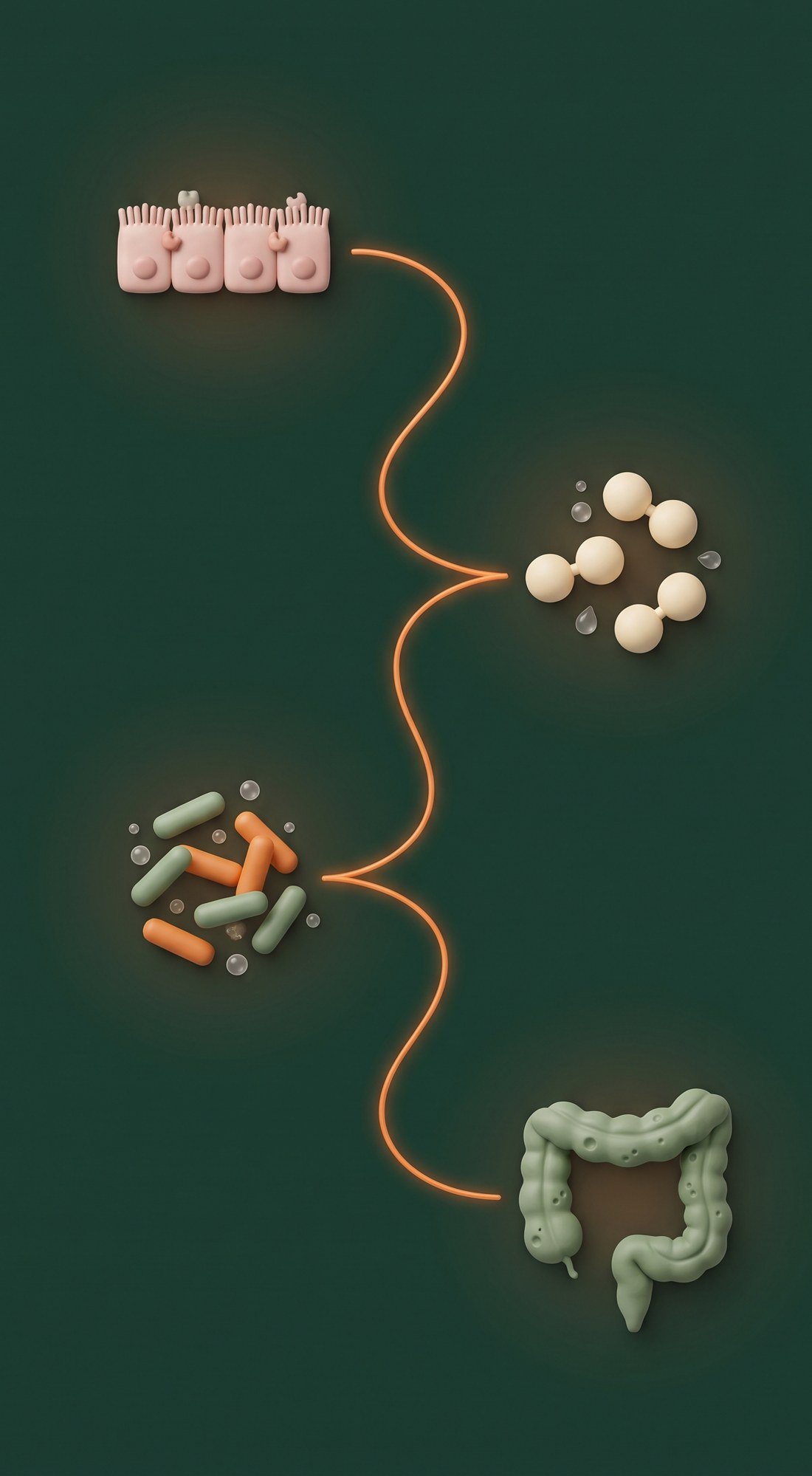
Unsplit sugar
If an enzyme is low, the unsplit sugar pulls water into the gut.
Typical symptoms
Gas, bloating, abdominal cramps and diarrhea are the most common, and some people have constipation instead.
Brush border enzymes
Disaccharidases sit on the lining of the small intestine and split lactose, sucrose and maltose into single sugars.
Unsplit sugar
If an enzyme is low, the unsplit sugar pulls water into the gut.
Gas-producing bacteria
The unsplit sugar also feeds gas-producing bacteria.
Typical symptoms
Gas, bloating, abdominal cramps and diarrhea are the most common, and some people have constipation instead.
Primary deficiency is inherited. Secondary deficiency follows damage to the brush border, for example after an infection. Late dinners, a sedentary day, very hard training and foodborne arsenic may each add to the problem.
Sources: Viswanathan et al. 2023, Misselwitz et al. 2019, Costa et al. 2017.
gutpathways.com
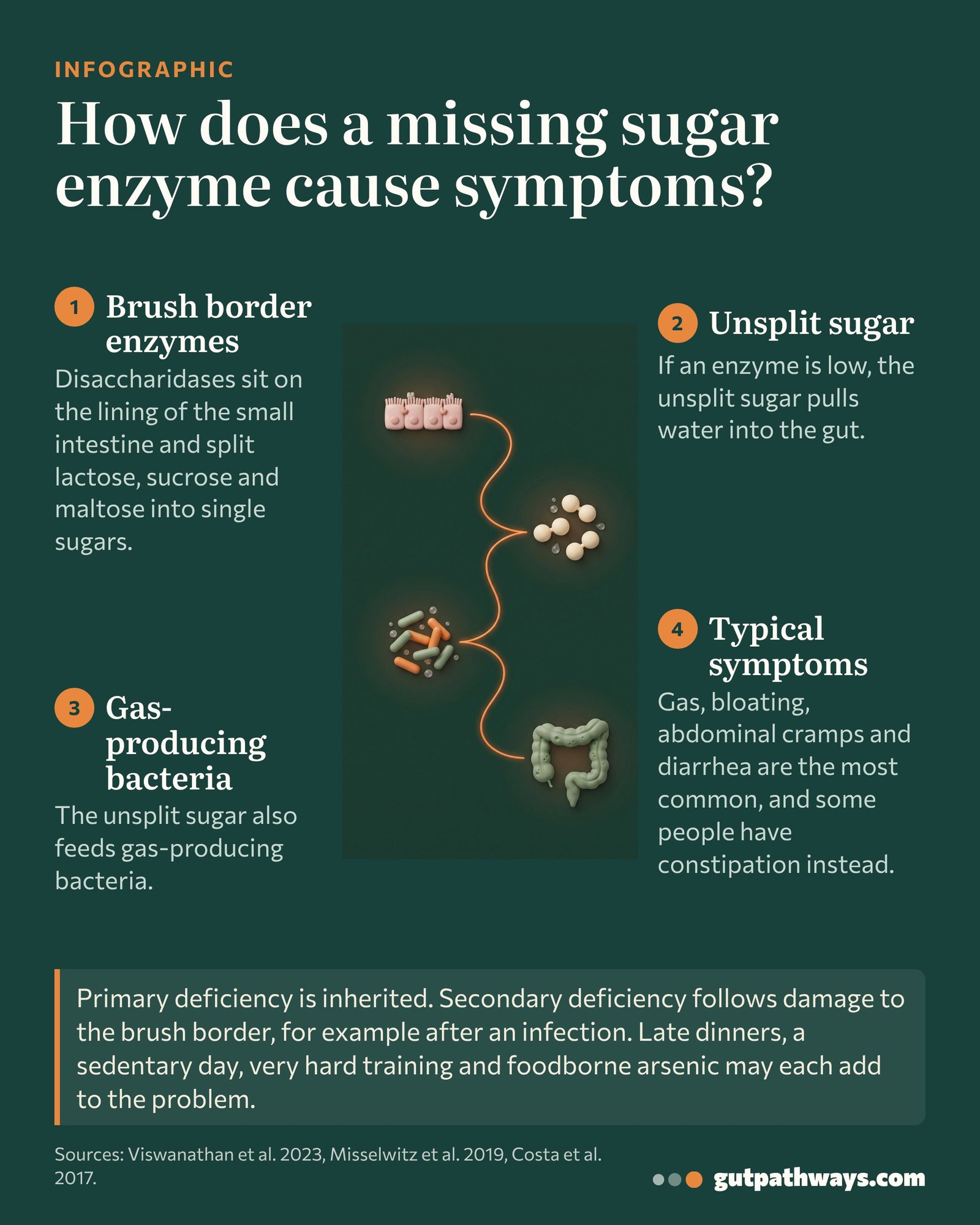 Save this infographicImage 4:5, with sources, from gutpathways.com
Which foods are high in disaccharides?
Disaccharides hide in more foods than milk and sugar. Knowing where they are helps you test your own tolerance in a planned way.
| Food group | Main disaccharide | Note |
|---|---|---|
| Sugar, sweets and desserts | Sucrose | Table sugar is almost pure sucrose |
| Milk and dairy products | Lactose | Hard cheeses and yogurt contain less |
| Some fruits, such as bananas and dates | Sucrose | Amounts vary with ripeness |
| Processed foods with added sugar | Sucrose and others | Check the label for added sugars |
| Some grains and malted products | Maltose | Also forms when starch is cooked or digested |
| Honey | Mostly single sugars, some maltose and sucrose | Honey is mainly fructose and glucose |
| Root vegetables, such as beets and carrots | Sucrose | Smaller amounts than in sweets |
The original article listed honey as rich in disaccharides. In fact, honey is mostly the single sugars fructose and glucose, with smaller amounts of disaccharides such as maltose and sucrose.25
I already avoid milk, so why do I still get bloated?
Lactose is only one of the double sugars. Sucrose and starch need sucrase, maltase and isomaltase, and a low level of any of them can cause the same bloating. A biopsy enzyme panel or a properly run breath test can show which enzyme is low.
Frequently asked questions
A disaccharidase is an enzyme on the surface of small intestine cells that splits a double sugar into two single sugars. Lactase, sucrase, maltase and isomaltase are the main ones.1
References
25 studies
- Viswanathan L, Rao SS. Intestinal disaccharidase deficiency in adults: evaluation and treatment. Curr Gastroenterol Rep. 2023.
- Misselwitz B, Butter M, Verbeke K, Fox MR. Update on lactose malabsorption and intolerance: pathogenesis, diagnosis and clinical management. Gut. 2019.
- Forsgård RA. Lactose digestion in humans: intestinal lactase appears to be constitutive whereas the colonic microbiome is adaptable. Am J Clin Nutr. 2019.
- Poltiyelova E, Zhang E, Pais J, Cohen C. Disaccharidase testing and clinical outcomes: a retrospective study. Proc (Bayl Univ Med Cent). 2026.
- Henning SJ, Guerin DM. Role of nocturnal feeding in the development of the diurnal rhythm of jejunal sucrase activity. Proc Soc Exp Biol Med. 1983.
- Yurtdaş G, Acar-Tek N, Akbulut G, et al. Risk factors for constipation in adults: a cross-sectional study. J Am Coll Nutr. 2020.
- Costa RJS, Snipe RMJ, Kitic CM, Gibson PR. Systematic review: exercise-induced gastrointestinal syndrome, implications for health and intestinal disease. Aliment Pharmacol Ther. 2017.
- Alam T, Naseem S, Shahabuddin F, et al. Oral administration of Nigella sativa oil attenuates arsenic-induced redox imbalance, DNA damage, metabolic distress, and histopathological alterations in rat intestine. J Trace Elem Med Biol. 2023.
- Cohen SA. The clinical consequences of sucrase-isomaltase deficiency. Mol Cell Pediatr. 2016.
- Puertolas MV, Fifi AC. The role of disaccharidase deficiencies in functional abdominal pain disorders, a narrative review. Nutrients. 2018.
- Varjú P, Ystad B, Gede N, et al. The role of small intestinal bacterial overgrowth and false positive diagnosis of lactose intolerance in southwest Hungary. PLoS One. 2020.
- Perets TT, Thurm T, Ben-Yehoyada M, et al. A national consensus guideline on the performance and interpretation of hydrogen- and methane-based breath tests for carbohydrate malabsorption, small intestinal bacterial overgrowth, and intestinal methanogen overgrowth. Ann Gastroenterol. 2026.
- Silva H, Zheng T, Porter J, et al. The associations of sucrase-isomaltase hypomorphic variants with long-term outcomes and dietary intake in an Australian irritable bowel syndrome population educated on the FODMAP diet. United European Gastroenterol J. 2026.
- Demirci FK, Koca TG, Elmas A, Akçam M. Sucrase-isomaltase deficiency in children with functional gastrointestinal disorders. J Clin Med. 2026.
- Li Q, Wang X, Guo S, et al. Galacto-oligosaccharides alleviate experimental lactose intolerance associated with gut microbiota in mice. Front Microbiol. 2025.
- Han LL, Mei CF, Lu M, Xue H. A Shenling Baizhu San polysaccharide fraction (SLP-2)-based synbiotic alleviates lactose-induced gut dysfunction via a microbiota-metabolite-barrier axis. Food Res Int. 2026.
- Montalto M, Nucera G, Santoro L, et al. Effect of exogenous beta-galactosidase in patients with lactose malabsorption and intolerance: a crossover double-blind placebo-controlled study. Eur J Clin Nutr. 2005.
- Treem WR, McAdams L, Stanford L, et al. Sacrosidase therapy for congenital sucrase-isomaltase deficiency. J Pediatr Gastroenterol Nutr. 1999.
- Shahid F, Rizwan S, Khan MW, et al. Studies on the effect of sodium arsenate on the enzymes of carbohydrate metabolism, brush border membrane, and oxidative stress in the rat kidney. Environ Toxicol Pharmacol. 2014.
- Cao S, Cai R, Xi S, Wang Y. Subchronic arsenic exposure induced intestinal microbiota dysbiosis and intestinal inflammation via activating the NF-κB signaling pathway. Food Chem Toxicol. 2026.
- van Wijck K, Lenaerts K, van Loon LJ, et al. Exercise-induced splanchnic hypoperfusion results in gut dysfunction in healthy men. PLoS One. 2011.
- de Oliveira EP, Burini RC. The impact of physical exercise on the gastrointestinal tract. Curr Opin Clin Nutr Metab Care. 2009.
- Grant CL, Dorrian J, Coates AM, et al. The impact of meal timing on performance, sleepiness, gastric upset, and hunger during simulated night shift. Ind Health. 2017.
- Gao R, Tao Y, Zhou C, et al. Exercise therapy in patients with constipation: a systematic review and meta-analysis of randomized controlled trials. Scand J Gastroenterol. 2019.
- da Silva PM, Gauche C, Gonzaga LV, et al. Honey: chemical composition, stability and authenticity. Food Chem. 2016.
Found this useful? Share it with someone who needs it.
Cite this article
Prevedoros, T. (2023, May 26). Intestinal disaccharidase deficiency and 5 habits that make it worse. Gut Pathways. https://gutpathways.com/articles/intestinal-disaccharidase-deficiency-5-tips/