Gallstones and pregnancy, and life after gallbladder surgery
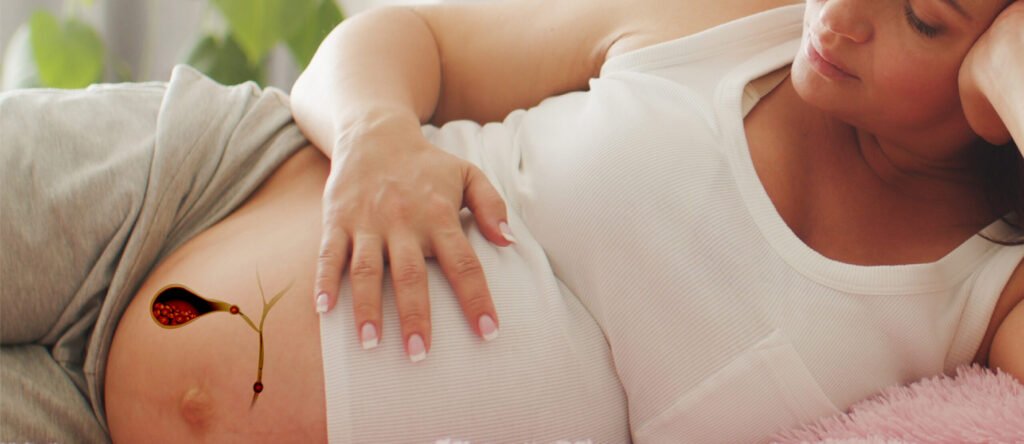
Women form gallstones about twice as often as men, and pregnancy is one of the main reasons. Pregnancy hormones change both the bile and the way the gallbladder empties, so sludge and stones often appear in the months around birth. Some of these women later have their gallbladder removed, and the gut has to adapt to working without it.

Why are women more prone to gallstones?
Gallstones are small, hard deposits that form in the gallbladder, the small organ under the liver. Anyone can develop them. However, women form cholesterol gallstones about twice as often as men at every age, and the gap opens at puberty and stays through the childbearing years.4, 1 That timing points straight at the female sex hormones.
Other risk factors add to that. Age, pregnancy, obesity, physical inactivity, overeating and a family history all raise the risk, and rapid weight loss is a known trigger as well.2, 9 In a 2024 population study from Chile, gallstone disease, counting stones and earlier gallbladder removal, was found in 40.4% of women against 17.1% of men, and in women the risk rose with the number of children.10
How common are gallstones during pregnancy and after birth?
Gallstones and pregnancy meet more often than most women expect. Sludge and new stones build up across pregnancy and peak in the weeks after birth, as a large prospective study with ultrasound in each trimester showed.3
- Second trimester5.1%had sludge or stones on at least one scan.3
- Third trimester7.9%had sludge or stones by this point.3
- 4 to 6 weeks after birth10.2%had sludge or stones at some point, and 4.2% still had them at the postpartum scan.3
- First year after birth0.8%had their gallbladder removed.3
An earlier Italian study followed 272 women from the first trimester. Sludge appeared in 31% of them and new stones in 2%. After birth, sludge cleared in 61% of the women within about five months, while stones cleared in 28% within about ten months.11 Reviews put the overall rates during pregnancy and the postpartum at up to 30% for sludge and up to 12% for stones, and 1% to 3% of pregnant women need their gallbladder removed within the first year after birth.1
Women who have recently given birth or are breastfeeding are therefore in a higher-risk window. The exact reason is not fully understood. Still, the leading explanation is hormonal, because the hormones of pregnancy and the months after birth push the liver to send more cholesterol into the bile.1, 4
I had my baby four months ago and since then I get a sharp pain under my right ribs after fatty meals. Could pregnancy have caused gallstones?
It could. Sludge and stones peak in the weeks after birth, so this timing is typical. An ultrasound is the simple first test, and it also shows whether the stones are small enough to clear on their own.
How do estrogen, progesterone and prolactin cause gallstones?
When there is too much cholesterol in the bile, it crystallizes and forms cholesterol-rich stones. Pregnancy shifts three hormones at once, and each one acts on a different step of this process.1
Estrogen
Estrogen raises the amount of cholesterol the liver sends into bile, so bile becomes supersaturated and crystals form more easily.4
Progesterone
Progesterone relaxes the smooth muscle of the gallbladder, so it empties more slowly and leaves bile sitting longer.12, 5
Prolactin
Prolactin drives milk production. It has also been proposed to raise cholesterol in bile and favor sludge, although human data are limited.13
The slowing effect is easy to measure. After the first trimester, the gallbladder held about twice as much bile when fasting and twice as much after a meal as in women who were not pregnant, and it emptied more slowly.5 That residual bile can keep cholesterol crystals in place long enough to grow. Progesterone may also change bile composition, although the evidence for this is weaker than for its effect on emptying.12
For prolactin, the picture is less clear. In one case-control study, prolactin levels did not differ between people with and without cholesterol stones, while premenopausal women with stones had higher estradiol in the second half of the cycle.13 So, estrogen and progesterone carry most of the evidence today.
Does breastfeeding raise or lower the risk of gallstones?
In the short term, the months of breastfeeding overlap with the postpartum window, when sludge and stones are most common.3 Over the long term, however, the picture flips. In the Million Women Study, with 1.3 million women followed for about six years, each birth raised the risk of hospital care for gallbladder disease by 8%, while each year of breastfeeding lowered it by 7%.14
In other words, breastfeeding does not protect the gallbladder in the first months after birth. Yet over the years, it may offset part of the extra risk that pregnancy adds.14
What are the symptoms of gallstones in pregnancy?
Most sludge and many stones cause no symptoms at all. Once symptoms appear, the typical sign is biliary pain, a steady pain under the right ribs or in the upper middle abdomen, often after a fatty meal. In the Italian cohort, 28% of the women had biliary pain during pregnancy, and the pain went with stones, not with sludge.11
Diagnosis is harder in pregnancy, because nausea, heartburn and abdominal discomfort are common anyway. Acute inflammation of the gallbladder occurs in about 0.3% to 0.6% of pregnant women, and ultrasound remains the first test.15 Gallstones can also block the pancreatic duct. In a Sicilian study, acute pancreatitis was more common than usual in the first two years after birth, with a peak in the first six months, mainly in young women with gallstones.16
Is gallbladder surgery safe during pregnancy?
For years, the standard advice was to wait until after birth. Today, laparoscopic cholecystectomy is often done during pregnancy when it is needed, preferably in the second trimester or after birth.1 A review of 590 operations found 2.2% conversions to open surgery, 0.4% fetal loss and 5.7% preterm births.17
A 2026 review on acute gallbladder inflammation in pregnancy went further. Treatment without surgery had high rates of relapse and readmission, and it went with more preterm births and lower birth weight. Keyhole removal of the gallbladder, by contrast, had fewer complications and better outcomes in all trimesters when there was a clear reason to operate.15
What the 2026 meta-analysis on keyhole surgery showed
In 2026, a meta-analysis in the British Journal of Surgery pooled 22 studies with 28,160 pregnant women who had surgery for appendicitis, gallstone disease or ovarian masses. It compared keyhole surgery with open surgery, trimester by trimester.6
So, keyhole surgery was better for the mother and lowered preterm births, but it went with more fetal loss and with more adverse fetal outcomes in the second trimester. The authors concluded that the choice should follow the trimester and the complexity of each case, and that open surgery is still a good option for some women.6 A small 2026 series of 13 pregnant women who had keyhole gallbladder surgery at 14 to 28 weeks reported no conversions and no fetal complications.18 Taken together, the data support keyhole surgery for many pregnant women, with the method chosen case by case.
What about small stones after birth?
Small stones often dissolve after birth, which leaves room for a medical option. In a 2026 study from Palermo, 14 women with pancreatitis from small stones, during late pregnancy or the first year after birth, declined surgery and took ursodeoxycholic acid. The stones dissolved completely in 13 of the 14 women, in about eight months on average, and 12 stayed free of recurrence for more than six years.19 There was no control group, though, and surgery remains the standard after birth.19
What does laparoscopic cholecystectomy involve?
Laparoscopic cholecystectomy removes the gallbladder through small cuts in the abdomen. The gallbladder stores bile, the digestive fluid the liver makes, and releases it when fat arrives in the small intestine. Stones can cause abdominal pain, diarrhea, bloating and nausea. Left untreated, they can lead to inflammation of the gallbladder, infection, and even damage to the liver or pancreas.2
The operation is done under general anesthesia and typically takes less than two hours. The surgeon inserts a laparoscope, a thin, lighted tube with a camera, and works through the other small cuts with long, thin instruments. Afterwards, the cuts are closed with stitches or staples. Most people go home the same day or the next morning. Overall, keyhole surgery is the standard treatment for gallstones, with a faster recovery and less pain than open surgery.17
What changes in the body after gallbladder removal?
After the operation, gallstones in the gallbladder belong to the past. The gallbladder, however, is more than a storage bag for bile. It concentrates bile, times its release to meals, helps the absorption of fat-soluble vitamins, makes an immune protein and talks to the other digestive organs. Without it, digestion has to adjust to new rules.
Bile flows all the time
Bile goes straight from the liver into the small intestine through the common bile duct. Studies show that colonic transit speeds up within a month of surgery and stays faster four years later.7
Less bile for each meal
Without a reservoir, the flow of bile is less well timed to meals. A large, fatty meal can meet less bile than it needs, which may affect the digestion of fat and fat-soluble vitamins. Even so, a 2026 study found no clinically important drop in vitamin D or vitamin K markers after surgery.20
Scar tissue
Scar tissue often forms where the gallbladder was. This is a normal part of healing. In some cases, though, it can form adhesions, bands of scar tissue that bind organs together, and the risk may be higher after earlier abdominal surgery or with endometriosis or inflammatory bowel disease.
Gut bacteria change
Bile acids shape the balance of gut bacteria. After gallbladder removal, people with post-cholecystectomy diarrhea had a different microbiome with more secondary bile acids, and in mice this pattern raised colonic serotonin and sped up the gut.8
Gut pH may shift
Bile is alkaline and helps neutralize stomach acid in the duodenum. A steady, untimed flow of bile may gradually change the pH of the gut, while the gut works best when it stays slightly acidic. More on this in why alkalizing foods never make your gut alkaline.
Less SP-D
In mice, surfactant protein D (SP-D) is made in the gallbladder, travels into the gut and binds selected gut bacteria. Mice without it developed dysbiosis and were more prone to colitis, and the authors pointed to possible implications for gallbladder removal.21
Pancreatic output may drop
The gallbladder and pancreas work together through cholecystokinin, the hormone that releases both bile and pancreatic enzymes. Five years after surgery, 46% of 72 patients had low pancreatic elastase in stool, a marker of lower enzyme output.22
Infographic
Pregnancy hormones
Estrogen puts more cholesterol into bile, and progesterone slows the emptying of the gallbladder.
Sludge and stones
Sludge and new stones peak in the weeks after birth, and sludge often clears again later.
Breastfeeding and risk
It does not protect in the first months. Over the years, each year of breastfeeding lowered the risk of gallbladder disease.
Bile flows all the time
After removal, bile goes straight from the liver into the small intestine, and colonic transit speeds up within a month.
Sources: de Bari et al. 2014, Ko et al. 2005, Liu et al. 2009, Fort et al. 1996.
gutpathways.com
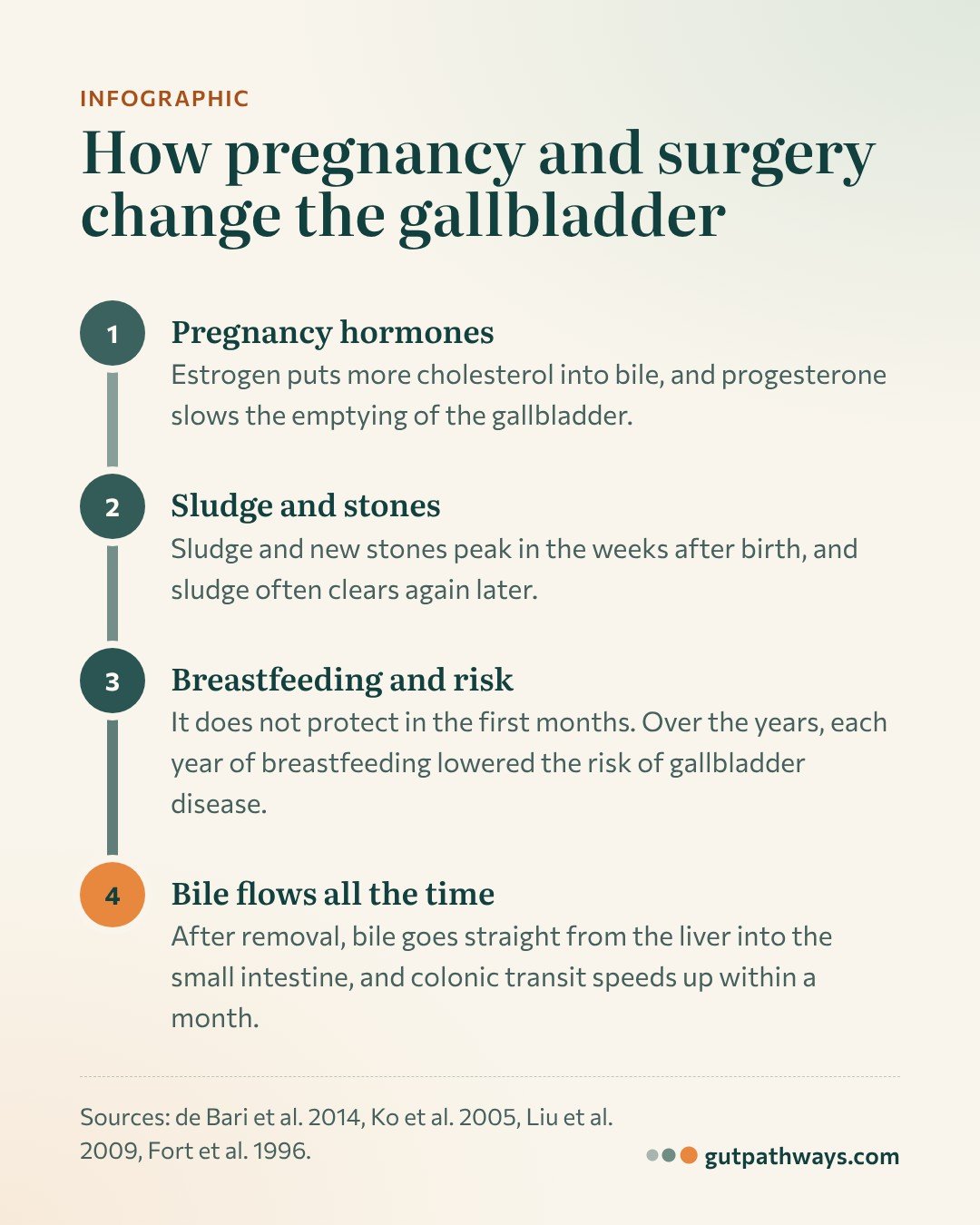 Save this infographicImage 4:5, with sources, from gutpathways.com
How often does IBS follow gallbladder surgery?
Irritable bowel syndrome is the complication people notice most. Some estimates put it as high as half of patients within the first year after surgery, against about 11% in the general population.23 The published studies, however, give lower and more varied numbers, because they measure different things.
In a prospective study, new functional diarrhea appeared in 6.6% of people a year after keyhole surgery, against 0.2% of matched controls, and new chronic abdominal pain in 11.9% against 4.4%.26 In another, non-biliary pain persisted in more than 40% of people after surgery, mostly in those who had IBS-type symptoms beforehand.24 The 2026 meta-analysis also showed that people with symptoms or complications before surgery had a much higher risk of ongoing problems afterwards.25
Women are more likely than men to have IBS in general.23 Symptoms often include abdominal pain, bloating and changes in bowel habits, from diarrhea to constipation, and they can range from mild to severe. More on this in IBS after gallbladder removal and SIBO after gallbladder removal.
In the practice where I work as a scientific collaborator, the care of women with IBS after gallbladder removal is individual, because the changes above are not the only causes, and different combinations of them can produce different patterns.
Frequently asked questions
Often, yes. Sludge cleared in 61% of women within about five months after birth, and stones cleared in 28% within about ten months. Larger stones that cause symptoms are less likely to clear.11
References
26 studies
- de Bari O, Wang TY, Liu M, et al. Cholesterol cholelithiasis in pregnant women: pathogenesis, prevention and treatment. Ann Hepatol. 2014.
- Lammert F, Gurusamy K, Ko CW, et al. Gallstones. Nat Rev Dis Primers. 2016.
- Ko CW, Beresford SA, Schulte SJ, et al. Incidence, natural history, and risk factors for biliary sludge and stones during pregnancy. Hepatology. 2005.
- Wang HH, Liu M, Clegg DJ, et al. New insights into the molecular mechanisms underlying effects of estrogen on cholesterol gallstone formation. Biochim Biophys Acta. 2009.
- Braverman DZ, Johnson ML, Kern F Jr. Effects of pregnancy and contraceptive steroids on gallbladder function. N Engl J Med. 1980.
- Wan S, Lin W, Zhang X, et al. Trimester-specific safety of laparoscopic versus open abdominal surgery during pregnancy: systematic review and meta-analysis. Br J Surg. 2026.
- Fort JM, Azpiroz F, Casellas F, et al. Bowel habit after cholecystectomy: physiological changes and clinical implications. Gastroenterology. 1996.
- Xu Y, Wang J, Wu X, et al. Gut microbiota alteration after cholecystectomy contributes to post-cholecystectomy diarrhea via bile acids stimulating colonic serotonin. Gut Microbes. 2023.
- Stinton LM, Shaffer EA. Epidemiology of gallbladder disease: cholelithiasis and cancer. Gut Liver. 2012.
- Rodriguez Gatta D, Huidobro L, Petermann-Rocha F, et al. Sex disparities in gallstone disease: insights from the MAUCO prospective population-based cohort study. BMJ Open Gastroenterol. 2024.
- Maringhini A, Ciambra M, Baccelliere P, et al. Biliary sludge and gallstones in pregnancy: incidence, risk factors, and natural history. Ann Intern Med. 1993.
- Kline LW, Karpinski E. Progesterone inhibits gallbladder motility through multiple signaling pathways. Steroids. 2005.
- Russo F, Cavallini A, Messa C, et al. Endogenous sex hormones and cholesterol gallstones: a case-control study in an echographic survey of gallstones. Am J Gastroenterol. 1993.
- Liu B, Beral V, Balkwill A, et al. Childbearing, breastfeeding, other reproductive factors and the subsequent risk of hospitalization for gallbladder disease. Int J Epidemiol. 2009.
- Sabonyte-Balsaitiene Z, Sleivyte U, Volochovic J, et al. Acute cholecystitis in pregnancy: a review of incidence, risk factors, diagnostic challenges, management, and maternal-fetal outcomes. Medicina (Kaunas). 2026.
- Maringhini A, Dardanoni G, Fantaci G, et al. Acute pancreatitis during and after pregnancy: incidence, risk factors, and prognosis. Dig Dis Sci. 2021.
- Nasioudis D, Tsilimigras D, Economopoulos KP. Laparoscopic cholecystectomy during pregnancy: a systematic review of 590 patients. Int J Surg. 2016.
- Shah MA, Wagay BA, Aijaz SM. Laparoscopic cholecystectomy during pregnancy: a five-year single-centre experience. J Minim Access Surg. 2026.
- Maringhini A, Patti R, Maringhini M, et al. Ursodeoxycholic acid for the prevention of relapse of pregnancy-related acute gallstone pancreatitis. J Clin Med. 2026.
- Akgul N, Sakar B, Turan MI, et al. Comparison of preoperative and postoperative serum 25-hydroxyvitamin D levels and vitamin K-dependent blood coagulation factor profiles in patients undergoing cholecystectomy. Med Sci Monit. 2026.
- Sarashina-Kida H, Negishi H, Nishio J, et al. Gallbladder-derived surfactant protein D regulates gut commensal bacteria for maintaining intestinal homeostasis. Proc Natl Acad Sci U S A. 2017.
- Mitusheva EI, Saifutdinov RG, Shaimardanov RS, et al. The hepatopancreatobiliary system after cholecystectomy. Eksp Klin Gastroenterol. 2015.
- Lovell RM, Ford AC. Global prevalence of and risk factors for irritable bowel syndrome: a meta-analysis. Clin Gastroenterol Hepatol. 2012.
- de Jong JJ, Latenstein CSS, Boerma D, et al. Functional dyspepsia and irritable bowel syndrome are highly prevalent in patients with gallstones and are negatively associated with outcomes after cholecystectomy: a prospective, multicenter, observational study (PERFECT trial). Ann Surg. 2022.
- Zhou H, Xuan F, Liu M. Incidence risk and risk factors for postcholecystectomy syndrome: a systematic review and meta-analysis. Medicine (Baltimore). 2026.
- Chang JY, Jung HK, Moon CM, et al. Development of functional gastrointestinal disorder symptoms following laparoscopic cholecystectomy: a prospective cohort study. Front Med (Lausanne). 2023.
Found this useful? Share it with someone who needs it.
Cite this article
Prevedoros, T. (2022, December 15). Gallstones and pregnancy, and life after gallbladder surgery. Gut Pathways. https://gutpathways.com/articles/the-relationship-between-pregnancy-breastfeeding-and-gallbladder-surgery/