Migraine and IBS share a histamine link in the gut
Migraine and IBS show up together far more often than chance allows. Underneath both, research keeps pointing to the same place, how gut bacteria and mast cells handle histamine, tryptase and serotonin. The food on the plate is rarely the real trigger, and the microbiome's handling of it usually is.

What is the relationship between migraine and IBS?
Migraine and IBS overlap far more than chance would predict, and the connection now has solid numbers behind it. Pooled data from 22 studies, with 286,993 people with IBS and 53,520 people with migraine, show that IBS roughly doubles the odds of also having migraine or headache. Migraine, in turn, raises the odds of IBS even more.1
The two conditions usually sit in different specialties, gastroenterology for one and neurology for the other. As a result, it is easy to miss how closely they track in the same person. Researchers increasingly place them on the same spectrum of nervous system sensitivity, rather than treating them as two unrelated diagnoses that happen to meet.1
Across 22 studies, people with migraine had about two and a half times the odds of also having IBS, and people with IBS about twice the odds of migraine or headache. Depression and fibromyalgia were similarly common in both groups.1
Do people with IBS get migraines?
Yes, and by a wide margin. In practice, migraine comes up again and again in people referred for gut symptoms alone, often mentioned almost in passing rather than as the main complaint.
Someone will describe years of bloating, abdominal pain and irregular bowel habits, and only then mention their headaches as an afterthought. Most people do not connect the two on their own. The pooled data above explain why they should, since the link holds in both directions.1 So migraine deserves its own line of questions in a first gut consultation, and gut symptoms deserve theirs in a headache clinic.
i've had ibs for years and migraines since my 20s. my neurologist and my gi doctor have never talked to each other. is it weird to think they're connected??
Not weird at all. Migraine and IBS show up together about twice as often as chance would predict, and the link runs both ways. They share mechanisms in the gut and the nervous system, including histamine, mast cells and serotonin, so it is worth asking both doctors to look at the full picture together.
What connects migraine and IBS in the gut-brain axis?
At least three biological routes tie migraine and IBS together, and a fourth has emerged from gut microbiome research. None of them starts with the food on the plate. Instead, they start with what a person's gut bacteria and immune cells do with that food, which is why the same meal can pass without trouble one day and set off a migraine on another.
Histamine and mast cells
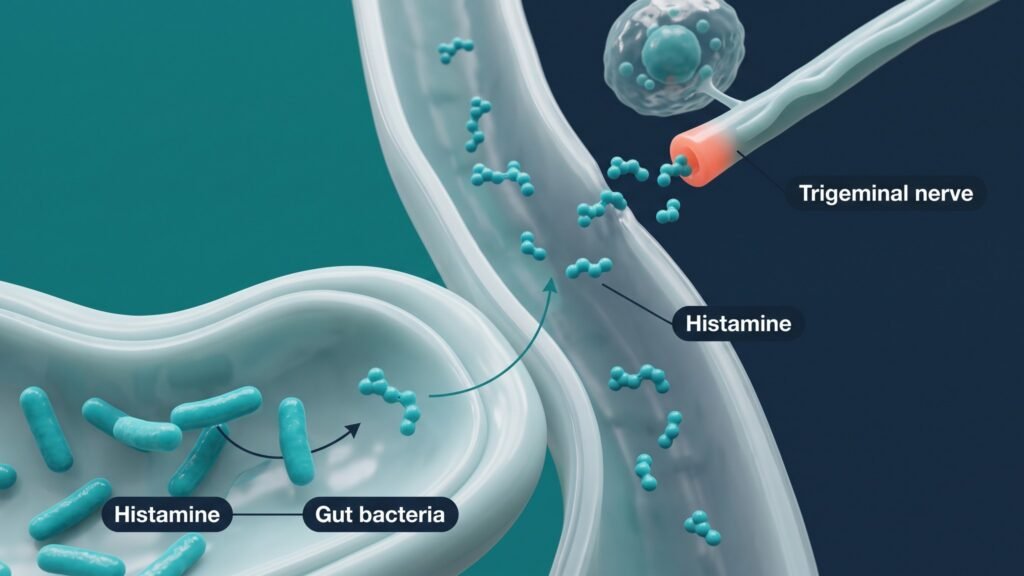
Histamine is the most direct route. Gut bacteria that carry histidine decarboxylase turn dietary histidine into histamine. In a person with low DAO activity, the main enzyme that breaks histamine down, that histamine builds up instead of clearing.4
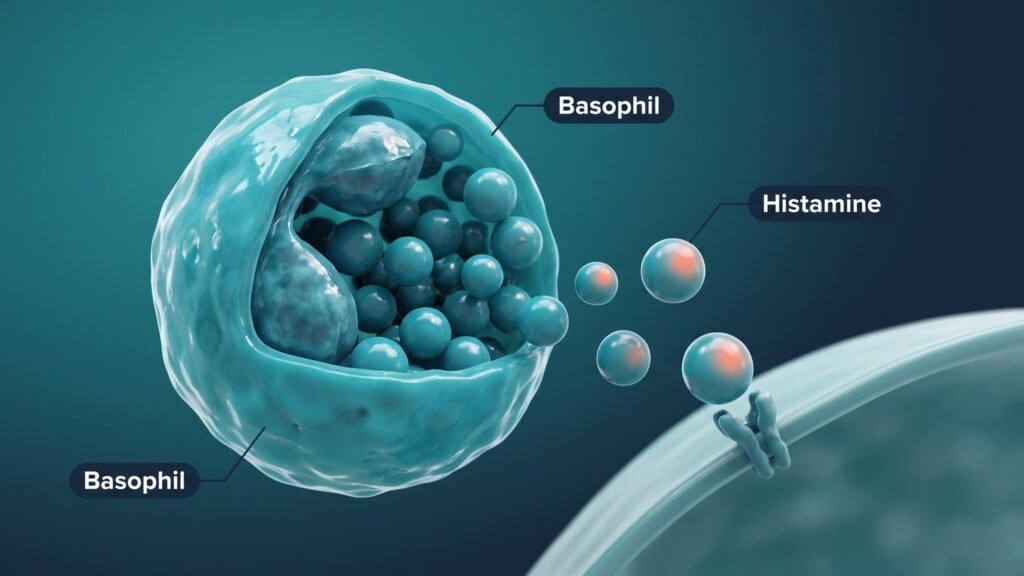
Once histamine rises, mast cells in the meninges, the lining of the brain, become easier to trigger. When these cells release their granules, histamine and other mediators reach nearby trigeminal nerve fibers. In rats, releasing the granules of these mast cells was enough to switch on the pain pathway behind migraine headache.5
Tryptase and nerve sensitization
Tryptase comes out of the same mast cell granules as histamine, but it works through a different route. As an enzyme that cuts proteins, it activates a receptor called PAR2 on trigeminal nerve fibers, and activating PAR2 lowers the threshold at which those fibers fire.6
In practical terms, tryptase does not need to build up over hours the way dietary histamine does. It acts locally and fast, sensitizing the same nerve pathway that carries migraine pain. That may be one reason attacks can escalate faster than blood histamine alone would explain.
Serotonin's double role
Serotonin complicates the picture because it plays almost opposite roles depending on where it acts. Most of the body's serotonin is made in the gut, by enterochromaffin cells whose output gut bacteria help regulate, and there it governs motility, secretion and how strongly the gut registers pain.7
Inside the meninges, serotonin can either narrow or widen blood vessels and change trigeminal firing, depending on which receptor it reaches. That is also why triptans, drugs that act on very specific serotonin receptors, remain a first-line migraine treatment.
A fourth route, gut bacteria and inflammation
The newest piece comes from gut dysbiosis itself, independent of histamine or serotonin. In mice, wiping out the gut microbiota with antibiotics prolonged migraine-like pain, and this depended on a rise in TNF-alpha in the trigeminal pain system. Blocking TNF-alpha, or giving probiotics, reversed the effect.8
This fits a pattern seen in post-infectious IBS and after antibiotics. A gut that has lost its normal balance tends to run a low background level of inflammation, which may sensitize distant nerve pathways and not only the ones in the gut wall. More on that pattern is in IBS after antibiotics.
- Gut bacteria make histamine
Bacteria that carry histidine decarboxylase turn dietary histidine into histamine.
- DAO cannot keep up
Low diamine oxidase activity lets that histamine accumulate instead of clearing.
- Meningeal mast cells react
Histamine and tryptase from mast cells in the brain's lining reach nearby trigeminal fibers.
- The trigeminal nerve fires
Sensitized fibers fire more easily, and the migraine begins.
A simplified chain. Each step is supported by separate studies, not by one experiment.
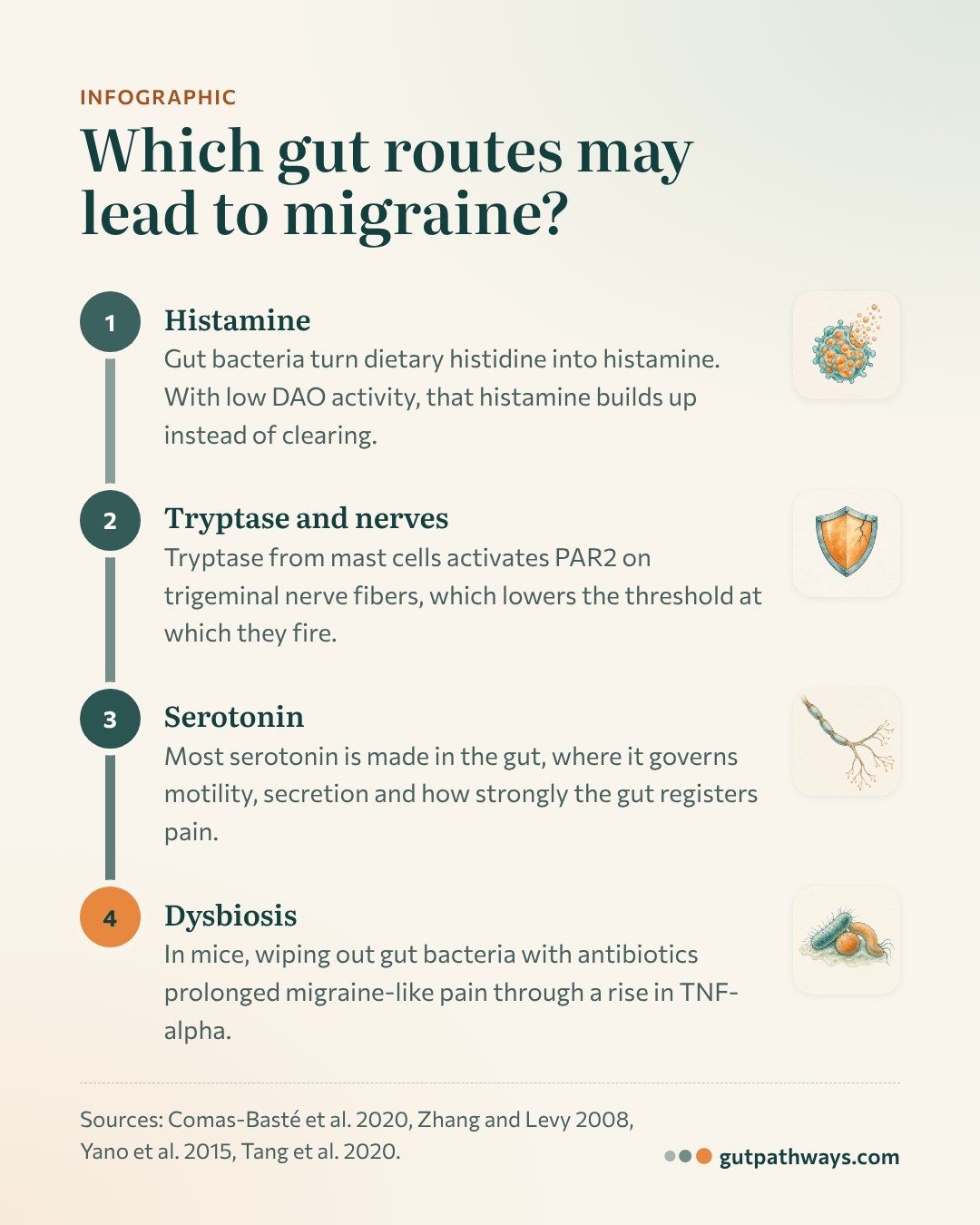
Infographic
Histamine
Gut bacteria turn dietary histidine into histamine. With low DAO activity, that histamine builds up instead of clearing.
Tryptase and nerves
Tryptase from mast cells activates PAR2 on trigeminal nerve fibers, which lowers the threshold at which they fire.

Serotonin
Most serotonin is made in the gut, where it governs motility, secretion and how strongly the gut registers pain.
Dysbiosis
In mice, wiping out gut bacteria with antibiotics prolonged migraine-like pain through a rise in TNF-alpha.
Sources: Comas-Basté et al. 2020, Zhang and Levy 2008, Yano et al. 2015, Tang et al. 2020.
gutpathways.com
 Save this infographicImage 4:5, with sources, from gutpathways.com
Which gut bacteria have been studied in migraine?
Several organisms come up when researchers compare the gut microbiota of people with migraine and matched headache-free controls. The species found lower in migraine are generally the ones linked elsewhere with calmer gut function, while the ones found higher lean toward more inflammatory groups.
| Organism | What research found |
|---|---|
| Faecalibacterium prausnitzii | Lower in elderly women with migraine. One of the gut's main butyrate producers, which helps keep the lining calm.9 More in low Faecalibacterium prausnitzii. |
| Bifidobacterium adolescentis | Also lower in the migraine group of the same study.9 |
| Methanobrevibacter smithii | Lower in the migraine group of the same study. This archaeon makes methane and affects how the gut handles gas and energy.9 |
| Clostridium species | Higher in the migraine group, described by the authors as the "unfriendly" side of the Firmicutes.9 |
| Eggerthella lenta | Changed in people with migraine compared with healthy controls in a separate study.10 |
| Alcaligenes | Changed in people with migraine in the same separate study.10 |
In 108 stool samples from elderly women with and without migraine, the migraine group had lower diversity, more Clostridium species and less Faecalibacterium prausnitzii, Bifidobacterium adolescentis and Methanobrevibacter smithii.9
None of these organisms causes migraine on its own, and a similar shift appears in SIBO cases that never involved a headache. Taken together, the pattern suggests a gut community that makes fewer of the calming metabolites the nervous system relies on, and more of the byproducts that keep it on edge.
Can treating histamine intolerance reduce migraine?
In some people, yes, and the clearest data point to diamine oxidase. If DAO activity is too low for the histamine a person makes or eats, the excess circulates more freely. In a randomized trial, a DAO supplement shortened migraine attacks, although the difference from placebo was modest.3
- Histamine intolerance
- A mismatch between how much histamine the body is exposed to, from food, gut bacteria or both, and how well the enzyme DAO can break it down. When DAO activity is too low, histamine builds up and can cause headache, gut and skin symptoms even after ordinary meals.4
Low DAO is more common in migraine than most people expect. In 137 people with migraine and 61 controls, DAO activity was lower in the migraine group, and 87% of the migraine patients had values below the study's cut-off. At the same time, 44% of the people without migraine were also below that cut-off, so a low result is common and does not explain a migraine on its own.2
A separate randomized, double-blind trial then tested whether correcting the deficit changes anything. One hundred people with episodic migraine and low DAO took a DAO supplement or a placebo for one month.3
Migraine attack duration before and after one month (hours)
Izquierdo-Casas 2019, randomized double-blind trial, n = 100. Mean hours of pain per attack.
In 100 people with migraine and DAO deficiency, one month of DAO supplement cut attack duration by 1.4 hours, a significant change within the group. The placebo group dropped by 0.9 hours, which was not significant on its own. The number of attacks and pain intensity fell similarly in both groups.3
Overall, the effect was real but modest, and specific. Attacks got shorter, while their number and intensity did not clearly change. DAO status looks like one lever among several, not a single explanation for every migraine in someone with IBS.
What foods trigger migraines in people with IBS?
In migraine and IBS, the food itself is rarely the real trigger. What usually decides whether a meal becomes a migraine is how much histamine is already in it, together with a person's own DAO capacity. That is why the same dish can be harmless for months and then suddenly provoke an attack.
Five food groups come up most often in practice. All five share one thing: they are fermented, aged or stored long enough for bacteria to make meaningful amounts of histamine before the food reaches the plate.4, 11

Aged cheese
The longer a cheese ages, the more time bacteria have to turn its amino acids into histamine. A sharp, well-aged wedge can carry far more than a fresh, mild one.

Cured and fermented meats
Salami, chorizo and other cured meats rely on bacterial fermentation for their flavor, and that same fermentation makes histamine as a byproduct.
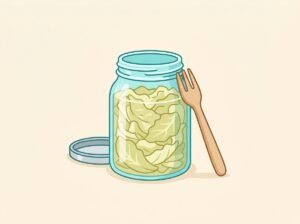
Fermented vegetables
Sauerkraut, kimchi and other fermented vegetables owe their tang to live bacterial cultures, the same cultures that can make histamine.

Red wine
Malolactic fermentation, which gives red wine its smoother finish, is carried out by bacteria that can also make histamine. Alcohol itself may also block DAO.11
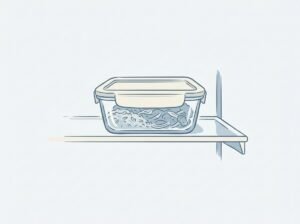
Leftovers and stored food
Histamine climbs the longer cooked meat, fish or leftovers sit, even in the refrigerator, because bacteria keep breaking down proteins.
Cutting back on these foods can help in the short term, but it treats the symptom rather than the cause. The lasting fix usually involves the gut bacteria and the DAO capacity that decide how much histamine a meal ends up delivering, which is what the routes above describe. The SIBO side of this is covered in how histamine intolerance and SIBO feed each other.
Does treating IBS change migraine in practice?
In practice, it often does, and it is one of the more consistent patterns in migraine and IBS cases worked up through biochemistry data mining. In the clinics where I work as a scientific collaborator, when a case traces back to bacterial overgrowth or a histamine-making gut pattern and that is corrected, people often report fewer and milder migraines along with fewer gut symptoms, sometimes before the headaches were addressed directly at all.
The gut work usually targets the same levers described above. It lowers the bacterial histamine load, supports the species linked to calmer gut function, and gives DAO enough support to keep up with a person's actual histamine exposure. None of this replaces migraine treatment when it is needed. Still, it explains why so many people notice both problems easing together rather than one at a time.
Frequently asked questions
Migraine and IBS occur together far more than chance would predict. Pooled data from 22 studies show that IBS roughly doubles the odds of migraine or headache, and migraine raises the odds of IBS about two and a half times. Shared routes include histamine, tryptase, serotonin and gut bacteria.1
Aged cheese, cured meats, fermented vegetables, red wine and stored leftovers come up most often. The trigger is usually the histamine that bacteria have already made in the food, combined with a person's own DAO capacity to clear it.4
Yes, and more often than people without IBS. In practice, migraine is often mentioned almost as an afterthought during a gut consultation, and pooled research confirms that the link is real.1
In practice, often yes. Correcting the gut bacteria and histamine handling behind IBS frequently goes together with fewer and milder attacks. This is a consistent clinical pattern rather than the result of a dedicated trial.
People describe anything from a dull, pressing headache on bad gut days to full migraine attacks with nausea and sensitivity to light. When headaches follow meals, flares or histamine-rich foods, the gut side is worth checking.
In one randomized trial in people with low DAO, a one-month supplement shortened attacks by 1.4 hours, while the number of attacks and pain intensity did not change more than with placebo.3 It may help some people, as one part of a wider plan.
References
11 studies
- Todor TS, Fukudo S. Systematic review and meta-analysis of calculating degree of comorbidity of irritable bowel syndrome with migraine. Biopsychosoc Med. 2023.
- Izquierdo-Casas J, Comas-Basté O, Latorre-Moratalla ML, et al. Low serum diamine oxidase (DAO) activity levels in patients with migraine. J Physiol Biochem. 2018.
- Izquierdo-Casas J, Comas-Basté O, Latorre-Moratalla ML, et al. Diamine oxidase (DAO) supplement reduces headache in episodic migraine patients with DAO deficiency: a randomized double-blind trial. Clin Nutr. 2019.
- Comas-Basté O, Sánchez-Pérez S, Veciana-Nogués MT, et al. Histamine intolerance: the current state of the art. Biomolecules. 2020.
- Levy D, Burstein R, Kainz V, Jakubowski M, Strassman AM. Mast cell degranulation activates a pain pathway underlying migraine headache. Pain. 2007.
- Zhang XC, Levy D. Modulation of meningeal nociceptors mechanosensitivity by peripheral proteinase-activated receptor-2: the role of mast cells. Cephalalgia. 2008.
- Yano JM, Yu K, Donaldson GP, et al. Indigenous bacteria from the gut microbiota regulate host serotonin biosynthesis. Cell. 2015.
- Tang Y, Liu S, Shu H, Yanagisawa L, Tao F. Gut microbiota dysbiosis enhances migraine-like pain via TNFα upregulation. Mol Neurobiol. 2020.
- Chen J, Wang Q, Wang A, Lin Z. Structural and functional characterization of the gut microbiota in elderly women with migraine. Front Cell Infect Microbiol. 2019.
- Kopchak O, Hrytsenko O. Feature of gut microbiota in patients with migraine and healthy individuals. Georgian Med News. 2022.
- Maintz L, Novak N. Histamine and histamine intolerance. Am J Clin Nutr. 2007.
Found this useful? Share it with someone who needs it.
Cite this article
Prevedoros, T. (2026, July 26). Migraine and IBS share a histamine link in the gut. Gut Pathways. https://gutpathways.com/articles/migraine-ibs-histamine-link/