How to stop an IBS flare-up in 12 quick steps
Knowing how to stop an IBS flare-up completely is hard. Easing it early is realistic, and these 12 steps are quick, simple and low-risk to try at the first sign of trouble.
The reality of an IBS flare-up
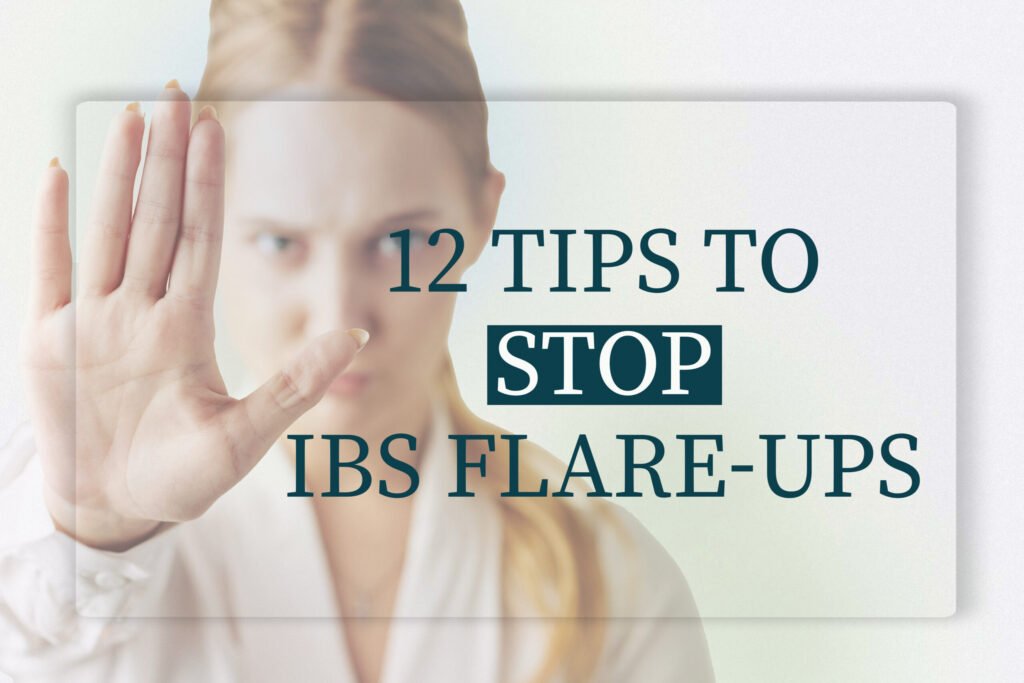
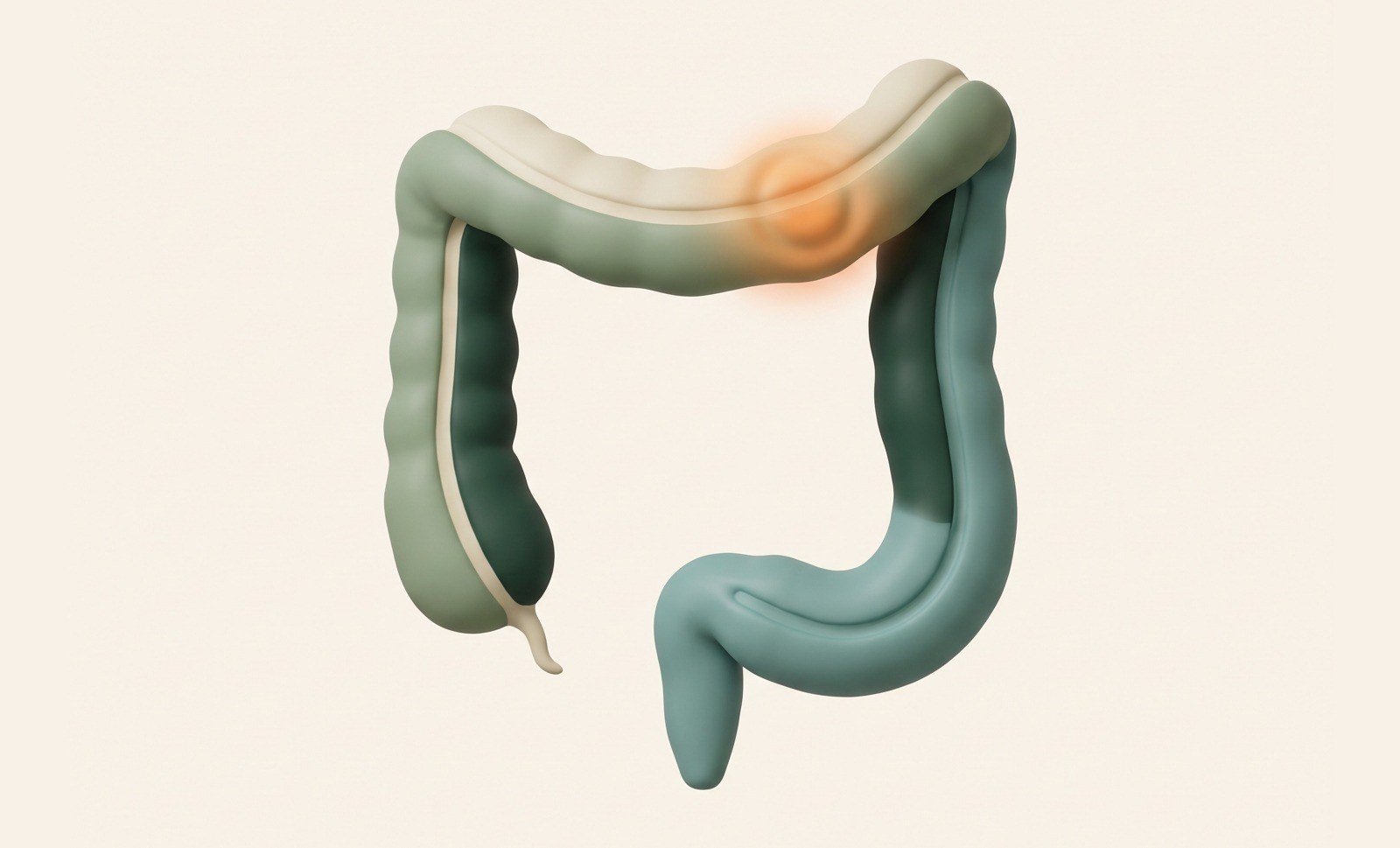
Flare-ups are part of life with IBS, and accepting this is a useful first step. A flare-up is a temporary worsening of symptoms, with more abdominal pain, bloating, diarrhea or constipation. We can manage these episodes, but we cannot always prevent them. Their unpredictability is hard on daily life.
Triggers and long-term management
Many different things can set off a flare-up, and they are often hard to pinpoint. Environmental, dietary or emotional factors can all act as triggers. In the long term, doctors often suggest dietary changes such as a low FODMAP diet, which limits foods that ferment in the gut. Those changes take time to work. What you need in the middle of a flare-up is something you can do right now.
The goal: fewer and milder flare-ups
The realistic goal is fewer and milder flare-ups, not none at all.
That alone changes daily life. There are fewer cancelled plans, better sleep and less worry about the next episode.
Why an early response helps
When you notice the start of a flare-up and act on it, the episode tends to be milder and shorter. Early action also limits the effect on your day, including sleep, anxiety and productivity.
How early is early? There is no proven time window. The sooner you start, the better it tends to go. So begin at the first sign, such as a tight feeling in the abdomen, the first cramp or a sudden urge.
Early action matters for two reasons:
A calmer gut-brain axis
It may stop the gut-brain axis from becoming overstimulated. An overactive axis can raise gut sensitivity and motility, and this makes symptoms stronger.
Less immune activation
It may limit the activation of the immune system in the gut, and with it the inflammation that can follow.
The loop of ignored early signs
If the first signs are ignored, a loop driven by stress hormones can start. Stress activates the hypothalamic-pituitary-adrenal (HPA) axis. The body then releases corticotropin-releasing hormone (CRH, also called CRF) and cortisol. In people with IBS, this stress response is thought to add to pain and bloating.12 Once the loop is running, the flare-up may last longer and respond less well to treatment.
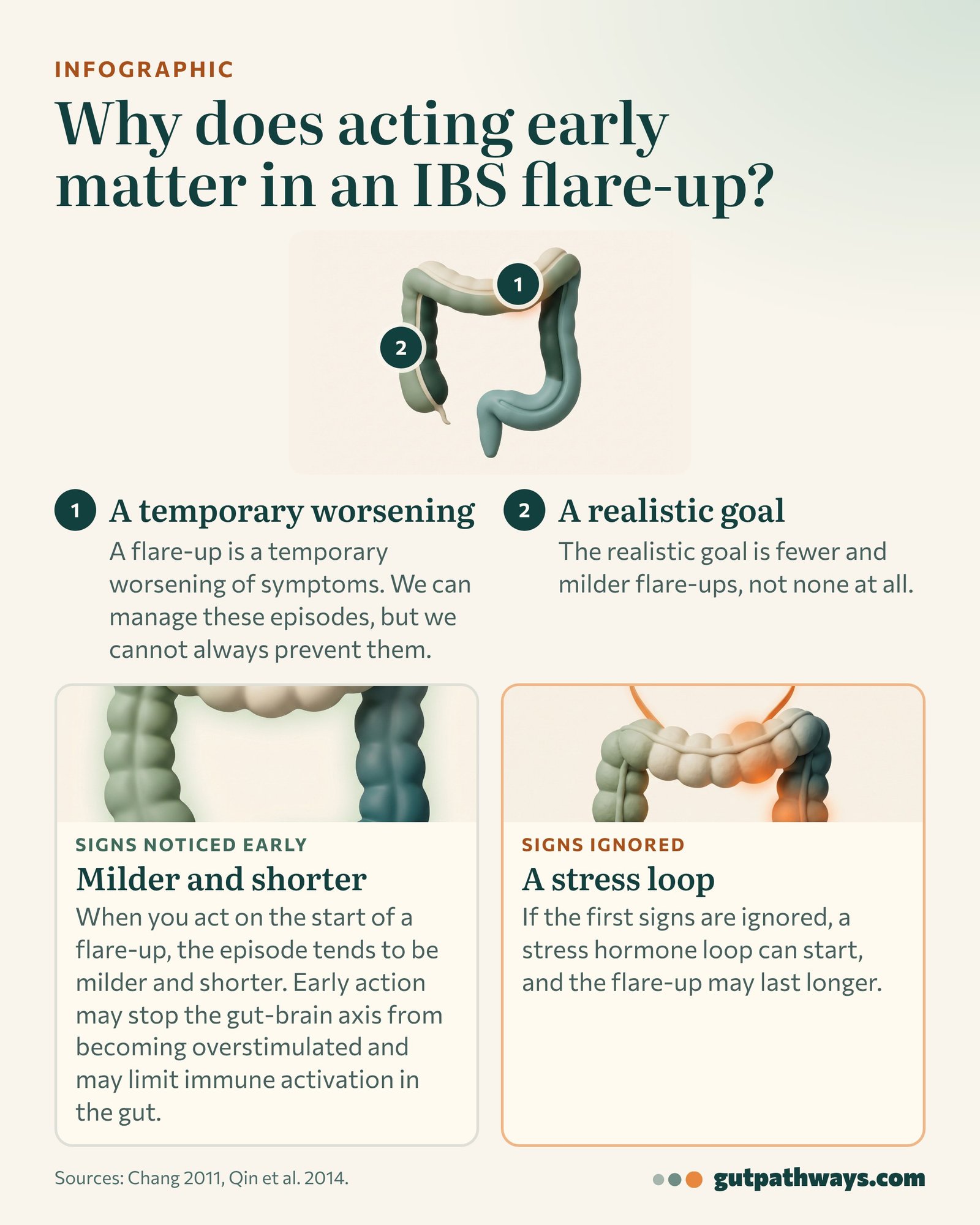
Infographic
A temporary worsening
A flare-up is a temporary worsening of symptoms. We can manage these episodes, but we cannot always prevent them.
A realistic goal
The realistic goal is fewer and milder flare-ups, not none at all.
Signs noticed early
Milder and shorter
When you act on the start of a flare-up, the episode tends to be milder and shorter. Early action may stop the gut-brain axis from becoming overstimulated and may limit immune activation in the gut.
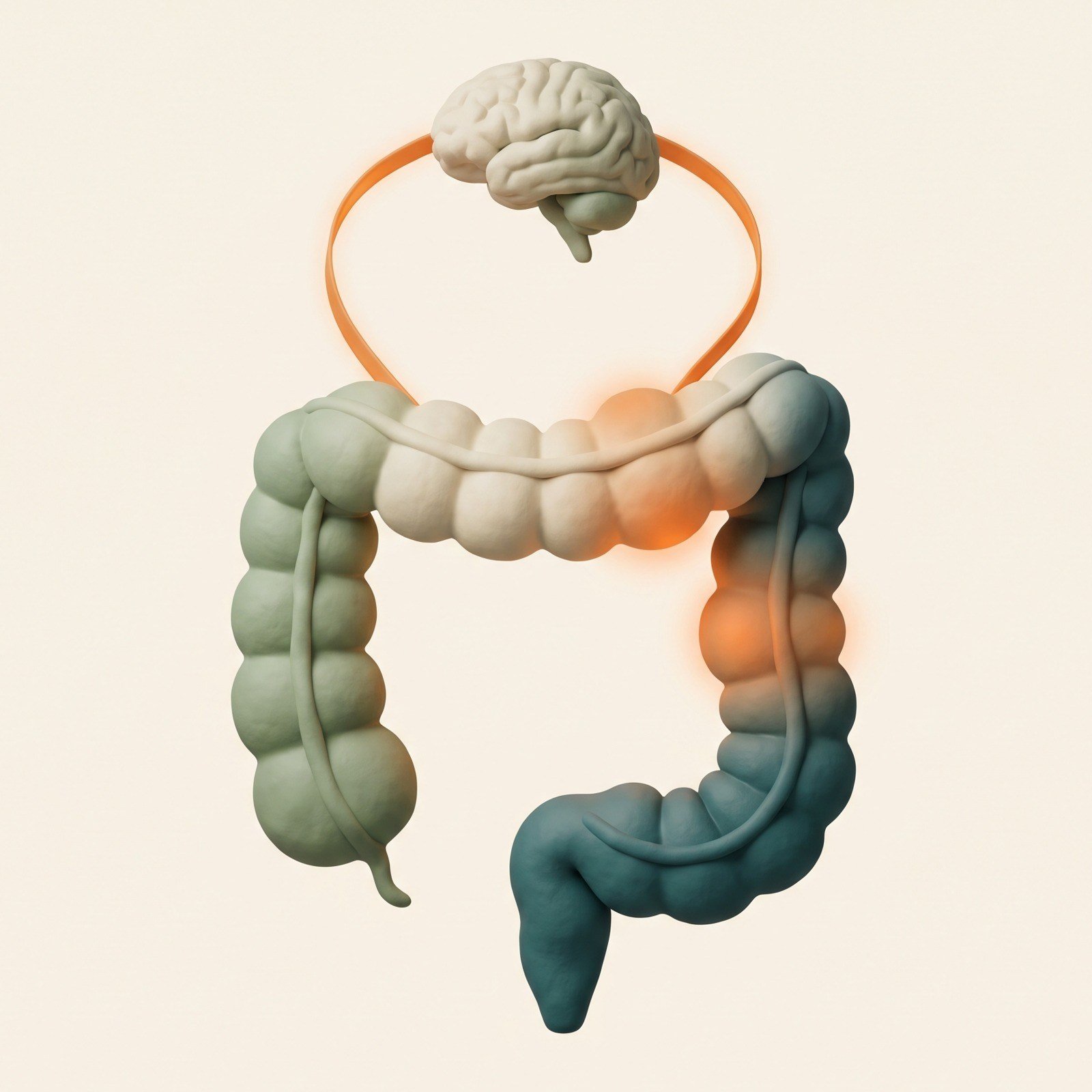
Signs ignored
A stress loop
If the first signs are ignored, a stress hormone loop can start, and the flare-up may last longer.
Sources: Chang 2011, Qin et al. 2014.
gutpathways.com
 Save this infographicImage 4:5, with sources, from gutpathways.com
12 quick steps to calm an IBS flare-up
Try these at the first signs. None of them replaces medical advice, and you do not need to do all twelve. Pick the ones that suit you.
Medicine and fluids
- 1
Peppermint oil. Among natural remedies, peppermint oil has the best evidence in IBS, mostly when taken regularly for some weeks.3 Some people also use it at the start of a flare-up. It can cause heartburn, so ask your doctor or pharmacist about the form and the dose.
- 2
An antispasmodic, if your doctor has recommended one. These medicines relax the muscle spasms of the gut and can ease cramps.4 Take it as prescribed.
- 3
Two glasses of water, sipped slowly. Water supports hydration and the fluid balance of the gut. This matters most when you have diarrhea.
Mind and body
- 4
Slow diaphragmatic breathing. Slow breaths with a long exhale can calm the body's stress response. The technique is safe, although evidence in IBS is limited.
- 5
A short mental break. Stop what you are doing for a few minutes. Less stress input gives the gut a chance to settle.
- 6
Avoid loud noise. Noise adds to stress, so a quiet room is a better place for the first hour.
- 7
A comfortable place with a steady temperature. Sit somewhere you feel at ease, away from drafts and heat.
- 8
No news and no devices. Bad news and endless scrolling keep the stress response active. Put them aside until the symptoms ease.
Heat, movement and herbal tea
- 9
A warm compress on the abdomen. Warmth can relax the abdominal muscles and ease cramps. Keep it warm and not hot.
- 10
A short, slow walk. Light activity is part of a healthy routine in IBS, and regular exercise has some support in studies.5
- 11
Gentle yoga. Yoga has some support in IBS studies.6 Choose slow, gentle poses.
- 12
Chamomile or passionflower tea. These teas are calming and pleasant. Evidence for IBS is limited, so think of them as comfort and not as treatment.
Frequently asked questions
Many things can set off a flare-up, including certain foods, stress hormones, sex hormones and the environment. See what causes IBS flare-ups for the full list. To find trigger foods, keep a detailed food and symptom diary. Then test one suspect food at a time and watch what happens. Cutting out many foods at once is not advised, since it can narrow your diet without telling you which food was the problem.
Easy-to-digest foods with a low FODMAP content usually feel best. Examples are plain rice, cooked vegetables that you tolerate and lean meat such as chicken. Firm, unripe bananas are low in FODMAPs, while ripe ones are higher. Large amounts of raw vegetables and insoluble fiber, such as whole-grain bran, can make a flare-up worse. For the diet in detail, see the low FODMAP diet.
Act at the first sign. Sit down in a calm, comfortable place. Breathe slowly and sip some water. Apply warmth to the abdomen and avoid loud noise and screens. If your doctor has recommended an antispasmodic or peppermint oil, use it as advised. All 12 steps are listed above.
From a few hours to several weeks. There is no single agreed definition. Read more in what causes IBS flare-ups.
References
7 studies
- Chang L. The role of stress on physiologic responses and clinical symptoms in irritable bowel syndrome. Gastroenterology. 2011.
- Qin HY, Cheng CW, Tang XD, Bian ZX. Impact of psychological stress on irritable bowel syndrome. World J Gastroenterol. 2014.
- Alammar N, Wang L, Saberi B, et al. The impact of peppermint oil on the irritable bowel syndrome: a meta-analysis of the pooled clinical data. BMC Complement Altern Med. 2019.
- Lacy BE, Pimentel M, Brenner DM, et al. ACG clinical guideline: management of irritable bowel syndrome. Am J Gastroenterol. 2021.
- Johannesson E, Simren M, Strid H, Bajor A, Sadik R. Physical activity improves symptoms in irritable bowel syndrome: a randomized controlled trial. Am J Gastroenterol. 2011.
- Schumann D, Anheyer D, Lauche R, et al. Effect of yoga in the therapy of irritable bowel syndrome: a systematic review. Clin Gastroenterol Hepatol. 2016.
- Mearin F, Lacy BE, Chang L, et al. Bowel disorders. Gastroenterology. 2016.
Found this useful? Share it with someone who needs it.
Cite this article
Prevedoros, T. (2023, June 13). How to stop an IBS flare-up in 12 quick steps. Gut Pathways. https://gutpathways.com/articles/12-tips-to-stop-an-ibs-flare-up/