SIBO can develop after gallbladder removal
SIBO after gallbladder removal starts with a change in how bile reaches the gut, and with it the conditions that keep bacteria in check. For many people, the bloating and pain that follow are often more than leftover gallbladder symptoms.
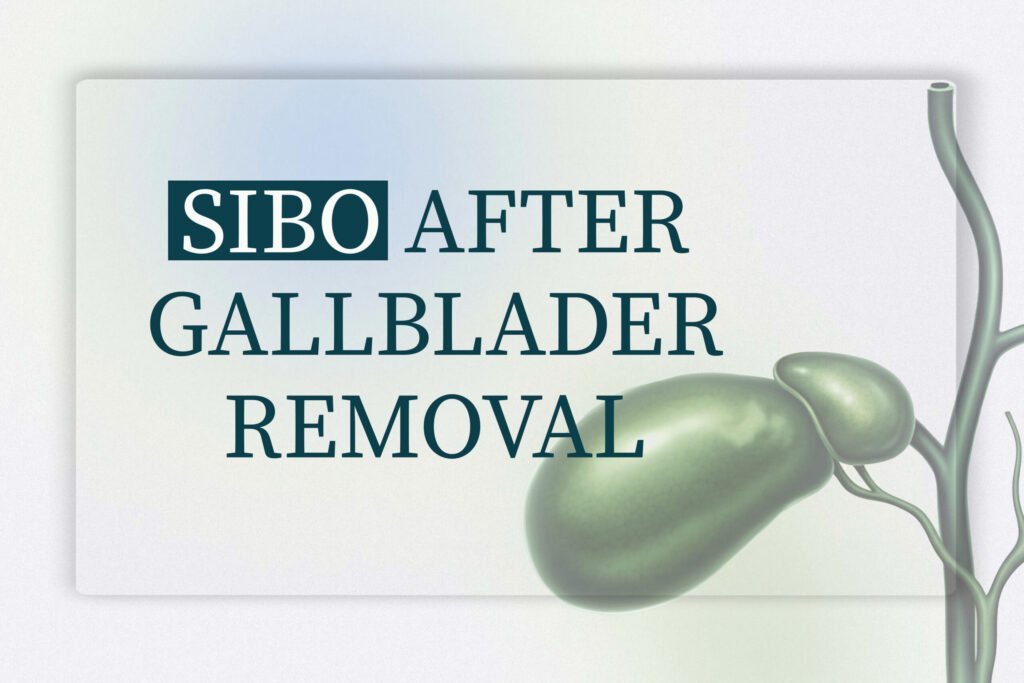
Why does SIBO show up after gallbladder removal?
Many people, especially women who have given birth, find that their symptoms persist or even get worse after gallbladder removal. Bloating, abdominal pain and irregular bowel habits may continue, even when they existed before the operation.
In the clinics where I work as a scientific collaborator, SIBO after gallbladder removal shows up in more than 80% of the people seen with these symptoms, anywhere from 6 months to 7 years after surgery. This is a practice observation rather than a study result, but it matches a clear trend in the research: gallbladder removal surgery can set the stage for small intestinal bacterial overgrowth (SIBO) and change the very nature of digestion.3
Gallbladder function and digestion 101
First of all, your gallbladder does more than store bile. It is central to fat digestion and in clearing fat-soluble substances. It stores and concentrates bile, a digestive fluid made by the liver and rich in bile acids. Besides helping digest fat, bile helps keep a healthy bacterial balance in the small intestine.
Whatever led to surgery, whether gallstones, polyps or cholecystitis, cholecystectomy replaces the controlled release of bile with a constant trickle into the gut. You now have bile around the clock, but often less of it than a meal needs. This shift changes the bile acid pool and the natural balance of bacteria, which can set the stage for malabsorption and SIBO.
How gallbladder removal contributes to SIBO and IBS
The gallbladder also releases a protein called surfactant protein D (SP-D). In mice, gallbladder-made SP-D binds selectively to certain gut bacteria and helps keep the gut community in balance. Mice lacking it developed dysbiosis and were more prone to colitis, and the authors noted possible relevance to cholecystectomy.4
Separately, the loss of bile storage makes bile flow constant rather than episodic, which may change conditions in the small intestine. This constant bile environment may be less effective at keeping bacteria in check, so overgrowth can take hold.
The gut's cleaning wave changes as well. After cholecystectomy, the duodenal part of the migrating motor complex travelled at about half its normal speed, and phase III became shorter.2 A slower sweep gives bacteria more time to settle, a mechanism described in detail in how a weak migrating motor complex sets up SIBO.
When SIBO develops, methane-type overgrowth is only one form. Hydrogen and other bacterial by-products can also cause bloating, abdominal pain and changes in stool consistency. A hydrogen breath test is often used to diagnose SIBO, measuring hydrogen and methane in the breath. In practice, though, its value for planning treatment is limited.
Does cholecystectomy cause SIBO? What the studies show
Studies that compare people after gallbladder removal with healthy controls find more SIBO after the operation, which is why cholecystectomy raises the risk of SIBO for many people.
Positive glucose breath test after cholecystectomy against controls (%)
Sung 2015 (62 post-cholecystectomy patients) and Kim 2017 (107 cholecystectomy patients), each against its own healthy controls.3, 5
Among people with gut symptoms after cholecystectomy, 46.8% had a positive glucose breath test, against 26.2% of people with functional gut disorders and 13.3% of healthy controls. Cholecystectomy was the only independent predictor of SIBO, and the positive group had more bloating, abdominal discomfort, early fullness and nausea.3
Beyond SIBO, gallbladder removal is also linked with IBS. In a UK Biobank cohort of more than 400,000 people followed for about 12.7 years, those with a cholecystectomy had a 46% higher risk of developing IBS, and an even higher risk of IBS with diarrhea.8
Symptoms beyond digestive issues
IBS-type symptoms are not the only result of gallbladder removal. The change can set off effects that reach well beyond the gut. Without the gallbladder to regulate bile flow and supply SP-D, the digestive system loses an important control mechanism, and the gut influences many other organs in the body.
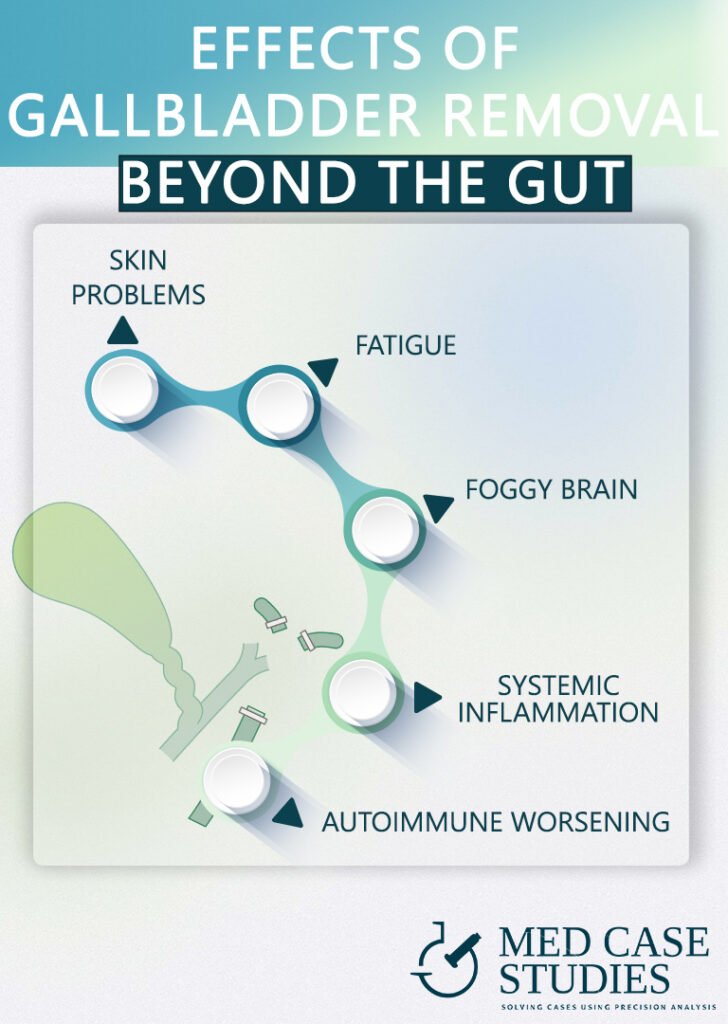
Skin problems
Gallbladder removal can have effects beyond the gut, such as skin problems.
Fatigue
Gallbladder removal can have effects beyond the gut, such as fatigue.
Foggy brain
Gallbladder removal can have effects beyond the gut, such as a foggy brain.
Systemic inflammation
Gallbladder removal can have effects beyond the gut, such as systemic inflammation.
Autoimmune worsening
Gallbladder removal can have effects beyond the gut, such as autoimmune worsening.
SIBO is linked in research with several skin conditions.1 After gallbladder removal, people often report outbreaks of acne and eczema. Acne may appear as overgrowth drives systemic inflammation, while eczema can flare with an immune response that has lost the gallbladder's regulating effects. These skin changes are visible signs that digestion is affecting overall health.
Beyond the skin, the inflammation that comes with SIBO often adds to a deep fatigue that rest does not fix and that can limit daily life and quality of life. Some people describe widespread, fibromyalgia-like pain as well.
A common complaint is brain fog, with trouble concentrating and memory lapses that disrupt work and home life. In one study, brain fog with gas and bloating was linked with SIBO and D-lactic acidosis, and it often eased after probiotics were stopped and the overgrowth was treated.9
Joint pain is another symptom people report, possibly tied to chronic inflammation and the stress that altered bile flow places on the body. These symptoms show that the effects of gallbladder surgery and SIBO are not confined to the gut.
First steps to manage SIBO after gallbladder removal
The good news is that the changes after gallbladder removal can be managed. Diet is usually the first lever: the timing of your last meal, the amount of fat per meal, what you drink and even how you sit while eating all help make up for the missing organ. Regular physical activity and stress management also support gut motility and bacterial balance.
In practice, people who stick with small, consistent changes see real improvements. The steps below are the ones that come up most often, and each is worth discussing with your doctor before you start.
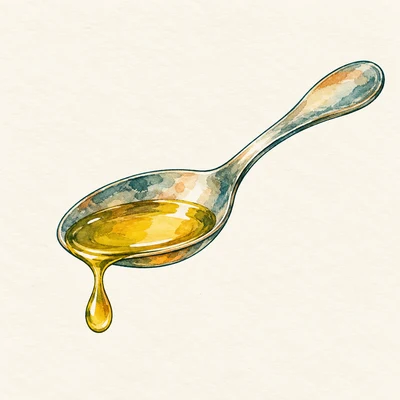
A smaller dose of healthy fat with every meal
About 5 to 7 grams of fat per meal, for example one teaspoon of extra virgin olive oil on a salad, a quarter of an avocado or 10 to 12 raw almonds. The aim is to prompt bile release without overwhelming digestion.
Water 20 to 30 minutes after meals
Waiting about 20 to 30 minutes after a meal before drinking larger amounts of water keeps bile and digestive enzymes from being diluted, so they work better on the fat in your food.
Ox bile before heavy meals
Ox bile extract before heavier meals may help mimic the concentrated bile you once had. The supplement is meant to support fat emulsification and nutrient absorption, and it is best used with your doctor's agreement.
Pre-meal acidification
Slightly more acidity in the stomach before eating may support fat emulsification and digestion. In practice, it is also used to help keep unwanted bacteria in the small intestine in check.
Slow, thorough chewing
Chewing slowly and thoroughly breaks food down mechanically, so digestive enzymes and the more dilute bile can work better.
Are probiotics good after gallbladder removal?
Yes, but mostly once the conditions favor them. In practice, a small intestine that stays constantly alkaline may work against the benefits of probiotics. The first step is therefore to adjust diet and lifestyle toward a more balanced bile acid environment. Once digestion starts to settle, carefully chosen probiotics can support bacterial balance and help with SIBO.
Personalized treatment and ongoing management
After gallbladder removal, a personal treatment and lifestyle plan becomes necessary. The loss of this organ changes bile flow and digestion in ways that go beyond typical gut discomfort. SIBO can be cleared with targeted treatment, but if the dietary and lifestyle changes are not kept, it is likely to come back, because the bacterial balance in the small intestine keeps being challenged.
Millions of cholecystectomies are performed worldwide every year. Studies have found SIBO more often in people without a gallbladder than in people with one.3, 5 This makes SIBO after cholecystectomy less a passing issue and more a recurring challenge that needs ongoing management.
In the end, managing SIBO after cholecystectomy depends on a continuous approach that combines clearing the overgrowth with a routine that supports balanced digestion. The benefits of treatment can be short-lived if the changes are not kept up. A step-by-step plan is described in how to treat gut dysbiosis in the right order.
Frequently asked questions
In the clinics where I work, more than 80% of people with gut symptoms after cholecystectomy develop SIBO within seven years. Research also finds more SIBO after cholecystectomy, for example 46.8% against 13.3% in healthy controls.3
It raises the risk for many people. Without a gallbladder, bile flows constantly instead of with meals, and the gut's cleaning wave slows down, both of which favor overgrowth.2 A breath test and the full symptom picture are still needed in each case.
It is common, but it is not something you have to live with. Persistent bloating after cholecystectomy can come from SIBO, from bile acids reaching the colon or from changed fat digestion. In one study, people with SIBO after cholecystectomy had more bloating, abdominal discomfort and early fullness.3 Ongoing bloating is worth checking with a doctor.
The steps that come up most are a small amount of fat with every meal, waiting before drinking larger amounts of water, an earlier dinner, slow chewing and, with your doctor's agreement, supplements such as ox bile. If SIBO is present, it needs treatment of its own, and the habits that support digestion then need to stay in place.
Yes, once the environment is favorable. Adjust diet and meal timing first, toward a healthier bile acid balance, and then add probiotics chosen with your doctor.
Hydrogen breath tests are widely used to diagnose SIBO. In practice, their value for planning treatment is limited, so the result is best read together with symptoms and history, and the long-term habits matter most.
References
9 studies
- Roszkowska P, Klimczak E, Ostrycharz E, et al. Small intestinal bacterial overgrowth (SIBO) and twelve groups of related diseases: current state of knowledge. Biomedicines. 2024.
- Perdikis G, Wilson P, Hinder R, et al. Altered antroduodenal motility after cholecystectomy. Am J Surg. 1994.
- Sung HJ, Paik CN, Chung WC, et al. Small intestinal bacterial overgrowth diagnosed by glucose hydrogen breath test in post-cholecystectomy patients. J Neurogastroenterol Motil. 2015.
- Sarashina-Kida H, Negishi H, Nishio J, et al. Gallbladder-derived surfactant protein D regulates gut commensal bacteria for maintaining intestinal homeostasis. Proc Natl Acad Sci U S A. 2017.
- Kim DB, Paik CN, Kim YJ, et al. Positive glucose breath tests in patients with hysterectomy, gastrectomy, and cholecystectomy. Gut Liver. 2017.
- Gabbard SL, Lacy BE, Levine GM, Crowell MD. The impact of alcohol consumption and cholecystectomy on small intestinal bacterial overgrowth. Dig Dis Sci. 2014.
- Kim DB, Paik CN, Song DS, et al. The characteristics of small intestinal bacterial overgrowth in patients with gallstone diseases. J Gastroenterol Hepatol. 2018.
- Zhao J, Tian L, Xia B, et al. Cholecystectomy is associated with a higher risk of irritable bowel syndrome in the UK Biobank: a prospective cohort study. Front Pharmacol. 2023.
- Rao SSC, Rehman A, Yu S, Andino NM. Brain fogginess, gas and bloating: a link between SIBO, probiotics and metabolic acidosis. Clin Transl Gastroenterol. 2018.
Found this useful? Share it with someone who needs it.
Cite this article
Prevedoros, T. (2025, February 13). SIBO can develop after gallbladder removal. Gut Pathways. https://gutpathways.com/articles/sibo-after-gallbladder-removal/