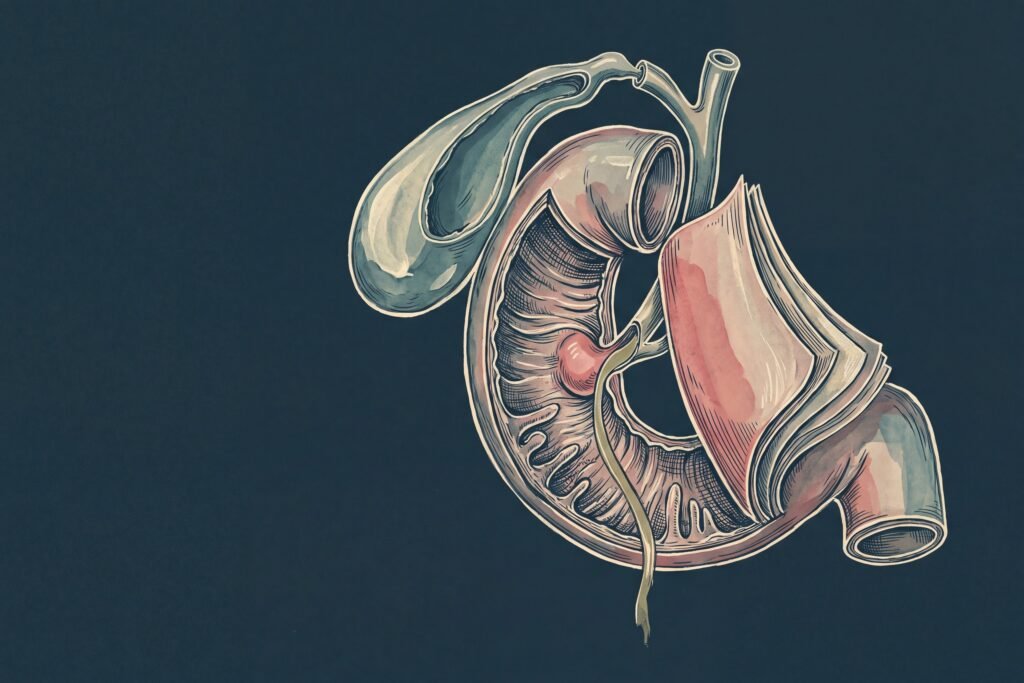
How genes link vitamin D and the gut microbiome after menopause
A 2026 study of 466 women in Mexico adds new data on vitamin D and the gut microbiome after menopause. Women who carried common variants in two vitamin D genes, VDR and NADSYN1, had less diverse gut bacteria. Yet their blood vitamin D was the same. So the genes seem to shape how the body handles vitamin D, and the gut follows. The link comes from one point in time, and the authors treat it as a starting point for more research.
What did the study find about vitamin D and the gut microbiome after menopause?
The study found that two vitamin D genes track with gut bacteria. In this research on vitamin D genes and gut bacteria after menopause, a team in Mexico City genotyped 466 women with a median age of 60. Women who carried common variants in VDR or NADSYN1 had fewer kinds of gut bacteria.
The team tested nine variants across six genes that handle vitamin D. Together, these genes make, carry, activate, break down or receive the vitamin. Next, the researchers sequenced each woman's stool and compared the bacteria across genotypes. In the end, three variants stood out, one in VDR and two in NADSYN1.
The clearest drop in diversity showed up in women with several variants at once. Among women aged 47 or older, more than three risk versions meant lower scores on three of four diversity measures. In other words, more variants went with a thinner gut community.
Vitamin D genes and gut bacteria after menopause
What was asked
Do common variants in vitamin D genes change the gut microbiome of women after menopause?
The team tested 9 variants in 6 genes that make, carry, activate, break down or receive vitamin D.
SummaryHow the study worked
In numbers
Women in the study
466
Variants linked to diversity
3 of 9
Diversity measures lower with 4+ risk versions
3 of 4
What it found
STUDY In 466 postmenopausal women, variants in the VDR and NADSYN1 genes were linked to lower gut microbiota diversity. Becerra-Cervera et al., 2026, Common genetic variants in vitamin D metabolism-related genes affect gut microbiota diversity in postmenopausal women, Genes & Nutrition.

Same result, different cause
IBSyncrasy shows why two people with the same test result can carry different causes underneath. You will understand how to read the pattern behind your own gut symptoms.
Buy on AmazonSee the bookWhat do the VDR and NADSYN1 genes do with vitamin D?
Both genes sit on the path vitamin D takes before it can act. VDR builds the receptor that reads active vitamin D inside cells. NADSYN1, in turn, lies in a stretch of DNA that larger studies tie to blood vitamin D levels. It works a bit like a radio, where one gene shapes the signal and the other shapes the receiver.
What is the vitamin D receptor gene?
The vitamin D receptor gene, VDR, holds the code for the protein that binds active vitamin D. Once bound, the receptor turns other genes on or off. In the gut, it also helps control Paneth cells, which release antimicrobial peptides, small proteins that keep bacteria in check. A review of this work describes how the receptor regulates Paneth cells.

A small spelling change in a gene is called a polymorphism, or variant. Common variants, by definition, show up in many healthy people. Even so, a vitamin D receptor polymorphism may change how much receptor a cell makes or how well it works. That is why researchers keep looking at the VDR gene when they study gut bacteria.
In fact, this gene had come up before. A genome-wide study in northern Germany linked VDR to the overall makeup of gut bacteria. Later, in 87 healthy adults in Spain, another VDR variant also tracked with gut diversity and specific genera.
STUDY A genome-wide study of 1,812 people tied variation in the VDR gene to gut microbiota makeup, and mice lacking the receptor showed shifted gut bacteria. Wang et al., 2016, Genome-wide association analysis identifies variation in vitamin D receptor and other host factors influencing the gut microbiota, Nature Genetics.
Non-genetic and genetic factors each account for approximately 10% of the variation in gut microbiota, whereby individual effects are relatively small.
Where does NADSYN1 fit in?
NADSYN1 makes NAD synthetase 1, the enzyme behind the last step in building NAD. Every cell uses NAD for energy work. The gene also sits right next to DHCR7 on chromosome 11. DHCR7 turns 7-dehydrocholesterol, the raw material skin uses to make vitamin D in sunlight, into cholesterol.
For that reason, variants in this shared region track with blood vitamin D. A study of 33,996 people of European descent found it among the top genetic links to the risk of vitamin D insufficiency. The Mexican team added a second idea. Nicotinamide from the host may feed NAD production in bacteria, so NADSYN1 could reach the gut community more directly.
A consumer DNA test said I carry a VDR gene variant. Should I worry that my gut bacteria are less diverse because of it?
There's no need to worry yet. VDR variants are common, and this study shows a link across a group of 466 women. Group results describe averages, and your own gut needs its own look. Also, consumer tests often report other variants than rs4516035, the one in this study. Your genes are one input. Diet, medicines, age and hormones shape your gut bacteria too, often more. So if you want an answer about your own gut, look at the gut itself with a well-run stool test, and read it next to your vitamin D level.
Why were gut bacteria less diverse in women with these variants?
The likely reason lies in the gut lining, which vitamin D signaling helps shape. The study measured the link, while the mechanism comes from earlier research. If the receptor works less well, the lining may release a different mix of antimicrobial peptides. Over time, that mix can favor some bacteria and crowd out others, which lowers gut microbiome diversity.
- Alpha diversity
- Alpha diversity measures how many kinds of bacteria live in one sample and how evenly they share the space. Scores such as the Shannon and Simpson indices put a number on it. Researchers often read higher diversity as a sign of a sturdier community, one that bounces back better after stress.
In this cohort, women carrying the C version of the NADSYN1 variant rs3794060 had lower Shannon and Simpson scores than women with two T copies. Likewise, the VDR variant pointed the same way. Its results, however, missed firm statistical significance by a small margin.
Which bacteria went up and which went down?
Different genera shifted with each gene. Carriers of the VDR risk version had more Fusobacterium, Erysipelatoclostridium, Acidaminococcus and the [Clostridium] innocuum group. Meanwhile, carriers of NADSYN1 risk versions had more Negativibacillus and DTU014, a bacterial group still without a formal name.
| Gene variant | Genera more common in carriers |
|---|---|
| VDR rs4516035, C version | Fusobacterium, Erysipelatoclostridium, Acidaminococcus, [Clostridium] innocuum group |
| VDR rs4516035, two C copies | Akkermansia, Adlercreutzia, Pseudomonas, Anaerotruncus |
| NADSYN1 risk versions | Negativibacillus, DTU014 |
| More than three risk versions | Weissella, Negativibacillus, Victivallaceae, Peptococcus, Paeniclostridium |
Some results resist easy labels. Women with two copies of the VDR risk version also had more Akkermansia, a genus many people see as a gut helper. The pattern describes a different community, with gains and losses on both sides. Fusobacterium may sound familiar, since it also turns up in research on Fusobacterium and endometriosis.

My microbiome test showed low diversity and low Akkermansia. I'm postmenopausal. Is there a link between vitamin D and Akkermansia?
Good question, and the answer is messy. In this study, women with two copies of the VDR risk version had more Akkermansia, which surprises most people. A separate large study found less Akkermansia muciniphila after menopause. So menopause, genes and vitamin D may all pull on the same bacterium in different directions. Sorting that out takes more than one stool result. Read it with your vitamin D level, your diet and your symptoms, and look at the whole system around that one number.
Why did blood vitamin D levels stay the same?
Blood vitamin D stayed the same because the gene variants and blood vitamin D moved independently. In this cohort, serum 25(OH)D, the standard blood test for vitamin D, was similar across all genotypes. Moreover, in the wider group of 689 adults, people with vitamin D deficiency, below 20 ng/mL, had the same gut diversity as people above it.
What does a normal vitamin D test leave out?
A normal blood level leaves out what happens at the receptor, inside the gut wall, where the hormone does its work. The test shows how much vitamin D is in circulation. To me, this is the most useful finding in the paper. As a result, two women can share the same lab number and still run vitamin D through different machinery.
You can then move the question upstream, from how much vitamin D you have to how your body uses it. Genes, the gut lining and the bacteria form one loop. A change at one point can show up somewhere else, far from the number on the lab sheet. The same idea, one result with several possible roots, sits behind what causes IBS in different people.
I'm 54 and went through menopause two years ago. My vitamin D test came back normal, but my gut has felt different since my periods stopped, with more bloating. Could my genes change how vitamin D works in my gut even if my levels are fine?
That combination fits this study well. Your normal vitamin D test measures how much is in your blood. Your genes, though, help decide how well the receptor in your gut wall responds to it. In 466 women after menopause, certain variants went with less diverse gut bacteria while blood levels stayed the same. Menopause itself also shifts gut bacteria. So your bloating may come from several connected changes. The useful next step is to look at the gut directly, with your hormones and your history, and to treat the normal number as one piece.
If your gut changed around menopause and your tests look normal, the gastroenterology practice where I work as a scientific collaborator may take on your case.
Book an appointmentDoes menopause itself change the gut microbiome?
Yes, menopause itself seems to shift gut bacteria. The largest study so far sequenced stool from 2,300 Hispanic and Latino adults in the US. There, postmenopausal women had a gut microbiome that trended toward lower diversity and looked more like that of men.
STUDY Among 1,027 postmenopausal and 295 premenopausal women, menopause went with an altered gut microbiome and estrobolome that sat closer to that of men. Peters et al., 2022, Menopause is associated with an altered gut microbiome and estrobolome, with implications for adverse cardiometabolic risk in the Hispanic Community Health Study/Study of Latinos, mSystems.
The same study also found less β-glucuronidase, an enzyme some gut bacteria use to reactivate estrogen. This bacterial toolkit for hormones is called the estrobolome. Lower estrogen and a changing estrobolome may feed each other, and both matter for menopause and gut health.
Smaller studies disagree on the details. For example, a meta-analysis of three case-control studies with 156 women found no clear change in diversity. That is one reason the Mexican team studied women after menopause only. With hormones more settled, the effect of vitamin D genes becomes easier to see.
How strong is this evidence?
The evidence is an early signal from one group of women. Researchers looked at each woman once, so it shows an association and cannot show which came first. The authors call their findings hypothesis-generating, which means they guide the next round of research.
Three more limits matter. First, 16S sequencing reads one marker gene and names bacteria at genus level, while shotgun sequencing reads all microbial DNA. Second, the predicted bacterial functions come from software, so they need lab confirmation. Third, the team built and tested the risk score in the same group, which can inflate its effect.
Found in the study
- A link between VDR and NADSYN1 variants and lower gut diversity in 466 women
- Bacterial shifts that differ by gene
- Agreement with earlier VDR studies in Germany and Spain
Still open
- Cause and effect, since each woman gave one sample
- Species-level detail, since 16S reads one marker gene
- Real bacterial functions, since software predicted them
These results should be interpreted with caution and considered hypothesis generating rather than conclusive.
On the other side, the team accounted for several possible confounders, and all 466 women had detailed health records. The VDR link also echoes the German and Spanish studies above. A finding that repeats across populations deserves larger and longer studies.
In the 2026 study, what happened to blood vitamin D across the gene variants?
Which gene builds the receptor that reads active vitamin D?
What does gut microbiome diversity measure?
0/3
The same gut symptoms can have very different roots. Find out which IBSyncrasy pattern your story is closest to.
Take the IBS quizWhat can women after menopause take from this study today?
The main lesson is that vitamin D works through a system, and genes set part of that system. Research on vitamin D and the gut microbiome after menopause is still young. Still, it already gives you a few practical points to discuss with your doctor.
First, a normal blood test answers one question, whether you have enough vitamin D in circulation. That still matters, because vitamin D supplementation does change gut bacteria. Across 25 human studies, one review found that supplements shifted microbiome composition, though results varied.
STUDY Across 14 randomized trials with 1,458 participants, vitamin D supplementation shifted gut microbiota composition, with results that varied by dose, duration and baseline vitamin D status. Zeb et al., 2026, Effect of vitamin D supplementation on human gut microbiota: A systematic review of randomized controlled trials, Nutrition Reviews.
Second, a gene result from a consumer test is one clue. The variants in this study are common, and their effect on any single person is unknown. For now, a vitamin D receptor test tells you about a gene, and your gut bacteria need their own test.
Third, if your gut changed around menopause, the gut itself is worth measuring. A well-run stool test shows diversity and the main genera directly. Read it together with your vitamin D level, your hormone history and your diet. In practice, the cause often sits where these three meet.
One gut, many possible causes
IBSyncrasy walks you through 10 patterns behind the same gut symptoms, so you will understand which story is closest to yours.
Frequently asked questions
Vitamin D supplements change gut bacteria in many trials. A review of 14 randomized trials found more Bifidobacterium and Lactobacillus and, in some trials, higher diversity. Results varied with dose, duration and starting vitamin D level, so the effect differs from person to person.
Vitamin D receptors sit in many tissues, including the intestine, kidney, bone and immune cells. In the gut, the receptor helps control Paneth cells and the antimicrobial peptides they release, which keep bacteria in check.
Yes. In a study of 2,300 Hispanic and Latino adults, postmenopausal women had a gut microbiome that trended toward lower diversity and looked more like that of men. They also had less of an enzyme that gut bacteria use to reactivate estrogen.
Some consumer DNA tests report common VDR variants. For now, the result describes a gene variant, and studies like this one report links across groups of people. A stool test and a blood vitamin D test describe your own gut and your own supply more directly.
Found this useful? Share it with someone who needs it.
Cite this article
Prevedoros, T. (2026, November 1). How genes link vitamin D and the gut microbiome after menopause. Gut Pathways. https://gutpathways.com/articles/vitamin-d-gut-microbiome-menopause/