Breast milk bacteria and how they shape the infant gut
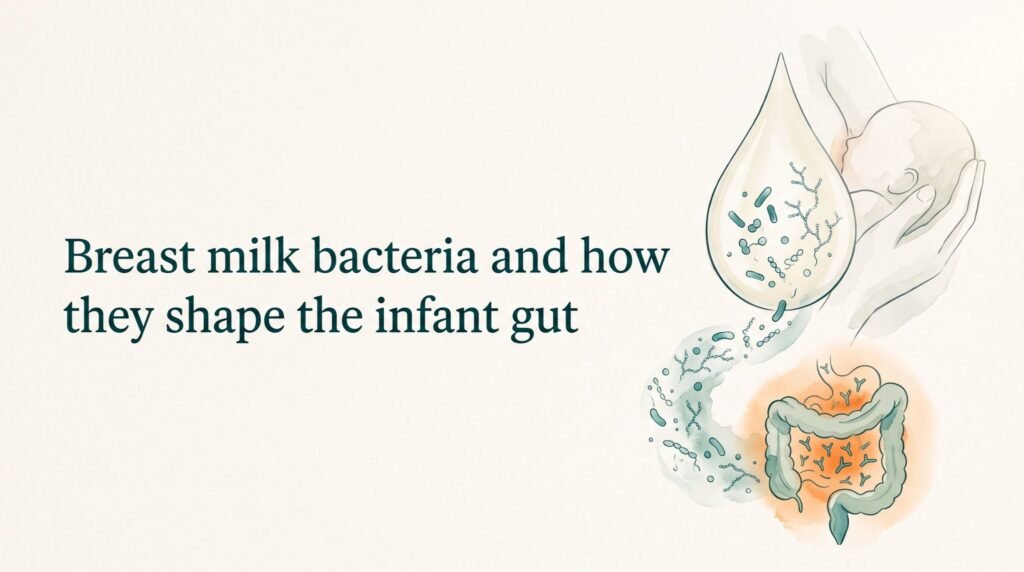
Breast milk is not sterile. It carries live bacteria, sugars that only gut bacteria can digest and immune cells from the mother. Together, they help seed and steer the infant gut microbiome in the first months of life.
Does breast milk contain bacteria?
Yes. Breast milk contains live bacteria, and it is now clear that it is not a sterile fluid. Researchers once treated any microbe found in milk as contamination from the skin. However, the same strains of Lactobacillus gasseri turned up in a mother's milk and in her baby's mouth and stool, but not on her breast skin, which points to a real milk microbiome.7, 2
Milk from healthy women carries a low load of bacteria, below about 1,000 colony-forming units per millilitre when grown in culture.8 Even so, a breastfed infant may swallow up to 800,000 bacteria a day, which makes milk one of the first steady sources of microbes after birth.2
Breast milk is sterile, so any bacteria in it mean the milk is contaminated.
Healthy breast milk has its own community of bacteria. Commensal staphylococci and oral streptococci dominate, and some of them even suppress Staphylococcus aureus.9
Which bacteria live in breast milk?
The core groups found again and again are staphylococci, streptococci, lactic acid bacteria and bifidobacteria.1 In one study of 40 healthy mothers, commensal staphylococci made up 64% of isolates and oral streptococci 30%, and part of these strains inhibited S. aureus in the lab.9 Other reported members include Lactobacillus fermentum, Lactobacillus gasseri and members of the Enterobacteriaceae family.7, 1
Why is breastfeeding more than feeding?
Breast milk feeds the baby and, at the same time, it feeds the baby's gut bacteria. Human milk oligosaccharides (HMOs) are complex sugars that the infant cannot digest. Instead, they reach the large intestine intact, where bacteria ferment them into short-chain fatty acids. As a result, they favor good bacteria and help keep harmful ones in check during the first year.4
- Human milk oligosaccharides (HMOs)
- A family of complex sugars that is abundant in human milk, at roughly 1 g per 100 ml. They act as food for bifidobacteria and as decoy receptors that stop pathogens from sticking to the gut lining.4, 10
Bifidobacteria that thrive on milk also make their own useful molecules. For example, breastfeeding-associated Bifidobacterium species turn amino acids into indolelactic acid, a compound that calms immune cells in laboratory tests.11, 12
What roles does the microbiome play in the first year?
The microbiome is unique to each person. Diet, environment and genetics all shape it. In the first year of life, it supports several core functions at once.
Commensal bacteria help break down complex sugars and fibers that the body cannot digest alone. They also produce some vitamins, such as vitamin K and several B vitamins. Human milk itself is very low in vitamin K, which is why newborns get a vitamin K injection.10
The microbiome helps protect against infection by producing antimicrobial substances and training the immune system. It also helps hold back the overgrowth of harmful microbes.
Gut bacteria affect how certain hormones and chemicals are made and broken down. Their makeup has been linked with obesity and other metabolic disorders.
Specific microbial groups have been linked with mental health, including depression, anxiety and autism.
Skin bacteria help protect against infection and influence the oils and other substances that keep the skin hydrated.
Postbiotics are products made by healthy gut bacteria. Some have anti-inflammatory effects, such as the indolelactic acid made by bifidobacteria in breastfed babies.11
A healthy gut ecology supports growth and development in the first months and may lower the risk of certain health problems.
Where do the bacteria in breast milk come from?
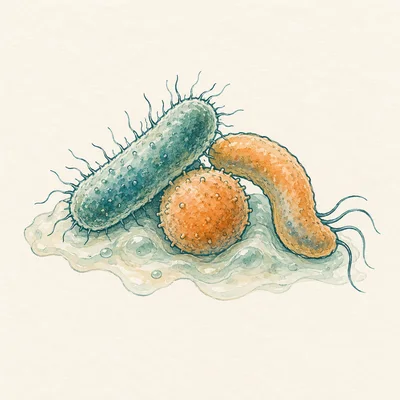
There are three main routes, and each one adds a different part of the milk microbiome. Some bacteria come from the skin of the nipple and areola. Others travel back into the milk ducts from the baby's mouth during the feed. A third group may come from the mother's own gut.15, 16
From the mother's gut
Immune cells may carry gut bacteria through the lymph and blood to the breast, a route called the entero-mammary pathway.15

From the baby's mouth
During a feed, bacteria from the infant's mouth can move back into the milk, a route called retrograde inoculation.16
From the skin
The skin around the nipple adds its own bacteria, about one tenth of an infant's gut bacteria in the first month.3
How does colostrum differ from mature breast milk?
Colostrum, the first milk after birth, differs from transitional and mature milk. Some studies found higher bacterial diversity in colostrum, while others found a higher bacterial load.17 Over the following months, bacteria typical of the mouth, such as Veillonella and Prevotella, increase.18
A 2026 study followed 188 mothers for up to 856 days after birth. Mode of delivery and antibiotics given during labor changed the colostrum microbiome, yet their effect faded as colostrum turned into mature milk.19
Which factors shape the infant gut microbiome?
The baby's microbiome starts to form around birth but is shaped mainly by what happens afterwards. In a study of 903 children, receiving breast milk, exclusive or partial, was the strongest factor linked to the gut microbiome, and stopping breast milk sped up its maturation.20
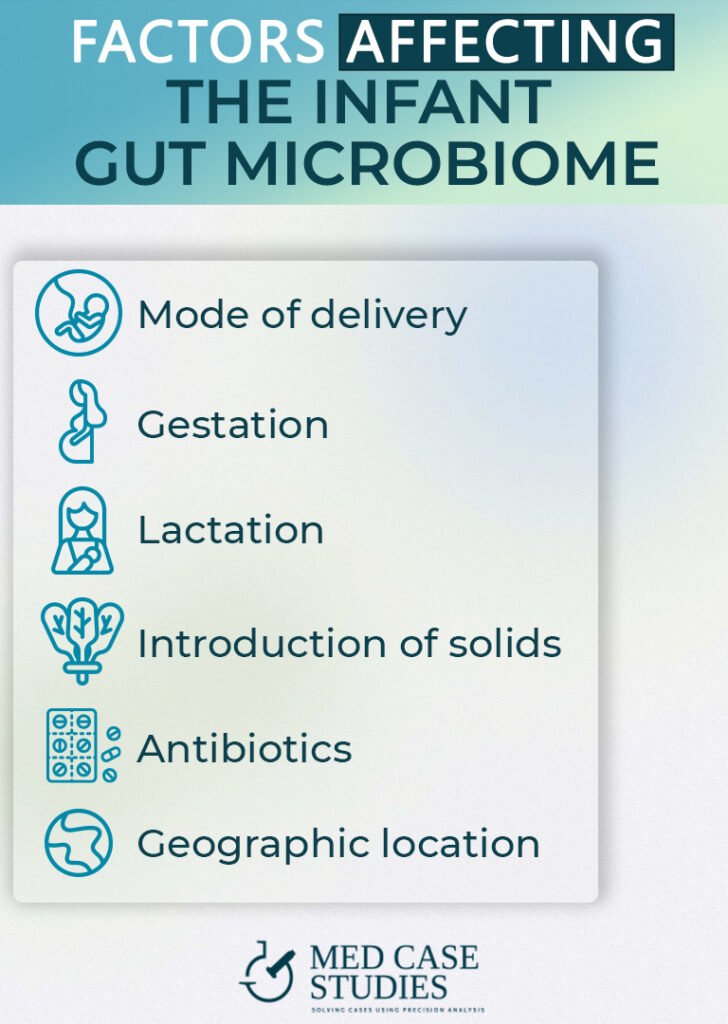
Mode of delivery
The mode of delivery affects the infant gut microbiome.
Gestation
Gestation affects the infant gut microbiome.
Lactation
Lactation affects the infant gut microbiome.
Introduction of solids
The introduction of solids affects the infant gut microbiome.
Antibiotics
Antibiotics affect the infant gut microbiome.
Geographic location
Geographic location affects the infant gut microbiome.
Gestation
During pregnancy, the developing baby is exposed to the mother's microbes and their products, which may influence the first gut microbiota.
Mode of delivery
Babies born by cesarean section start with different microbes from babies born vaginally, because they meet different bacteria at birth. More on this in C-section and the infant gut.
Breastfeeding
Breastfeeding is a major driver of the infant microbiome. Formula lacks the live bacteria and HMOs of breast milk, so formula-fed babies start with a different microbial mix. The comparison is covered in breast milk vs formula.20
Introduction of solids
The age at which solids start can change which bacteria settle in the infant gut. Starting much earlier or later than advised may alter the mix.3
Antibiotics
Antibiotics can lower beneficial bacteria, because they kill helpful and harmful microbes alike.
Geographic location
Different regions bring different microbial exposures. Location, siblings and furry pets all showed up as factors in a large multinational study.20
What did a 2026 study find about the mother's role?
A 2026 Dutch study changed part of this picture. Researchers sequenced 4,526 stool samples from 714 mother-infant pairs, plus breast milk and vaginal samples, from pregnancy to the baby's first birthday. The mother's gut turned out to be the main reservoir for the strains that settle in the infant gut.5
Breast milk still mattered, but in a different way. Strain transfer from milk to the infant gut happened only occasionally, whereas feeding mode, together with mode of delivery, shaped the infant microbiome the most.5 In other words, milk seems to steer which bacteria grow, while the dominant strains come mostly from the mother's gut.
The 2026 Lifelines NEXT study concluded that the maternal gut microbiome is a major reservoir for infant gut strains, with only occasional transmission from vaginal and breast milk microbiomes. Mode of delivery and feeding mode primarily shaped the infant gut microbiome.5
Does breastfeeding protect against IBS later in life?
A large 2026 study points that way. Researchers followed 290,962 adults in the UK Biobank for a median of 14.6 years. Those who had been breastfed as babies had a 9% lower risk of developing IBS, while exposure to maternal smoking around birth raised the risk by 16%.6
An earlier analysis of the same cohort found a similar effect, with a hazard ratio of 0.92.21 The data are observational, so they show a link rather than proof of cause. Even so, they fit with the idea that the first microbiome can leave a mark on gut function decades later.
How does breast milk protect mother and baby?
Breastfeeding has been linked with a lower risk of several health problems in mothers and children. The evidence is strong for some outcomes and weaker for others, so the table shows what large reviews found.14, 22
| Who | Outcome | What the evidence shows |
|---|---|---|
| Mother | Breast and ovarian cancer | Breastfeeding for more than 12 months was linked with a 26% lower risk of breast cancer and a 37% lower risk of ovarian cancer.22 |
| Mother | Type 2 diabetes | Breastfeeding was linked with a 32% lower risk.22 |
| Baby | Infections | Protection against respiratory, ear and gut infections, stronger with longer and more exclusive breastfeeding.23, 14 |
| Baby | Gut symptoms and IBS | Breastfed babies are thought to have fewer functional bowel symptoms, and adults who were breastfed had a 9% lower risk of IBS.6 |
| Baby | Allergies and asthma | Many reviews found protection against allergic disease, but a large meta-analysis found no clear link with asthma.13, 14 |
| Baby | Overweight and diabetes | Probable reductions in overweight and diabetes later in life.14 |
| Baby | SIDS | Breastfeeding for at least 2 months was linked with half the risk of sudden infant death syndrome.24 |
Does the baby's saliva change breast milk?
Yes, and this makes breastfeeding a two-way exchange. Each time the baby's lips and mouth touch the nipple, the baby brings new microbes and signals into contact with the milk. Data from a large cohort support this backflow from the infant's mouth into the milk, known as retrograde inoculation.16
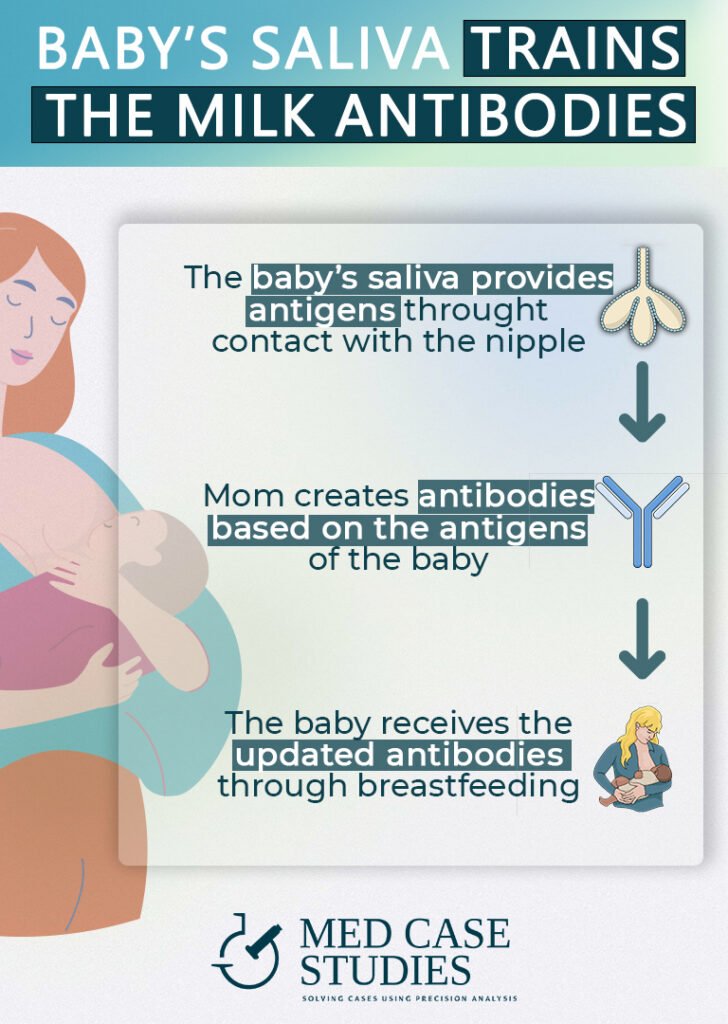
- Antigens
The baby's saliva provides antigens through contact with the nipple.
- Antibodies
Mom creates antibodies based on the antigens of the baby.
- Updated antibodies
The baby receives the updated antibodies through breastfeeding.
The text of the infographic above.
Baby saliva also reacts with milk directly. In one study, mixing newborn saliva with breast milk produced enough hydrogen peroxide to inhibit S. aureus and Salmonella, while compounds in baby saliva favored Lactobacillus.25 In addition, when infants were sick, the number of white blood cells and macrophages in their mothers' milk rose and fell again after recovery.26
The idea that the mother makes new antibodies against antigens from the baby's saliva is plausible, but in that study the level of secretory IgA did not change.26 So the immune response in milk does change with the baby's health, while the exact antibody part remains a hypothesis.
This explains why pumped milk tends to carry a less updated bacterial community than milk taken straight from the breast.16 Still, pumped milk remains worth giving. A 2026 review of case reports found that infections linked to expressed milk are rare and affect mainly very preterm babies in intensive care.28
I mostly pump and give my baby breast milk in a bottle because of work. Am I missing out on the good bacteria?
Your baby still gets the HMOs, antibodies and many of the nutrients of breast milk. Pumped milk does carry a somewhat different set of bacteria, with fewer bifidobacteria and fewer oral bacteria from the baby. Yet in the CHILD cohort, the overall infant gut microbiota tracked how exclusive and how long the breastfeeding was, not whether the milk came from the breast or a bottle. On days that allow it, a few direct feeds bring the saliva-and-milk exchange back in.
Do mothers send gut bacteria to the breast?
Studies suggest they may. Dendritic cells in the mother's gut can take up bacteria and carry them inside the body, and during late pregnancy and lactation this traffic toward the breast seems to increase.29, 8
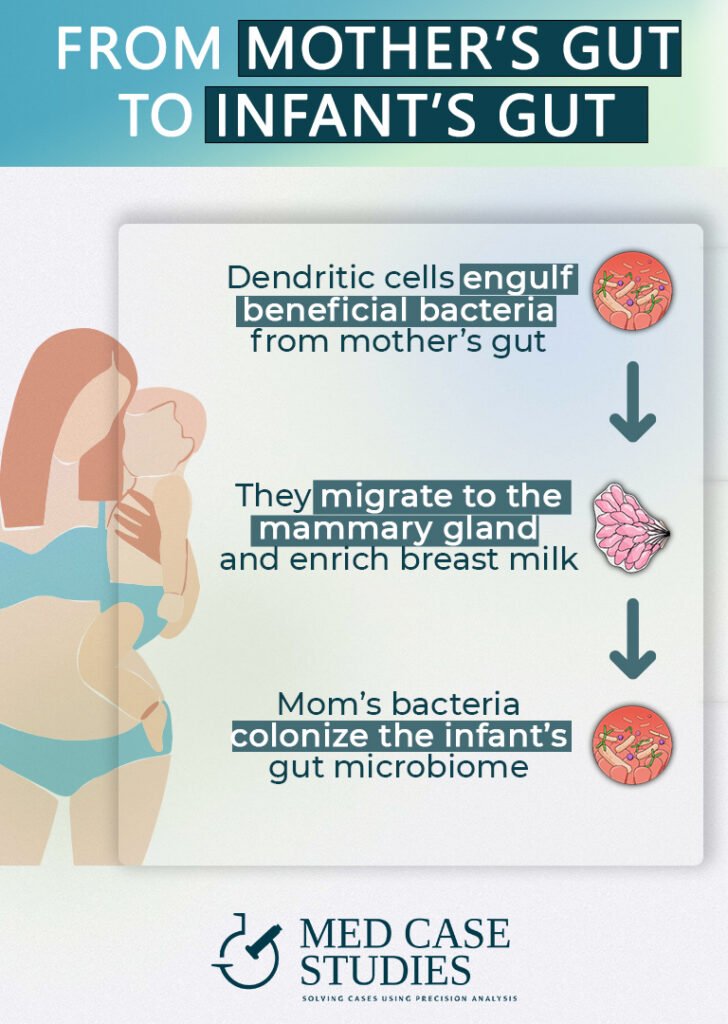
- Beneficial bacteria
Dendritic cells engulf beneficial bacteria from the mother's gut.
- Mammary gland
They migrate to the mammary gland and enrich breast milk.
- Infant's gut
Mom's bacteria colonize the infant's gut microbiome.
The text of the infographic above.
What do dendritic cells do?
Dendritic cells are immune cells found throughout the body, including the gut. They take up bacteria and other microbes through phagocytosis and present them to the rest of the immune system. In this way, the body learns which microbes to tolerate and which to attack.29
How might dendritic cells enrich breast milk?
In mice, bacteria moved from the gut to the lymph nodes and the mammary gland during late pregnancy and lactation. In women, milk cells and blood immune cells carried genetic material from a wide range of gut bacteria.8 Milk leukocytes, in turn, help program the infant's immune system.30
- Mother's gut
Dendritic cells sample bacteria from the gut lining.29
- Lymph and blood
Bacteria and their DNA travel inside immune cells.8
- Mammary gland
The cells reach the breast during late pregnancy and lactation.8
- Breast milk
Bacteria and their fragments end up in milk cells.15
- Infant gut
Some strains may settle in the baby's gut and train its immune system.29
A simplified chain built from human and animal studies, not from a single experiment.
That said, the 2026 Lifelines NEXT data suggest that direct strain transfer through milk is occasional, so this route probably plays a supporting part in the infant gut.5
How does breast milk change between feedings?
Breast milk is a living fluid that changes within a feed, across the day and over the months. It adjusts to the infant's needs, keeping a balance of nutrients and microbes.10
How does milk change during a single feed?
Breast milk contains proteins, fats, carbohydrates, vitamins, minerals, commensal bacteria and other microbes. Foremilk, at the start of a feed, is thinner and more watery. Hindmilk, later in the feed, is creamier, with two to three times the fat of foremilk and more energy.31
How does milk adapt over the day and the months?
Breast milk also follows a daily rhythm. Tryptophan, fats, iron, cortisol and melatonin all vary across 24 hours, and night milk carries more melatonin, which may help set the baby's biological clock.32 Over the months, the mix of bacteria shifts as well, with more oral bacteria in later milk.18
Which nutrients and prebiotics does breast milk contain?
Besides nutrients and commensal bacteria, breast milk contains prebiotics. These are compounds the baby cannot digest that feed good bacteria in the infant gut, and they have been linked with health benefits in infants and adults.
Oligosaccharides
Complex sugars that resist digestion and serve as food for beneficial gut bacteria, especially bifidobacteria.4
Fats
Breast milk contains many types of fat. According to the original article, short-chain fatty acids among them may also support good gut bacteria. The fatty acid profile of milk follows the mother's diet.10
Lactoferrin
A milk protein that promotes the growth of bifidobacteria in laboratory and animal studies and, in breastfed infants, may work together with HMOs.33
Epidermal growth factor
A protein that survives the stomach and stimulates the cells of the infant gut lining to grow and absorb, which supports the environment where good bacteria live.10
Lysozyme
An enzyme in breast milk that attacks bacterial walls and has been described as supporting a beneficial gut microbiota.
How can mothers keep breast milk nutritious?
Three words sum it up, seasonal, clean and varied. The milk microbiome partly reflects the mother's own body, so her daily habits matter. Some tips rest on stronger evidence than others, as noted below.34, 10
A varied diet supports milk production and may raise the level of good bacteria and prebiotics in milk. Include whole, unprocessed foods such as fruit, vegetables, whole grains and lean proteins. Diet changes the fatty acid and some vitamin levels in milk. The clearest links are fish with DHA and vitamin C intake with vitamin C in milk.34, 10
Prebiotics are compounds that strongly influence gut ecology. Foods such as onions, garlic, asparagus and leeks may help increase the benefits of breast milk. More examples are in best foods for gut health.
Olive oil, avocado and nuts belong in a healthy diet and may support milk production and quality. The fatty acids in milk, especially long-chain omega-3s such as DHA, follow what the mother eats.10
Processed foods carry artificial ingredients that should not end up in milk. Choosing whole foods instead may improve the quality of the milk microbiome.
Seasonal vegetables tend to be more nutrient-dense and carry a wider range of phytochemicals. A variety of them feeds the microbes in your gut and may support the milk microbiota.
Pesticides such as glyphosate can harm human health and the environment. Choosing organic produce or growing your own may reduce the pesticides that reach breast milk.
Lead and mercury are harmful and occur in some foods and in the environment. Avoiding certain fish and not smoking helps. In one study, mothers exposed to tobacco smoke had more mercury in their milk.35
Probiotics are beneficial bacteria found in supplements and some foods. In a meta-analysis of 24 trials, maternal probiotics raised beneficial bacteria in milk and in the infant gut.36 A 2026 trial found a different route. L. reuteri given to mothers did not change their milk bacteria, yet their babies had more bifidobacteria and lactobacilli after a month.37
Physical activity supports overall health and may have a positive effect on milk production and quality. Aim for at least 30 minutes of moderate activity a day, such as walking, swimming or cycling.
Adequate sleep supports overall health and may support milk production. The original advice was 7 to 9 hours a night, going to bed before midnight on most days.
Water and other fluids support milk production. Breast milk is mostly water.
What does this mean in practice?
In practice, breast milk works as food and messenger at the same time. It feeds the bacteria that suit the infant gut, carries some bacteria of its own, and changes with every feed. On the other hand, the mother's gut, diet and daily habits stay in the background of all of this.
In the clinics where I work as a scientific collaborator, early-life history often comes up when adults describe gut symptoms that started in childhood. Birth mode, early antibiotics and feeding are part of that history, and they help explain why the same symptom can have a very different story behind it.
Frequently asked questions
No. Breast milk was once considered sterile, but culture and DNA studies have shown that it has its own microbiome.2
Healthy milk mainly carries commensal bacteria. Infections linked to expressed milk are rare and mostly affect very preterm infants in intensive care, so clean pumping and storage matter most for them.28
Yes. In a large cohort, pumped milk had fewer bifidobacteria and more potential pathogens than milk given directly at the breast.16
References
38 studies
- Fernández L, Langa S, Martín V, et al. The human milk microbiota: origin and potential roles in health and disease. Pharmacol Res. 2013.
- Lyons KE, Ryan CA, Dempsey EM, Ross RP, Stanton C. Breast milk, a source of beneficial microbes and associated benefits for infant health. Nutrients. 2020.
- Pannaraj PS, Li F, Cerini C, et al. Association between breast milk bacterial communities and establishment and development of the infant gut microbiome. JAMA Pediatr. 2017.
- Bode L. Human milk oligosaccharides: every baby needs a sugar mama. Glycobiology. 2012.
- Sinha T, Brushett S, Fernández-Pato A, et al. Maternal influences on infant gut microbiome and health. Nature. 2026.
- Li Y, Liu S, Zhang Q, et al. Maternal smoking, lactation, and risk of incident irritable bowel syndrome in offspring: a large-scale prospective cohort study. Am J Clin Nutr. 2026.
- Martín R, Langa S, Reviriego C, et al. Human milk is a source of lactic acid bacteria for the infant gut. J Pediatr. 2003.
- Perez PF, Doré J, Leclerc M, et al. Bacterial imprinting of the neonatal immune system: lessons from maternal cells? Pediatrics. 2007.
- Heikkilä MP, Saris PE. Inhibition of Staphylococcus aureus by the commensal bacteria of human milk. J Appl Microbiol. 2003.
- Ballard O, Morrow AL. Human milk composition: nutrients and bioactive factors. Pediatr Clin North Am. 2013.
- Laursen MF, Sakanaka M, von Burg N, et al. Bifidobacterium species associated with breastfeeding produce aromatic lactic acids in the infant gut. Nat Microbiol. 2021.
- Stewart CJ. Breastfeeding promotes bifidobacterial immunomodulatory metabolites. Nat Microbiol. 2021.
- Oddy WH. Breastfeeding, childhood asthma, and allergic disease. Ann Nutr Metab. 2017.
- Victora CG, Bahl R, Barros AJ, et al. Breastfeeding in the 21st century: epidemiology, mechanisms, and lifelong effect. Lancet. 2016.
- Rodríguez JM. The origin of human milk bacteria: is there a bacterial entero-mammary pathway during late pregnancy and lactation? Adv Nutr. 2014.
- Moossavi S, Sepehri S, Robertson B, et al. Composition and variation of the human milk microbiota are influenced by maternal and early-life factors. Cell Host Microbe. 2019.
- Tzani A, Xixi NA, Sokou R, et al. Factors influencing the colostrum's microbiota: a systematic review of the literature. Children (Basel). 2025.
- Cabrera-Rubio R, Collado MC, Laitinen K, et al. The human milk microbiome changes over lactation and is shaped by maternal weight and mode of delivery. Am J Clin Nutr. 2012.
- Xie Y, Lu Y, Jiang Z, et al. Dynamics and drivers of the human breast milk microbiome across lactation stages. Front Nutr. 2026.
- Stewart CJ, Ajami NJ, O'Brien JL, et al. Temporal development of the gut microbiome in early childhood from the TEDDY study. Nature. 2018.
- Liu X, Lin R, Li X, et al. Association of maternal smoking, breastfeeding, and multiple birth with irritable bowel syndrome in older adults: a UK Biobank cohort study. Gastroenterol Rep (Oxf). 2025.
- Chowdhury R, Sinha B, Sankar MJ, et al. Breastfeeding and maternal health outcomes: a systematic review and meta-analysis. Acta Paediatr. 2015.
- Heinig MJ. Host defense benefits of breastfeeding for the infant. Effect of breastfeeding duration and exclusivity. Pediatr Clin North Am. 2001.
- Thompson JMD, Tanabe K, Moon RY, et al. Duration of breastfeeding and risk of SIDS: an individual participant data meta-analysis. Pediatrics. 2017.
- Al-Shehri SS, Knox CL, Liley HG, et al. Breastmilk-saliva interactions boost innate immunity by regulating the oral microbiome in early infancy. PLoS One. 2015.
- Riskin A, Almog M, Peri R, et al. Changes in immunomodulatory constituents of human milk in response to active infection in the nursing infant. Pediatr Res. 2012.
- Fehr K, Moossavi S, Sbihi H, et al. Breastmilk feeding practices are associated with the co-occurrence of bacteria in mothers' milk and the infant gut: the CHILD cohort study. Cell Host Microbe. 2020.
- Daeschel D, Roth K, Reyes S, Snyder AB. Infant infections associated with expressed breast milk: a scoping review. Clin Microbiol Infect. 2026.
- Donnet-Hughes A, Perez PF, Doré J, et al. Potential role of the intestinal microbiota of the mother in neonatal immune education. Proc Nutr Soc. 2010.
- Laouar A. Maternal leukocytes and infant immune programming during breastfeeding. Trends Immunol. 2020.
- Saarela T, Kokkonen J, Koivisto M. Macronutrient and energy contents of human milk fractions during the first six months of lactation. Acta Paediatr. 2005.
- Italianer MF, Naninck EFG, Roelants JA, et al. Circadian variation in human milk composition, a systematic review. Nutrients. 2020.
- Oda H, Wakabayashi H, Yamauchi K, Abe F. Lactoferrin and bifidobacteria. Biometals. 2014.
- Bravi F, Wiens F, Decarli A, et al. Impact of maternal nutrition on breast-milk composition: a systematic review. Am J Clin Nutr. 2016.
- Gaxiola-Robles R, Zenteno-Savín T, Labrada-Martagón V, et al. Mercury concentration in breast milk of women from northwest Mexico, possible association with diet, tobacco and other maternal factors. Nutr Hosp. 2013.
- Alemu BK, Azeze GG, Wu L, et al. Effects of maternal probiotic supplementation on breast milk microbiome and infant gut microbiome and health: a systematic review and meta-analysis of randomized controlled trials. Am J Obstet Gynecol MFM. 2023.
- Pagliarini E, Poli C, Martini S, et al. Effect of supplementation with Lactobacillus reuteri SGL 01 in lactating women on breast milk and neonatal gut microbiota: an exploratory, randomized, open-label clinical trial. Nutrients. 2026.
- Sun W, Cao Y, Li S, Sun L, Liao Y. Maternal probiotic supplementation and offspring health: an umbrella review with re-analysis of systematic reviews and meta-analyses. Front Nutr. 2026.
Found this useful? Share it with someone who needs it.
Cite this article
Prevedoros, T. (2022, December 30). Breast milk bacteria and how they shape the infant gut. Gut Pathways. https://gutpathways.com/articles/breast-milk-bacteria/