Why did diarrhea begin after her gallbladder was removed?
This is case 2 in the book IBSyncrasy
Athina could not leave a courtroom without worrying about the nearest toilet. Her case of diarrhea after gallbladder removal shows how the surgery can change bile flow, gut bacteria and stool, and what her care plan started with.
 Athina's casecase study
1DemographicsStop 1 of 8
Who Athina is
Athina was a 46-year-old lawyer and mother of two boys when she came to the clinic where I work as a scientific collaborator, in June 2016. Her gallbladder had been removed because of stones, soon after she stopped breastfeeding her second child.
- 46 years old
- Woman
- Lawyer
- Mother of two
- Gallbladder removed after breastfeeding
Statistics from the practice for similar cases
- Number of cases
- 339
- Age range
- Any
- Success rate
- >95%
- Treatment duration
- 2 to 12 weeks
- Most common symptom
- Diarrhea
- Most common trigger
- After childbirth or breastfeeding
Average improvement score
Figures from the practice's own records of cases like this one, not from a published study.
Her main complaints were urgency, loose stools and several bowel movements a day. Her full case is described in the book IBSyncrasy.
2IntroductionStop 2 of 8
How gallbladder removal changes digestion
The gallbladder stores bile and releases it in strong bursts with each meal. After it is removed, bile flows into the gut in a steady trickle, all day long. This one change affects several organs that once worked in step with the gallbladder. In some people, symptoms such as bloating or loose stools existed before surgery in a milder form, which suggests that the stones were not the only problem.
Diarrhea after cholecystectomy is not rare. A review of 21 studies with 3,476 patients found it in 13.3% of them, and the authors recommend looking early for bile acid diarrhea.1 In another study, the share of people with loose stools rose from 2% before surgery to 47% one month after and 33% three months after.3 Not every bowel change after surgery is explained by bile alone, though.3 Pregnancy and breastfeeding are also linked with gallbladder problems, as explained in pregnancy, breastfeeding and gallbladder surgery.
The changes I look at after gallbladder removal are these:
Bile can flow back into the stomach and irritate its lining. In one study, bile reflux gastritis was found in 61.8% of people after cholecystectomy with upper abdominal symptoms, against 16.7% of controls.4
As bile circulation between the gut and the liver changes, the chemistry of the large intestine can shift too.
A changed colon environment can shift the bacterial community, often toward fermenting species.
With no stored bile released at meals, less bile is available at any one time to absorb fat and fat-soluble vitamins.
In practice, I often see lower stomach acidity over time after gallbladder removal. This comes from clinical experience rather than from studies.
The pancreas may receive weaker signals to release its enzymes after gallbladder removal. In practice, I check pancreatic function, because reduced output can add to loose stools.
3MeetingStop 3 of 8
Meeting Athina
Being a lawyer meant that Athina spent most of her day in crowded rooms that she often could not leave to go to the toilet. She had already had every endoscopic test available and had tried several medicines, mostly antispasmodics. They did not help, because a fast bowel was the result rather than the cause. The problem was what reached her colon.
Bile acids are a good example. Reaching the colon in larger amounts than normal, they draw water into the bowel and speed up its contractions, which leads to loose stools and urgency.2 Since bile keeps flowing after gallbladder removal, this can happen several times a day.
Looking back, four factors had built up over the years.
Lifestyle habits
Her daily routine gradually wore down the balance of her gut bacteria.
Antibiotics
Courses of antibiotics changed her gut lining and bacteria.
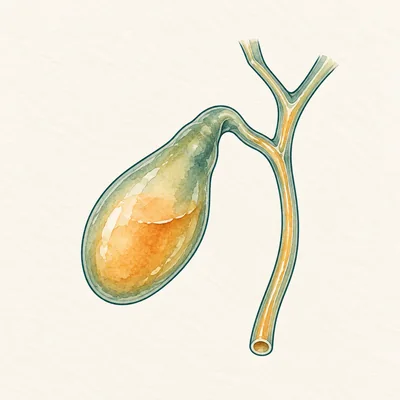
Gallbladder removal
The surgery changed bile flow, and later tests showed fungal overgrowth with Candida.
Avoiding fiber
Cutting out fiber to calm her bowel also starved the beneficial bacteria that feed on it.
4DiagnosticsStop 4 of 8
Diagnostics: urgency first
Based on Athina's history and main complaints, I asked her for several stool and blood tests. My first aim was the urgency. If we could ease it, we would have time to work on the rest. A person's mood during treatment affects how well they can follow it, so in her case some symptoms had to be relieved first, even before their causes were treated.
She did a special stool test and several blood markers of absorption, and she kept a diary to link foods with her symptoms.
More bile than normal in the colon makes it contract faster to get rid of it, and this is felt as urgency.
Diarrhea protects the body from harmful or infectious material in the colon. Bile or undigested food can switch on the same response.
The feeling of not having emptied the bowel completely usually has both nerve and secretion components, and it often comes with urgency.
Having less bile than needed can reduce the absorption of fat-soluble vitamins and nutrients, and over time this can contribute to fatigue.
Other details completed her picture:
- Early osteoporosis
- Normal colonoscopy
- Irregular sweating and heartbeat
- Bloating
- Bile reflux gastritis
5ResultsStop 5 of 8
Results: bile diarrhea and more
Athina had daily episodes of bile diarrhea, caused by bile that passed the end of her small intestine and reached her colon. Her colon responded by secreting water and mucus. Bile diarrhea covers soft stools as well as watery ones. Her bloating and gas came from abnormal fermentation of fiber and starch reaching her colon. Her fatigue and other symptoms outside the gut may have been linked with histamine from Klebsiella and by-products of Candida, although this link is a clinical hypothesis rather than an established finding.
Of the 9 results we reviewed, four guided the care plan.
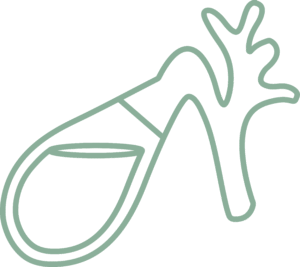
Bile reaching the colon
Bile in the colon causes heavy loss of water, salts and mucus, which softens stool up to diarrhea and sends an urgent signal to empty the bowel.2
Klebsiella pneumoniae
Klebsiella ferments starch readily, and some strains produce histamine.5 Loose stools, bloating and irregular sweating or heartbeat may come with its overgrowth. More on this finding is in Klebsiella spp high in stool.

Candida albicans
Candida ferments sugars readily. In practice, I consider it a possible contributor to loose stools, although the evidence for this is limited.
Low levels of beneficial bacteria
With few beneficial bacteria (what I call probiotic sterility), starch, sugars and fiber ferment abnormally, and less biotin and vitamin K is made, which may add to fatigue.
6Care planStop 6 of 8
Care plan: binding bile first
Athina had four findings to address, and binding the excess bile came first, because the other steps depended on it. Bile acid binders are the main medicines used for bile acid diarrhea, and they usually work by controlling symptoms over the long term.2 Her plan also included specific probiotics, since bile changes the conditions at the gut lining.
Each probiotic strain lives in a particular part of the gut lining and needs its own conditions to survive. For this reason, bringing in new colonies is difficult and needs close adherence. Even large amounts of probiotics may fail to settle if the gut pH is wrong, the mucus layer is too thin or competing bacteria are nearby, and in that case symptoms can get worse.
Every case is different, so Athina's plan describes her care and is not a plan for anyone else. Treatment choices after gallbladder removal are best made with the treating doctor.
7Follow-upStop 7 of 8
Follow-up: formed stools again
After Athina started her plan, I asked her to call me after one week. She was very happy, because for the first time in months her stools were formed and her bloating was at least half as bad. When we spoke again after 40 days, the call was short, since she had nothing to report. She had one or two formed bowel movements a day, and she had gained 2 kg.
8ConclusionStop 8 of 8
Conclusion: one surgery, many changes
Athina's case is similar to those of many people with IBS who have had their gallbladder removed. The surgery changes many processes in the gut, and the symptoms that follow can differ in when they start, how strong they are and even which IBS subtype appears. Gallbladder removal is linked with a higher risk of IBS, especially IBS with diarrhea.6 In some people it comes with constipation instead, which in my experience is often harder to treat. SIBO is another possible result, described in SIBO after gallbladder removal.
Many people look for a fuller diagnosis only years after their symptoms begin. In my experience, the longer bile keeps affecting the gut bacteria, the mucus layer and the colon, the harder they are to restore.
What Athina's case shows
- Gallbladder removal changes many chemical, hormonal and structural parts of digestion.
- Bile reflux into the stomach can irritate its lining, and changes in the colon can favor inflammation.4
- How soon IBS symptoms appear after surgery depends on gut health and habits before it.
- Bloating after fiber can be an indirect effect of gallbladder removal, since bile changes the environment of the beneficial bacteria.
- Urgency after gallbladder removal is the gut's way of signaling that something needs to leave quickly.
This case is one of the seven stories on the page about what causes IBS, where the same symptom has a different cause in each person.
Frequently asked questions
Bile diarrhea often means soft or loose stools with urgency, sometimes several times a day and often after meals. Stools can also look yellow or greasy. In Athina's case, stools were soft rather than always watery, and for months she had not seen a formed stool.
The first step is finding the cause with a doctor. When bile acids are the cause, bile acid binders are the main treatment.2 In Athina's case, binding bile came first, followed by steps for her gut bacteria.
For many people they settle, and after treatment Athina had one or two formed bowel movements a day. Some dietary and lifestyle changes may need to stay in place for the long term.
Probiotics can help, but they need the right conditions to settle. In Athina's case, binding bile came first, and specific probiotics followed, chosen for her gut environment.
References
6 studies
- Farrugia A, Attard JA, Khan S, et al. Postcholecystectomy diarrhoea rate and predictive factors: a systematic review of the literature. BMJ Open. 2022.
- Walters JRF, Sikafi R. Managing bile acid diarrhea: aspects of contention. Expert Rev Gastroenterol Hepatol. 2024.
- Sauter GH, Moussavian AC, Meyer G, et al. Bowel habits and bile acid malabsorption in the months after cholecystectomy. Am J Gastroenterol. 2002.
- Othman AA, Dwedar AA, ElSadek HM, et al. Post-cholecystectomy bile reflux gastritis: prevalence, risk factors, and clinical characteristics. Chronic Illn. 2023.
- De Palma G, Shimbori C, Reed DE, et al. Histamine production by the gut microbiota induces visceral hyperalgesia through histamine 4 receptor signaling in mice. Sci Transl Med. 2022.
- Zhao J, Tian L, Xia B, et al. Cholecystectomy is associated with a higher risk of irritable bowel syndrome in the UK Biobank: a prospective cohort study. Front Pharmacol. 2023.
Found this useful? Share it with someone who needs it.
Cite this article
Prevedoros, T. (2022, September 16). Why did diarrhea begin after her gallbladder was removed?. Gut Pathways. https://gutpathways.com/case-studies/post-cholecystectomy-ibs/