Meal timing changed the course of one man's SIBO
This is case 9 in the book IBSyncrasy
Colin had burping, bloating and pain that years of tests could not explain. His case is one of the SIBO success stories, and it shows how thyroid function, histamine, meal timing and gallbladder removal can add up to SIBO and what changed once each piece was addressed.
 Colin's casecase study
1DemographicsStop 1 of 8
Who Colin is
Colin was a 24-year-old postgraduate student with a busy social life, late nights and occasional drinking. He had Hashimoto's hypothyroidism, and he had already had his gallbladder removed when we first met at the clinic where I work as a scientific collaborator.
- 24 years old
- Man
- Postgraduate student
- Hashimoto's hypothyroidism
- Gallbladder removed
- Late meals
Statistics from the practice for similar cases
- Number of cases
- >300
- Age range
- Any
- Success rate
- >90%
- Treatment duration
- 2 to 6 months
- Most common symptom
- Post-meal distress
- Most common trigger
- All-day eating
Average improvement score
Figures from the practice's own records of cases like this one, not from a published study.
His main complaints were burping after meals, bloating and episodes of sharp abdominal pain. The details below come from the full case in the book IBSyncrasy.
2IntroductionStop 2 of 8
Why the small intestine needs time off
The small intestine does most of the work of digestion, and it also needs quiet periods to clean and repair itself. Digestion itself brings a degree of immune activation, from food, bacteria and their by-products, so the gut depends on the hours between meals to settle that activity down.
The main tool for this is the migrating motor complex (MMC), a wave of contractions controlled by nerves and gut hormones. It runs only in the fasting state, between meals and during the night, and a meal switches it off.1 When the MMC is weak, food remains and bacteria stay longer in the small intestine. People with IBS and an abnormal breath test had fewer MMC cycles than those with a normal test.4
- 1
Phase I
The quiet phase. The stomach and small intestine barely move.
- 2
Phase II
Irregular contractions start and slowly build up.
- 3
Phase III
Strong, regular contractions sweep leftover food, cells and bacteria forward.
- 4
Phase IV
Some descriptions add a short transition, as the contractions fade back to rest.
In healthy people, the full cycle repeats about every 90 to 120 minutes while the gut is empty.1 For that reason, the time between meals matters as much as what is on the plate. The mechanism is covered in detail in how a weak migrating motor complex sets up SIBO.
3MeetingStop 3 of 8
First meeting: how Colin's symptoms began
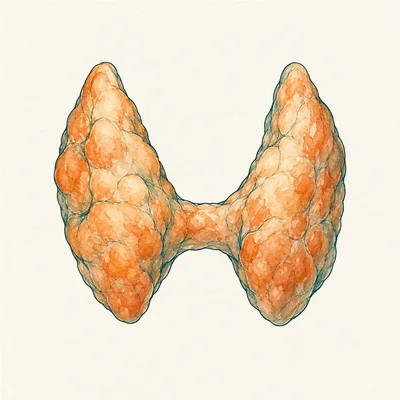
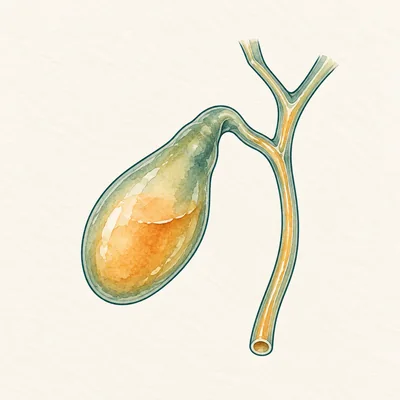
Colin's gut symptoms started after his hypothyroidism was diagnosed. Over the following years, he saw several gastroenterologists, had his gallbladder removed and was even prescribed antidepressants. None of this resolved the burping, bloating and pain.
Looking back over his history, four factors seemed to have built on each other, each one weakening the gut's cleaning wave a little more.
Allergies
Colin had allergies, which often come with extra histamine. In his case, we considered that histamine might also dampen the nerve signals behind the MMC. This was a working hypothesis for him, not an established finding.
All-day eating
Breakfast right after waking, then food about every three hours, and the last meal after 10 pm. Each meal paused the MMC, so his gut rarely had a long enough break to clean itself.1
4DiagnosticsStop 4 of 8
Diagnostics: what his history already told us
Before any test, Colin's history pointed toward a disorganized MMC. His burping, gas and bloating followed the rhythm of his meals, and that made SIBO a reasonable working diagnosis. The main points are below.
Colin was sure that his eating habits could not be the cause. To him, five meals a day, starting at breakfast and ending after 10 pm, was a good schedule.
The thyroid takes part in the nerve and hormone control of the gut, including the MMC. Any deviation from normal thyroid function can affect both gut movement and gut secretions.
Allergies are classically linked with antibodies, but many people with allergies also have excess histamine, which is why antihistamines often help them. We kept histamine in mind as a possible brake on gut movement.
Gas, burping and bloating appeared in step with his meals, which fits a gut that has little time to clear itself.
Other details helped complete the picture:
- Burping after meals
- Alternating stool pattern
- Poor sleep habits
5ResultsStop 5 of 8
Results: methane and other findings
Colin's breath test was strongly positive, with very high methane at 30 and 60 minutes. Under current guidelines, a methane-type result points to intestinal methanogen overgrowth (IMO), which is closely related to SIBO.7 An upper endoscopy also showed inflammation of the lower stomach (antritis), a finding often seen after gallbladder removal, and activated eosinophils in the gut lining.
Of the 13 results we reviewed, four guided the care plan.

Undigested food residues
Fragments of undigested food reaching the colon can trigger mixed bowel movements, which fits his alternating stool pattern.

High stool EPX and histamine
Eosinophil protein X (EPX) and histamine both take part in allergic-type reactions in the gut and elsewhere in the body.
SIBO
Bacteria growing in the wrong place, the small intestine, can interfere with nutrient absorption and produce gas and bloating.
Low levels of beneficial bacteria
With few beneficial bacteria in the colon (what I call probiotic sterility), starch, sugars and fiber ferment abnormally, and bloating and gas follow.
6Care planStop 6 of 8
Care plan: beyond antibiotics
Colin's breath test was high, but his results did not call for another round of antibiotics. Instead, his plan used a milder antimicrobial approach that worked on the small and the large intestine at the same time. The plan covered his whole digestive tract: the stomach phase of digestion, the overgrowth in the upper small intestine and the bacterial community of the colon.
In his case, the details of the plan depended on how long ago his gallbladder had been removed, how extensive the overgrowth was and his age. Every case is different, so what worked for Colin is a description of his care, not a plan for anyone else.
Diet was part of his plan, for a limited time. An elemental diet or a low FODMAP approach can help in SIBO, and a 14-day elemental diet normalized the breath test in 80% of people in one study.8 These approaches need supervision and an end date, so we kept them to no more than three months. In my experience, avoiding gluten also helped him, since the lining of the upper small intestine was already strained by the overgrowth.
Alongside the treatment, Colin changed when he ate. Fewer meals and a longer gap between dinner and breakfast gave his MMC more time to work. The article is snacking bad for digestion explains why these gaps matter.
7Follow-upStop 7 of 8
Follow-up: from symptoms to the root cause
At a follow-up phone call, Colin reported a clear improvement in his stool pattern. At the same time, his allergic symptoms had become stronger. I explained this as a possible effect of histamine-producing bacteria releasing histamine as they die off, an explanation drawn from practice rather than from studies, and I expected the allergies to settle once both antimicrobial stages were complete.
He had also managed to change his meal schedule. Even so, I encouraged him to have dinner earlier still, to give his gut a longer overnight break.
8ConclusionStop 8 of 8
Conclusion: the MMC as the gut's housekeeper
The MMC links the brainstem to the gut and works as the control panel for gut contractions between meals. These contractions depend on the vagus nerve, and they are the reason the MMC is often called the gut's housekeeper. Since the MMC is naturally quieter during sleep, the fasting hours while awake matter a great deal.
In Colin's case, a longer break between meals supported his treatment, and this held whether the main complaint was diarrhea or constipation. A related case, with thyroid function at the center, is described in hypothyroidism and SIBO.
What Colin's case shows
- Habits and substances that slow the MMC can favor bacterial overgrowth in the small intestine.
- Allergies were worth considering as a possible MMC brake in his assessment.
- Symptoms after meals, bloating and stress-related symptoms are common complaints in IBS with SIBO.
- The vagus nerve shapes how gut symptoms are felt and reported, which is one reason IBS affects the whole body.
- Lifestyle changes were part of his recovery, and earlier treatment generally makes recovery easier.
This case is one of the stories behind what causes IBS, where one symptom turns out to have different causes in different people.
Frequently asked questions
SIBO can be cleared with treatment, but it often returns when the conditions that caused it stay the same. In Colin's case, changing his meal schedule was part of keeping it away, since the gut's cleaning wave only works between meals.1
It depends on the person, the extent of the overgrowth and what caused it. Colin's plan had more than one antimicrobial stage, and diet changes were limited to no more than three months.
Some people notice new or stronger symptoms during treatment. In Colin's case, his allergies flared while his stools improved, which I explained as a possible effect of bacteria releasing histamine as they die off. This comes from practice rather than from studies, and any new symptom is worth reporting to the treating doctor.
In one study, a 14-day elemental diet normalized the lactulose breath test in 80% of people.8 It is demanding and needs medical supervision, so it is usually used for a short period.
Hypothyroidism is linked with SIBO. In one study, 54% of people with a history of overt hypothyroidism tested positive, against 5% of controls.2 A slower gut is one likely reason.
References
8 studies
- Deloose E, Janssen P, Depoortere I, et al. The migrating motor complex: control mechanisms and its role in health and disease. Nat Rev Gastroenterol Hepatol. 2012.
- Lauritano EC, Bilotta AL, Gabrielli M, et al. Association between hypothyroidism and small intestinal bacterial overgrowth. J Clin Endocrinol Metab. 2007.
- Sung HJ, Paik CN, Chung WC, et al. Small intestinal bacterial overgrowth diagnosed by glucose hydrogen breath test in post-cholecystectomy patients. J Neurogastroenterol Motil. 2015.
- Pimentel M, Soffer EE, Chow EJ, et al. Lower frequency of MMC is found in IBS subjects with abnormal lactulose breath test, suggesting bacterial overgrowth. Dig Dis Sci. 2002.
- Patil AD. Link between hypothyroidism and small intestinal bacterial overgrowth. Indian J Endocrinol Metab. 2014.
- Perdikis G, Wilson P, Hinder R, et al. Altered antroduodenal motility after cholecystectomy. Am J Surg. 1994.
- Pimentel M, Saad RJ, Long MD, Rao SSC. ACG Clinical Guideline: Small Intestinal Bacterial Overgrowth. Am J Gastroenterol. 2020.
- Pimentel M, Constantino T, Kong Y, et al. A 14-day elemental diet is highly effective in normalizing the lactulose breath test. Dig Dis Sci. 2004.
Found this useful? Share it with someone who needs it.
Cite this article
Prevedoros, T. (2022, September 14). Meal timing changed the course of one man’s SIBO. Gut Pathways. https://gutpathways.com/case-studies/sibo-success-stories-ibs/