How to bring low Faecalibacterium prausnitzii back up
A low Faecalibacterium prausnitzii result on a stool test often follows antibiotics, a gut infection or years of low-fiber eating. This butyrate producer feeds and calms the gut lining, and specific fibers can bring it back up.
What does a low Faecalibacterium prausnitzii result mean?
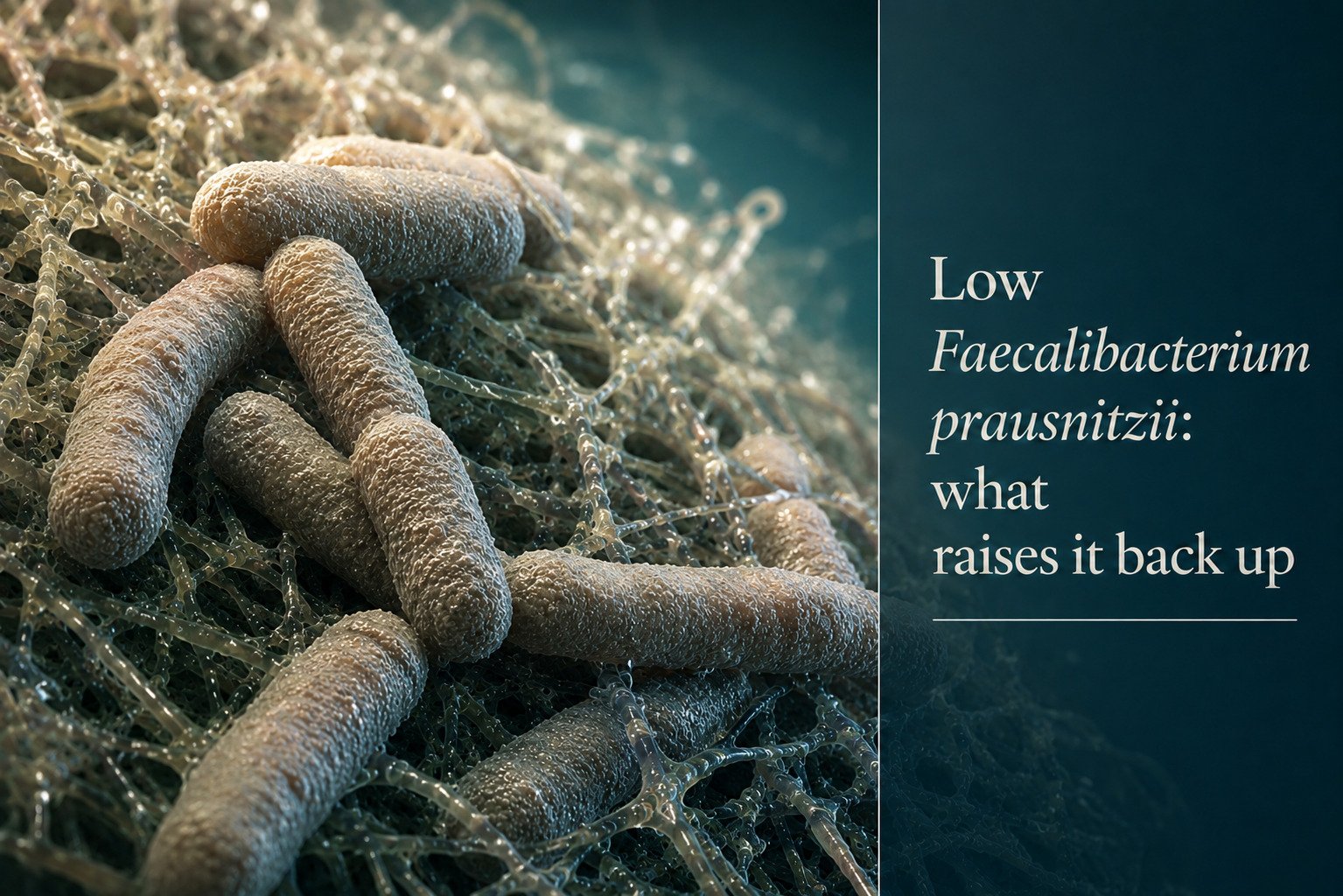
Faecalibacterium prausnitzii is one of the most abundant bacteria in a healthy gut. A low result on a stool panel means that this species is scarcer than expected. Most people see its name for the first time on a PCR-based stool test, which counts species by their genetic material instead of growing them in a dish.
I asked labs to add PCR detection to stool panels well before it became standard practice, for one reason: species like this one die within minutes of contact with oxygen. As a result, traditional stool culture misses them almost by definition, and a normal-looking culture from a few years ago says little about where this species stands today.
Why this one species carries so much weight in the gut
F. prausnitzii earns its reputation from one molecule: butyrate, a short-chain fatty acid that the cells lining the colon use as their preferred fuel. A sealed gut lining and a calmer immune response both trace back to this metabolic step.
How it keeps the gut lining sealed
Butyrate does more than feed colon cells. Inside them it blocks an enzyme called HDAC, switches on a gene called Dact3, calms the Wnt/JNK inflammatory pathway and lowers the inflammatory messenger IL-8.4 In animal models, F. prausnitzii also helped restore tight junction proteins and lower gut permeability.2
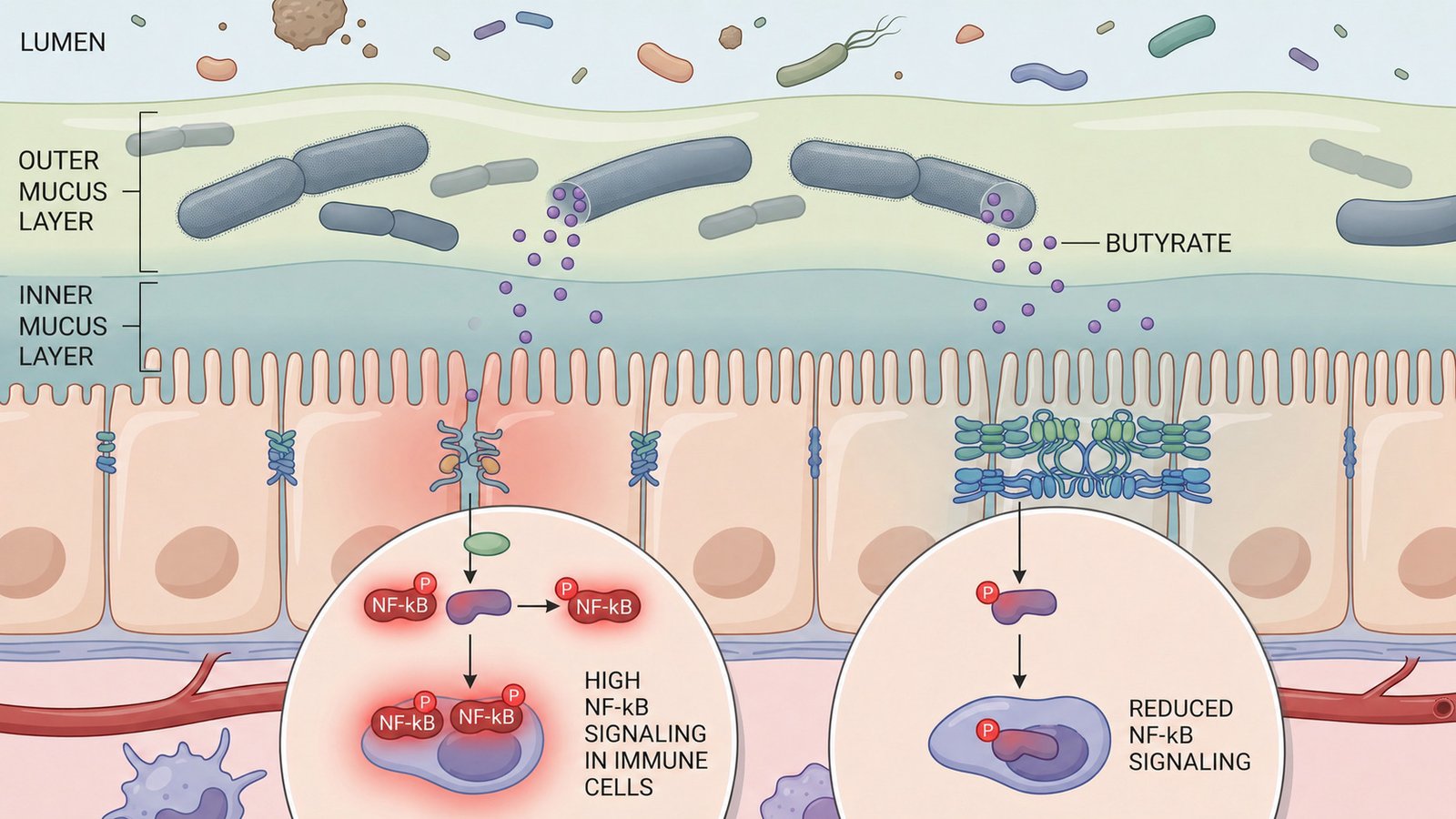
Substances released by F. prausnitzii blocked NF-κB, a master switch of gut inflammation, in intestinal cells grown in the lab, and mice given the bacterium had milder colitis.5
How it supports the mucus layer and other bacteria
F. prausnitzii uses a narrower set of fibers than some of its neighbors. Instead, it relies on acetate cross-feeding: it takes up acetate released by other bacteria and turns it into butyrate. This reaction supplies a large share of the butyrate in the gut, but it depends on having the right neighbors.
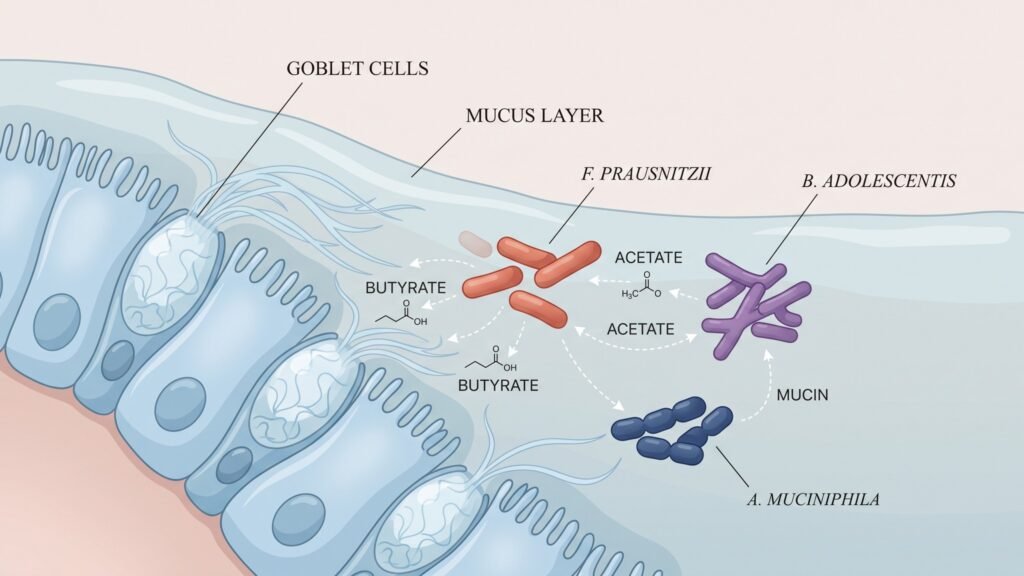
In a lab study, researchers grew F. prausnitzii together with Bifidobacterium adolescentis, and butyrate output rose because the two species exchanged acetate.6 The same cross-feeding also helps preserve mucus production when F. prausnitzii grows next to mucus-degrading bacteria.2
Conditions where researchers keep finding it low
Crohn's disease and ulcerative colitis are the conditions most consistently linked with low F. prausnitzii. A 2014 meta-analysis of 11 studies and 1,180 people found an average of 6.79 log10 CFU per gram of stool in inflammatory bowel disease, against 7.58 in healthy controls, with a larger gap in Crohn's disease.1
| Condition | What was observed |
|---|---|
| Crohn's disease and ulcerative colitis | Lower counts than healthy controls in a 2014 meta-analysis of 11 studies, with a larger drop in Crohn's disease1 |
| Irritable bowel syndrome | Lower levels in some IBS subtypes, tracking with symptom severity2 |
| Obesity and type 2 diabetes | Lower levels that track inversely with body mass index and rise after weight loss2 |
| Psoriasis and atopic dermatitis | Reduced levels in these skin barrier conditions2 |
| Depression | Lower abundance than in people without depression2 |
| Colorectal cancer | Reduced abundance in stool compared with healthy controls2 |
All six conditions point the same way. The last five rows come from one 2023 review of the literature, so the primary studies behind each row are worth checking for full context.2
What pushes Faecalibacterium prausnitzii down?
Broad-spectrum antibiotics are the most consistent cause of a sudden drop, especially those that target anaerobic bacteria, because this species survives only without oxygen. In a mouse model, antibiotics combined with Clostridioides difficile damaged the gut, and F. prausnitzii given with a prebiotic protected the gut lining.7
However, the effect depends on the antibiotic. As the meta-analysis above notes, one trial linked rifaximin with a rise in F. prausnitzii.1 If your symptoms started or got worse right after a course of antibiotics, see IBS after antibiotics.
Which foods and fibers raise Faecalibacterium prausnitzii?
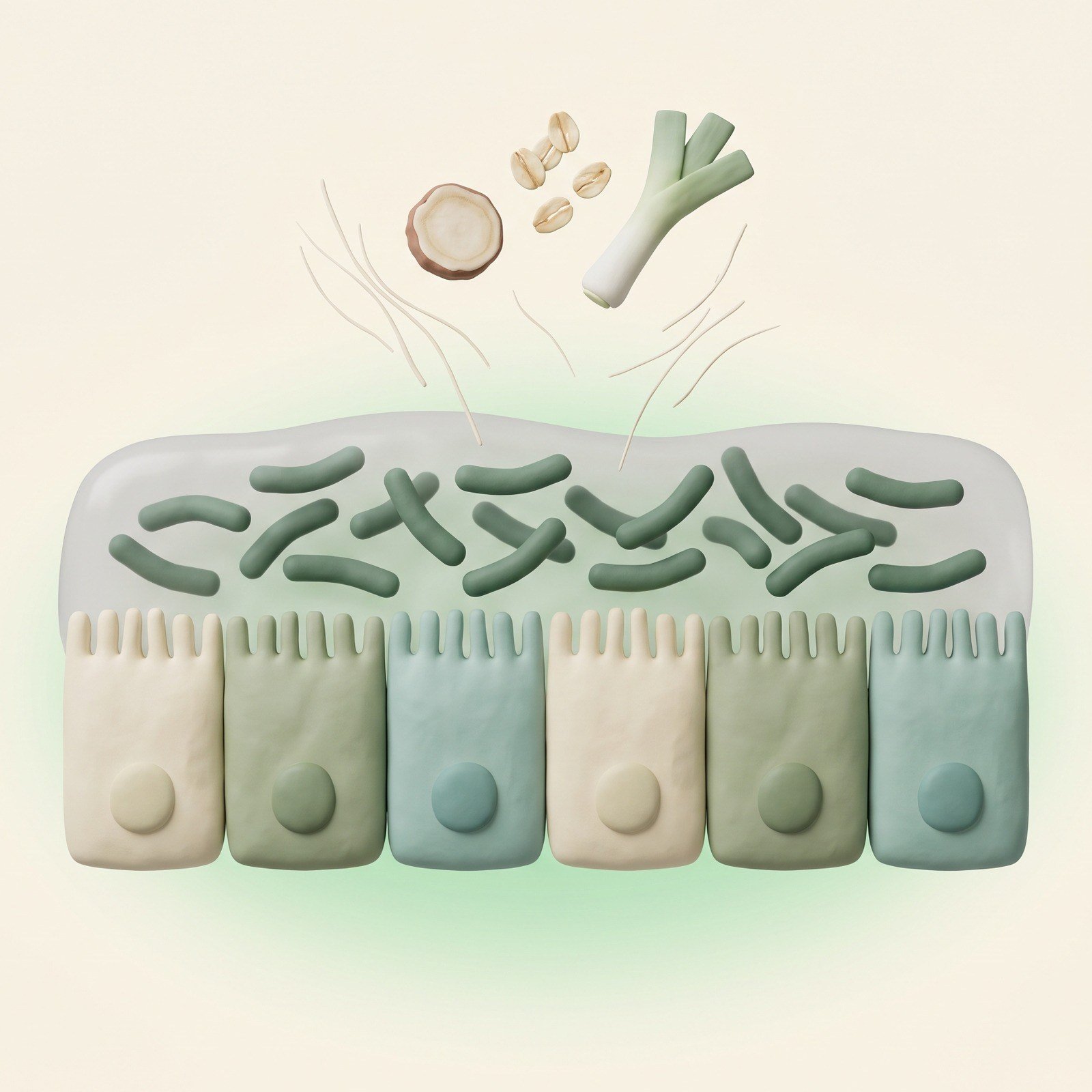
F. prausnitzii is a strict anaerobe, so fermented foods and standard probiotic capsules cannot deliver it alive. The fibers that feed the F. prausnitzii already living in your colon are what you can eat, and a few of them have trial data.

Inulin
Inulin is the best studied. In healthy volunteers, 10 grams a day for 16 days raised F. prausnitzii from 10.3% to 14.5% of gut bacteria.3 Chicory root, Jerusalem artichoke, garlic and the white part of leeks are rich in it.
Arabinoxylan
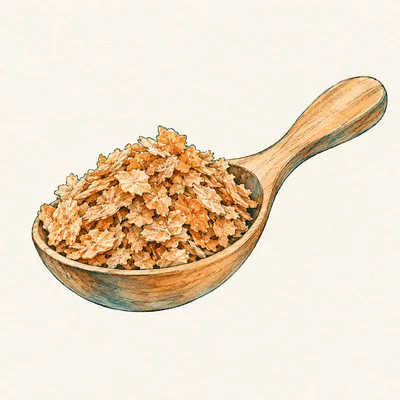
Arabinoxylan is concentrated in wheat bran and oat bran. In a randomized crossover trial in people with metabolic syndrome, a diet rich in arabinoxylan and resistant starch raised butyrate and Bifidobacterium, a cross-feeding partner of F. prausnitzii.8

Resistant starch
Resistant starch forms in cooked and cooled potatoes and rice, and in green bananas. It was part of the same trial, with the same rise in butyrate.8
Oats
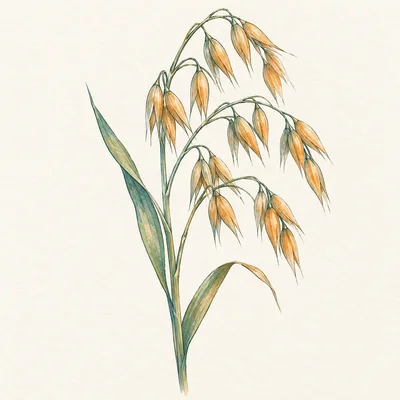
Faecalibacterium is the only known bacterial genus that can convert avenanthramides, the polyphenols unique to oats, into a more anti-inflammatory form.2
F. prausnitzii as a share of gut bacteria before and after inulin (%)
Ramirez-Farias 2009, 12 healthy volunteers, 10 g inulin a day for 16 days.
I've had bloating and loose stools on and off for two years. My GI-MAP just came back and my Faecalibacterium prausnitzii is at the bottom of the range. Does that explain my symptoms, or is it just one number among hundreds on that report?
It is one number among hundreds, but a meaningful one. A value at the bottom of the range points to lower butyrate production, and butyrate is tied to bloating, motility and the strength of the gut lining. Still, it rarely explains two years of symptoms by itself. See it as a solid clue toward reduced fiber fermentation, and possibly a fiber intake or motility issue behind it.
Does fasting help Faecalibacterium prausnitzii recover?
A longer break between meals may help, although the clearest human data come from a supervised week-long fast, which is different from a daily 16:8 schedule. In 13 overweight adults who completed a monitored week of 600 to 800 kilocalories a day, followed by six weeks of follow-up, both microbial diversity and F. prausnitzii rose significantly.9
Microbial diversity before and after a supervised week-long fast (DGGE bands)
Remely 2015, 13 overweight adults. F. prausnitzii itself also rose significantly.
A systematic review of intermittent fasting adds that the effect on gut bacteria depends on the person: diversity changed in lean and overweight people, but not in people with metabolic syndrome.10
Why recovery runs at a different speed for each person
Two people can follow the same fiber and fasting plan and land in different places three months later. Starting counts, diet history and recent antibiotics set a different baseline for each gut.
In ulcerative colitis, F. prausnitzii rose steadily back to normal levels in patients who stayed in remission, while it stayed low in those who relapsed.11 The only way to know whether it is recovering is to measure it again, on the same type of test, at a reasonable interval.
I got food poisoning about eight months ago and my gut has never fully gone back to normal. My latest stool test shows low Faecalibacterium prausnitzii. Is it going to stay low forever, or does it come back on its own?
It can come back, although "on its own" carries a lot of weight in that question. After an infection, the community that grows back is often a different mix, especially for a slow-growing, oxygen-sensitive species like this one. Fiber intake, recent antibiotics and gut motility all shape whether it rebounds in months or stays flat for years. Eight months without clear improvement is a reasonable point to retest.
Infographic
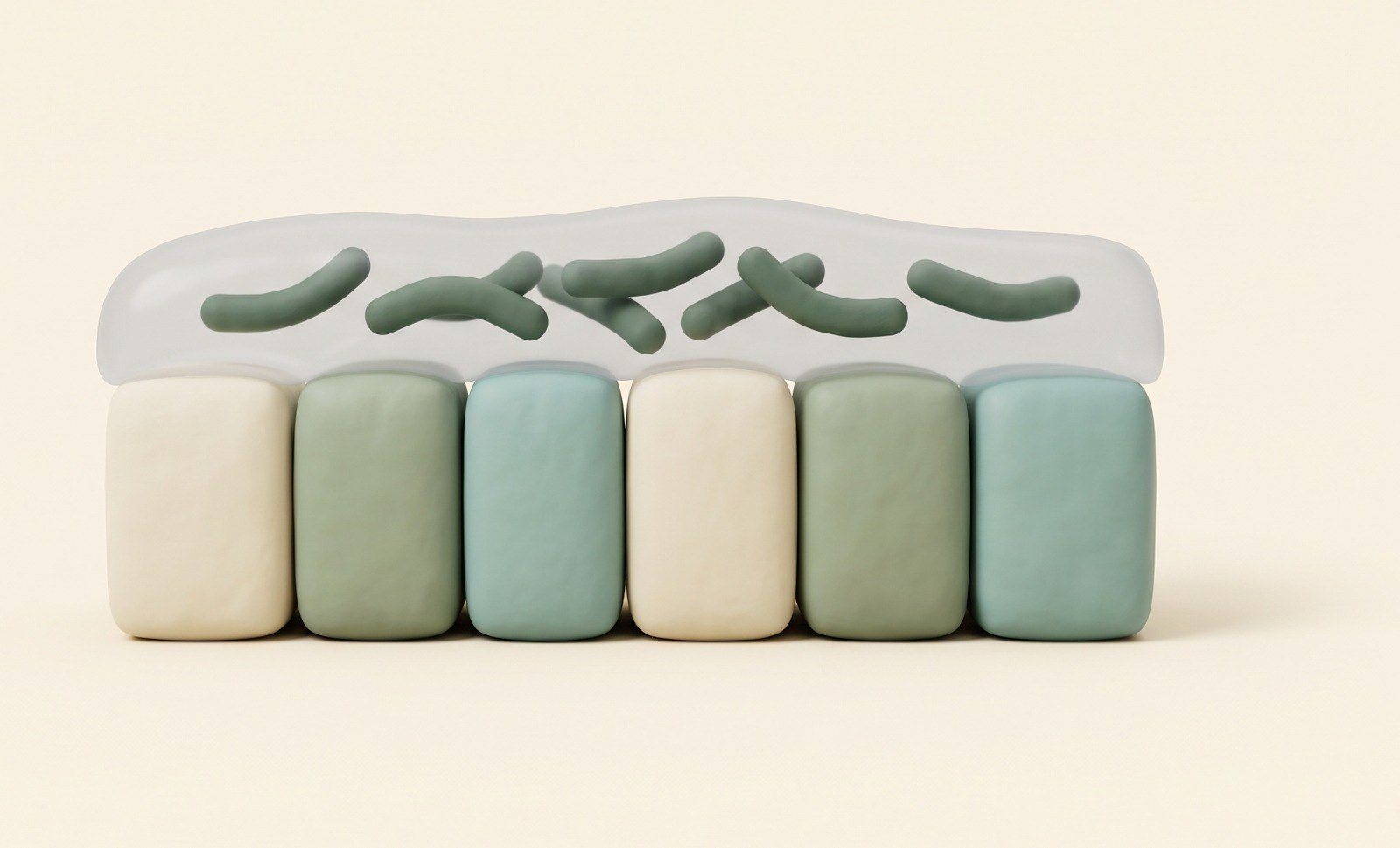
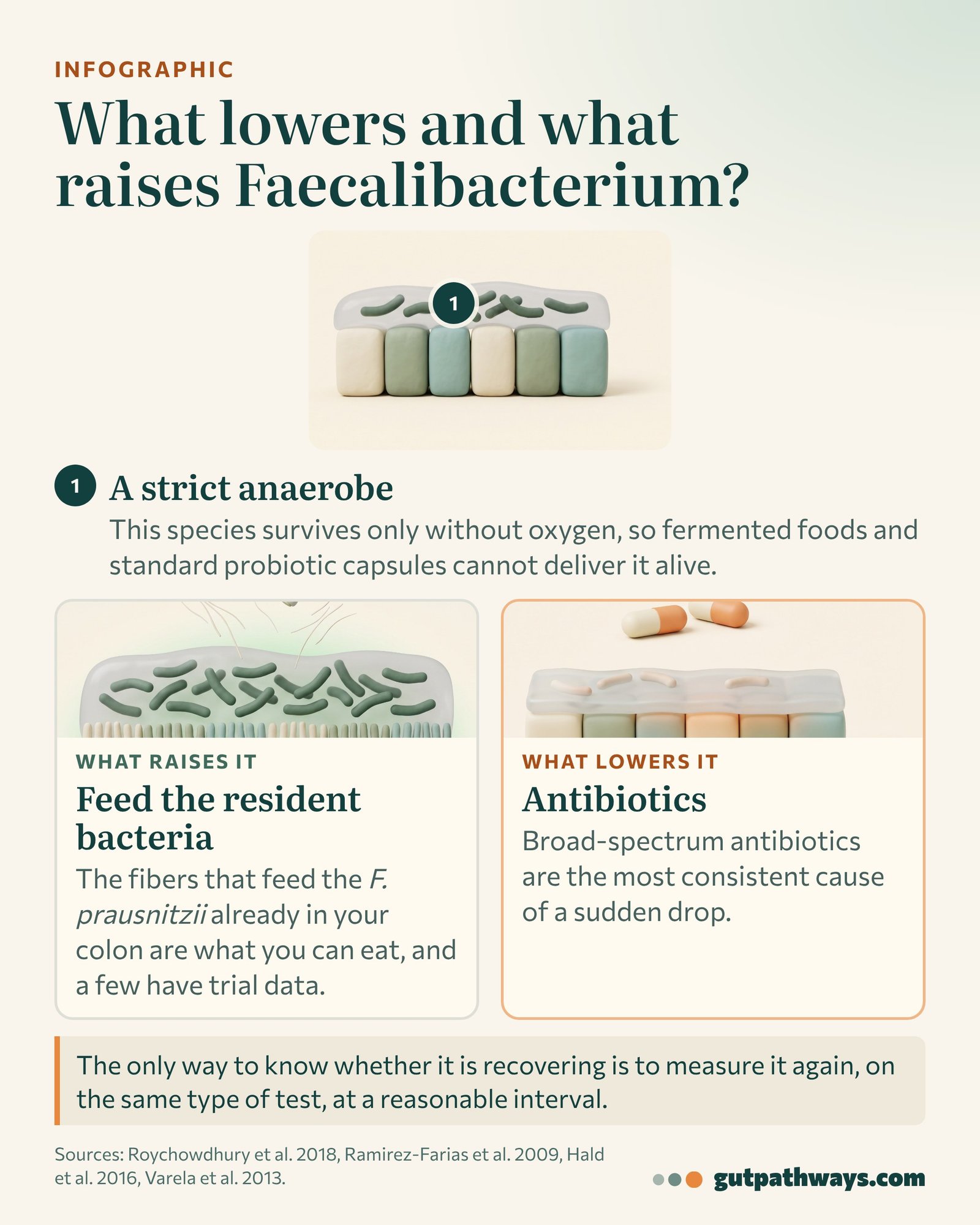
A strict anaerobe
This species survives only without oxygen, so fermented foods and standard probiotic capsules cannot deliver it alive.
What raises it
Feed the resident bacteria
The fibers that feed the F. prausnitzii already in your colon are what you can eat, and a few have trial data.

What lowers it
Antibiotics
Broad-spectrum antibiotics are the most consistent cause of a sudden drop.
The only way to know whether it is recovering is to measure it again, on the same type of test, at a reasonable interval.
Sources: Roychowdhury et al. 2018, Ramirez-Farias et al. 2009, Hald et al. 2016, Varela et al. 2013.
gutpathways.com
 Save this infographicImage 4:5, with sources, from gutpathways.com
What moves the number on your next test
Broad-spectrum antibiotics and a low-fiber diet push F. prausnitzii down. On the other hand, specific fibers, enough spacing between meals and time bring it back up, at a pace that differs for every gut. A repeat test on the same kind of panel shows which stage you are in.
Frequently asked questions
It means this butyrate producer is scarcer than expected, usually on a PCR-based stool panel. On its own it is a pattern worth looking into rather than a diagnosis, and it is linked with a weaker gut barrier in several conditions.2
There are no symptoms specific to it. Low levels mean less butyrate, which supports the gut lining, so they often go along with bloating, loose stools or a sensitive gut, but other causes need to be ruled out.
Not in a form that reliably reaches the gut alive. It dies within minutes in oxygen, so standard probiotic capsules and fermented foods do not deliver it. It is studied as a next-generation probiotic,2 but for now the practical route is feeding the F. prausnitzii already in your gut with specific fibers.
Most broad-spectrum antibiotics, especially those that target anaerobic bacteria, lower it. Rifaximin has been linked with a rise in this species,1 which shows the effect depends on the antibiotic.
References
11 studies
- Cao Y, Shen J, Ran ZH. Association between Faecalibacterium prausnitzii Reduction and Inflammatory Bowel Disease: A Meta-Analysis and Systematic Review of the Literature. Gastroenterol Res Pract. 2014.
- Martín R, Rios-Covian D, Huillet E, et al. Faecalibacterium: a bacterial genus with promising human health applications. FEMS Microbiol Rev. 2023.
- Ramirez-Farias C, Slezak K, Fuller Z, et al. Effect of inulin on the human gut microbiota: stimulation of Bifidobacterium adolescentis and Faecalibacterium prausnitzii. Br J Nutr. 2009.
- Lenoir M, Martín R, Torres-Maravilla E, et al. Butyrate mediates anti-inflammatory effects of Faecalibacterium prausnitzii in intestinal epithelial cells through Dact3. Gut Microbes. 2020.
- Sokol H, Pigneur B, Watterlot L, et al. Faecalibacterium prausnitzii is an anti-inflammatory commensal bacterium identified by gut microbiota analysis of Crohn disease patients. Proc Natl Acad Sci U S A. 2008.
- Rios-Covian D, Gueimonde M, Duncan SH, et al. Enhanced butyrate formation by cross-feeding between Faecalibacterium prausnitzii and Bifidobacterium adolescentis. FEMS Microbiol Lett. 2015.
- Roychowdhury S, Cadnum J, Glueck B, et al. Faecalibacterium prausnitzii and a Prebiotic Protect Intestinal Health in a Mouse Model of Antibiotic and Clostridium difficile Exposure. JPEN J Parenter Enteral Nutr. 2018.
- Hald S, Schioldan AG, Moore ME, et al. Effects of Arabinoxylan and Resistant Starch on Intestinal Microbiota and Short-Chain Fatty Acids in Subjects with Metabolic Syndrome: A Randomised Crossover Study. PLoS One. 2016.
- Remely M, Hippe B, Geretschlaeger I, et al. Increased gut microbiota diversity and abundance of Faecalibacterium prausnitzii and Akkermansia after fasting: a pilot study. Wien Klin Wochenschr. 2015.
- Pramono A, Ardiaria M, Limijadi EKS, et al. Intermittent fasting modulates human gut microbiota diversity in a phenotype-dependent manner: a systematic review. Biosci Microbiota Food Health. 2024.
- Varela E, Manichanh C, Gallart M, et al. Colonisation by Faecalibacterium prausnitzii and maintenance of clinical remission in patients with ulcerative colitis. Aliment Pharmacol Ther. 2013.
Found this useful? Share it with someone who needs it.
Cite this article
Prevedoros, T. (2026, September 1). How to bring low Faecalibacterium prausnitzii back up. Gut Pathways. https://gutpathways.com/articles/low-faecalibacterium-prausnitzii/