How to reduce Klebsiella in the gut naturally
The useful target is the ecology that lets Klebsiella expand, then the antimicrobial pressure that fits that ecology. Diet, competing bacteria, botanicals and biofilms all play a part.

What helps reduce Klebsiella in the gut naturally?
If you want to reduce Klebsiella in the gut naturally, the most useful strategy works on two levels at the same time: lower the microbial pressure and change the gut environment that keeps selecting for it. That means looking at diet, microbial competitors, protected colony behavior, strain susceptibility and the wider intestinal community as one connected plan.
Klebsiella is an opportunistic pathogen that can also be a normal resident of the human gut.5 A stool microbiome report can show intestinal expansion in someone whose problem stays inside the gut. The result becomes clinically useful when you place it beside digestive symptoms, antibiotic history, diet, SIBO findings and the broader microbial profile. That context tells you whether the main issue is fuel, weak colonization resistance, a protected surface community, or several of these at once.
The species also matters. Klebsiella pneumoniae, Klebsiella oxytoca and Klebsiella aerogenes can all appear in gut testing, and different strains carry different traits. The name Klebsiella pneumoniae is tied to pneumonia because the same organism can cause serious pneumonia outside the gut, and some reports abbreviate it as KP. Outside the intestine, this species can also cause urinary tract and bloodstream infections.5
Why does Klebsiella overgrowth happen in the first place?
Expansion happens when the intestinal ecosystem gives the organism enough space, enough usable fuel and too little competition from the microbes that usually keep opportunistic Enterobacteriaceae contained. Klebsiella can exploit that opening quickly. The useful question is which conditions let it overgrow in this particular gut, and which competitor has lost ground.
Antibiotic courses
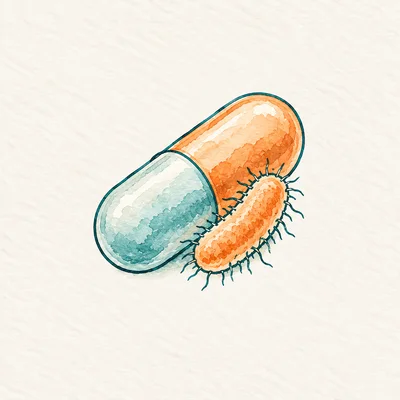
A healthy gut contains bacteria that compete for nutrients and attachment sites. Repeated antibiotic courses reduce these beneficial bacteria and leave room for Klebsiella. An antibiotic can be necessary for an infection and still become part of the history behind a later dysbiosis.
Simple sugars and starch
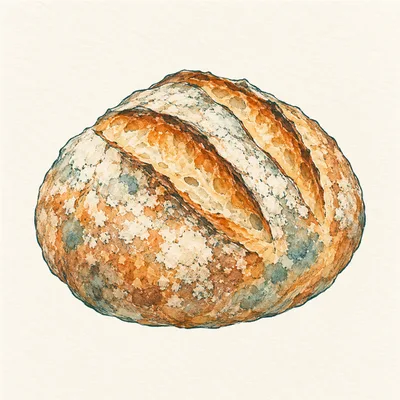
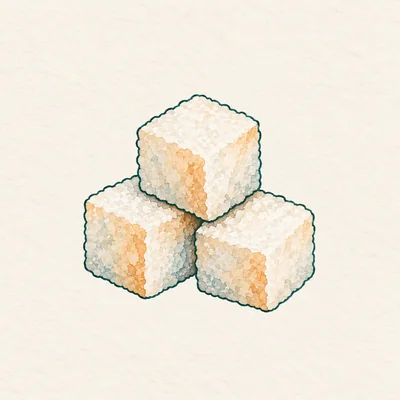
In a human diet study, Klebsiella bloomed during recovery from antibiotics when fiber was missing. In mice, simple sugars were a limiting resource for its growth, while complex fiber suppressed it.1
Weak microbial competition
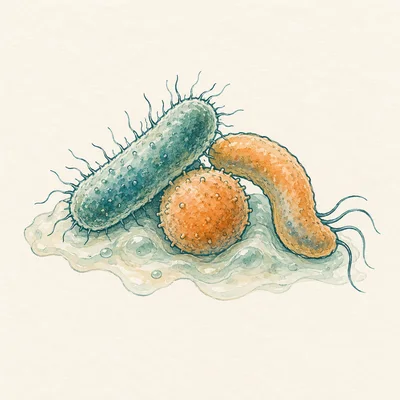
Bifidobacteria and other commensals, the mucus barrier, immune function and available nutrients all help decide whether Klebsiella stays quiet or becomes an overgrowth problem.6
Protected growth in biofilm
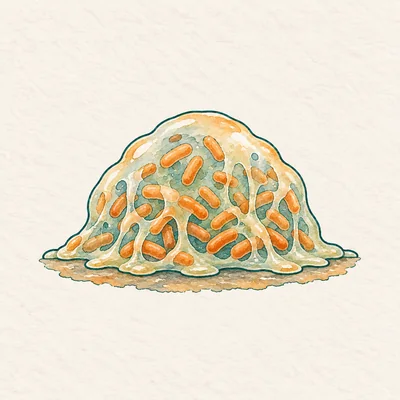
A strain that builds a strong protective matrix persists differently from one that grows in free form. In 150 clinical isolates, 54% formed biofilm.7 Long-standing colonization often needs more than one short active phase.
Which symptoms can Klebsiella produce once it expands?
Klebsiella can produce gut symptoms through several biochemical routes at once: starch fermentation, bacterial histamine, protein-digesting enzymes and LPS from the outer membrane of gram-negative bacteria. That combination explains why bloating can sit beside abdominal pain, food reactions, fatigue or skin symptoms in the same person.
Starch metabolism can turn the same food into gas and pressure
Klebsiella pneumoniae and related species produce pullulanase, a starch-digesting enzyme that breaks down branched carbohydrate structures.8 In real-life terms, Klebsiella thrives on starch because it becomes a usable energy source for the organism. Fermentation then adds gas, bloating and pressure. This is also why a SIBO pattern can feel similar, even though the location and community structure differ.
Bacterial histamine can connect the gut with pain and food reactions
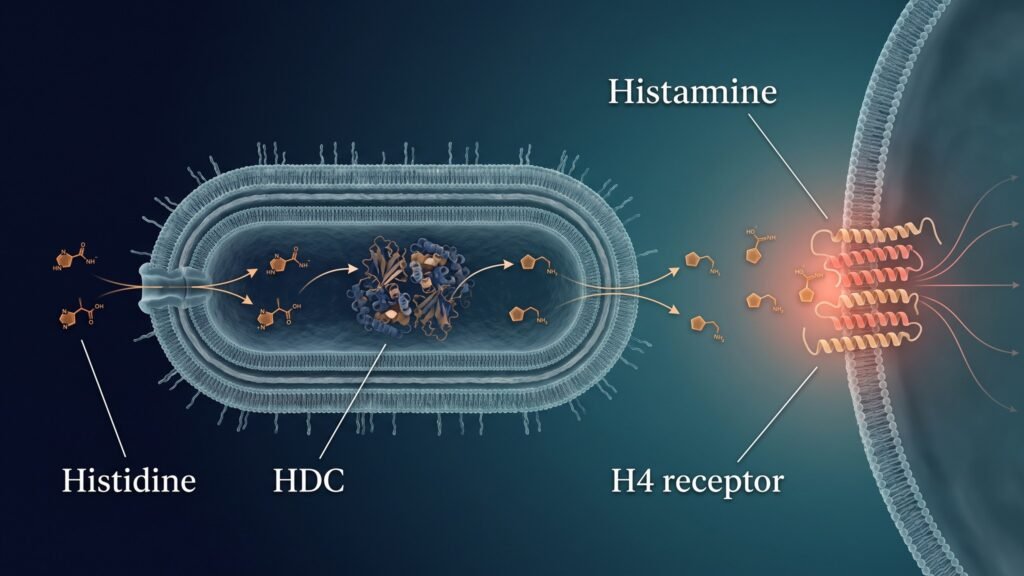
A strain of Klebsiella aerogenes carries a histidine decarboxylase gene variant that converts dietary histidine into histamine. In mice, this bacterial histamine drove gut pain through histamine 4 receptor signaling.9 That gives histamine a direct microbial route from a food-derived amino acid to a signal that acts on the gut and the immune system.
Proteases, urease and LPS add irritation and inflammation
Clinical isolates of Klebsiella pneumoniae often produce protease, gelatinase, lipase and siderophores, and many form biofilm.7 Urease splits urea into ammonia, while LPS on the outer membrane is a strong immune signal when bacterial cells break apart. These routes help connect local inflammation in the gut lining with wider symptoms in susceptible people.
Virulence traits reported across 150 Klebsiella pneumoniae isolates (%)
Hullur, Natarajan and Sreeramulu 2022, phenotypes among 150 clinical isolates.
For a deeper breakdown of histamine, LPS, urease and pullulanase, read Klebsiella spp high in stool.
| Symptom | Biochemical context |
|---|---|
| Gas and bloating | Fermentation of dietary starch and sugars can increase gas and pressure. |
| Abdominal pain | Bacterial histamine and H4 receptor signaling are one route to gut pain.9 |
| Food reactions, itching or hives | Histamine and LPS-driven inflammation can connect a gut imbalance with symptoms elsewhere. |
| Fatigue or joint aches | Immune signaling from bacterial outer-membrane material can add a body-wide component when the barrier is weak. |
| Looser stools or digestive discomfort | A dysbiotic environment can combine fermentation, irritation of the gut lining and altered gut function. |
What foods influence Klebsiella overgrowth and gut health?
Food changes Klebsiella through the nutrient environment it creates for both the organism and its competitors. Two lines of research point the same way. In mice, simple sugars fed Klebsiella, while complex fiber suppressed it and let competing bacteria recover, and fiber also prevented its spread into the blood and liver when the gut lining was damaged.1 In people with ankylosing spondylitis, a low-starch diet was used to lower the bacterial load.10
Bread, pasta, rice and potatoes were the main foods restricted in the clinical protocol
The practical translation is a targeted carbohydrate restriction. Bread, potatoes, cakes and pasta were the core of the restricted group,10 with rice, cereals and refined sugar often added. Fish, eggs, meat, many vegetables, some fruit and dairy formed the practical base. The aim was to change the fuel supply for months, long enough for the microbial ecosystem and clinical markers to shift.
In 36 patients with active ankylosing spondylitis followed for nine months on a low-starch diet, most showed lower erythrocyte sedimentation rates and total IgA, and a lower need for anti-inflammatory drugs.11
That rheumatology data gives a mechanistic clue for diet control. In day-to-day gut work, processed foods, fermented foods and fiber-rich foods can each shape tolerance and microbial competition differently. Fermented foods also carry histamine, so they are worth adding slowly when histamine symptoms are strong. The useful question is which diet supports this person's Klebsiella expansion while still feeding the wider microbial community.
Can a probiotic or prebiotic make Klebsiella less competitive?
A probiotic or prebiotic can be useful when the goal is to rebuild microbial competition around Klebsiella, especially after the active antimicrobial phase. This part of the plan gives beneficial bacteria a stronger position, supports the gut barrier and shrinks the empty niche that lets the organism expand again.
Bifidobacteria are especially relevant, because an early-life study linked a higher Klebsiella-to-Bifidobacterium ratio with later allergic disease.6 Inulin is one prebiotic that appears often in gut protocols, while Saccharomyces boulardii is a probiotic yeast often discussed in dysbiosis work. The right choice still comes from the whole microbiome profile, current symptoms and tolerance. A person with active SIBO may react very differently from someone whose problem is mainly in the colon.
Infants with a high ratio of Klebsiella to Bifidobacterium at 3 months had about nine times higher odds of allergic disease by age three.6
I think of this phase as ecological reinforcement. The active phase lowers microbial pressure. The rebuilding phase supports gut resilience and immune function at the gut lining, so Klebsiella has less room to return.
Which botanicals have evidence against Klebsiella?
A natural approach to Klebsiella can draw on herbal antimicrobials, yet the evidence sits on several levels. Human data support multi-herb regimens in SIBO, while direct Klebsiella evidence for berberine, oregano and thymol comes mainly from the lab. That difference matters, because an effect in a dish answers a different question from symptom relief in a person.
Berberine may weaken the protective Klebsiella biofilm
In one lab study, berberine inhibited biofilm formation in all seven strong biofilm-forming Klebsiella pneumoniae isolates tested, although other compounds such as reserpine were stronger.2 That makes it interesting when persistence and protected growth are the main problem, for example in a chronic case where several earlier rounds brought only temporary improvement. Clinically, berberine fits inside a broader protocol, with the dose, form and duration chosen around the person and the product.
Oregano oil brings carvacrol and thymol into the active phase
Oregano oil is rich in carvacrol, and thyme oil in thymol. These compounds can disrupt bacterial membranes in lab models. A systematic review of 38 studies found antibacterial and anti-biofilm activity for both against Klebsiella, often synergistic with other compounds.3 In people, oregano has been studied inside multi-herb SIBO protocols, which is the human evidence most relevant to a blend.
Among 104 SIBO patients with a follow-up breath test, the test normalized in 17 of 37 people on multi-herb therapy and in 23 of 67 on rifaximin.4
Breath test normalization in the multi-herb SIBO study (%)
Chedid 2014: 17 of 37 with herbal therapy, 23 of 67 with rifaximin.
Thyme and oregano together act on mixed biofilms
A combination of thyme and oregano oil disrupted more than 90% of a mixed biofilm of Klebsiella pneumoniae and Acinetobacter baumannii in the lab.12 Berberine adds a different anti-biofilm effect, which is one reason a blend can be more interesting than a single fashionable compound.
In my clinical experience, the best results usually come when the active phase uses a blend of antimicrobials chosen around the organism, the microbiome pattern and the person's tolerance. Klebsiella often returns when a protocol lowers the bacterial load but leaves the same ecological conditions in place.
My stool test showed high Klebsiella. I used oregano oil and berberine, my bloating improved for a few weeks, and then Klebsiella came back high again. Does that mean the herbs stopped working?
A temporary response followed by a high Klebsiella result usually makes me look at the whole ecosystem again. The first protocol may have lowered bacterial pressure while a protective biofilm, strain susceptibility, starch intake or weak microbial competition kept the niche open. This is where I often prefer a blend of antimicrobials and a deliberate rebuilding phase. The goal is durable control of Klebsiella together with a gut environment that makes it harder to return.
How is Klebsiella linked with ankylosing spondylitis and autoimmune inflammation?
The clearest autoimmune connection is ankylosing spondylitis in people who carry HLA-B27. Specific Klebsiella proteins share short amino acid sequences with HLA-B27 and with collagen, creating a molecular mimicry route in which an immune response against the bacterium may cross-react with the body's own tissue.13, 8
The pullulanase story is especially interesting, because the same bacterial enzyme system connects diet and immunity. Pullulanase helps Klebsiella digest dietary starch, while parts of the system have been studied as cross-reactive targets.8 That gives one organism a direct bridge between fuel use, gut ecology and immune recognition.
Antibodies to a six amino acid sequence shared by HLA-B27 and Klebsiella nitrogenase were more common in HLA-B27 patients with ankylosing spondylitis or Reiter's syndrome than in healthy HLA-B27 carriers.13
Kl. pneumoniae may be an initiating agent in ankylosing spondylitis. (Ebringer and colleagues, Annals of the Rheumatic Diseases, 1978)14
For the full antibody, genetic and diet evidence, read ankylosing spondylitis and Klebsiella. Inflammatory bowel disease, including ulcerative colitis, also sits in a mucosal immune context where the microbiome matters, but the autoimmune mechanism has been developed most fully through molecular mimicry in ankylosing spondylitis.
Why is Klebsiella difficult to get rid of and why does it keep coming back?
Klebsiella becomes difficult to clear when the strain persists well and the surrounding microbiome still offers the same opening after treatment. A protected surface community, long-standing colonization, antibiotic history, diet and weak microbial competition can all explain why the same overgrowth returns after an active phase that seemed to work.
A protective biofilm can give chronic colonization staying power
In the clinical isolate dataset, 54% of Klebsiella pneumoniae isolates formed biofilm.7 A biofilm is a structured bacterial community inside a protective matrix, and it changes how much of an antimicrobial reaches the bacteria. This can explain a temporary drop followed by renewed growth.
Die-off can temporarily raise the immune load during treatment
Klebsiella is gram-negative, so rapid bacterial killing releases outer-membrane material that includes LPS. In a person with a leaky gut or existing inflammation of the gut lining, that load can bring a short flare in bloating, fatigue, skin symptoms or general discomfort, often described as a die-off reaction. Its intensity tends to depend on the bacterial load, the state of the barrier and the wider immune context.
Susceptibility testing can make treatment more precise
Different Klebsiella strains respond differently to the same antimicrobial. If a culture-based isolate is available, I prefer susceptibility testing for each antimicrobial the laboratory can validly test. A conventional antibiogram guides antibiotic choice, and some functional laboratories also offer botanical susceptibility panels, which help compare natural compounds before a blend is built.
This is where persistence matters more than chasing a single supplement. A chronic overgrowth may need repeated reassessment of the protocol, the probiotic and prebiotic phase, diet and the rest of the microbiome. SIBO adds another layer, because the small intestine and a stool sample represent different microbial neighborhoods.
My GI-MAP keeps showing high Klebsiella after two protocols. I still have bloating, food reactions and occasional skin symptoms. How do I know whether I should keep targeting Klebsiella or look at the rest of my microbiome?
After two protocols, I would read the Klebsiella result beside the wider microbiome. Strain behavior, Bifidobacteria, SIBO, diet, antibiotic exposure and how long colonization has lasted can all change what the next step should look like. A complete microbiome profile becomes especially useful here, because the same Klebsiella number can sit inside very different ecosystems. The next step should match the mechanism that still keeps the niche open.
Infographic
Antibiotics clear competitors
Repeated antibiotic courses reduce beneficial bacteria that compete for nutrients and leave room for Klebsiella.
Fuel without fiber
In a diet study, Klebsiella bloomed after antibiotics when fiber was missing. In mice, simple sugars fed it and fiber suppressed it.
Weak competition
Bifidobacteria, the mucus barrier, immune function and nutrients help decide whether Klebsiella stays quiet or overgrows.
Biofilm gives staying power
A biofilm changes how much of an antimicrobial reaches the bacteria, which can explain a drop followed by renewed growth.
Sources: Hecht et al. 2024, Low et al. 2017, Hullur et al. 2022.
gutpathways.com
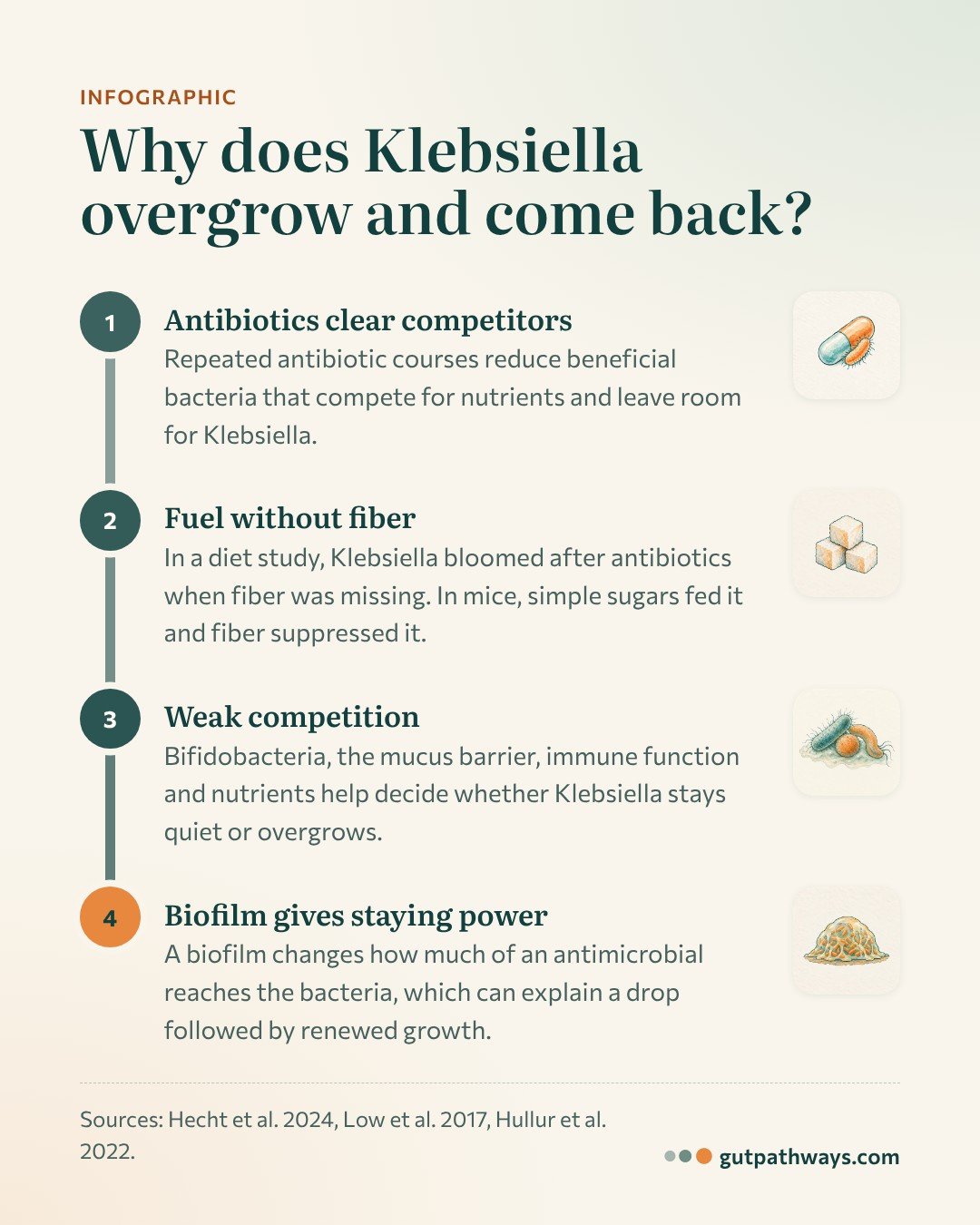 Save this infographicImage 4:5, with sources, from gutpathways.com
What should you do next when Klebsiella stays high after treatment?
If testing keeps showing persistent expansion, the next step is to connect the abundance with strain behavior, symptoms, diet, earlier antibiotic exposure, microbial competitors and the duration of colonization. At this point a full microbial profile is more useful than another random round of supplements. It can show whether the same Klebsiella number sits inside a very different ecological pattern after treatment.
In practical terms, I want to know what is feeding the organism, whether a protected surface community is likely to matter, which natural compounds or antibiotics the strain responds to when testing is available, and what the rebuilding phase will do for helpful bacteria. The same logic applies whether the original trigger was gut dysfunction, SIBO, repeated antibiotics or another disruption. Getting the order right is covered in how to treat gut dysbiosis.
The deeper goal is a gut ecosystem that makes Klebsiella less competitive, and that usually takes persistence. How long colonization has lasted and the starting microbiome shape how many phases are needed, how strong a die-off reaction may feel and how quickly gut health settles. For many people, a personalized antimicrobial blend paired with a deliberate ecological rebuild is the most durable strategy.
Frequently asked questions
Natural compounds with lab evidence against Klebsiella or its biofilm include berberine, thymol and carvacrol from oregano.2, 3 Human evidence comes from multi-herb SIBO regimens that combine several compounds.4 In practice, the active phase works best when it fits the strain, its biofilm and the rest of the gut ecosystem.
Klebsiella can persist through biofilm, antibiotic resistance in some strains, a diet that keeps feeding it and weak competition from the surrounding microbiome. Long-standing colonization makes those layers more important. A durable plan combines the active phase with diet and microbial rebuilding, then reassesses when the same organism returns.
Usually the realistic goal is a low, harmless level rather than zero, since Klebsiella is a normal resident of many healthy guts.5 Keeping it low depends on diet, microbial competition and the gut barrier after treatment.
Common symptoms include gas, bloating, abdominal discomfort and looser stools. Bacterial histamine and LPS also link Klebsiella with food reactions, itching, hives, fatigue and joint aches in some people.9 These overlap with many other gut and immune problems, so a test result is most useful with the full clinical context.
No. A high stool result describes how much Klebsiella lives in the gut. Pneumonia is a lung infection with its own clinical picture, and Klebsiella pneumoniae is one organism that can cause it outside the gut.5 Pneumonia symptoms, urinary symptoms or systemic illness need acute medical assessment.
References
14 studies
- Hecht AL, Harling LC, Friedman ES, et al. Dietary carbohydrates regulate intestinal colonization and dissemination of Klebsiella pneumoniae. J Clin Invest. 2024.
- Magesh H, Kumar A, Alam A, et al. Identification of natural compounds which inhibit biofilm formation in clinical isolates of Klebsiella pneumoniae. Indian J Exp Biol. 2013.
- Farhadi K, Rajabi E, Varpaei HA, et al. Thymol and carvacrol against Klebsiella: anti-bacterial, anti-biofilm, and synergistic activities, a systematic review. Front Pharmacol. 2024.
- Chedid V, Dhalla S, Clarke JO, et al. Herbal therapy is equivalent to rifaximin for the treatment of small intestinal bacterial overgrowth. Glob Adv Health Med. 2014.
- Centers for Disease Control and Prevention. About Klebsiella. 2024.
- Low JSY, Soh SE, Lee YK, et al. Ratio of Klebsiella/Bifidobacterium in early life correlates with later development of paediatric allergy. Benef Microbes. 2017.
- Hullur MS, Natarajan A, Sreeramulu PN. Phenotypic Characterization of Virulence Factors and Antibiogram of Klebsiella pneumoniae Isolates from Various Clinical Samples: A Cross Sectional Study. J Pure Appl Microbiol. 2022.
- Fielder M, Pirt SJ, Tarpey I, et al. Molecular mimicry and ankylosing spondylitis: possible role of a novel sequence in pullulanase of Klebsiella pneumoniae. FEBS Lett. 1995.
- De Palma G, Shimbori C, Reed DE, et al. Histamine production by the gut microbiota induces visceral hyperalgesia through histamine 4 receptor signaling in mice. Sci Transl Med. 2022.
- Ebringer A, Wilson C. The use of a low starch diet in the treatment of patients suffering from ankylosing spondylitis. Clin Rheumatol. 1996.
- Rashid T, Wilson C, Ebringer A. The link between ankylosing spondylitis, Crohn's disease, Klebsiella, and starch consumption. Clin Dev Immunol. 2013.
- Anees TMM, Suchithra KV, Shetty AV. Antibacterial and anti-biofilm activities of thyme oil, oregano oil, and their combination against Klebsiella pneumoniae and Acinetobacter baumannii polymicrobial biofilms. Antonie Van Leeuwenhoek. 2026.
- Schwimmbeck PL, Yu DT, Oldstone MB. Autoantibodies to HLA B27 in the sera of HLA B27 patients with ankylosing spondylitis and Reiter's syndrome. Molecular mimicry with Klebsiella pneumoniae as potential mechanism of autoimmune disease. J Exp Med. 1987.
- Ebringer RW, Cawdell DR, Cowling P, et al. Sequential studies in ankylosing spondylitis. Association of Klebsiella pneumoniae with active disease. Ann Rheum Dis. 1978.
Found this useful? Share it with someone who needs it.
Cite this article
Prevedoros, T. (2026, August 10). How to reduce Klebsiella in the gut naturally. Gut Pathways. https://gutpathways.com/articles/how-to-reduce-klebsiella-in-gut-naturally/