Pain after every meal pointed to mesenteric ischemia
A 72-year-old woman's symptoms started soon after every meal and lasted for hours. Her case shows how the timing of pain after eating narrows the search and points to chronic mesenteric ischemia, in the blood vessels of the gut.
 Melina's casecase study
IBS symptoms vary a lot and often overlap, so it is hard to link them to one specific cause. Small details, however, can point to specific causes. One of these details is the time after the meal when the symptoms start. Because each organ receives more blood at a different stage of digestion, this timing can narrow down the possible diagnoses and lead to a more targeted diagnostic plan.
Who is Melina, and why did her pain start after meals?
A retired teacher with three years of tests
The first meeting was with Melina's daughter, because her mother was tired of looking into her symptoms. During the previous three years, Melina had visited many doctors and had done dozens of medical tests. None of them showed anything clinically relevant, and every treatment she tried helped her only for a while. Later, she came to the practice where I work as a scientific collaborator.
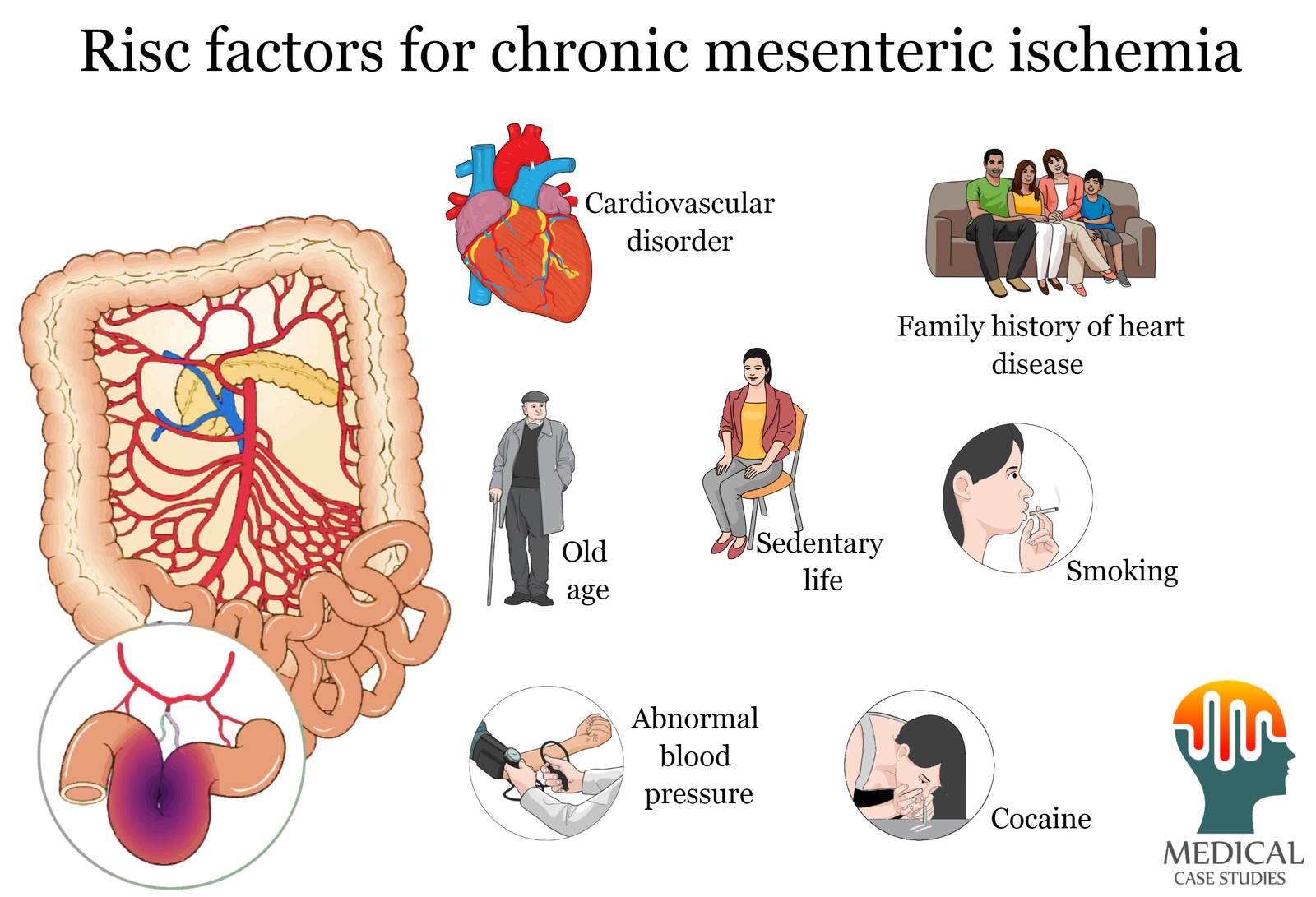
Melina was a retired teacher. Throughout her life she had been active, taking care of her diet and exercising almost daily. Nevertheless, she had one important habit, smoking. She had stopped for over a year, but she had smoked for more than 45 years. She had not had any gut problems, except a short period of constipation right after menopause. Her main problem appeared three years earlier.
Pain 20 to 30 minutes after eating
At first she thought she had an age-related metabolic problem. As time went by, however, she could clearly see the pattern of her symptoms. About 20 to 30 minutes after a meal, a low abdominal pain started, came and went for two to three hours and then disappeared by itself. At the same time, she had moderate to severe nausea for no clear reason.
Over those three years she had seen every possible specialty and done every possible test. The only positive findings were raised homocysteine, poorly controlled blood fats and some irritation of the stomach on her last gastroscopy. The final diagnosis for her symptoms was stress. Meanwhile, Melina had lost a lot of weight, because she skipped meals to avoid the pain.
- TriggerChronic smokingEffect
Narrowing of the blood vessels.
- TriggerMenopauseEffect
Estrogen withdrawal affects how the heart and vessels work.
- TriggerToo much stressEffect
Stress hormones make every inflammatory symptom stronger.
Each trigger adds a load on the blood vessels or on how strongly the body reacts.
Which clues pointed to chronic mesenteric ischemia?
Chronic mesenteric ischemia means that the arteries supplying the gut are narrowed, so the gut does not get enough blood when it needs it. Blood flow to the gut rises by up to 30% to 150% after a meal, because digestion needs much more oxygen.1 In earlier stages, symptoms appear after eating, when the demand for oxygen exceeds what the narrowed arteries can deliver.
Main data mined
- Pain right after meals
After a medium meal, blood flow to the gut rises step by step. About 20 minutes after eating, the vessels that supply the bowel are fully engaged.
- Pain that resolves by itself
Because the problem is blood flow, the pain fades once digestion is over and blood is withdrawn.
- Nausea
People with chronic mesenteric ischemia may have weight loss, pain after eating, nausea, diarrhea or vomiting.
- Weight loss
After years of pain, avoiding food leads to weight loss.
- Pain without eating
When the narrowing becomes very extensive, symptoms can appear even without digestion.
Useful data mined
We read every clue against the blood flow of digestion before choosing tests.
- The meal arrives
Digestion starts, and the gut needs much more oxygen.
- Blood flow must rise
Flow to the gut normally rises by 30% to 150% after a meal.1
- Narrowed arteries
Two narrowed vessels cannot deliver the extra blood.
- Pain and nausea
The oxygen gap causes pain about 20 to 30 minutes after eating.
- Digestion ends
Demand falls again, and the pain fades after two to three hours.
A simplified chain of what happens in the gut after each meal.
How common are these symptoms?
The classic picture is a woman with pain after meals and significant weight loss, and most people with the condition also have signs of atherosclerosis elsewhere.2, 3 Weight loss is reported by 61% to 94% of patients, and avoiding food in later stages comes from fear of eating, even though hunger is normal. Diarrhea is reported by 19% to 61%, nausea by 5% to 84%, and pain that worsens with exercise by 43% to 76%.1
What did the tests show?
Earlier tests had already excluded tumors and autoimmune inflammation. Then, CT angiography found narrowing in two arteries, which set the basis for the diagnosis. Chronic mesenteric ischemia is diagnosed when the symptoms match the findings on imaging and other possible causes have been excluded.4, 1
When blood is scarce, the stomach keeps its supply first, and the small intestine loses much of its movement and absorption. That is why pain and inflammation appear when the meal passes through the small intestine, which needs much more blood. In Melina's case, pain even without eating suggested a more advanced stage. In advanced stages, symptoms usually become permanent and get worse with eating, and people with chronic mesenteric ischemia are at risk of acute ischemia of the gut.1, 4
At the same time, high levels of Candida and increased intestinal permeability were found. Very low pancreatic elastase was probably an incidental finding, either from age-related changes or from poor blood flow. Reduced blood flow to the gut is also linked with a weaker gut barrier.5 Our first action, obviously, was to inform her surgeon, who planned a stent operation right away. Everything else would be treated afterwards.

Narrowing of two arteries
Long-term smoking led to narrowing of two vessels that supply the small intestine. The blood supply was too low for the demanding intestinal phase of digestion, which caused pain after meals.

Candida albicans
High yeast levels point to a weakened gut lining.
Low pancreatic output
Low output of the pancreas could come from age or from earlier habits.

Increased intestinal permeability
Long-term ischemia weakens the gut barrier, so toxins from yeasts can reach the blood and pancreatic enzymes can act on the gut wall.

No beneficial bacteria
There was no sign of Lactobacilli or Bifidobacteria in the stool.
My mother has pain after every meal, and all her tests are normal. Could it be her blood vessels?
It can be, especially in an older person who has smoked or has other risk factors for artery disease. Guidelines advise considering chronic mesenteric ischemia in anyone with unexplained pain after meals, and weight loss is a reason for further tests.1 Imaging of the gut arteries, such as CT angiography, shows whether they are narrowed. Her doctor decides which test fits.
How did Melina recover after the stent?
Melina finally came to my office about six weeks after the operation. She reported that the pain had already dropped sharply, and the nausea had gone. In addition, she had gained 1.5 kg, and her appetite was back. New symptoms had appeared, such as bloating and one or two episodes of diarrhea, but she did not seem worried about them, and we already knew how to deal with them.
- OperationStentHer surgeon opened the narrowed arteries with a stent.
- About 6 weeksPain downThe pain was much lower, the nausea had gone and she had gained 1.5 kg.
- About 2 monthsRemissionWith a strict plan for diet and exercise, she reached full remission.
Following a strict plan
Melina was now a very committed patient, and it took about two months to reach full remission. Her nutrition and exercise schedule was very strict. Later, she agreed to try intermittent fasting once she was back at her normal weight. Every case is different, so Melina's plan describes her care and is not a plan for anyone else.
What does Melina's case show about pain after meals?
Frequently asked questions
The chronic form causes pain after meals, fear of eating and weight loss. Diarrhea, nausea and pain that worsens with exercise are also common.1 The acute form is an emergency with sudden, severe pain.
Intestinal angina is another name for the pain of chronic mesenteric ischemia. Just as chest angina appears when the heart needs more oxygen, gut pain appears after a meal, when the gut needs more blood than narrowed arteries can deliver.1
References
5 studies
- Terlouw LG, Moelker A, Abrahamsen J, et al. European guidelines on chronic mesenteric ischaemia. United European Gastroenterol J. 2020.
- White CJ. Chronic mesenteric ischemia: diagnosis and management. Prog Cardiovasc Dis. 2011.
- Moawad J, Gewertz BL. Chronic mesenteric ischemia. Clinical presentation and diagnosis. Surg Clin North Am. 1997.
- Cognet F, Ben Salem D, Dranssart M, et al. Chronic mesenteric ischemia: imaging and percutaneous treatment. Radiographics. 2002.
- Rahman SH, Ammori BJ, Holmfield J, et al. Intestinal hypoperfusion contributes to gut barrier failure in severe acute pancreatitis. J Gastrointest Surg. 2003.
Found this useful? Share it with someone who needs it.
Cite this article
Prevedoros, T. (2022, September 21). Pain after every meal pointed to mesenteric ischemia. Gut Pathways. https://gutpathways.com/case-studies/ibs-and-chronic-mesenteric-ischemia/