Can a routine operation trigger ulcerative colitis?
A 29-year-old man's ulcerative colitis symptoms began soon after a routine ankle operation. His case shows how several ulcerative colitis triggers, surgery, night work, constant eating and an earlier tonsillectomy, can add up in a gut that was already vulnerable.
 Cleon's casecase study
Surgery is a major source of stress for the body, and there are many reports linking it with the start of a disease process. The exact mechanism is not clearly defined. Most importantly, these patients usually have some predisposition before the operation, or an early form of the disorder. The gut, an area with very active immune function, is one of the places where damage is reported after an operation.
Which triggers can start ulcerative colitis after an operation?
The operation
The surgery itself is a very stressful event that can shock the immune system.
Anaesthesia
Anaesthetic drugs act on the immune system, and their effects on immune cells are an active field of study.3
Infection
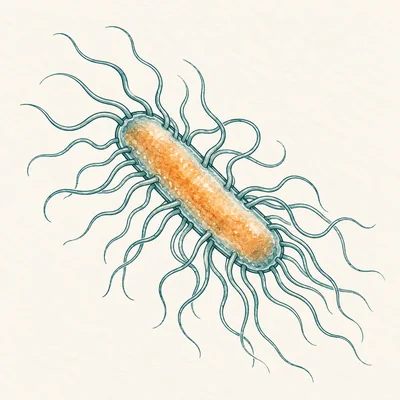
Infections picked up in hospital are recognised triggers of immune reactions, especially bacteria such as Proteus, Klebsiella and Fusobacterium.
Who is Cleon, and how did his colitis begin?
Night work, meals at 2 a.m. and frequent antacids
Cleon is 29 years old, and he was diagnosed with distal colitis two years before he came to the practice where I work as a scientific collaborator. He has always been stressed and hard-working. His family owns a restaurant, so he worked day and night and slept only six hours a day. In addition, he had his last meal around 2 a.m. He followed this pattern for five months a year, for the last seven years.
Nevertheless, until the age of 27 he only had minor gut problems. From time to time he had intense bloating that lasted two or three days, and some episodes of diarrhea. He also had frequent reflux and took antacids at least once a week during the last six years.
An ankle operation, then blood in the stool
Cleon was an amateur football player and had several injuries, one of them serious. During a game he fractured his right ankle. He avoided surgery for eight months, but finally he decided to have the operation. It went well, and within two months he was back on the pitch.
Soon, however, the episodes of diarrhea became more frequent, and he needed the toilet more than once a day. Two months after the surgery, he noticed blood in his stool. This worried him for a while, but it did not happen again, so he did not see a doctor. A few months later, mucus and blood became very common. The first gastroenterologist he saw performed a colonoscopy and gave the diagnosis of ulcerative colitis, with the matching treatment.
- DiagnosisMesalazine-type drugHe started an oral aminosalicylate.
- 2 months laterPrednisoneImprovement was poor, so his doctor added prednisone, and he reached remission quickly.
- A few monthsRelapseThe remission did not last, and anti-TNF treatment was suggested.
- Second opinionBiologicA second colonoscopy followed, with advice to start a biological drug.
Cleon already knew the possible side effects of anti-TNF treatment, because his uncle had been on the same medicine for years. So he looked for a second opinion, and later he came to us.
- TriggerTonsillectomyEffect
Weaker immunity, lower secretory IgA and less tolerance of the gut's own bacteria.
- TriggerPoor lifestyle habitsEffect
The body clock of the immune system falls out of rhythm.
- TriggerEating all dayEffect
The cleaning wave of the gut is blocked, so the gut has no time to repair.
- TriggerSurgeryEffect
A probable trigger of the inflammatory bowel disease.
Each trigger weakens a different defence of the gut.
Which clues in his history did we follow?
Main data mined
- Night shifts
People who work night shifts for many years live with a kind of permanent jet lag. In a large UK cohort, regular night shift workers had a higher risk of IBS.4
- Eating all day
When the gut has no fasting time to repair itself, digestive by-products build up and the gut is more prone to inflammation. In people with IBS and bacterial overgrowth, the cleaning waves of the small intestine are much less frequent.5
- Tonsillectomy
Removing the tonsils lowers secretory IgA, so several bacteria can behave more aggressively.1
Useful data mined
Main clues shape the tests, and useful clues help us read the results.
What do tonsils and the appendix have to do with the gut?
Tonsils and the appendix are parts of the immune tissue linked with the gut. In a study of 160 people, those who had both operations had much lower secretory IgA in the blood, 1.89 mg/dl against 4.97 mg/dl in people with neither operation. People with only one of the operations also had lower values, and after tonsillectomy the drop lasted for more than 20 years.1
Secretory IgA in the blood by operation (mg/dl)
Andreu-Ballester 2007, 160 people in four matched groups.1
In a meta-analysis of observational studies, tonsillectomy was linked with slightly higher odds of ulcerative colitis, while the link of appendix removal with ulcerative colitis was not significant.2
What did his stool tests find?
At least three bacteria were hugely overgrown. Klebsiella planticola, Proteus mirabilis and Morganella morganii were found at levels at least 100 times above baseline. All three are well known for taking advantage of an inflamed environment to thrive and make things worse. Proteus mirabilis, for example, was more common in people with Crohn's disease and made colitis more severe in mice.6 Morganella morganii, in turn, is enriched in Crohn's disease, and in mice it weakened the gut barrier through the histamine it releases.7
All of these bacteria can produce a lot of ammonia and may also switch on inflammatory signals. As expected, secretory IgA in the stool was very low (about 445), whereas IgA in the blood was at the low end of normal. Such low secretory IgA can come both from the earlier tonsillectomy and from poor eating habits.

Low secretory IgA
A strong tendency to infections and weaker immune defence of the gut lining.

Proteus, Klebsiella and Morganella
All three are typically overgrown in several cases of inflammatory bowel disease.

Complement factors
High C3 and C4 point to long-term stimulation of the immune system.

No beneficial bacteria
There was no sign of Lactobacilli or E. coli Nissle 1917.

Poor absorption of fat, protein and vitamins
Nutrient deficiencies were clear, and only his young age kept him going with this lifestyle.

Bile
Excess bile was found in the stool, probably because fast transit left less time to take it back.
How was Cleon treated, and how did he respond?
The treatment had two stages. In the first stage, a long antimicrobial treatment started, based on the sensitivities of the three bacteria, followed by a milder antibacterial phase with natural extracts. While the antimicrobial treatment lasted, a strong probiotic programme and bovine colostrum aimed to raise secretory IgA.
In the second stage, the aim was to keep the remission stable, without yet lowering the medicines Cleon was already taking. Only 40 days after the treatment started, Cleon had no symptoms at all. At this stage, butyric acid and a targeted diet were added. During the antimicrobial treatment, the diet must be very careful not to favour bacteria such as Proteus, which can swarm. Equally important was a more normal lifestyle, with good sleep and regular fasting gaps.
Can stress cause ulcerative colitis?
Stress alone does not cause it, but it can act as a trigger in a gut that is already vulnerable. In Cleon's case, years of night work, late meals, an earlier tonsillectomy and an operation came together before the diagnosis. Each of them affects immunity or the gut barrier in a different way.
Follow-up and remission
Cleon received a very detailed programme and followed it to the letter. As a result, he has remained without symptoms until today, and together with his gastroenterologist he managed to stop prednisone and halve the aminosalicylate. His next colonoscopy looked very good, with full remission and only a few groups of activated eosinophils and polymorphonuclear cells. Every case is different, so Cleon's plan describes his care and is not a plan for anyone else. Any change to his medicines was decided by his doctors.
What does Cleon's case show about colitis triggers?
Frequently asked questions
Ulcerative colitis comes from a mix of genes, immunity and environment. Triggers that people report include infections, antibiotics, stress, smoking cessation and some medicines. In Cleon's case, night work, late meals, an earlier tonsillectomy and an operation came together.
Surgery and anaesthesia change immune function for a time, and some people report the first symptoms soon after an operation.3 In our experience this happens mostly in people who already had a predisposition or early symptoms.
Secretory IgA coats the gut lining and helps keep bacteria in check. When it is very low, bacteria such as Proteus, Klebsiella and Morganella can overgrow more easily.
References
7 studies
- Andreu-Ballester JC, Pérez-Griera J, Ballester F, et al. Secretory immunoglobulin A (sIgA) deficiency in serum of patients with GALTectomy (appendectomy and tonsillectomy). Clin Immunol. 2007.
- Amin R, Mansabdar A, Gu H, et al. Mucosa-associated lymphoid tissue surgeries as a possible risk for inflammatory bowel disease: a systematic review and meta-analysis. Gastroenterology Res. 2024.
- Ye J, Deng M, Liao Y, et al. The immunomodulatory landscape of anesthetic agents: mechanisms, clinical implications, and therapeutic potential. Eur J Pharmacol. 2026.
- Yao Y, You X, Yang S, et al. Associations of long-term night shift work with incident irritable bowel syndrome: a population-based cohort study. J Gastroenterol Hepatol. 2025.
- Pimentel M, Soffer EE, Chow EJ, et al. Lower frequency of MMC is found in IBS subjects with abnormal lactulose breath test, suggesting bacterial overgrowth. Dig Dis Sci. 2002.
- Zhang J, Hoedt EC, Liu Q, et al. Elucidation of Proteus mirabilis as a key bacterium in Crohn's disease inflammation. Gastroenterology. 2021.
- Yi Y, Feng R, Wu X, et al. Morganella morganii-derived histamine impairs intestinal barrier function via HRH4 and aggravates colitis. Inflamm Bowel Dis. 2026.
Found this useful? Share it with someone who needs it.
Cite this article
Prevedoros, T. (2022, September 21). Can a routine operation trigger ulcerative colitis?. Gut Pathways. https://gutpathways.com/case-studies/ulcerative-colitis-after-operation/