Two days of reflux led to six years on omeprazole
This is case 7 in the book IBSyncrasy
Can omeprazole make IBS worse? George started it for two days of reflux and was still taking it six years later. His case shows how long-term acid suppression can change digestion and the gut bacteria, and what his care plan focused on.
 George's casecase study
1DemographicsStop 1 of 8
Who George is
George is a man who came to the clinic where I work as a scientific collaborator after years of changing gut symptoms. His main complaints were bloating, gas, indigestion and a constant feeling that his bowel was not empty.
- Man
- Six years on omeprazole
- Many coffees a day
- Very late dinners
- Few vegetables
Statistics from the practice for similar cases
- Number of cases
- >98
- Age range
- 30 to 55
- Success rate
- >70%
- Treatment duration
- 2 to 6 months
- Most common symptom
- Gastritis
- Most common trigger
- Poor eating habits
Average improvement score
Figures from the practice's own records of cases like this one, not from a published study.
His full case is described in the book IBSyncrasy.
2IntroductionStop 2 of 8
Why stomach acid matters for the whole gut
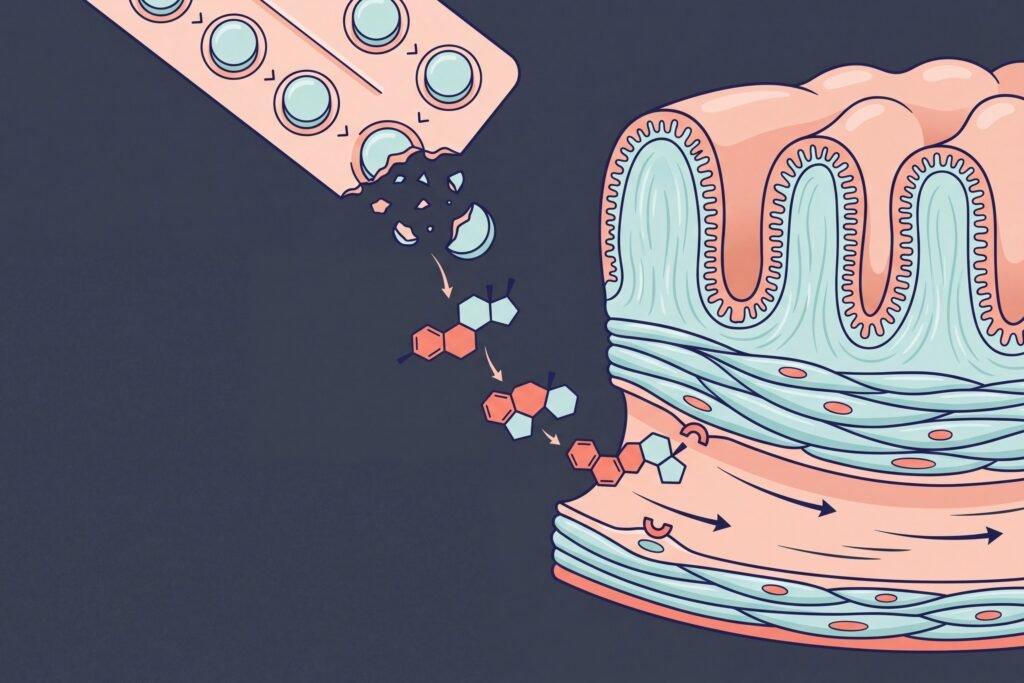
Stomach acid does more than cause heartburn. It starts protein digestion, helps absorb nutrients such as vitamin B12 and works as a barrier against bacteria swallowed with food and saliva. When acid stays low for years, both digestion and the bacteria further down the gut can change. Anything that interferes with acid production, from medicines (including over-the-counter ones) to hormonal shifts, can affect this balance. The article your gut is acidic and should stay acidic explains why the gut depends on that acidity.
Proton pump inhibitors (PPIs) such as omeprazole lower acid very effectively, which is why they relieve reflux so quickly. Large studies have found that PPI users have a less diverse gut microbiome, with more bacteria that normally live in the mouth, such as Streptococcus and Rothia.1, 2 In addition, PPI use was linked with SIBO in a meta-analysis of 11 studies (odds ratio 2.28), although the link held only when SIBO was diagnosed by culture of intestinal fluid, not by glucose breath test.3
Oral bacteria beyond the mouth
Several oral bacteria have been studied for links with conditions far from the mouth. Fusobacterium nucleatum is a normal mouth resident that can turn harmful elsewhere.4 Porphyromonas gingivalis has been linked through gene networks with Alzheimer's disease, diabetes and heart disease, and with Tannerella forsythia it has been studied in esophageal cancer.5, 6 These are associations from research, and they do not mean that a PPI causes these conditions.
Long-term use is common. PPIs often continue for months or years because they relieve symptoms quickly, sometimes on a doctor's advice and sometimes against it. In one large study, two or more years of acid suppression was linked with a higher risk of vitamin B12 deficiency (odds ratio 1.65).7 More on this link is in PPIs and vitamin B12 deficiency.
3MeetingStop 3 of 8
Meeting George
George is a typical example of a PPI course that became permanent. His first symptoms were mild. He was prescribed omeprazole for a reflux episode that lasted two days, the relief was immediate, and with his doctor's agreement he was still taking it six years later.
His daily routine had set the stage for his stomach symptoms: many coffees, very late dinners and almost no salads. Over the years, his symptoms kept changing and getting worse, with episodes of diarrhea and unexplained fatigue. He had seen several specialists and had a gastroscopy and a colonoscopy. Apart from non-specific gastritis and redness throughout his colon, they found nothing of note.
Looking back, four steps seemed to lead from one to the next.
Diet and lifestyle
Late dinners, many coffees and few vegetables kept his stomach constantly irritated.
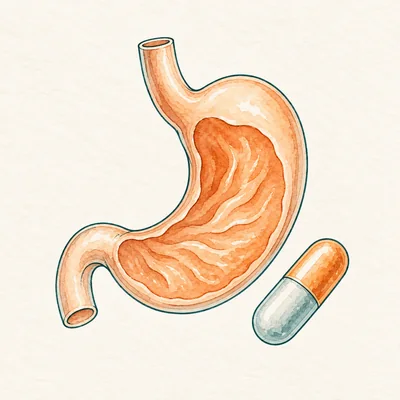
PPI treatment
Omeprazole brought quick relief, and a two-day prescription turned into six years of low stomach acid.
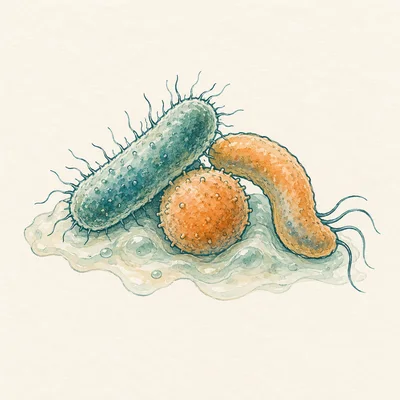
IBS symptoms
Bloating, gas, indigestion and episodes of diarrhea followed, and they kept changing over time.
4DiagnosticsStop 4 of 8
Diagnostics: what we looked for
Long-term PPI use is known to change gut hormones, for example by raising gastrin. For that reason, I asked George for several stool and blood tests. The aim was to look for possible effects of chronic acid suppression, such as low stomach acid, reduced pancreatic enzyme output and high ADMA, a molecule linked with blood vessel function and blood pressure. I also wanted to know how much his gut bacteria had changed and how extensive the overgrowth was, so we could plan his treatment.
How much undigested food reaches the colon, and what kind, largely sets how fast it ferments and how much gas is produced.
With less acid, the stomach digests food less well. Acid-related pain may ease, but indigestion and fullness can get worse.
Gas trapped in the gut, together with an irregular bowel rhythm, added to a constant feeling of fullness and of needing to empty the bowel.
Vitamin B12 deficiency is the best-known effect of long-term acid suppression.7 Low acid can also affect the absorption of other nutrients indirectly.
Other details completed his picture:
- Early fullness
- Anemia
- Gastritis in the lower stomach
- Unexplained blood pressure swings
- Sudden episodes of diarrhea
5ResultsStop 5 of 8
Results: SIBO and more
George's hydrogen breath test was positive. The small intestine holds only a small share of the gut's bacteria, but with constantly low stomach acid this population can grow many times over. A single test is not enough to plan treatment, so his results were read together. Of the 13 results we reviewed, four guided the care plan.

Low diversity index
His gut bacteria were less varied than expected. This fits large studies, in which PPI users had a less diverse microbiome.1, 2
Elevated ADMA
ADMA blocks the production of nitric oxide, a molecule that relaxes blood vessels. In mouse and lab studies, PPIs raised ADMA levels, which may help explain the blood pressure swings he described.8
SIBO
Bacterial overgrowth in the small intestine can interfere with nutrient absorption and produce gas.
Low levels of beneficial bacteria
With few beneficial bacteria in the colon (what I call probiotic sterility), starch, sugars and fiber ferment abnormally, and bloating and gas are the main symptoms.
6Care planStop 6 of 8
Care plan: treating PPI-related IBS symptoms
In George's case, the care plan covered the whole digestive tract. It aimed to reduce stomach inflammation, reduce the overgrowth in the small intestine and restore the bacteria of the colon. This was a demanding process that took time.
Several factors shaped his plan, including his age, his diet and his daily habits. Every case is different, so George's plan describes his care rather than a plan for anyone else. Any change to a PPI, including stopping it, is a decision for the prescribing doctor. Stopping a PPI after weeks of use can bring a temporary return of acid symptoms, which is one reason it is planned carefully.9, 10
7Follow-upStop 7 of 8
Follow-up: evaluating progress
Our third appointment took place by phone, since George was out of town. His stools had improved a lot, with one or two bowel movements a day, almost formed. At the same time, his allergic symptoms had increased. I explained this as a possible effect of histamine-producing bacteria releasing histamine as they die off. This explanation comes from practice rather than from studies, and I expected the flare to ease once both antimicrobial stages were complete.
He had also changed his meal times, eating dinner mostly before 9 pm and breakfast after 10 am. This was a real achievement, but I encouraged him to have dinner even earlier.
8ConclusionStop 8 of 8
Conclusion: PPIs and IBS
Long-term PPI use changes both the secretions of the digestive tract and the gut microbiome. The release of gastric hormones and signals, such as gastrin, acetylcholine and histamine, changes, and bacteria from the mouth reach the gut more easily.1 In George's case, this went together with SIBO.
Whether PPIs cause IBS is still debated. One review suggested that the link between SIBO and IBS might partly reflect PPI use, since people with IBS are often prescribed PPIs.11 Gastroenterology guidance recommends that the reason for a long-term PPI is documented and reviewed regularly, to check whether it is still needed.10
What George's case shows
- Long-term PPI use can change acid production and gut physiology, and in George's case this went together with bloating, gas and changing bowel habits.
- Chronic acid suppression can lower vitamin B12 absorption and change gut bacteria.7, 1
- His results showed SIBO, low gut diversity, high ADMA and few beneficial bacteria.
- His care plan addressed stomach inflammation, overgrowth in the small intestine and the colon's bacteria together.
- Long-term PPI use is worth reviewing with the prescribing doctor at regular intervals.
George's case is one of the stories behind what causes IBS, where one symptom turns out to have different causes in different people.
Frequently asked questions
Omeprazole treats acid-related problems such as reflux and ulcers. It is not a treatment for IBS itself. If reflux and IBS occur together, the doctor weighs the benefit of the PPI against its possible effects on the gut.
After eight weeks of PPI use, 44% of healthy volunteers had acid-related symptoms in the weeks after stopping, against 15% on placebo.9 That is why stopping is best planned with the prescribing doctor.
Two or more years of acid suppression was linked with a higher risk of vitamin B12 deficiency in a large study (odds ratio 1.65).7 People on long-term PPIs can ask their doctor whether B12 testing makes sense.
References
11 studies
- Imhann F, Bonder MJ, Vich Vila A, et al. Proton pump inhibitors affect the gut microbiome. Gut. 2016.
- Jackson MA, Goodrich JK, Maxan ME, et al. Proton pump inhibitors alter the composition of the gut microbiota. Gut. 2016.
- Lo WK, Chan WW. Proton pump inhibitor use and the risk of small intestinal bacterial overgrowth: a meta-analysis. Clin Gastroenterol Hepatol. 2013.
- Han YW. Fusobacterium nucleatum: a commensal-turned pathogen. Curr Opin Microbiol. 2015.
- Carter CJ, France J, Crean S, et al. The Porphyromonas gingivalis/host interactome shows enrichment in GWASdb genes related to Alzheimer's disease, diabetes and cardiovascular diseases. Front Aging Neurosci. 2017.
- Malinowski B, Węsierska A, Zalewska K, et al. The role of Tannerella forsythia and Porphyromonas gingivalis in pathogenesis of esophageal cancer. Infect Agent Cancer. 2019.
- Lam JR, Schneider JL, Zhao W, Corley DA. Proton pump inhibitor and histamine 2 receptor antagonist use and vitamin B12 deficiency. JAMA. 2013.
- Ghebremariam YT, LePendu P, Lee JC, et al. Unexpected effect of proton pump inhibitors: elevation of the cardiovascular risk factor asymmetric dimethylarginine. Circulation. 2013.
- Reimer C, Søndergaard B, Hilsted L, Bytzer P. Proton-pump inhibitor therapy induces acid-related symptoms in healthy volunteers after withdrawal of therapy. Gastroenterology. 2009.
- Targownik LE, Fisher DA, Saini SD. AGA Clinical Practice Update on De-Prescribing of Proton Pump Inhibitors: Expert Review. Gastroenterology. 2022.
- Spiegel BM, Chey WD, Chang L. Bacterial overgrowth and irritable bowel syndrome: unifying hypothesis or a spurious consequence of proton pump inhibitors? Am J Gastroenterol. 2008.
Found this useful? Share it with someone who needs it.
Cite this article
Prevedoros, T. (2022, September 15). Two days of reflux led to six years on omeprazole. Gut Pathways. https://gutpathways.com/case-studies/ppi-omeprazole-ibs/