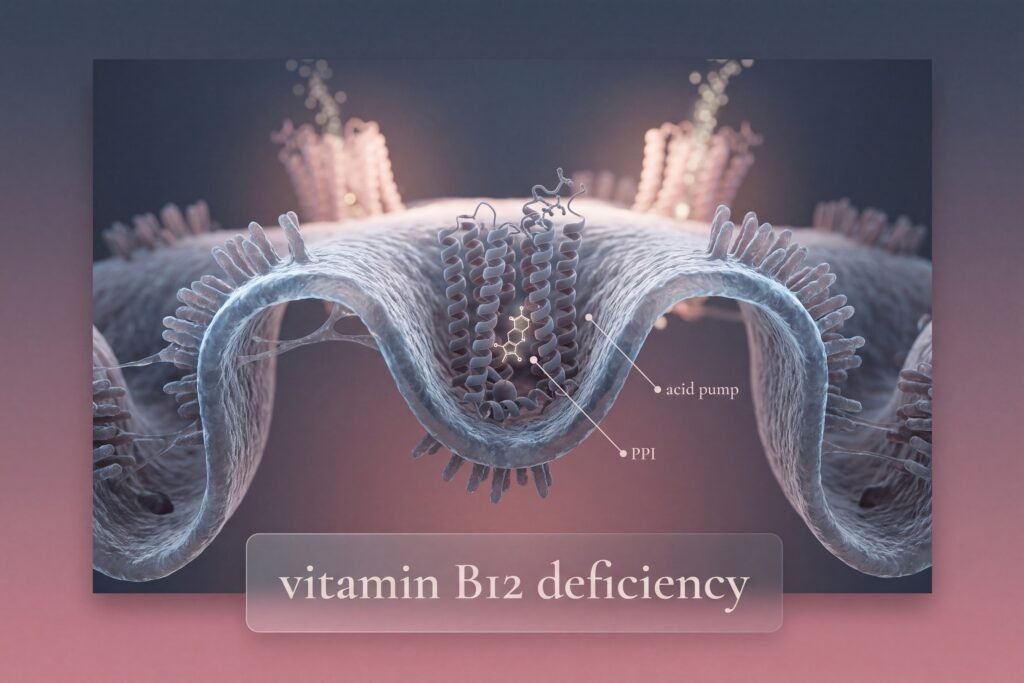
An anticholinergic drug made acid reflux severe
Antigone's reflux became severe soon after she started an anticholinergic drug for incontinence. Her case shows how medications that cause acid reflux act together with her weight and six daily meals to load the stomach, and why sleeping right after lunch made things worse.
 Antigone's casecase study
Acid reflux from anticholinergic drugs can show up hard in a woman who already has Sjögren's syndrome and Hashimoto's thyroiditis, because these drugs relax the lower esophageal sphincter and slow down how fast the stomach empties. The proton pump inhibitor (PPI) she was given next brought on tremor and disturbed sleep. Antigone, 70, can see the pattern by now: every new drug brought a new symptom.
In this case, we explain why her body weight and how many times a day she eats affect the gastric phase of digestion, and why sleeping right after a meal makes her reflux worse.
Who is Antigone, and what did she already have going on?
Her daily routine
Antigone is 70 and came to the practice where I work as a scientific collaborator with severe reflux. She weighs 68 kg at 157 cm, which puts her right at the edge of the overweight range. She wakes up at 7:30 am and starts the day with oatmeal in water, with slippery elm, raisins and cinnamon. Around 11 am she usually has a koulouri, a Greek sesame bread ring, and at 1:30 pm comes her main meal of the day: lentils, chicken with rice, spinach rice, steak with potatoes, bean soup or another oil-based dish, depending on the day. Right after that, she lies down to sleep. In the afternoon she has fruit with coffee and rusks, and in the evening something similar to lunch, or pizza with tortilla and cheese.
She drinks about six glasses of water a day and does no exercise. She already takes medicines for high blood pressure and osteoporosis, two conditions that are monitored steadily without any particular issue.
How the problem started
After a urodynamic test for incontinence, she was started on an anticholinergic drug. Within a short time she developed severe acid reflux, intense stomach pain, a dry cough and unusually heavy drooling. She also started noticing that her ears kept getting blocked. An internist then prescribed lansoprazole, a PPI, but it made things worse, adding two new symptoms: an internal tremor and badly disturbed sleep.
At her next visit, she was advised to stop all of these medicines, and little by little her symptoms eased. Because of travel and stress, some of them are still around today: burping, an occasional dry cough and the acid reflux itself.
- Acid reflux Severe, soon after starting the drug.
- Stomach pain Intense pain in the upper abdomen.
- Dry cough A cough without phlegm that came with the reflux.
- Heavy drooling More saliva than usual, a reflex to acid in the esophagus.
- Blocked ears Her ears kept getting blocked.
Symptoms after the anticholinergic drug, in the order she reported them.
What the rest of her history shows
Antigone already has a diagnosis of Sjögren's syndrome, Hashimoto's thyroiditis and gastric antral vascular ectasia (GAVE), also known as watermelon stomach. Her lipoprotein(a) is clearly raised, a separate cardiovascular risk marker that is tracked alongside her reflux care. In her food diary, bread appears 7 days a week, potatoes on 4 days and coffee every day, with 1 to 2 cups, while fish appears only once a week.
None of her six daily eating times had been looked at as a possible strain on her stomach, and the chain of medicines that followed her incontinence had not been linked clearly with her current reflux either.
- 1
Urodynamic test for incontinence
She is started on an anticholinergic drug.
- 2
First reactions
Severe acid reflux, stomach pain, dry cough, heavy drooling and blocked ears.
- 3
Lansoprazole prescribed
The PPI is added for the reflux, but brings on an internal tremor and badly disturbed sleep.
- 4
All these medicines stopped
Her symptoms gradually ease.
- 5
Today
Burping, an occasional dry cough and acid reflux remain to some degree, made worse by travel and stress.
Why does acid reflux from anticholinergic drugs happen?
What caught our attention right away in Antigone's history was the timing. Her reflux got clearly worse within days of starting one specific drug, and the PPI that came next added two new symptoms on top of it. That pattern led us to look at the mechanism behind each drug separately, so that we could pin down what was causing each symptom.
- Severe acid reflux
- Intense stomach pain
- Dry cough and heavy drooling
- Blocked ears
- An internal tremor
- Badly disturbed sleep
- The reflux did not settle
Each column lists what Antigone reported after starting that medicine.
What an anticholinergic drug does to the lower esophageal sphincter
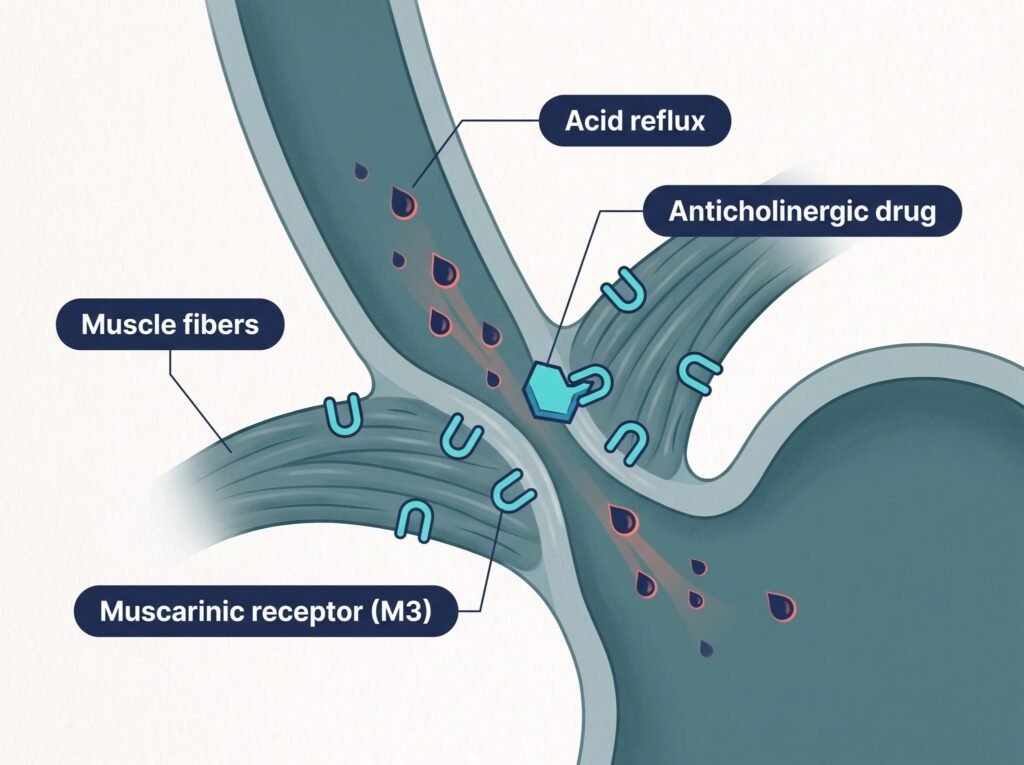
Anticholinergic drugs block the muscarinic receptors for acetylcholine. That is useful for calming an overactive bladder, but the same acetylcholine also keeps up the tone of the lower esophageal sphincter, the valve between the esophagus and the stomach. In a study in 15 healthy adults, an oral anticholinergic drug increased the time the esophagus spent in acid during the first two hours lying down, while reflux episodes in the upright position after meals fell.1 This explains why the same medicine can be fairly tolerable while someone is up and moving, and become a much bigger problem the moment they lie down, which matches Antigone's habit of lying down right after lunch.
The unusually heavy drooling she reported has an explanation too. When stomach acid reaches the esophagus, it triggers a reflex that increases saliva, known as water brash, because saliva helps neutralize the acid. It is a sign that reflux was already under way.
Why did a drug for incontinence make my reflux so much worse?
Anticholinergic drugs act on the same receptors in several places in the body, including the bladder and the lower esophageal sphincter. In people who already have some reflux, relaxing the sphincter can turn a mild, well-controlled problem into intense symptoms, especially when combined with lying down after eating. That is why prescribing anticholinergics to someone with known reflux usually calls for extra caution from the care team.
What did the tremor and poor sleep after the PPI mean?
Lansoprazole belongs to the PPIs, a group of drugs that reduce acid production effectively, but long-term use has been linked with poor absorption of magnesium and calcium. In a case series, low magnesium and low calcium after long-term PPI use showed up as neurological symptoms that reversed once they were corrected.3 Magnesium has a direct role in how excitable nerves and muscles are, so a drop in it may explain both the tremor and the disturbed sleep. In Antigone's case, her magnesium and calcium were not measured at the time, so this stays a possible explanation.
The PPI was supposed to help me, so why did I get tremor and stop sleeping instead?
PPIs reduce acid and are often prescribed exactly when someone has acid reflux. However, the longer they are used, the more likely it is that the absorption of magnesium and calcium in the gut is affected. A drop in those two minerals can show up as symptoms that look completely unrelated to the stomach, such as tremor, muscle irritability or disturbed sleep. Any change to a PPI is decided with the prescribing doctor.
How does body weight connect to the gastric phase?
Antigone's body mass index sits at 27.6, at the edge of the overweight range. Extra weight increases pressure inside the abdomen, which pushes stomach contents upward and makes reflux easier. In a meta-analysis, overweight people had 1.43 times the odds of reflux symptoms compared with people of normal weight, and people with obesity 1.94 times.2 In similar cases we have followed with this weight and reflux profile, gradual loss of even a few kilos usually comes before any other improvement in how often symptoms show up.
Reflux and its complications by body weight (odds ratio)
Hampel 2005, meta-analysis, compared with normal weight.2
Why do frequent meals and sleeping after eating add to the strain?
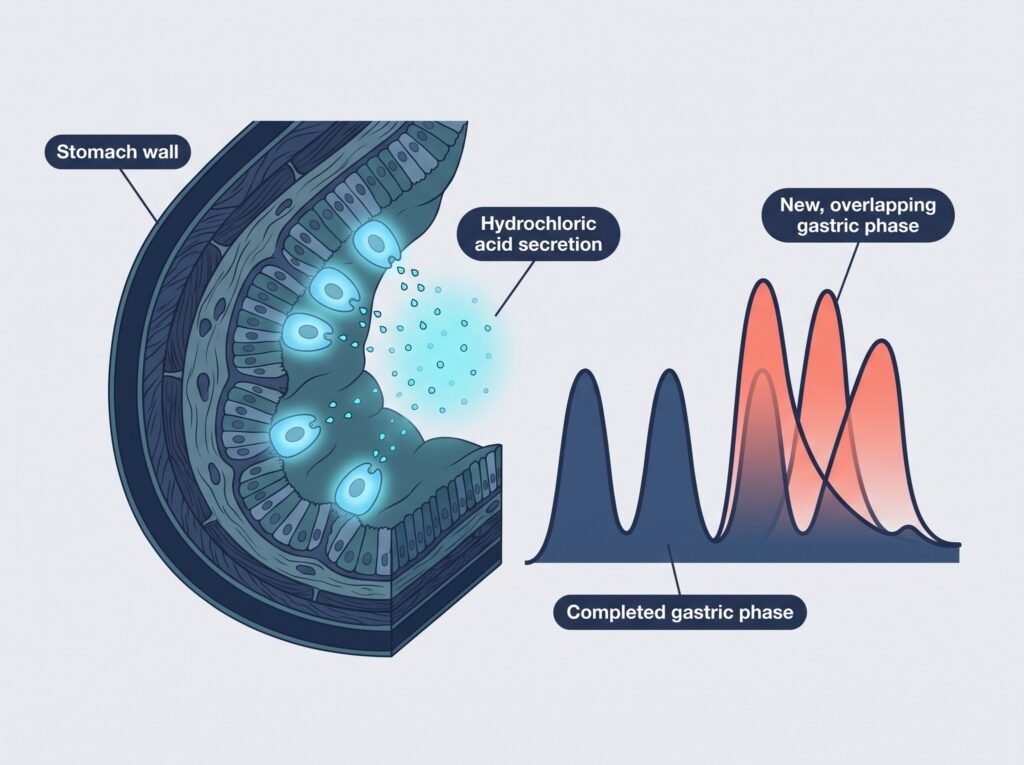
Every meal starts its own gastric phase, with hydrochloric acid secretion and a gradual emptying of the stomach that takes time to finish. Antigone eats six times a day, which means a new gastric phase often starts before the previous one has finished. The result is a stomach that stays stretched for longer, with more chances for the esophageal sphincter to relax for a moment.
Her day now
With her plan, upright after lunch
A schematic. Only 07:30, 11:00 and 13:30 are her exact meal times. The afternoon and evening meals are placed approximately, and the width of each wave is not measured.
Lunch at 1:30 pm is followed almost immediately by sleep. When someone lies down soon after eating, gravity stops helping the stomach empty, and its contents stay in contact with the esophagus for much longer than when sitting up. This is the same position effect described in the anticholinergic study.1 In people with reflux, reflux episodes during sleep were more frequent lying on the back, while lying on the right side kept acid in the esophagus for longer than lying on the left.4
How do Sjögren's syndrome, Hashimoto's thyroiditis and watermelon stomach come together?
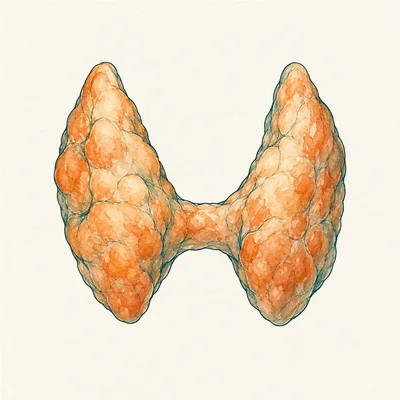
In Sjögren's syndrome, less saliva means less natural neutralizing of the acid that rises into the esophagus, so the lining is exposed for longer. Watermelon stomach has been described in people with Sjögren's syndrome and other autoimmune diseases.5 At the same time, hypothyroidism can slow the gut: in women with hypothyroidism, the stomach took 49 minutes on average to empty, against 30 minutes in healthy women.6 This adds one more reason for slower stomach emptying.

Less saliva to neutralize acid
The most common mechanism. Reduced saliva in Sjögren's syndrome leaves acid in contact with the esophagus for longer.
Slower gut movement
An added factor. Thyroid problems can slow stomach emptying, so food stays in the stomach for longer.6
A sensitive stomach lining
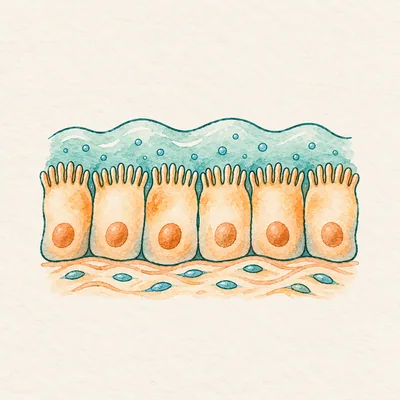
The most sensitive spot. Watermelon stomach makes the lining more prone to bleeding and pressure, which also shapes the diet changes we recommend.5
Based on all of this, we recommended fecal calprotectin, a test that had never been done in her case. The autoimmune conditions she already has are linked, in some people, with mild gut inflammation, and we wanted to see whether that adds to the overall picture.
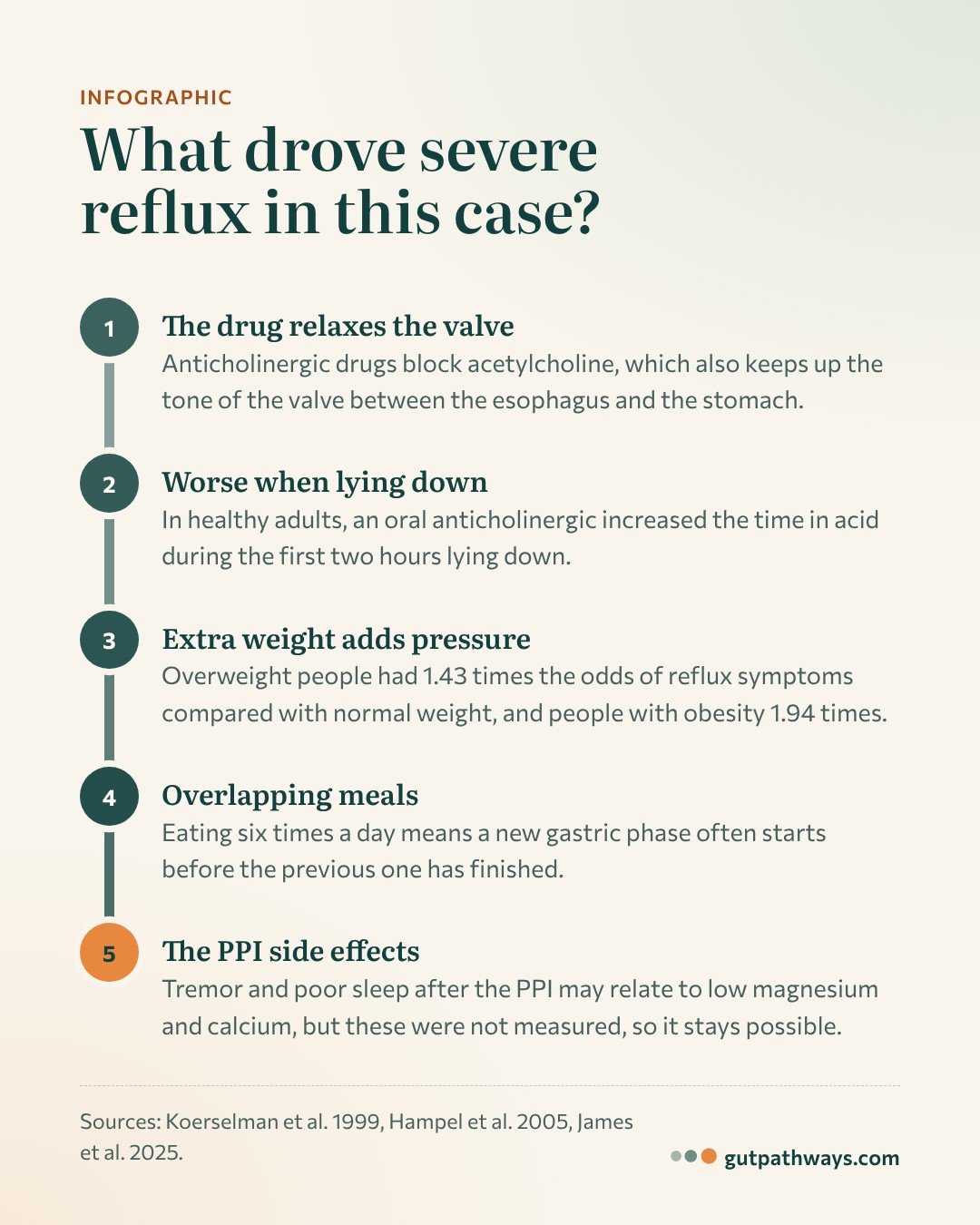
Infographic
The drug relaxes the valve
Anticholinergic drugs block acetylcholine, which also keeps up the tone of the valve between the esophagus and the stomach.
Worse when lying down
In healthy adults, an oral anticholinergic increased the time in acid during the first two hours lying down.
Extra weight adds pressure
Overweight people had 1.43 times the odds of reflux symptoms compared with normal weight, and people with obesity 1.94 times.
Overlapping meals
Eating six times a day means a new gastric phase often starts before the previous one has finished.
The PPI side effects
Tremor and poor sleep after the PPI may relate to low magnesium and calcium, but these were not measured, so it stays possible.
Sources: Koerselman et al. 1999, Hampel et al. 2005, James et al. 2025.
gutpathways.com
 Save this infographicImage 4:5, with sources, from gutpathways.com
What do we expect the fecal calprotectin test to show?
Fecal calprotectin is a marker of inflammation in the gut lining. In Antigone's case it had never been checked, even though she already has three autoimmune or autoimmune-related diagnoses.
If the result comes back raised, it would mean an added inflammatory part in the gut, beyond the mechanical strain behind her reflux, and that would shift how much weight we put on certain diet changes. If it comes back normal, it would confirm that most of the problem sits in the mechanics of her stomach and sphincter, the same mechanisms explained above. At the time of this case, the result was still pending.
What do we recommend, and how do we think it will help?
Out of all her recommendations, we picked the five that most directly address the mechanics of her reflux: her weight, the gastric phase, sleeping after meals and protecting her already sensitive stomach lining.
Why we recommend soup for dinner
Liquid meals, such as soup, shorten the gastric phase, because they need less mechanical breakdown and less hydrochloric acid to move on to the next stage of digestion. That means less strain on the stomach lining overnight, which matters especially in her case because of watermelon stomach, where the lining is already more prone to damage and bleeding.
How proper acid secretion depends on how she eats
The burping she still has is often a sign of unbalanced acid secretion during the gastric phase. We recommend chewing food thoroughly, so the stomach has less work to do, and avoiding drinks during meals and for 60 minutes after, so the acid keeps its full strength. We also recommend pairing animal protein with vegetables while limiting starch on the same plate. Because stress hormones strongly affect the gastric phase, we also recommend eating without distractions, with no phone or screen at the table.
Why we recommend not sleeping right after a meal
As we explained above, lying down right after lunch removes the help of gravity in emptying the stomach and lengthens the time acid stays in contact with the esophagus.1, 4 We recommend that she stays upright or seated for 2 to 3 hours after lunch, even if that means moving her afternoon nap later.
Why we recommend less bread, to bring her weight into the normal range
She eats bread 7 days a week and potatoes 4 days a week, two sources of refined carbohydrate that help keep her weight in the overweight range. As we showed above, extra weight is linked with a higher risk of reflux symptoms.2 We recommend that she gradually swaps part of her bread for other sources of protein and vegetables at breakfast and in the afternoon.
Why we recommend more fluids until 8 pm
In Sjögren's syndrome, a dry mouth gets worse when fluid intake drops earlier in the day. Getting enough fluids through the day helps keep the mucous membranes moist and supports her bones, which matters because of her osteoporosis. We recommend that she gradually increases her water until 8 pm, without drinking large amounts right before or during meals, for the reasons explained above.
Every case is different, so Antigone's plan describes her care and is not a plan for anyone else. Any change to her medicines stays with her doctors.
Why do we believe these changes will help?
The five changes treat her reflux as the result of specific mechanisms we mapped in her history: her weight, how often she eats, her body position after eating and the state of her already sensitive mucous membranes. Weight and reflux go together in large studies, and the risk rises step by step with weight.2
What this means for her daily life
Sjögren's syndrome and Hashimoto's thyroiditis remain autoimmune conditions, and none of our recommendations target them directly. However, a large part of her reflux comes from factors that can change: her weight, how many meals she eats and what they contain, and when she lies down. In similar cases we have followed with this mix of autoimmune conditions and mechanical strain, burping and dry cough usually improve before any change on the scale.
We believe that a lighter gastric phase in the evening, gradual weight loss, no sleep right after meals and enough fluids through the day will help Antigone reduce how often and how intensely her symptoms appear. More on how meal timing affects the stomach is in is snacking bad for digestion.
Frequently asked questions
Anticholinergic drugs block the muscarinic receptors for acetylcholine. They are commonly used for incontinence and overactive bladder, certain breathing conditions and some neurological conditions.
The same receptors they block in the bladder also exist in the lower esophageal sphincter. Blocking them relaxes the sphincter and slows stomach emptying, which makes reflux easier, especially lying down.1
Several groups of medicines can relax the lower esophageal sphincter, slow the stomach or irritate the esophagus, and anticholinergic drugs are one of them. If reflux starts or gets worse after a new medicine, the prescribing doctor can review it. Medicines should not be stopped without medical advice.
It is a condition of widened blood vessels in the lining of the lower part of the stomach, which can cause bleeding and anemia. It has been described with autoimmune conditions, including Sjögren's syndrome.5
Extra weight increases pressure inside the abdomen and the risk of reflux. A large meta-analysis found higher odds of reflux symptoms in both overweight and obese people compared with people of normal weight.2
References
6 studies
- Koerselman J, Pursnani KG, Peghini P, et al. Different effects of an oral anticholinergic drug on gastroesophageal reflux in upright and supine position in normal, ambulant subjects: a pilot study. Am J Gastroenterol. 1999.
- Hampel H, Abraham NS, El-Serag HB. Meta-analysis: obesity and the risk for gastroesophageal reflux disease and its complications. Ann Intern Med. 2005.
- James L, Rajan G, Devarajan D, Mohan A. Neurological manifestations associated with hypomagnesemia due to proton-pump inhibitors: a case series. Cureus. 2025.
- Khoury RM, Camacho-Lobato L, Katz PO, et al. Influence of spontaneous sleep positions on nighttime recumbent reflux in patients with gastroesophageal reflux disease. Am J Gastroenterol. 1999.
- Goel A, Christian CL. Gastric antral vascular ectasia (watermelon stomach) in a patient with Sjögren's syndrome. J Rheumatol. 2003.
- Yaylali O, Kirac S, Yilmaz M, et al. Does hypothyroidism affect gastrointestinal motility? Gastroenterol Res Pract. 2009.
Found this useful? Share it with someone who needs it.
Cite this article
Prevedoros, T. (2026, September 11). An anticholinergic drug made acid reflux severe. Gut Pathways. https://gutpathways.com/case-studies/acid-reflux-from-anticholinergic-drugs/