Intestinal permeabilityCarousel
Is carrageenan bad for you?
Carrageenan (E407) is a seaweed additive found in creamy ice cream, chocolate milk, dairy desserts and deli meats. It is considered safe, and the amount per serving is small. However, lab studies link it to gut inflammation, and a 2024 human trial found higher gut permeability. Here is what the evidence shows, slide by slide.
13 pictures. Swipe sideways, or use the left and right arrow keys.
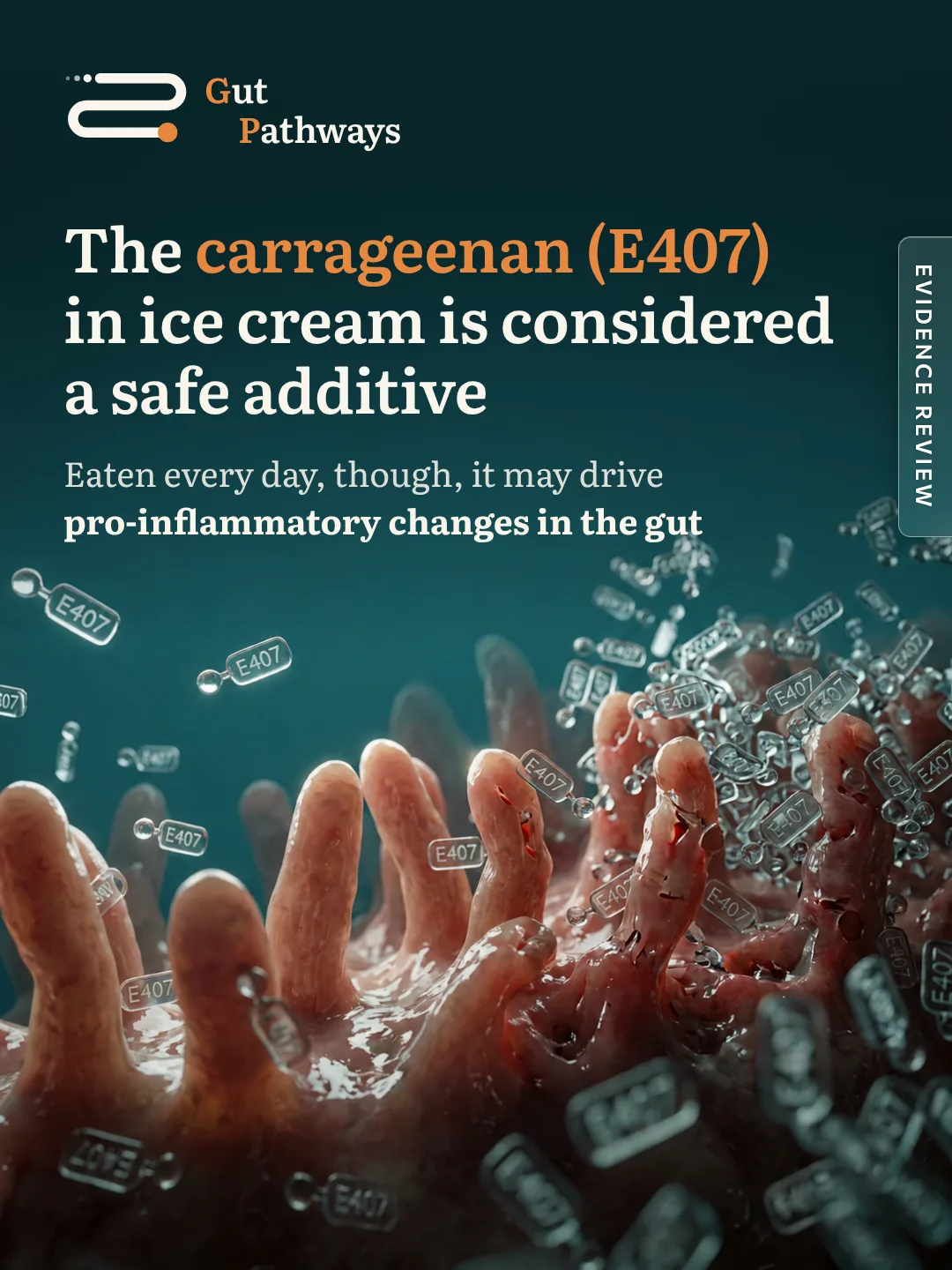
01 The carrageenan (E407) in ice cream is considered a safe additive
Eaten every day, though, it may drive pro-inflammatory changes in the gut.
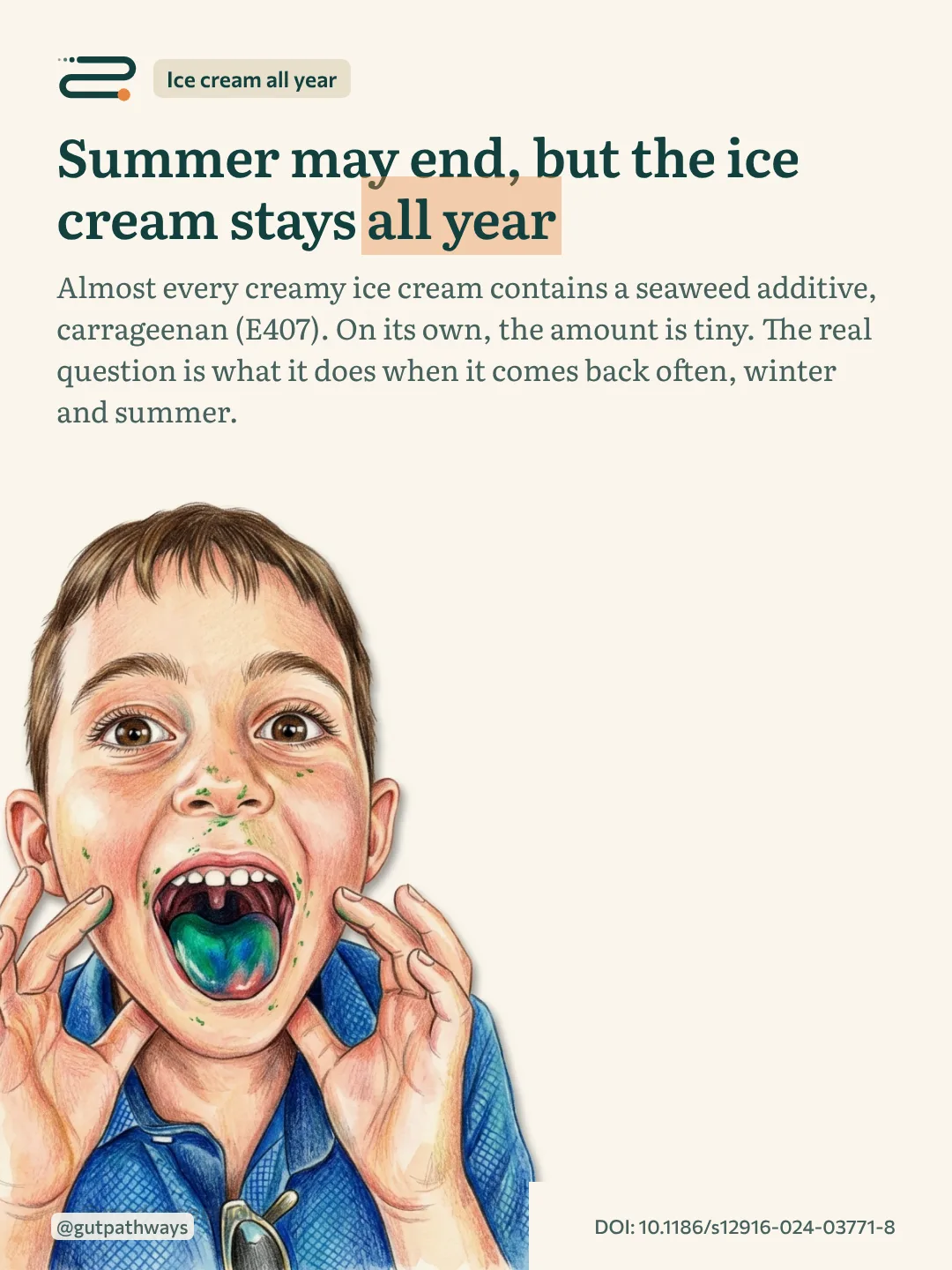
02 Summer may end, but the ice cream stays all year
Almost every creamy ice cream contains a seaweed additive, carrageenan (E407). On its own, the amount is tiny. The real question is what it does when it comes back often, winter and summer.
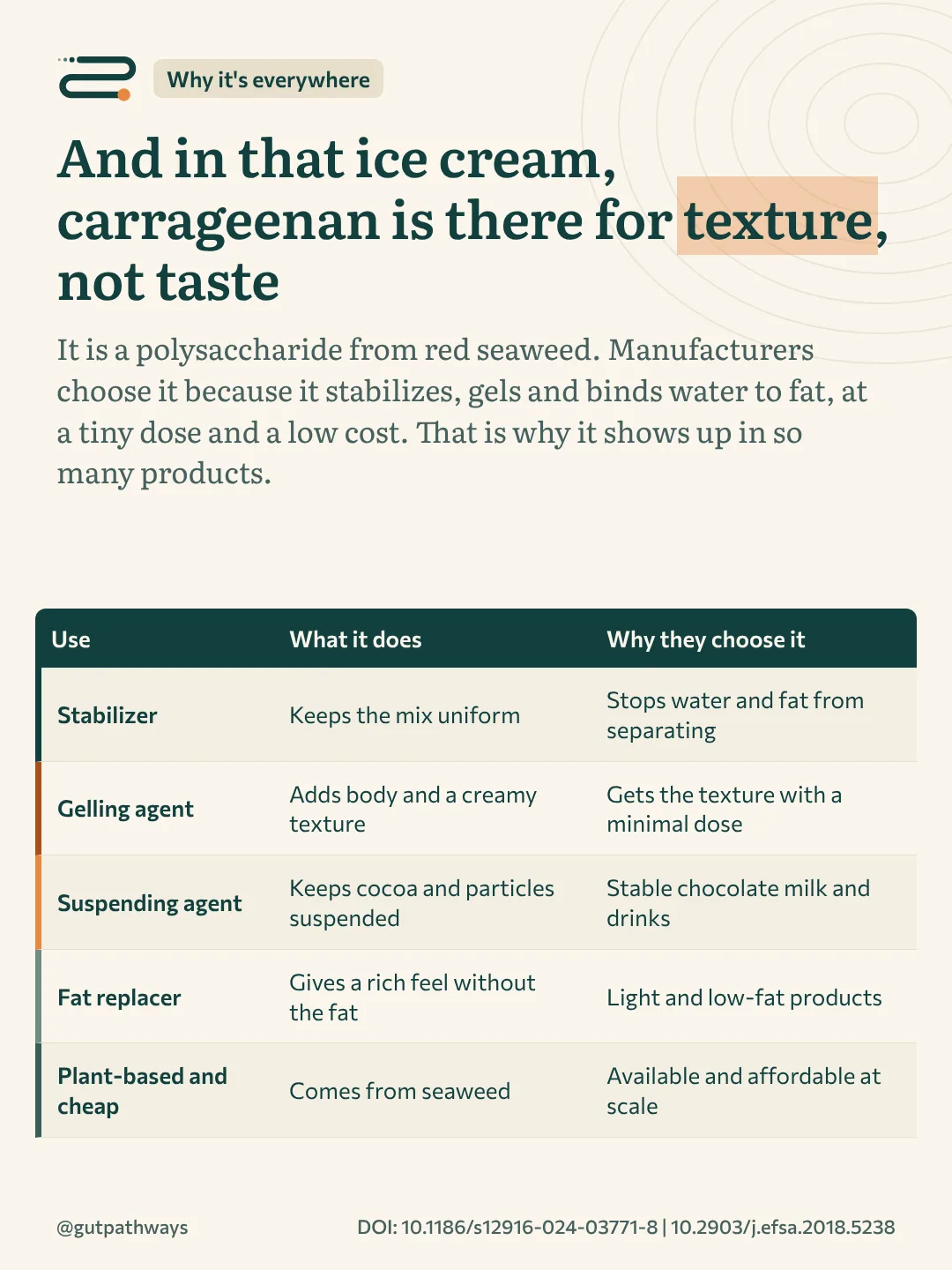
03 And in that ice cream, carrageenan is there for texture, not taste
It is a polysaccharide from red seaweed. Manufacturers choose it because it stabilizes, gels and binds water to fat, at a tiny dose and a low cost. That is why it shows up in so many products.
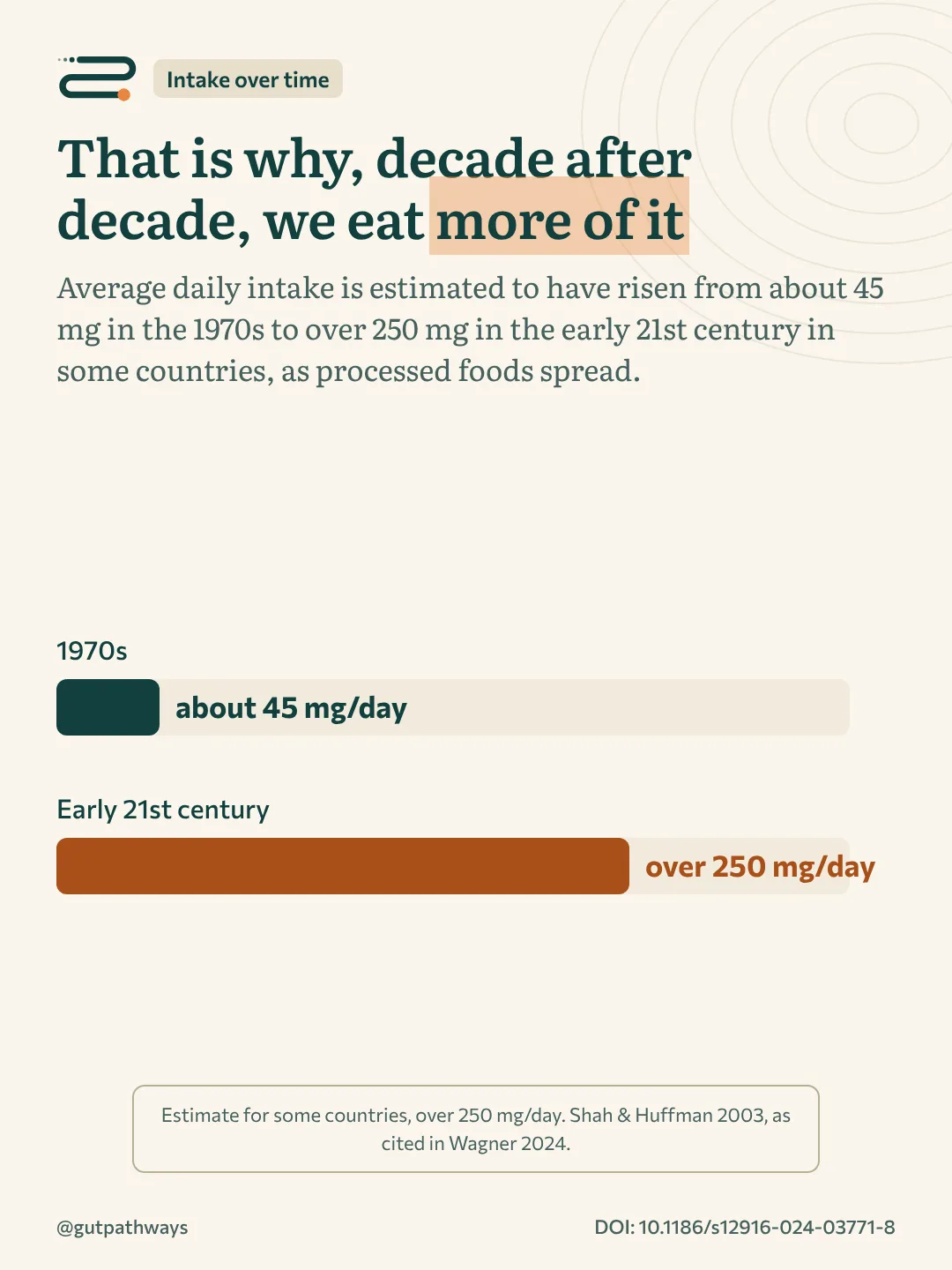
04 That is why, decade after decade, we eat more of it
Average daily intake is estimated to have risen from about 45 mg in the 1970s to over 250 mg in the early 21st century in some countries, as processed foods spread.
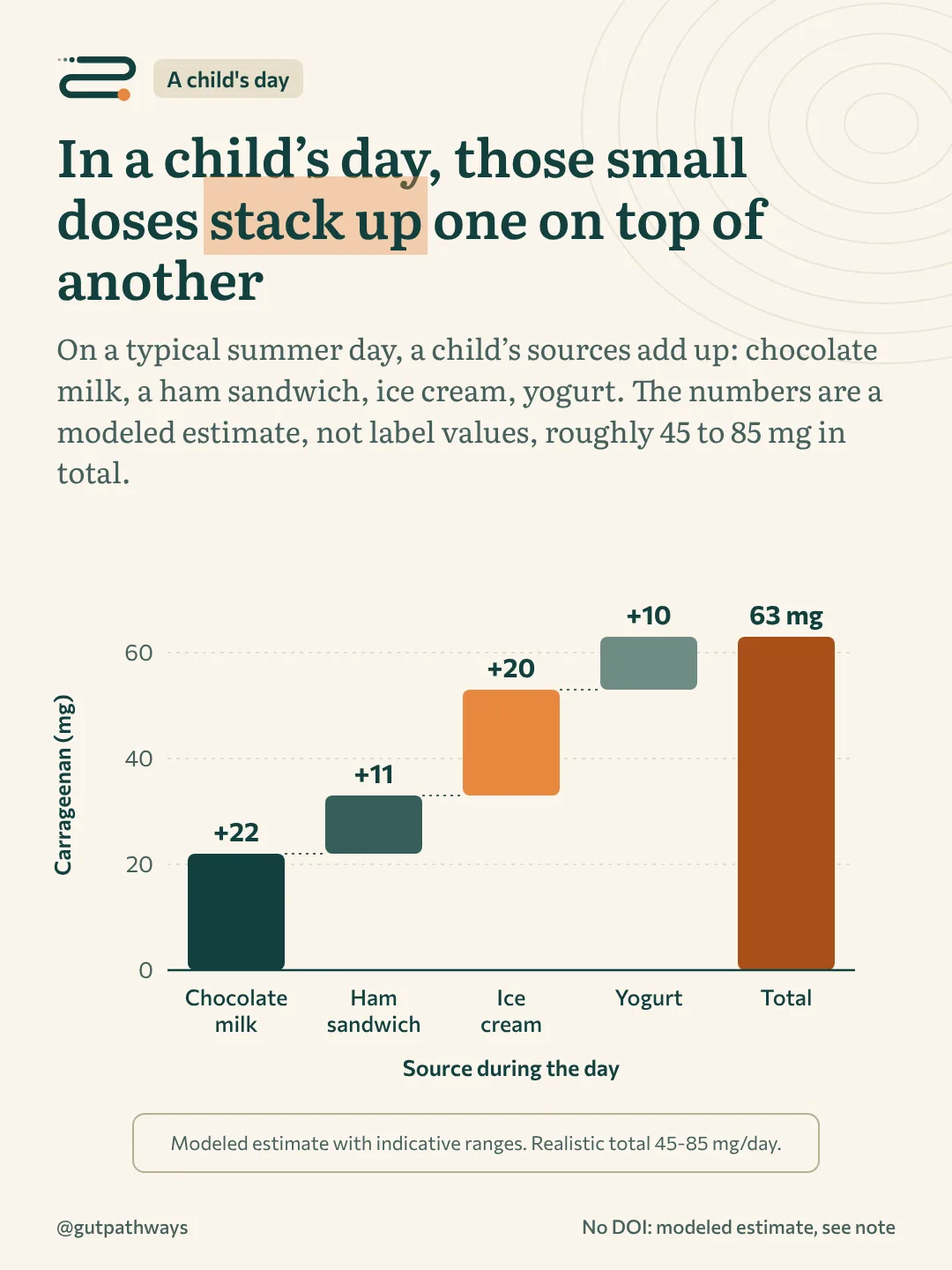
05 In a child's day, those small doses stack up one on top of another
On a typical summer day, a child's sources add up: chocolate milk, a ham sandwich, ice cream, yogurt. The numbers are a modeled estimate, not label values, roughly 45 to 85 mg in total.
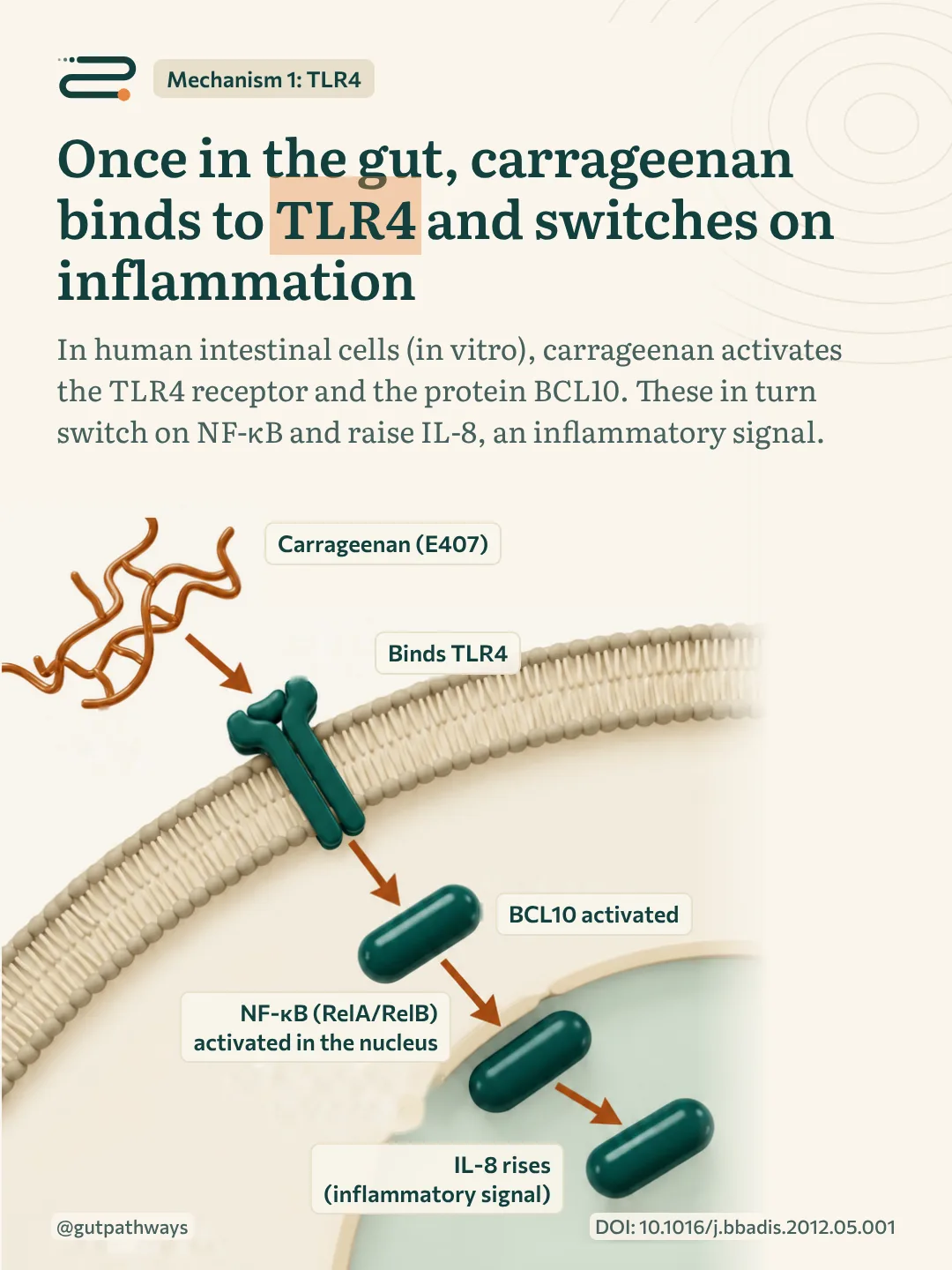
06 Once in the gut, carrageenan binds to TLR4 and switches on inflammation
In human intestinal cells (in vitro), carrageenan activates the TLR4 receptor and the protein BCL10. These in turn switch on NF-κB and raise IL-8, an inflammatory signal.
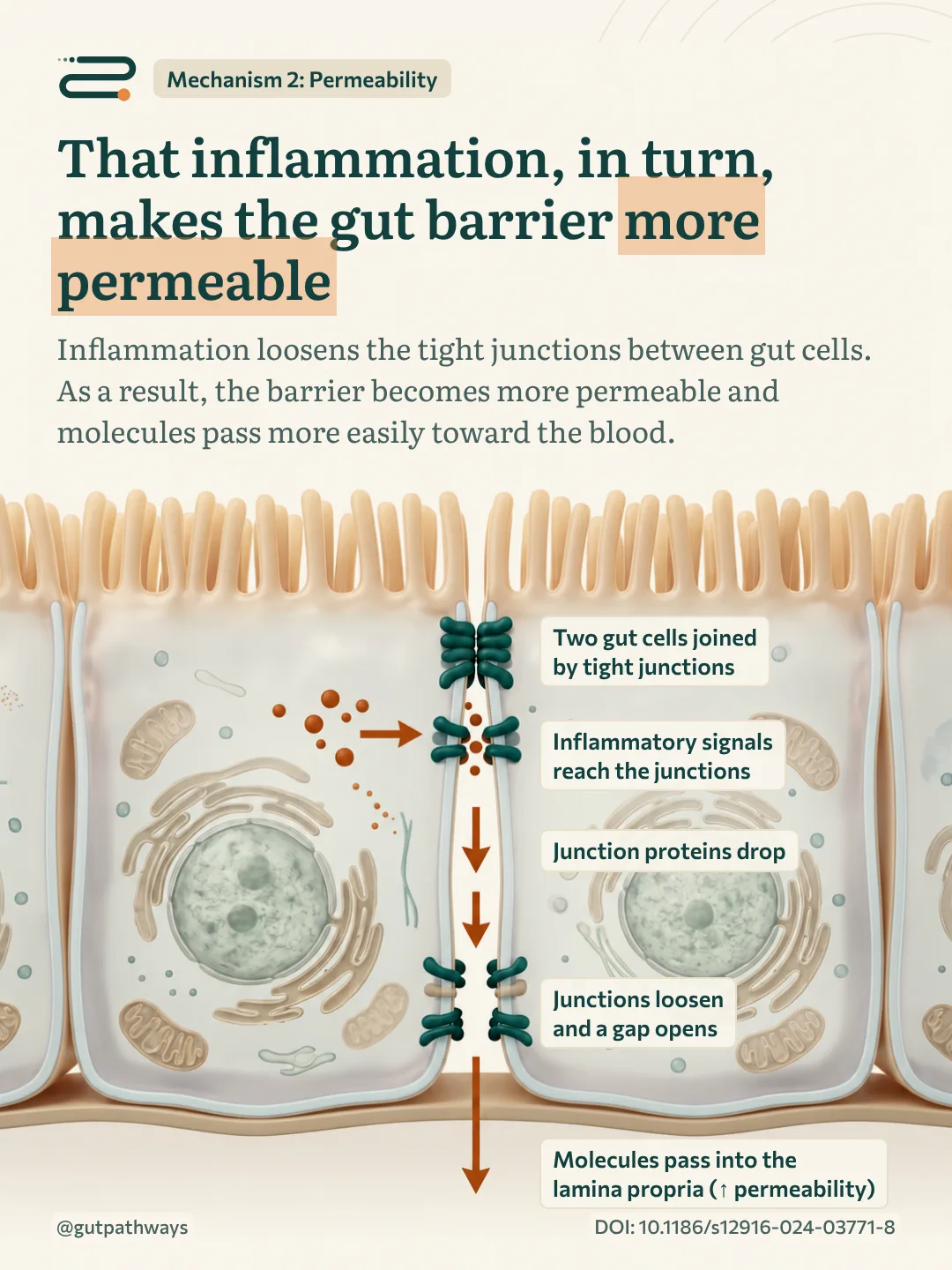
07 That inflammation, in turn, makes the gut barrier more permeable
Inflammation loosens the tight junctions between gut cells. As a result, the barrier becomes more permeable and molecules pass more easily toward the blood.
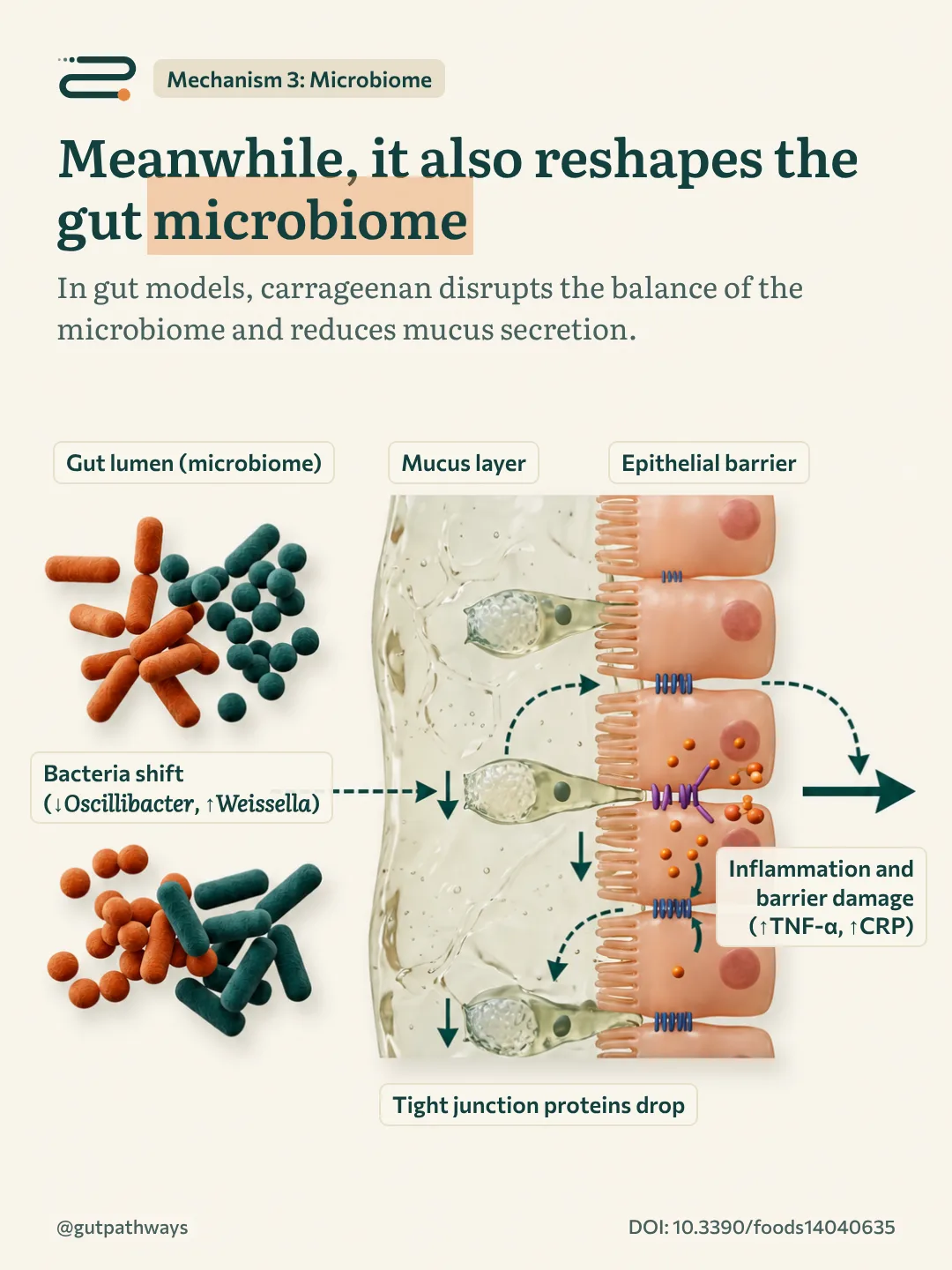
08 Meanwhile, it also reshapes the gut microbiome
In gut models, carrageenan disrupts the balance of the microbiome and reduces mucus secretion.
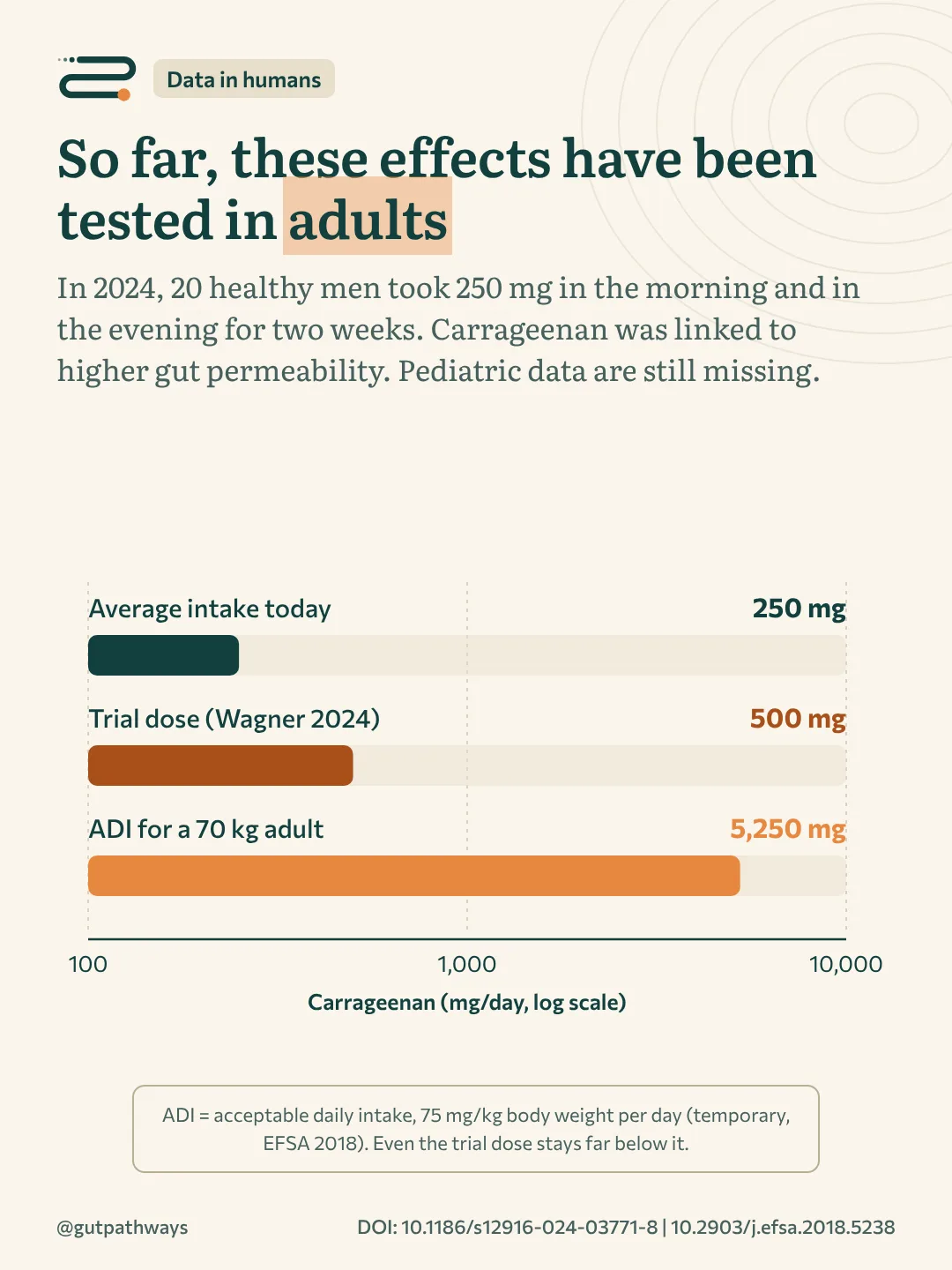
09 So far, these effects have been tested in adults
In 2024, 20 healthy men took 250 mg in the morning and in the evening for two weeks. Carrageenan was linked to higher gut permeability. Pediatric data are still missing.
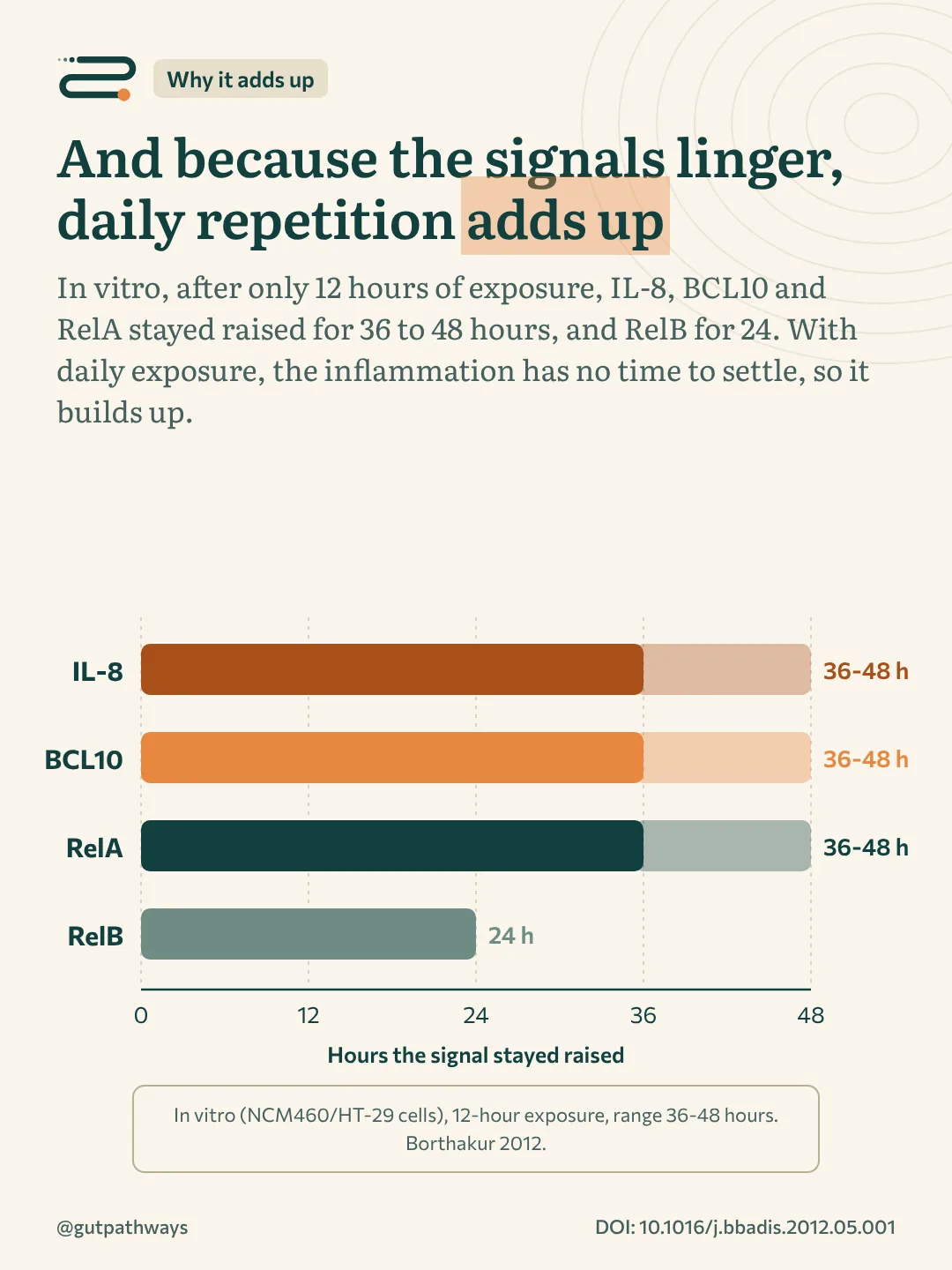
10 And because the signals linger, daily repetition adds up
In vitro, after only 12 hours of exposure, IL-8, BCL10 and RelA stayed raised for 36 to 48 hours, and RelB for 24. With daily exposure, the inflammation has no time to settle, so it builds up.
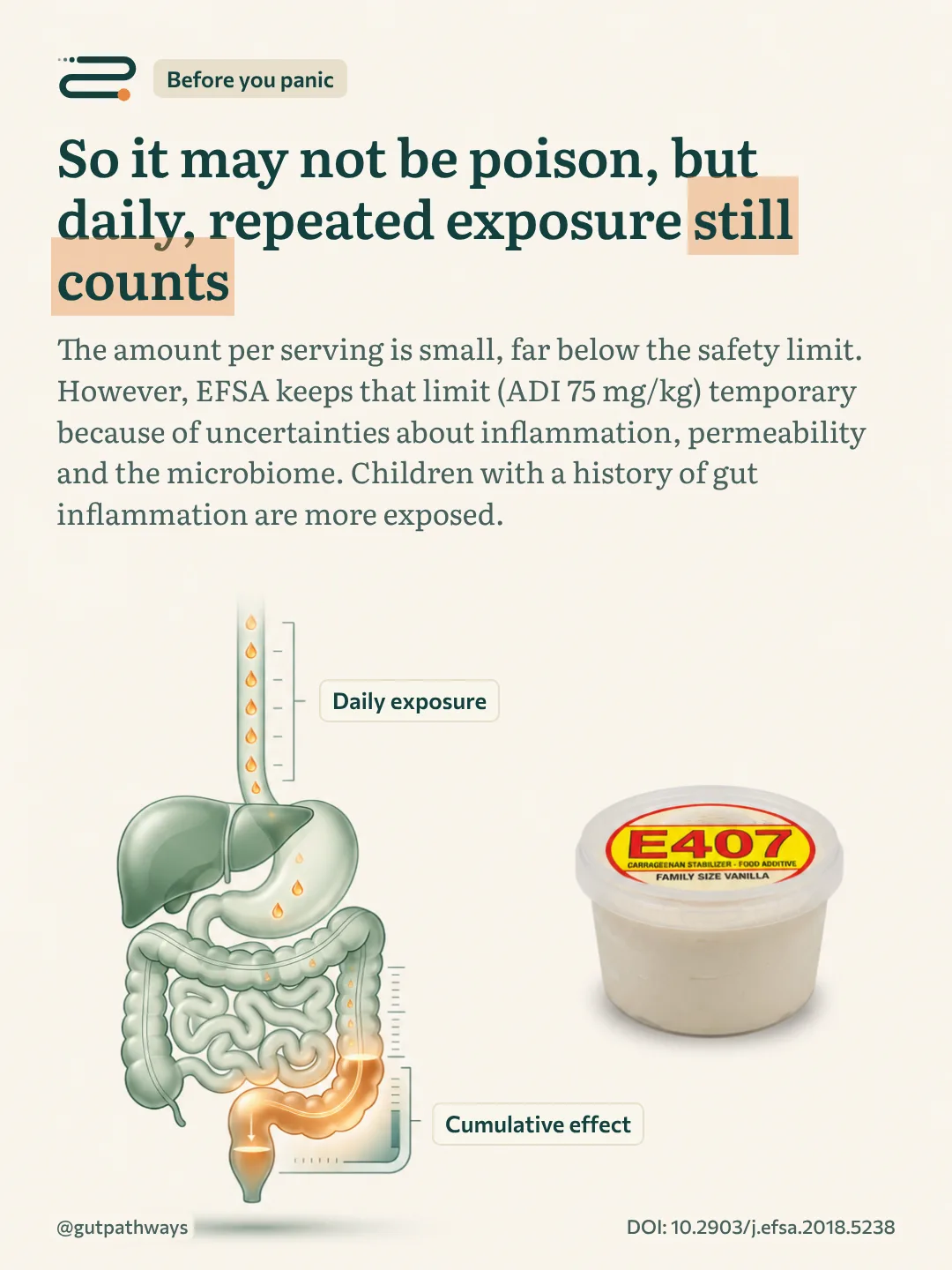
11 So it may not be poison, but daily, repeated exposure still counts
The amount per serving is small, far below the safety limit. However, EFSA keeps that limit (ADI 75 mg/kg) temporary because of uncertainties about inflammation, permeability and the microbiome. Children with a history of gut inflammation are more exposed.
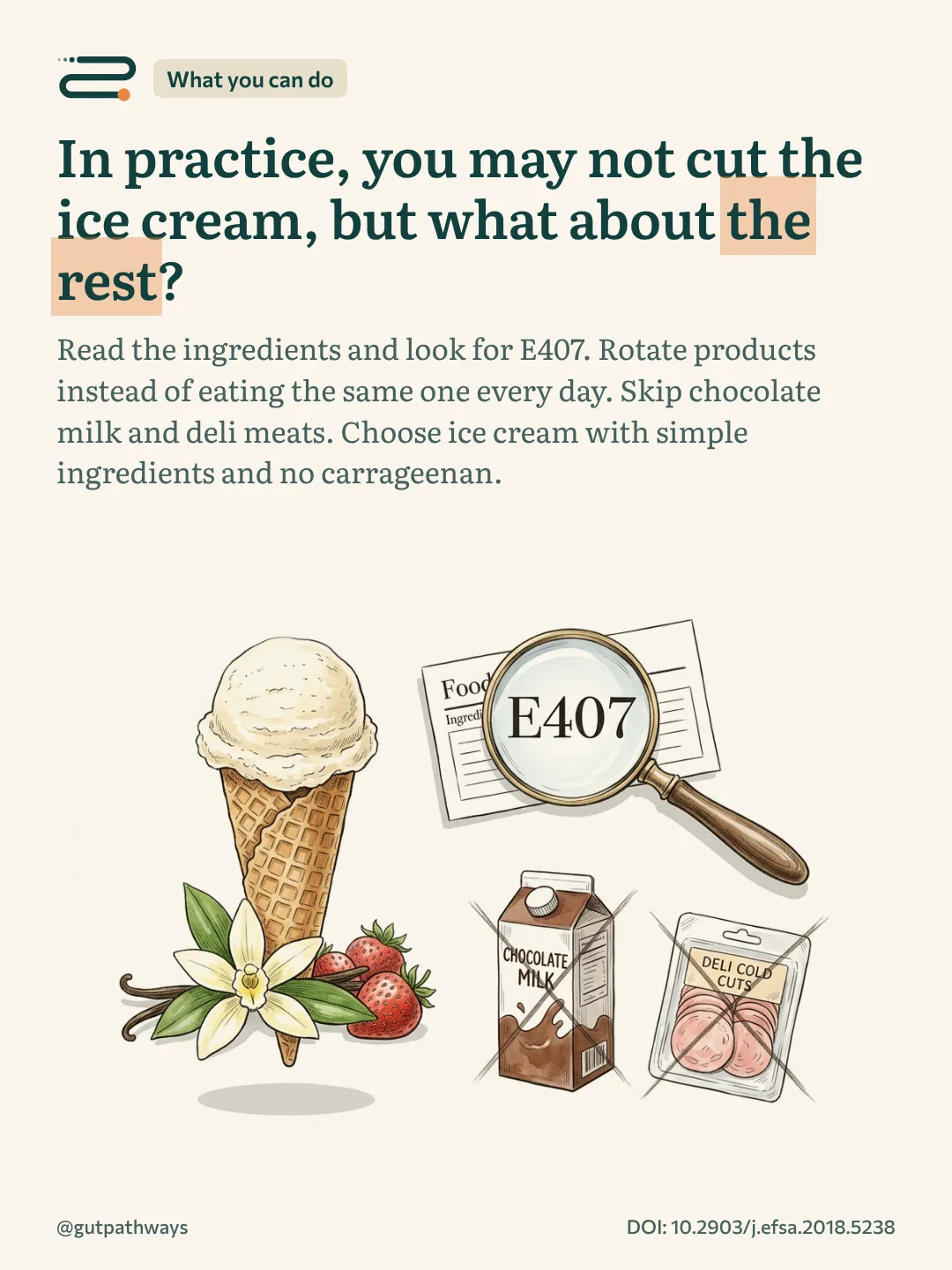
12 In practice, you may not cut the ice cream, but what about the rest?
Read the ingredients and look for E407. Rotate products instead of eating the same one every day. Skip chocolate milk and deli meats. Choose ice cream with simple ingredients and no carrageenan.
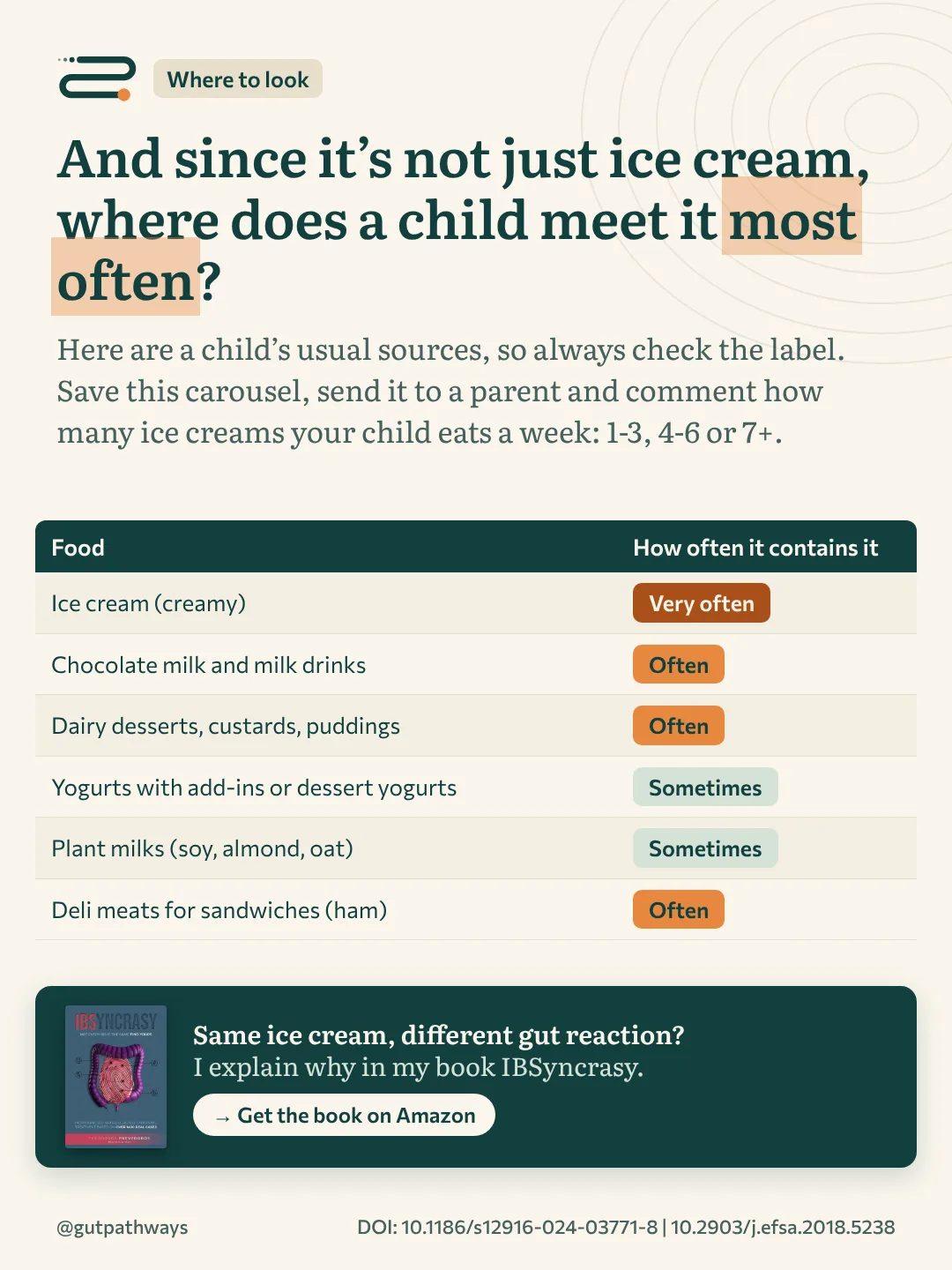
13 And since it's not just ice cream, where does a child meet it most often?
Here are a child's usual sources, so always check the label.
Sources
- Wagner et al. 2024, BMC Medicine. DOI 10.1186/s12916-024-03771-8
- Borthakur et al. 2012, Biochimica et Biophysica Acta. DOI 10.1016/j.bbadis.2012.05.001
- EFSA 2018, Re-evaluation of carrageenan (E 407). DOI 10.2903/j.efsa.2018.5238
- Foods 2025, food matrix and carrageenan. DOI 10.3390/foods14040635