Carousel
Does Sugar Cause Bloating? The Sucrase Enzyme | Gut Pathways
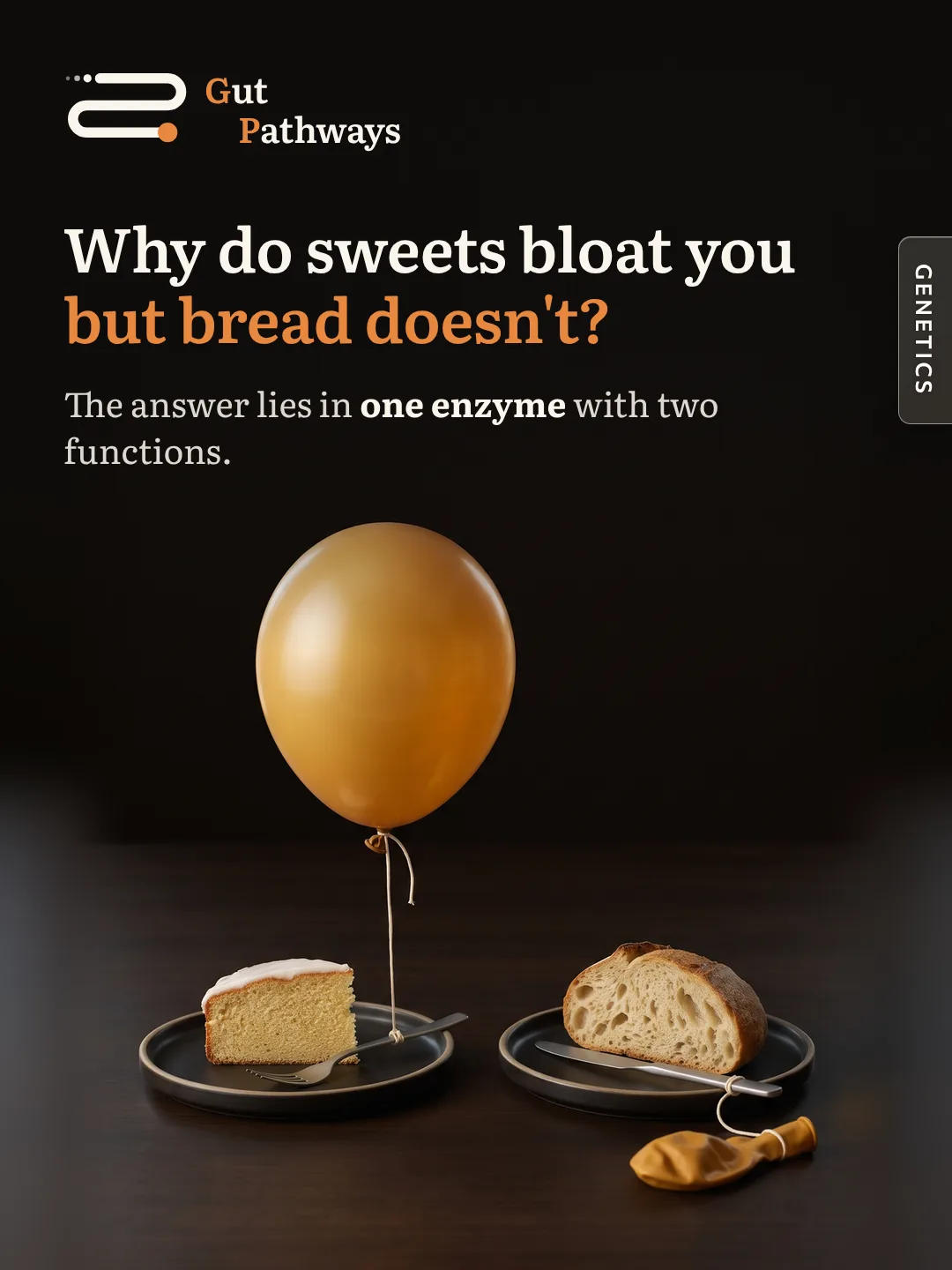
Does sugar cause bloating while bread does not? One enzyme with two active sites, sucrase-isomaltase, and what a 357,058-person study found.

8 pictures. Swipe sideways, or use the left and right arrow keys.
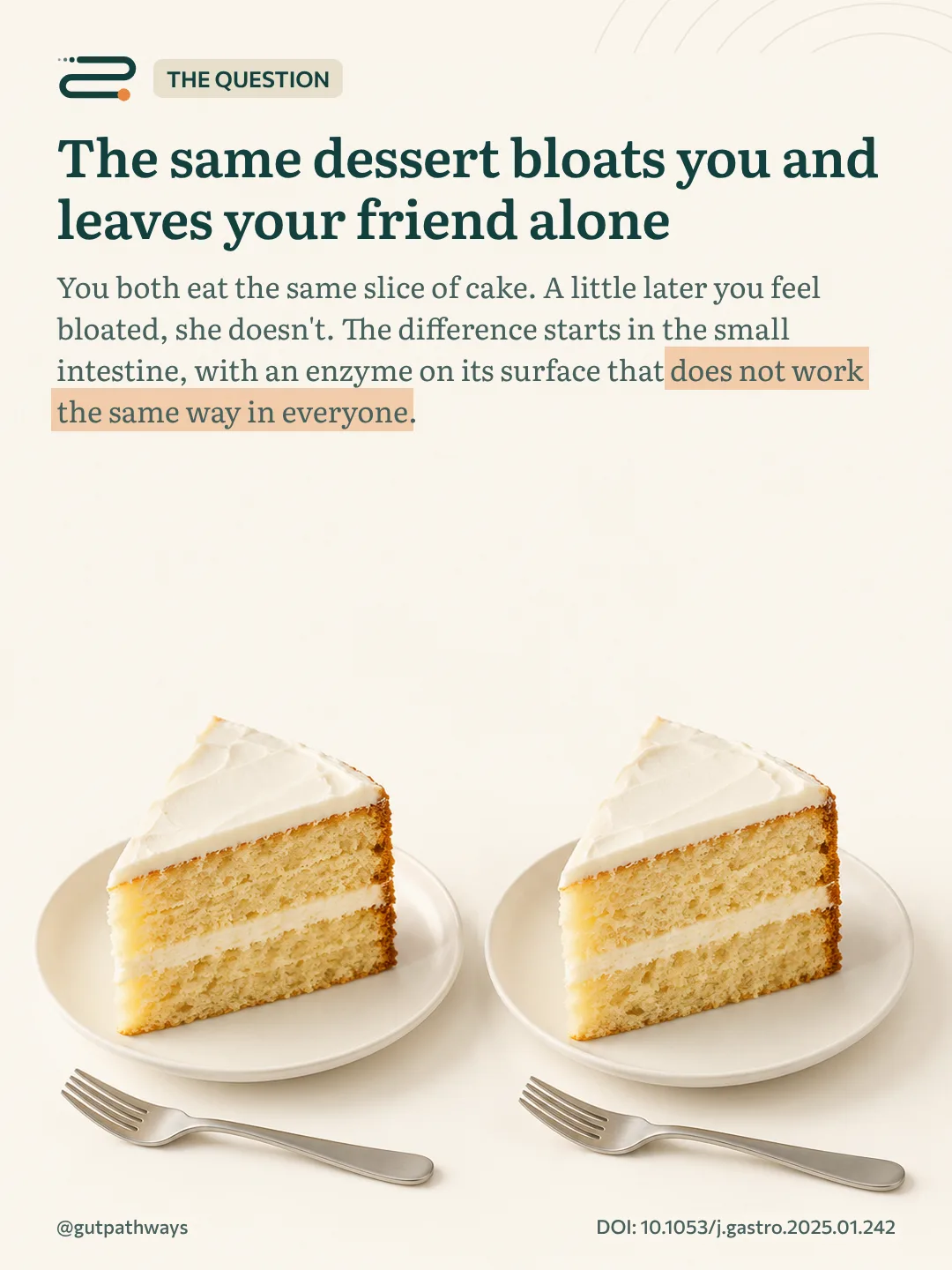
02 The same dessert bloats you and leaves your friend alone
You both eat the same slice of cake. A little later you feel bloated, she doesn't. The difference starts in the small intestine, with an enzyme on its surface that does not work the same way in everyone.
03 It is one single enzyme with two active sites that cut different bonds
Sucrase-isomaltase is one protein with two active sites. Sucrase splits table sugar (sucrose) into glucose and fructose. Isomaltase cuts the alpha-1,6 bonds where starch branches.
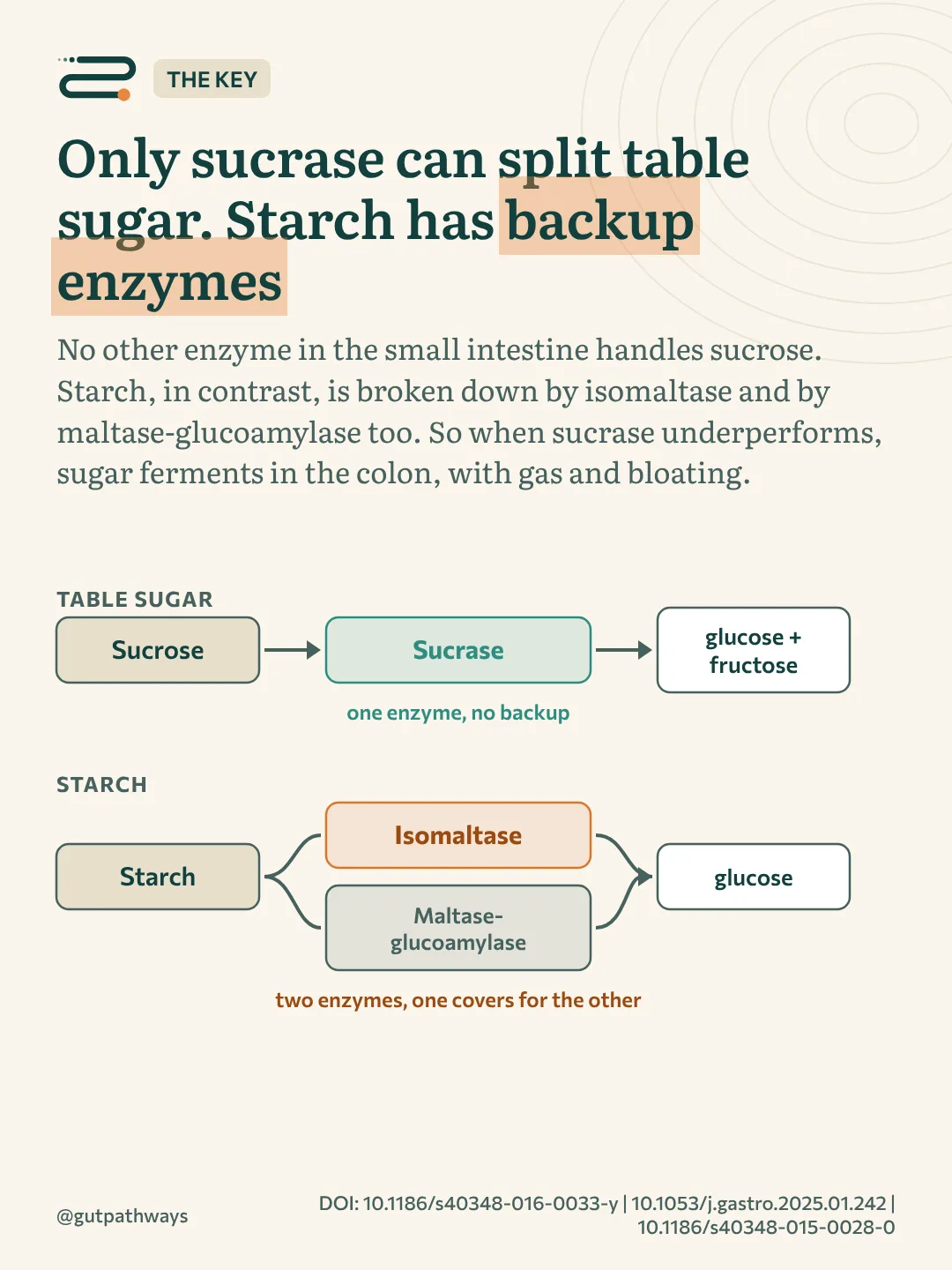
04 Only sucrase can split table sugar. Starch has backup enzymes
No other enzyme in the small intestine handles sucrose. Starch, in contrast, is broken down by isomaltase and by maltase-glucoamylase too. So when sucrase underperforms, sugar ferments in the colon, with gas and bloating.
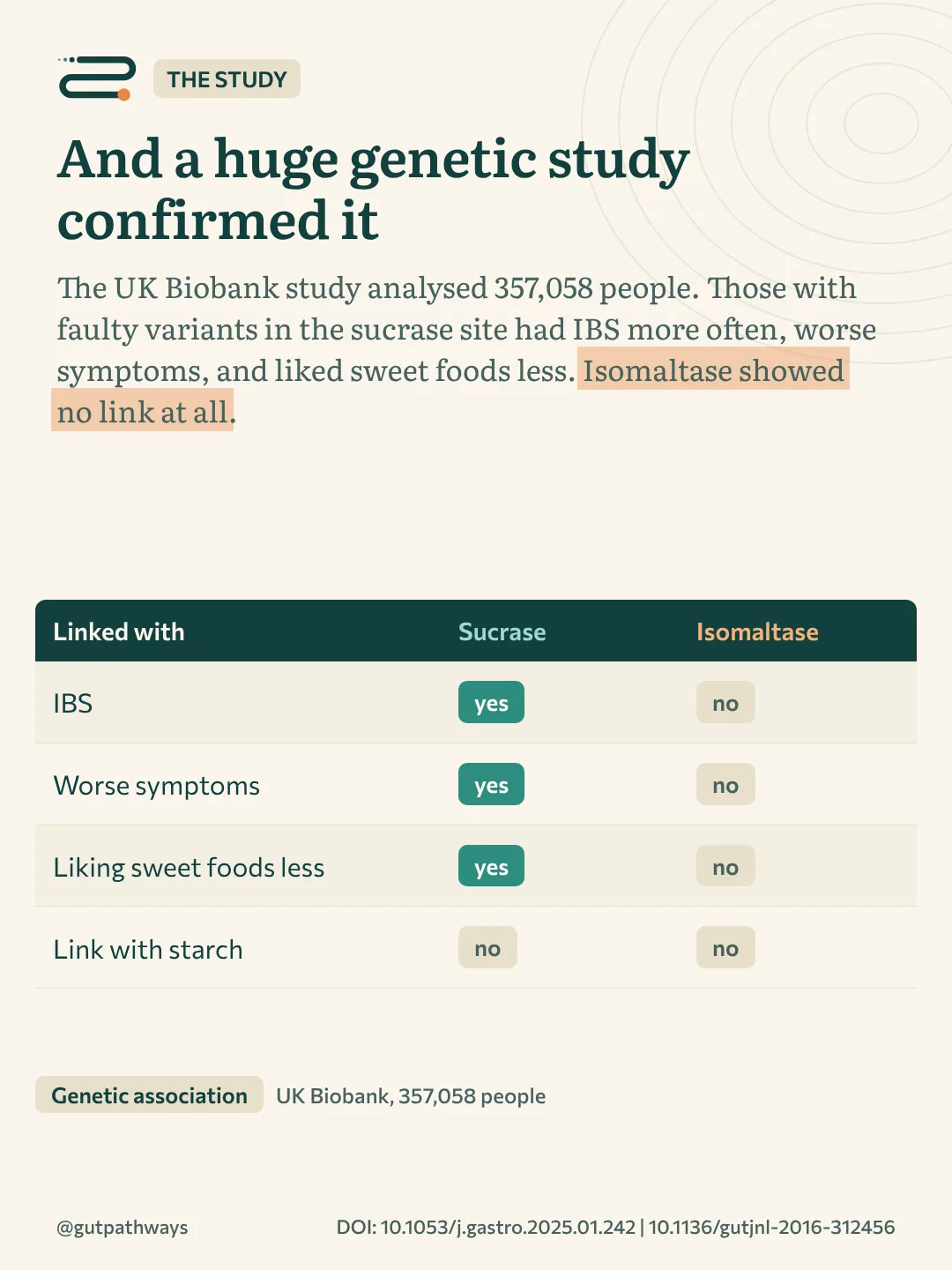
05 And a huge genetic study confirmed it
The UK Biobank study analysed 357,058 people. Those with faulty variants in the sucrase site had IBS more often, worse symptoms, and liked sweet foods less. Isomaltase showed no link at all.
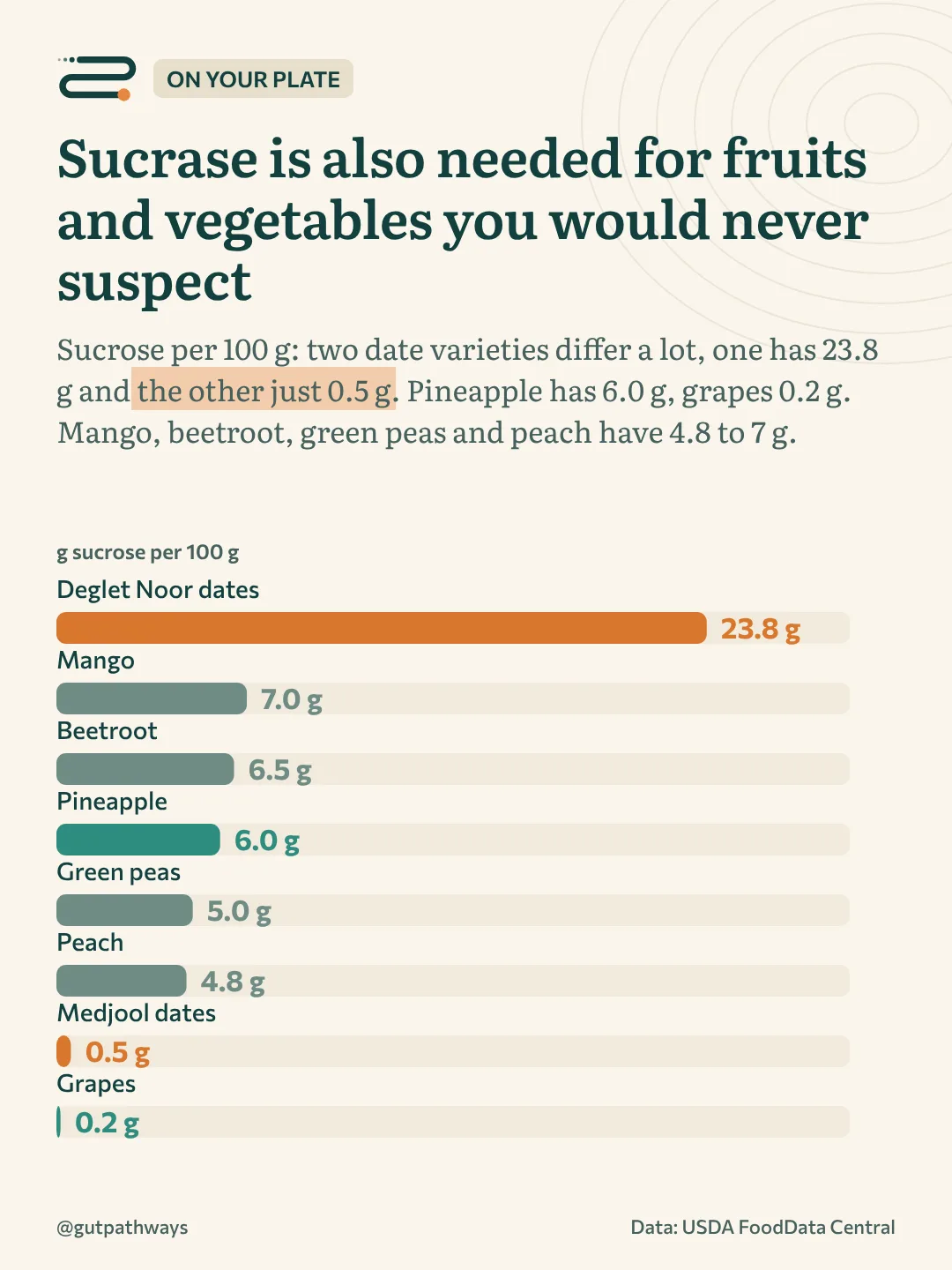
06 Sucrase is also needed for fruits and vegetables you would never suspect
Sucrose per 100 g: two date varieties differ a lot, one has 23.8 g and the other just 0.5 g. Pineapple has 6.0 g, grapes 0.2 g. Mango, beetroot, green peas and peach have 4.8 to 7 g.
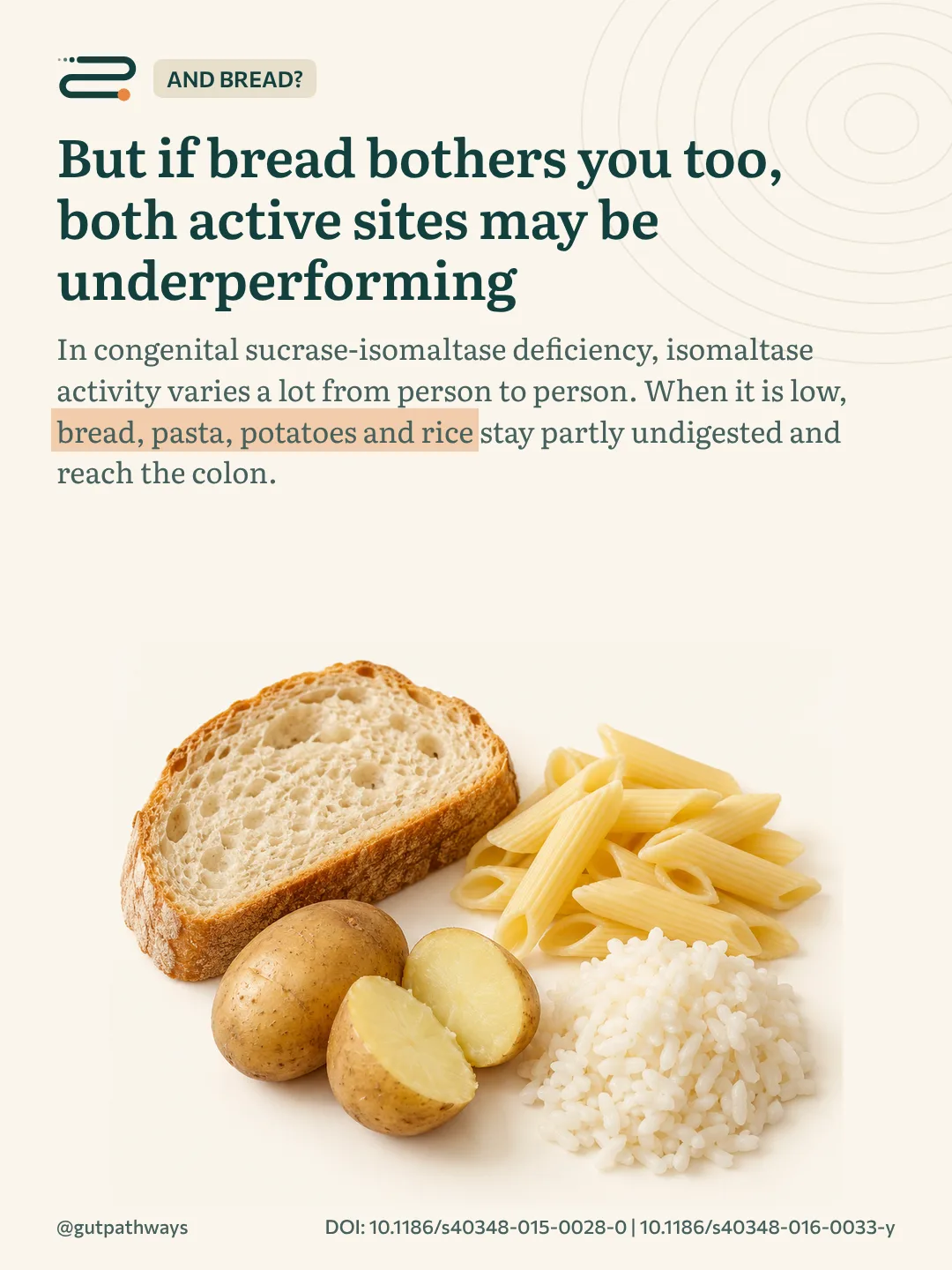
07 But if bread bothers you too, both active sites may be underperforming
In congenital sucrase-isomaltase deficiency, isomaltase activity varies a lot from person to person. When it is low, bread, pasta, potatoes and rice stay partly undigested and reach the colon.
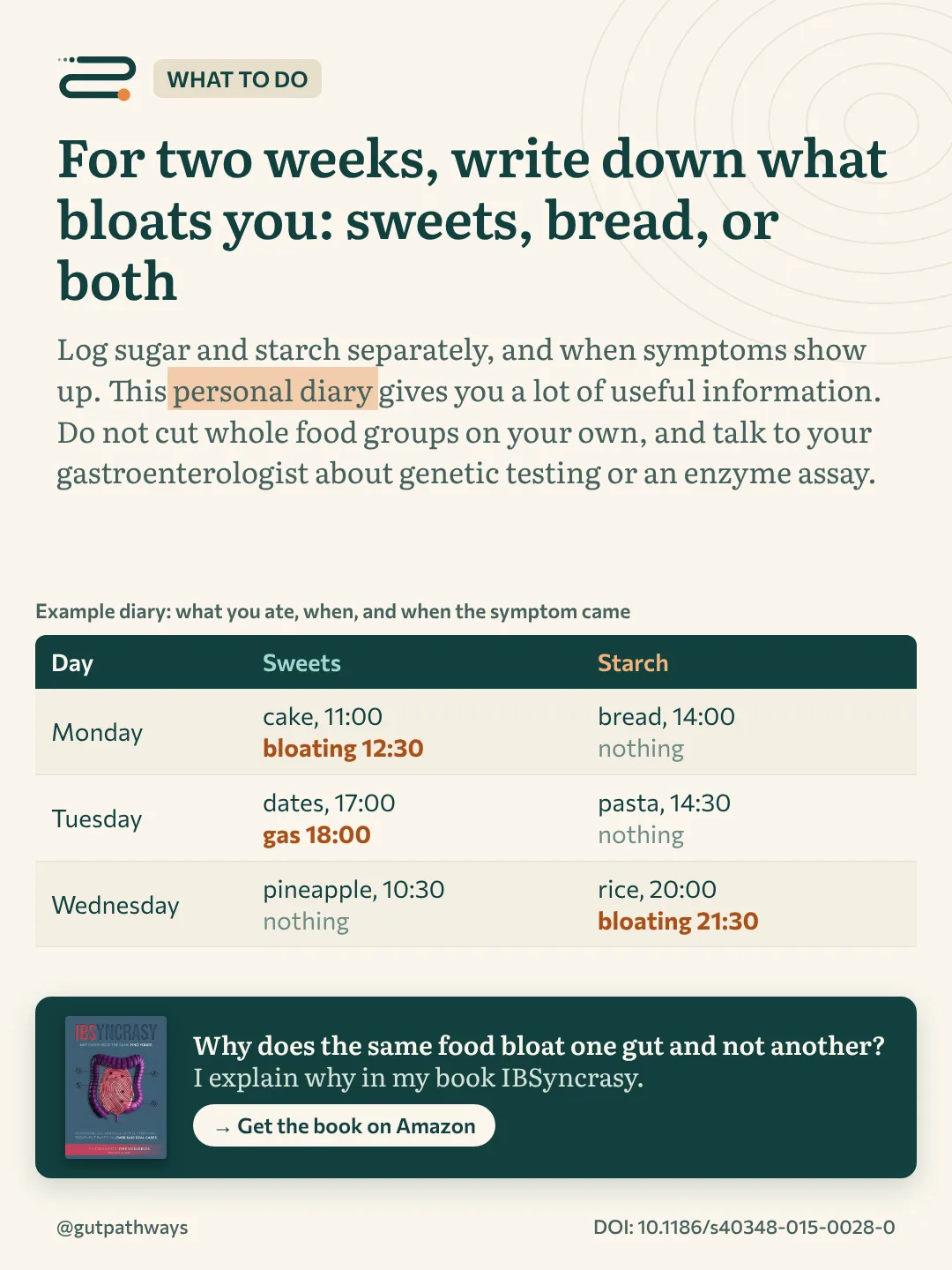
08 For two weeks, write down what bloats you: sweets, bread, or both
Log sugar and starch separately, and when symptoms show up. This personal diary gives you a lot of useful information. Do not cut whole food groups on your own, and talk to your gastroenterologist about genetic testing or an enzyme assay.
Video for section 2: 03-does-sugar-cause-bloating-sucrase.mp4 (poster 03-does-sugar-cause-bloating-sucrase.webp)
> Why does the same food bloat one gut and not another? I explain why in my book IBSyncrasy. [Get the book on Amazon](https://www.amazon.com/IBSyncrasy-Individualized-irritable-syndrome-treatment-ebook/dp/B0DPLMQ8V5)
Sources
- Torices L et al. Gastroenterology 2025. DOI 10.1053/j.gastro.2025.01.242
- Henström M et al. Gut 2018. DOI 10.1136/gutjnl-2016-312456
- Gericke B et al. Mol Cell Pediatr 2016. DOI 10.1186/s40348-016-0033-y
- Cohen SA. Mol Cell Pediatr 2016. DOI 10.1186/s40348-015-0028-0
- Sim L et al. J Biol Chem 2010. DOI 10.1074/jbc.M109.078980
- USDA FoodData Central, SR Legacy