Carousel
Colon cancer before 50 and the colibactin signature
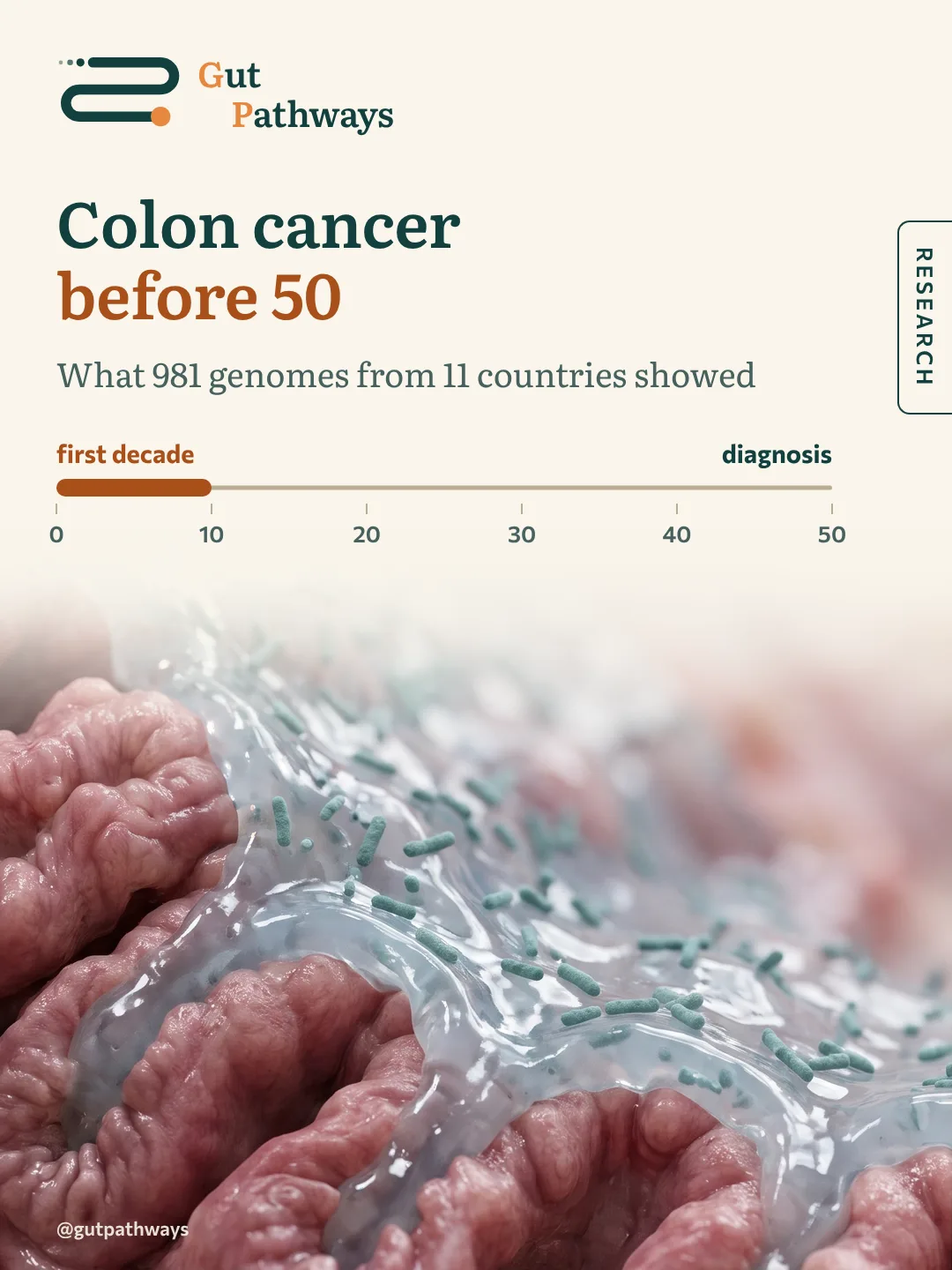
Colorectal cancer in people under 50 has been rising for two decades. In 2025 a study in Nature read the DNA of 981 tumours from 11 countries and found a pattern of damage left by colibactin, a genotoxin made by certain strains of E. coli. The pattern was far more common in younger patients, and it appears to be written in the first ten years of life. This page walks through what the evidence shows, what it does not show, and which part of it you can act on.

9 pictures. Swipe sideways, or use the left and right arrow keys.
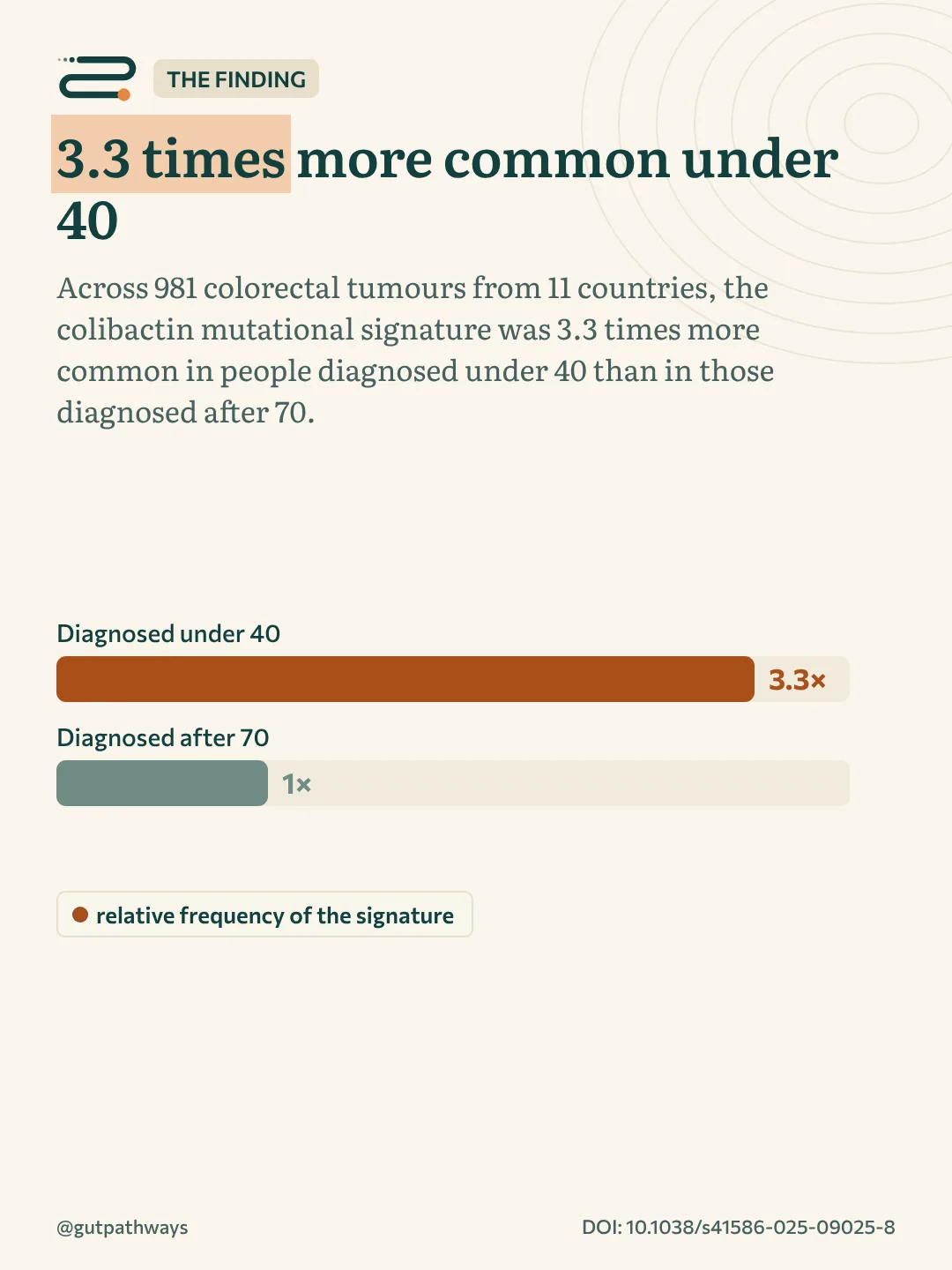
02 3.3 times more common under 40
Across 981 colorectal tumours from 11 countries, the colibactin mutational signature was 3.3 times more common in people diagnosed under 40 than in those diagnosed after 70.
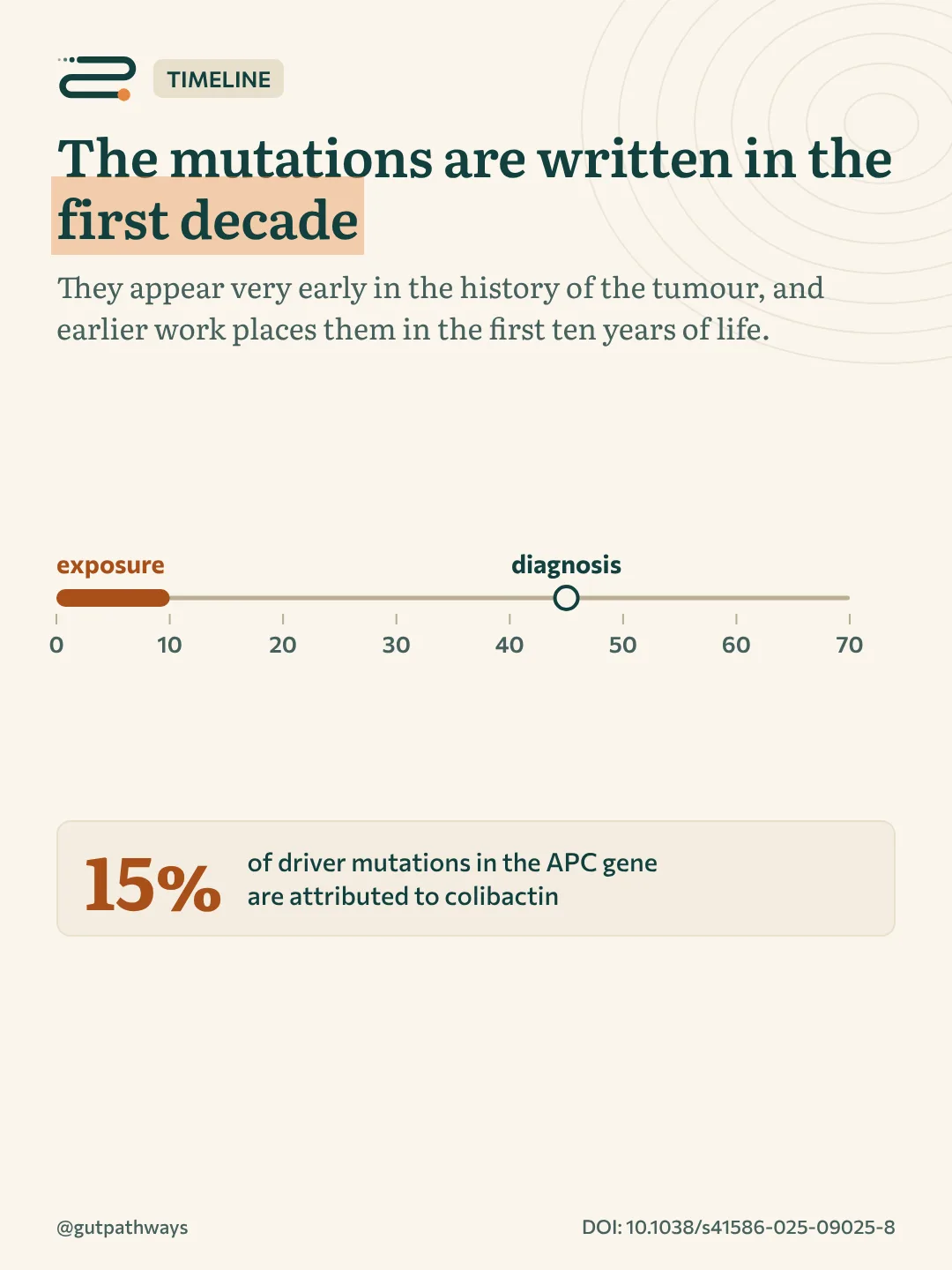
03 The mutations are written in the first decade
They appear very early in the history of the tumour, and earlier work places them in the first ten years of life. They account for roughly 15% of driver mutations in the APC gene.
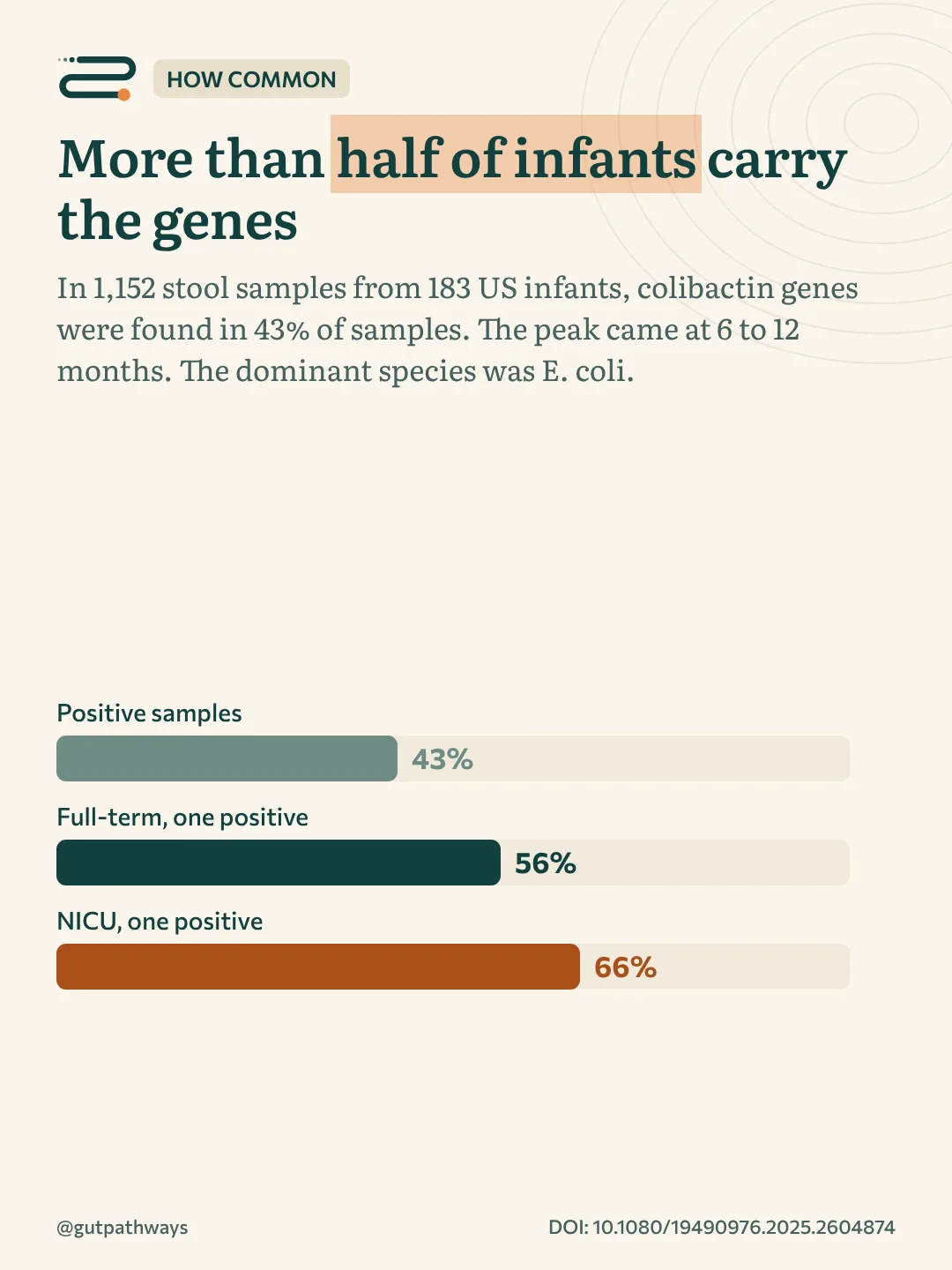
04 More than half of infants carry the genes
In 1,152 stool samples from 183 US infants, colibactin genes were found in 43% of samples. The peak came at 6 to 12 months. The dominant species was E. coli.
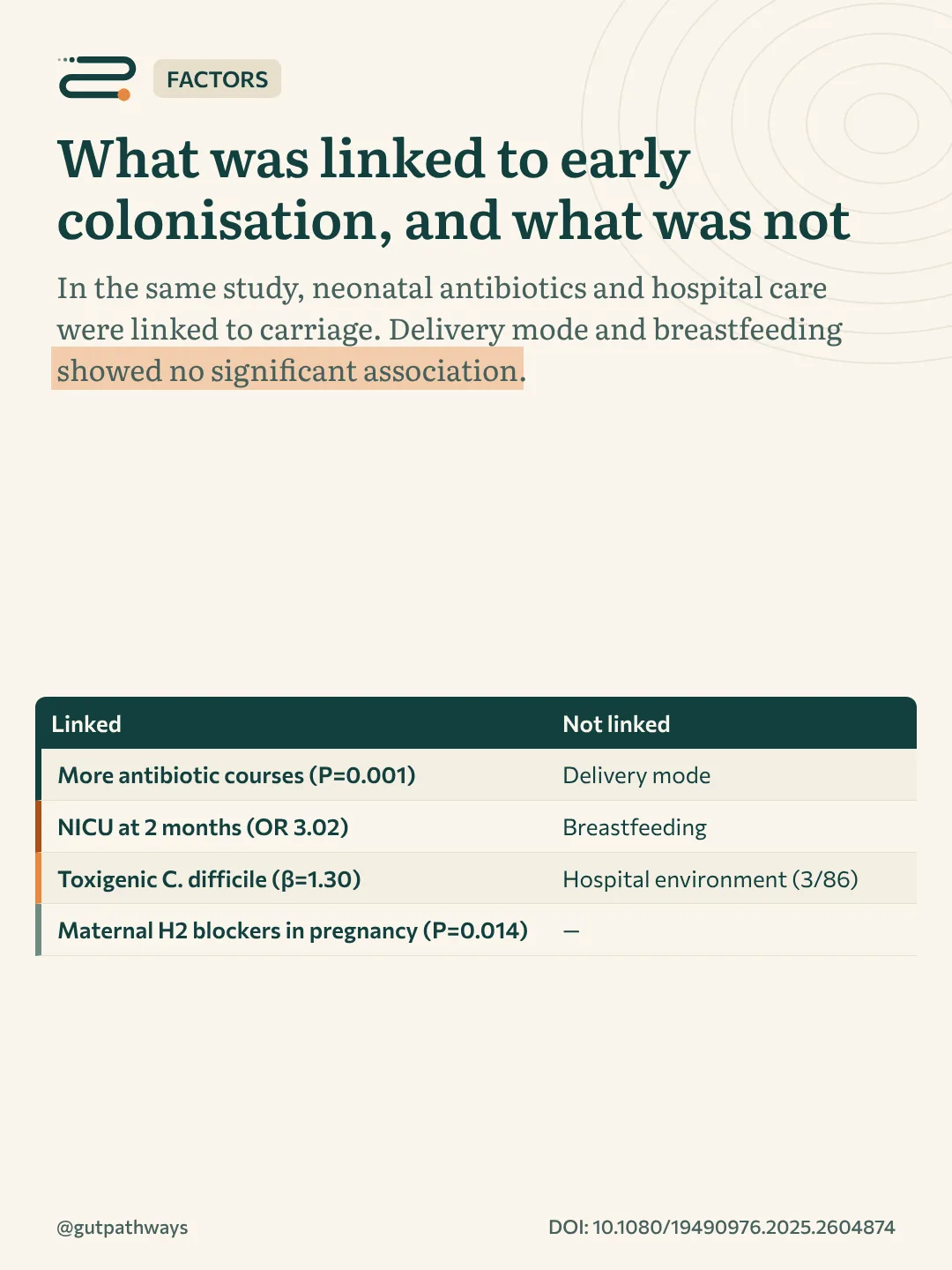
05 What was linked to early colonisation, and what was not
In the same study, neonatal antibiotics and hospital care were linked to carriage. Delivery mode and breastfeeding showed no significant association.
06 From colonisation to damage
Inflammation lowers PPAR-γ signalling in the epithelium, nitrate rises in the lumen, and pks+ E. coli expands while colibactin damages DNA. Data in mice.
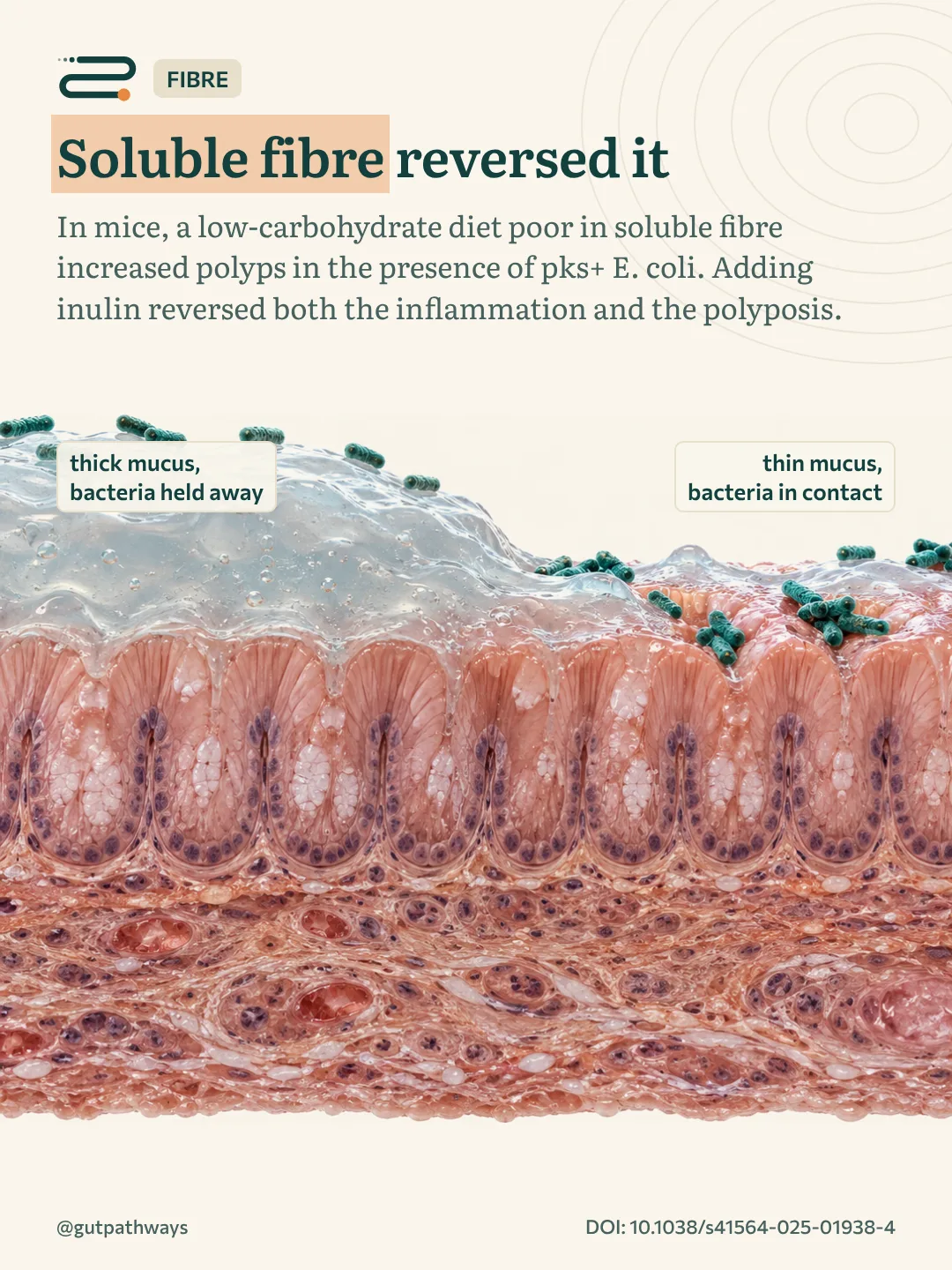
07 Soluble fibre reversed it
In mice, a low-carbohydrate diet poor in soluble fibre increased polyps in the presence of pks+ E. coli. Adding inulin reversed both the inflammation and the polyposis.
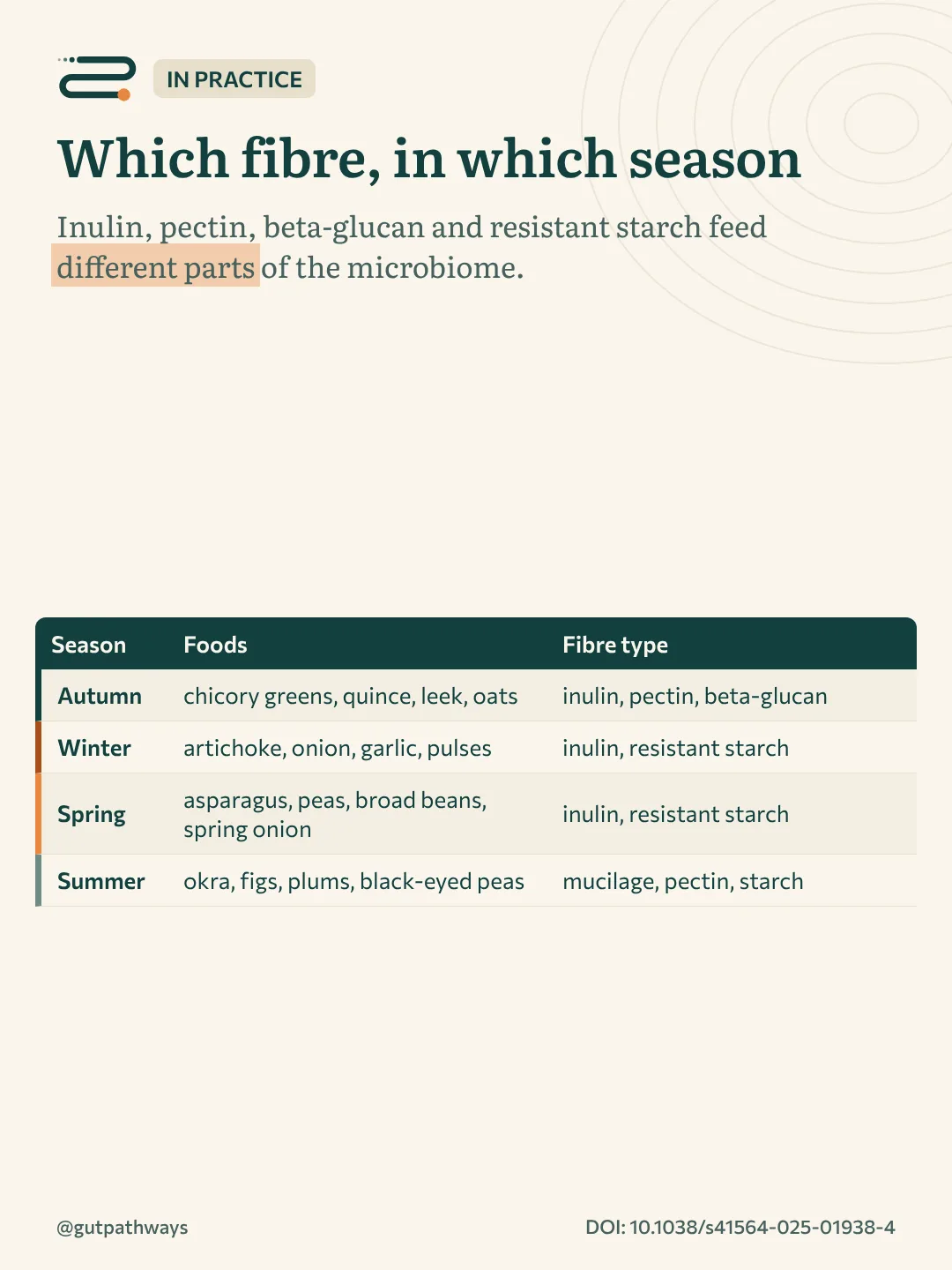
08 Which fibre, in which season
Inulin, pectin, beta-glucan and resistant starch feed different parts of the microbiome.
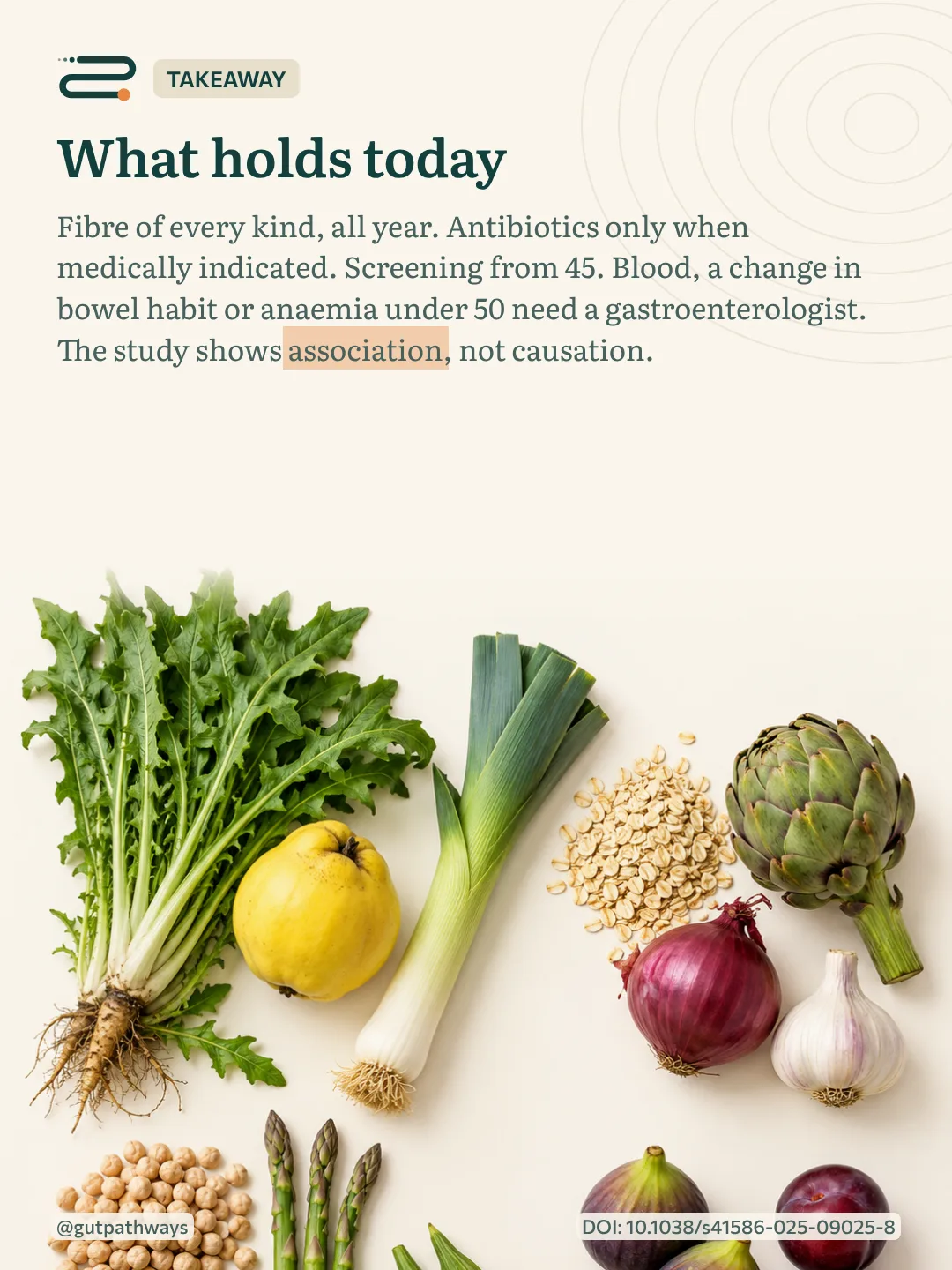
09 What holds today
Fibre of every kind, all year. Antibiotics only when medically indicated. Screening from 45. Blood, a change in bowel habit or anaemia under 50 need a gastroenterologist. The study shows association, not causation.
Sources
- Díaz-Gay M et al. Geographic and age variations in mutational processes in colorectal cancer. Nature 2025. doi:10.1038/s41586-025-09025-8
- Levy S et al. Colibactin genes are highly prevalent in the developing infant gut microbiome. Gut Microbes 2025. doi:10.1080/19490976.2025.2604874
- Jans M, Vereecke L. Physiological drivers of pks+ E. coli in colorectal cancer. Trends in Microbiology 2025, 33(9):1003-1017. doi:10.1016/j.tim.2025.04.010
- Thakur BK et al. Dietary fibre counters the oncogenic potential of colibactin-producing Escherichia coli in colorectal cancer. Nature Microbiology 2025, 10(4):855-870. doi:10.1038/s41564-025-01938-4
- US Preventive Services Task Force. Screening for colorectal cancer, 2021.