ProbioticsCarousel
Same probiotic, by mouth or vaginally: which one reaches the uterus?
A new study from Japan gave the same probiotic capsule to women with a low-Lactobacillus uterine lining, by mouth or vaginally. One month later, the two groups looked nothing alike. Here is what the study found, and what it cannot tell us yet.

10 pictures. Swipe sideways, or use the left and right arrow keys.
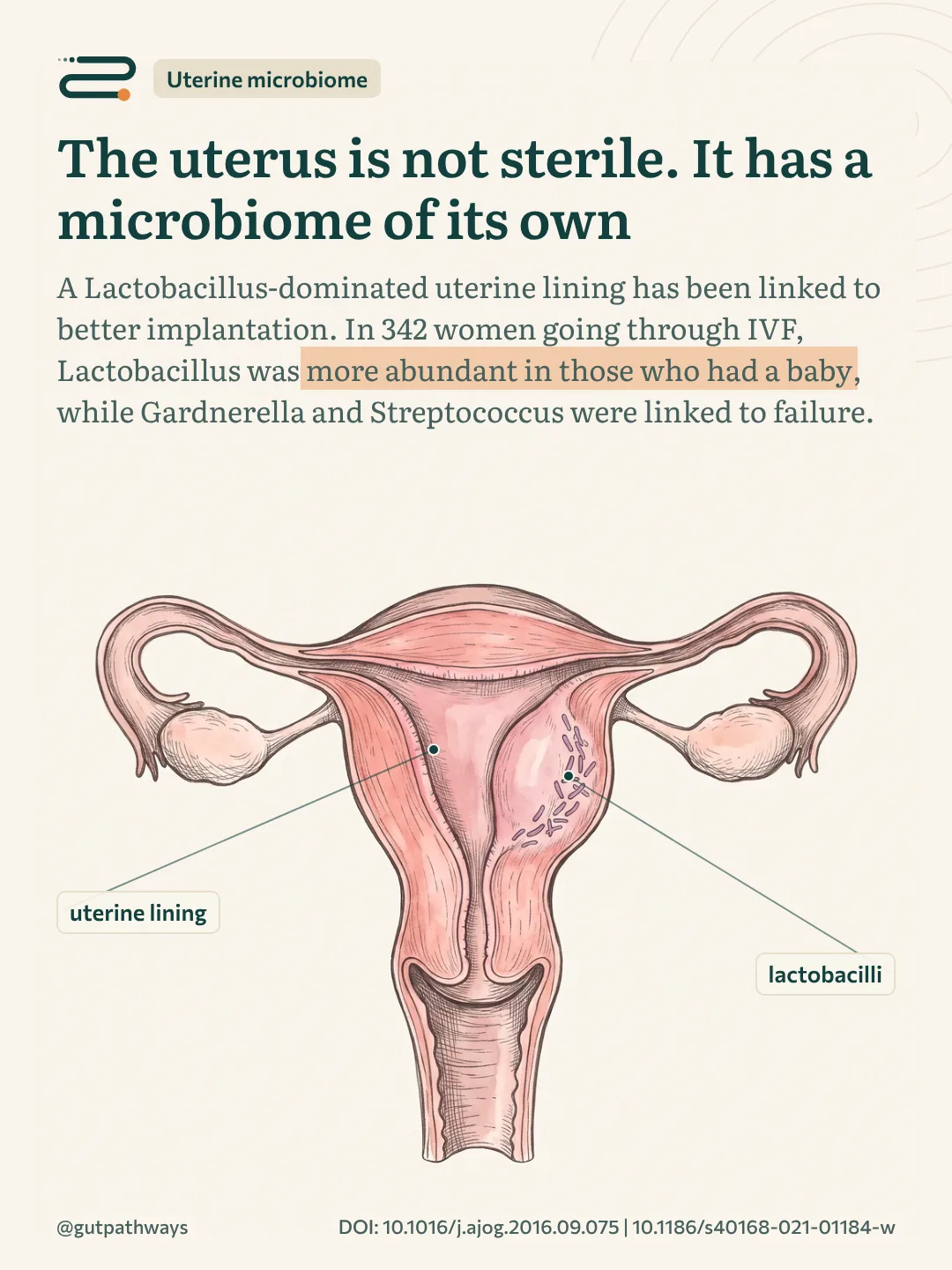
02 The uterus is not sterile. It has a microbiome of its own
A Lactobacillus-dominated uterine lining has been linked to better implantation. In 342 women going through IVF, Lactobacillus was more abundant in those who had a baby, while Gardnerella and Streptococcus were linked to failure.
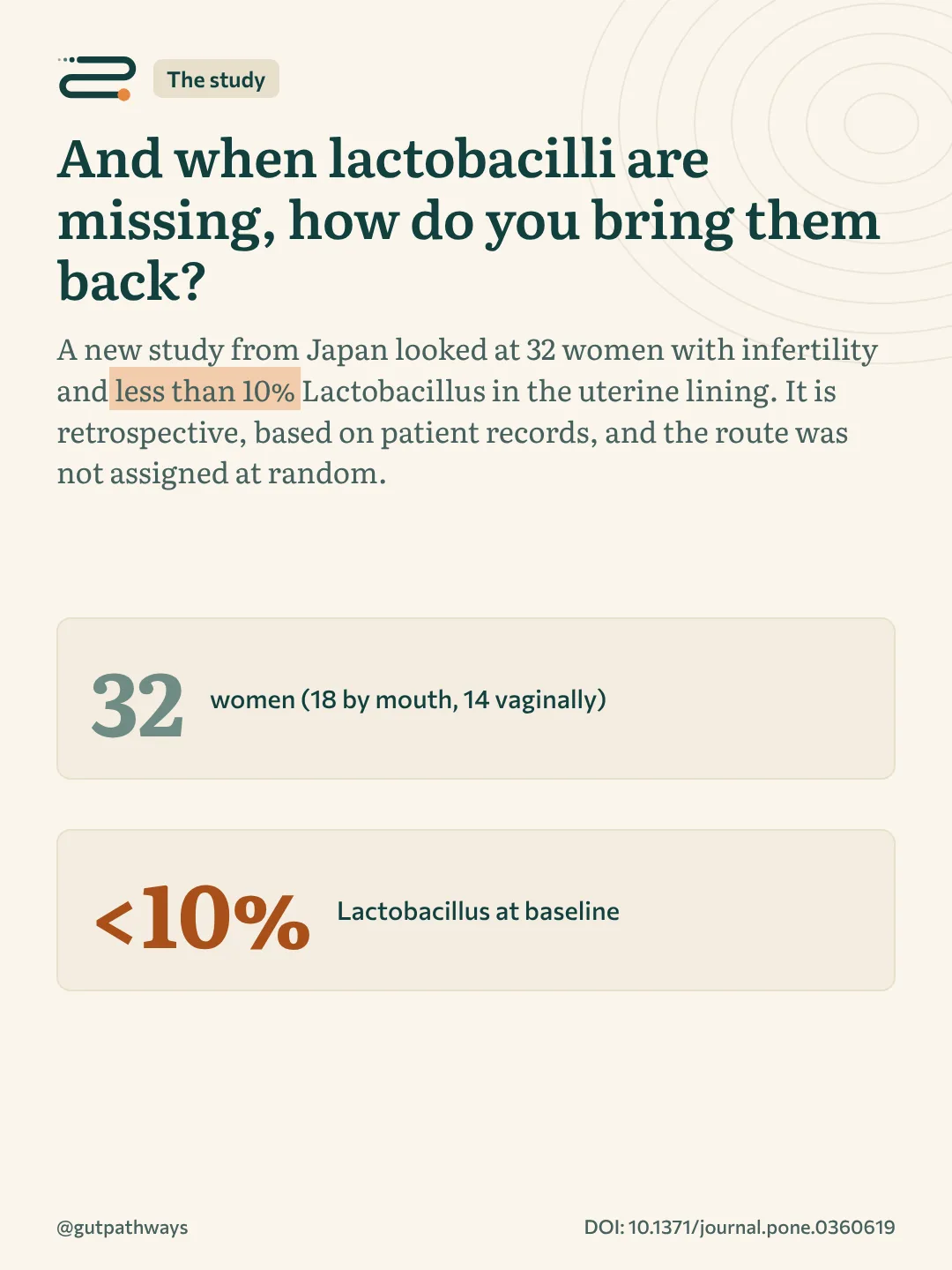
03 And when lactobacilli are missing, how do you bring them back?
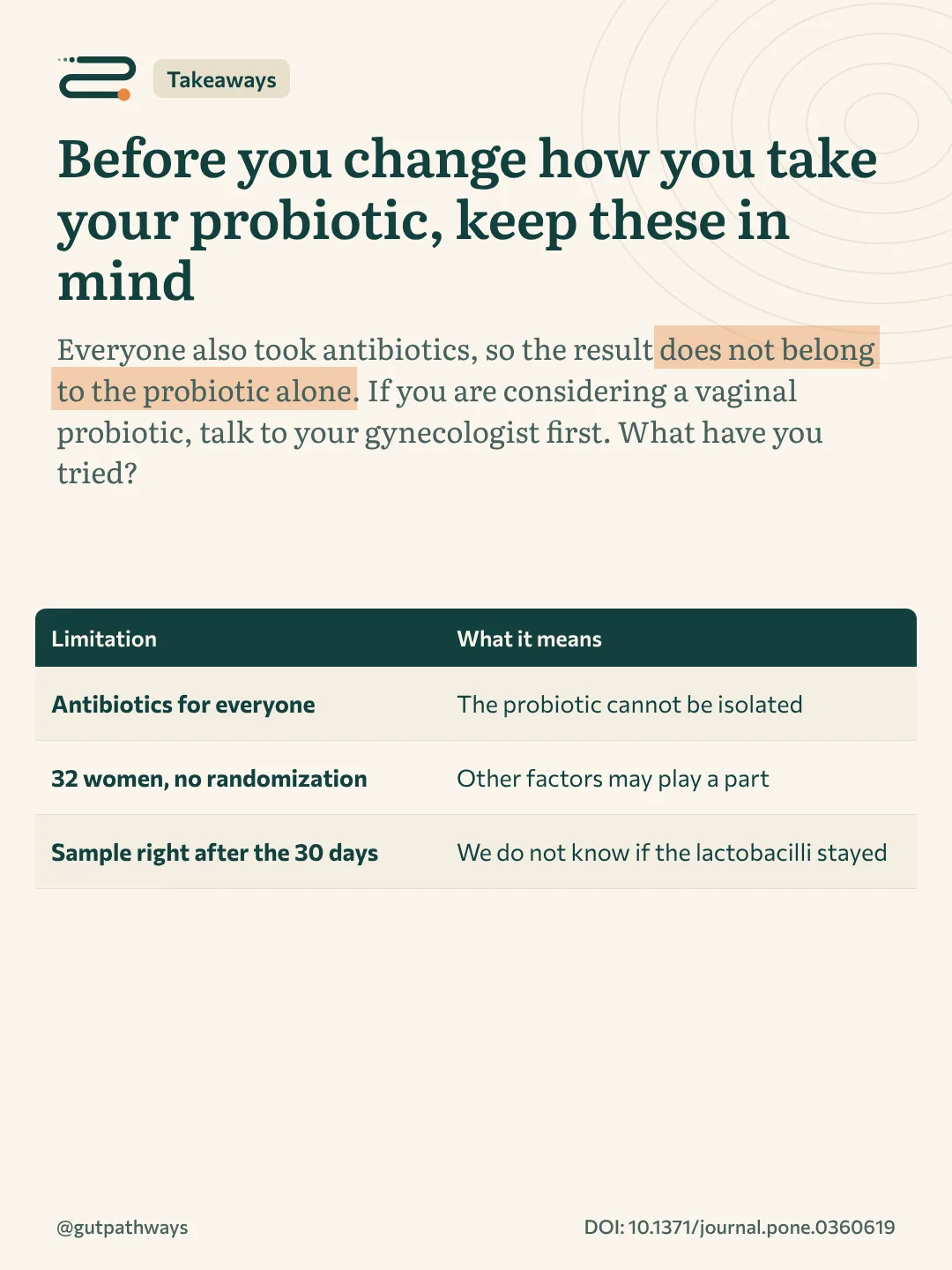
A new study from Japan looked at 32 women with infertility and less than 10% Lactobacillus in the uterine lining. It is retrospective, based on patient records, and the route was not assigned at random.
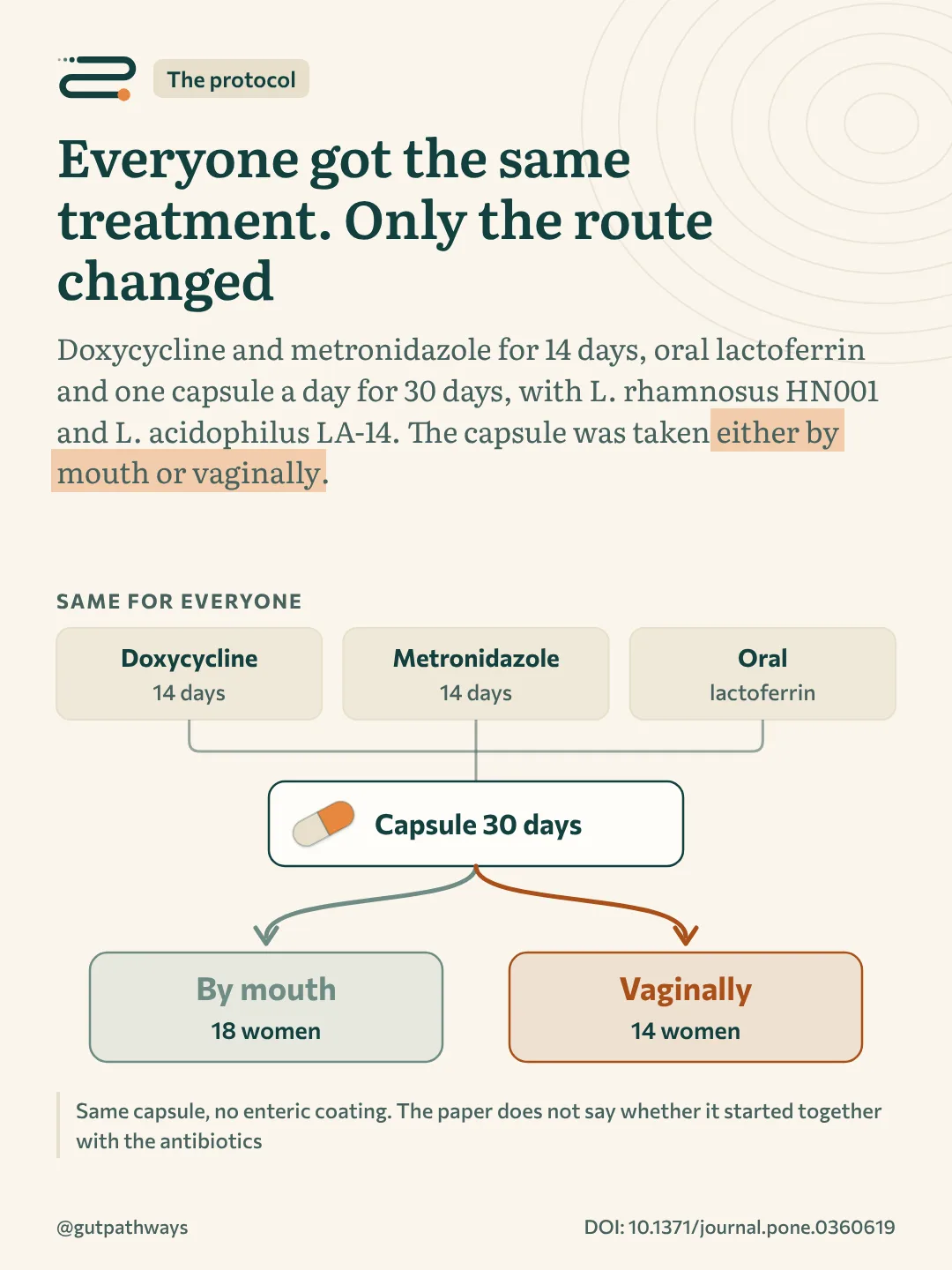
04 Everyone got the same treatment. Only the route changed
Doxycycline and metronidazole for 14 days, oral lactoferrin and one capsule a day for 30 days, with L. rhamnosus HN001 and L. acidophilus LA-14. The capsule was taken either by mouth or vaginally.
05 One month later, the two groups looked nothing alike
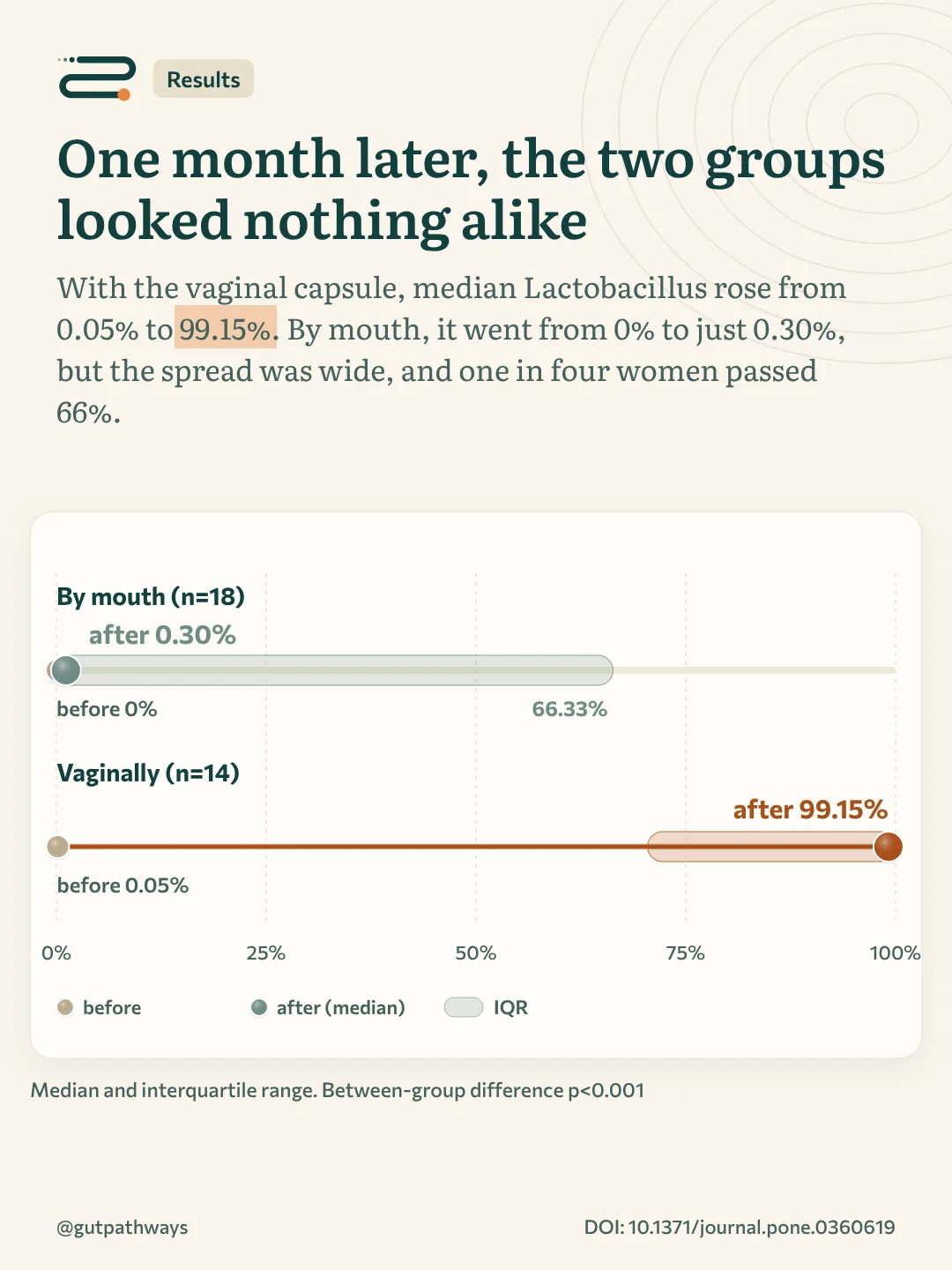
With the vaginal capsule, median Lactobacillus rose from 0.05% to 99.15%. By mouth, it went from 0% to just 0.30%, but the spread was wide, and one in four women passed 66%.
06 How many reached a Lactobacillus-dominated uterus?
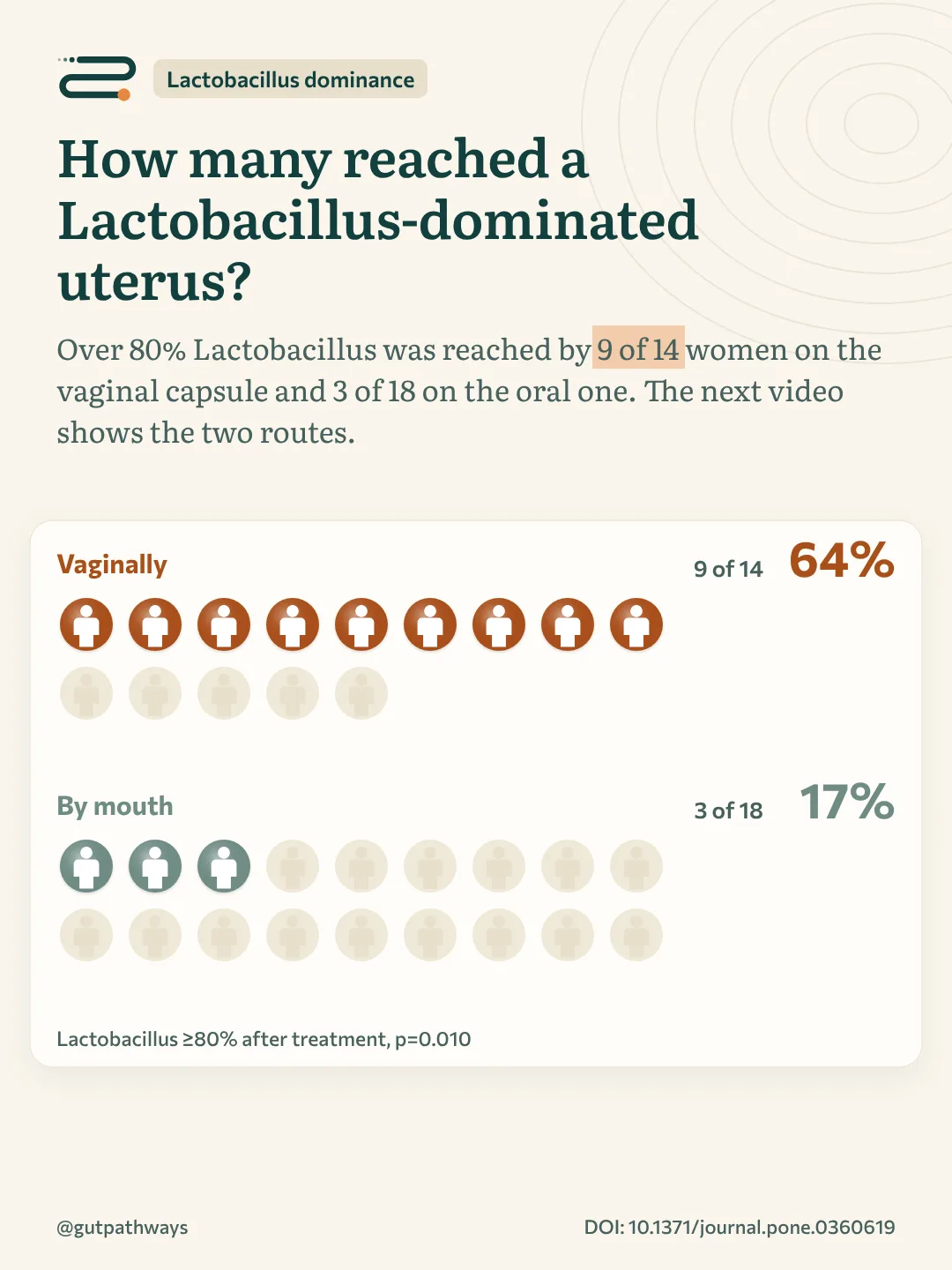
Over 80% Lactobacillus was reached by 9 of 14 women on the vaginal capsule and 3 of 18 on the oral one. The next video shows the two routes.
07 Vaginally the route is short, by mouth it passes through the gut first
Vaginally the route is short, by mouth it passes through the gut first
08 By mouth, though, lactobacilli appeared that the capsule did not contain
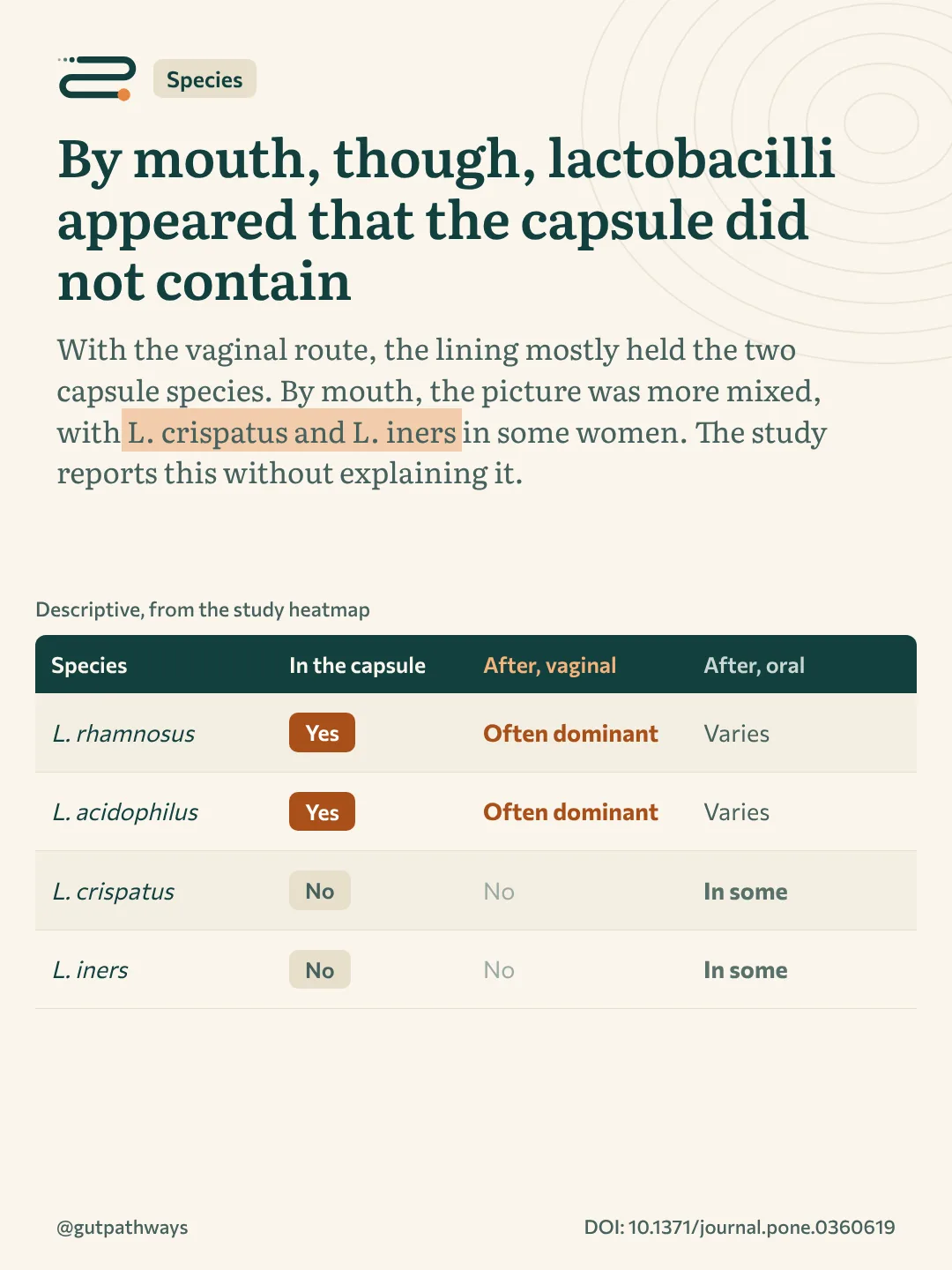
With the vaginal route, the lining mostly held the two capsule species. By mouth, the picture was more mixed, with L. crispatus and L. iners in some women. The study reports this without explaining it.
09 And pregnancies? The first data are encouraging, but they prove nothing yet
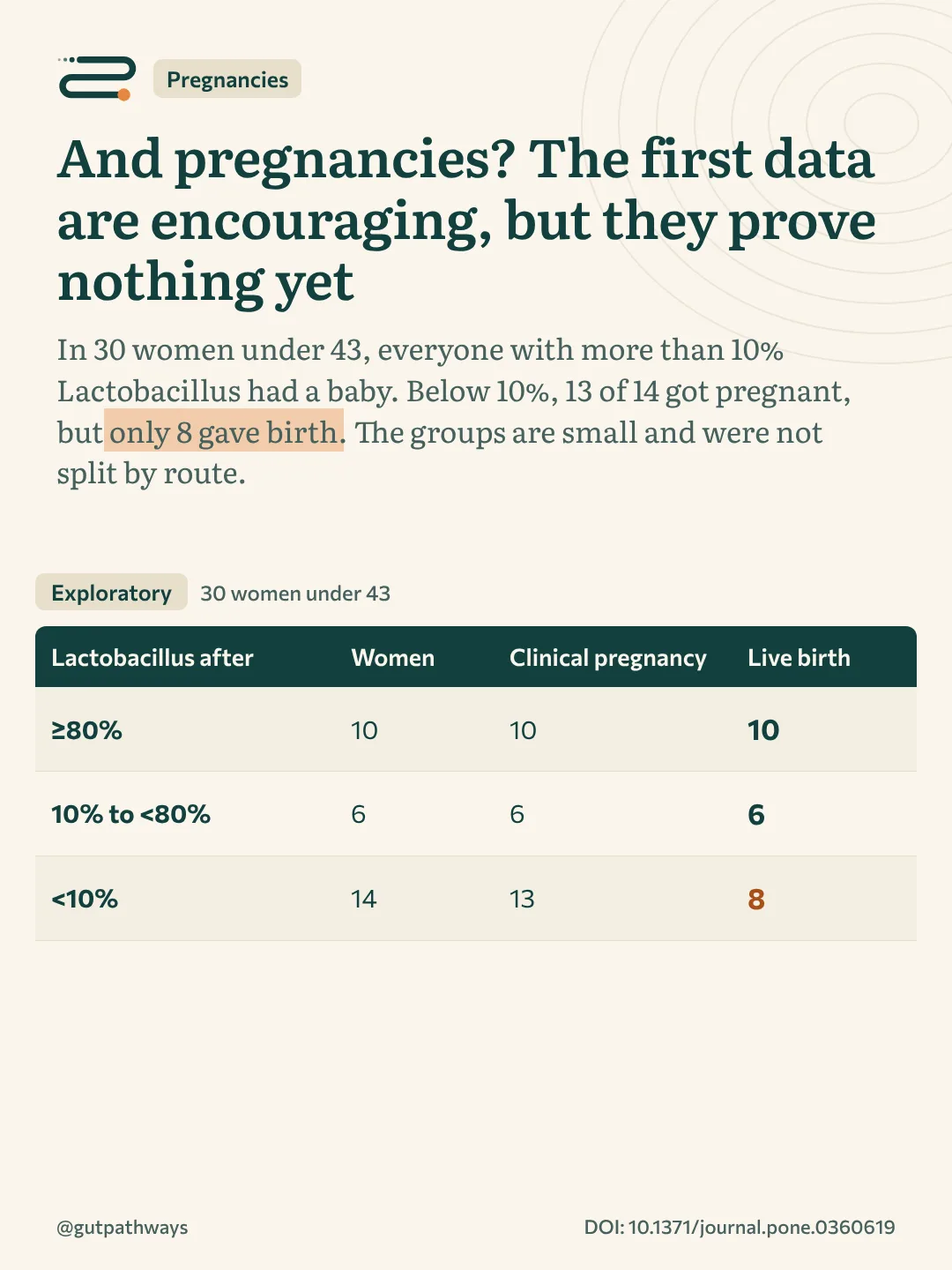
In 30 women under 43, everyone with more than 10% Lactobacillus had a baby. Below 10%, 13 of 14 got pregnant, but only 8 gave birth. The groups are small and were not split by route.
10 Before you change how you take your probiotic, keep these in mind
Everyone also took antibiotics, so the result does not belong to the probiotic alone. If you are considering a vaginal probiotic, talk to your gynecologist first. What have you tried?
Sources
- Hiratsuka D, et al. Oral versus vaginal Lactobacillus supplementation for endometrial dysbiosis. PLOS ONE 2026. DOI: 10.1371/journal.pone.0360619
- Moreno I, et al. Evidence that the endometrial microbiota has an effect on implantation success or failure. Am J Obstet Gynecol 2016. DOI: 10.1016/j.ajog.2016.09.075
- Moreno I, et al. Endometrial microbiota composition is associated with reproductive outcome in infertile patients. Microbiome 2022. DOI: 10.1186/s40168-021-01184-w